Blauberg and GEAREA
A Customized Fan Partnership for Precision HVAC and Smart Living Systems
Structural optimization • Software control • Customized integration • Reliable delivery
Executive Summary
Precision air treatment depends on much more than moving a specified volume of air. In equipment designed for independent temperature and humidity control, constant-temperature and constant-humidity environments, or smart residential comfort, airflow affects heat exchange, moisture removal, filtration, room pressure, acoustics, and energy use. A fan that looks acceptable on a catalogue page can still create problems if its operating point, mounting structure, control limits, wiring, or supply consistency do not match the complete unit.
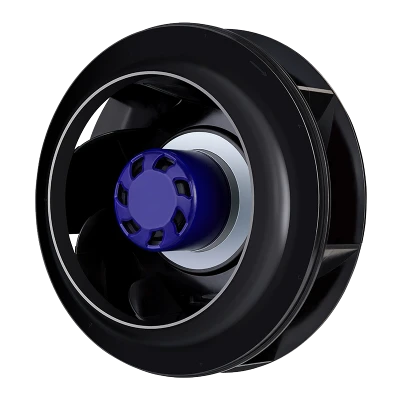
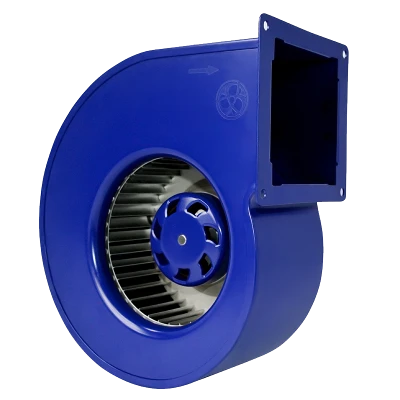
This industry report examines the collaboration between Blauberg and GEAREA, a Jiangsu-based specialist in human-settlement environmental technology. GEAREA develops energy-saving, high-precision air temperature and humidity treatment technologies, including decoupled temperature-and-humidity air handling equipment and intelligent Five-Constant living systems. To support these applications, Blauberg supplied a fan solution built around its 190-355 mm backward-curved centrifugal fan range and a 146 mm double-inlet fan.
The cooperation addressed two practical concerns identified in the customer case: inconsistent product quality from an earlier fan source and lead times that did not fit the customer's project schedule. A specific engineering issue also required attention. The previous 146 mm double-inlet fan arrangement used a double-support structure and could generate abnormal noise at high speed. Blauberg's technical team changed the fan to a single-support design and added a speed-limiting program. According to the customer-case material, application validation confirmed stable operation and resolved the high-speed abnormal-noise problem.
The importance of this case extends beyond one fan model. It shows how a professional centrifugal fan manufacturer can contribute through coordinated mechanical design, aerodynamic selection, electronic control, non-standard wiring and terminal configuration, documentation, certification support, and production delivery. It also demonstrates why an EC fan supplier for smart home ventilation systems should be evaluated as an engineering partner rather than only as a component vendor.

The Industry Context: Precision Comfort Requires Controlled Airflow
The building industry is under simultaneous pressure to improve energy performance and indoor environmental quality. The International Energy Agency reports that buildings account for around 30% of global energy demand, with residential buildings representing the largest share of energy use in the sector. The U.S. Environmental Protection Agency also emphasizes that ventilation and filtration are central tools for reducing exposure to indoor pollutants and improving indoor air quality.
These priorities are especially relevant to advanced residential and commercial HVAC systems. Conventional comfort equipment often treats temperature as the primary control variable, while moisture removal occurs as a secondary result of cooling. ASHRAE notes that modern air conditioners dehumidify while cooling, but they cannot inherently control temperature and humidity independently. During humid, mild-weather, or part-load conditions, a space may have limited sensible cooling demand while still requiring moisture removal.
Independent temperature and humidity control addresses this mismatch by organizing sensible and latent treatment more precisely. However, the concept only works when the air-moving subsystem performs consistently. Airflow through a coil influences heat-transfer conditions, leaving-air temperature, condensation, moisture-removal capacity, and downstream reheating. Airflow through a filter determines both particle-control performance and system resistance. Airflow in occupied rooms influences mixing, comfort, and pressure relationships.
For this reason, a low-noise EC fan for temperature and humidity control must do more than reach a maximum airflow. It needs to support several stable operating points, respond predictably to a control command, remain within mechanical and acoustic limits, and maintain acceptable performance as system resistance changes. The fan, motor, electronics, structure, airflow path, and software limits become one functional subsystem.
GEAREA's Application Requirements
GEAREA focuses on energy-saving, high-precision air temperature and humidity treatment and intelligent control. Its core product direction includes temperature-and-humidity-decoupled constant-temperature and constant-humidity air handling units, as well as intelligent Five-Constant systems for healthier and more comfortable living environments. These applications bring together air treatment, filtration, temperature control, humidity management, airflow distribution, and system automation.
From the fan's perspective, this creates a demanding operating environment. The required duty point can change when the unit switches between normal ventilation, humidity control, rapid treatment, quiet operation, or other modes. Filter resistance increases during use. Heat exchangers and air-treatment sections add internal pressure loss. Residential applications also impose strict acoustic expectations, particularly when equipment is installed near bedrooms, inside ceilings, or within compact mechanical spaces.
The customer's earlier fan solution presented two wider business problems. First, quality variation created uncertainty about long-term equipment reliability. Second, extended supply lead times made it difficult to keep product development and manufacturing aligned with project schedules. Both issues illustrate a point that is sometimes missed in procurement: the technical value of an HVAC fan is inseparable from manufacturing consistency and supply performance.
Blauberg responded with a combined product and service proposal. Its 190-355 mm backward-curved fan series addressed different airflow and pressure classes, while the 146 mm double-inlet design served compact equipment requirements. The support scope extended beyond standard product selection to wire length, connector specification, structural configuration, control programming, technical data, certification requirements, and delivery planning. In effect, the project became a custom EC fan solution for HVAC equipment, not simply a fan purchase.
Why the 190-355 mm Backward-Curved Fan Range Fits Air Treatment
A backward curved centrifugal fan is commonly considered for air-treatment equipment that must overcome the resistance of filters, heat exchangers, dampers, silencers, and ductwork. Its suitability depends on the exact impeller, motor, construction, and operating point, but backward-curved geometry can provide a useful balance of pressure capability, efficiency potential, and controllable operating range.

Blauberg's 190-355 mm range provides several nominal diameter options for different cabinet sizes and airflow classes. This supports a platform approach: an OEM can develop multiple equipment capacities around a related fan family while still selecting the correct model for each pressure and airflow requirement. A series-based strategy can simplify supplier qualification, documentation, spare-part planning, and engineering communication.
It is important, however, not to treat diameter as a complete specification. Two fans with the same nominal size can have different wheel geometry, motor power, speed, maximum pressure, sound characteristics, mounting details, and control functions. The selection of a backward curved EC centrifugal fan for air handling units should therefore begin with a defined duty schedule rather than a target diameter.
That duty schedule should include, at minimum, design airflow, external static pressure, clean-filter resistance, final-filter resistance, heat-exchanger pressure loss, air temperature, humidity, altitude, air cleanliness, available installation space, electrical supply, acoustic limits, and all major operating modes. Candidate working points should be plotted on the relevant performance curves. Input power, speed, efficiency, and sound should then be reviewed across the operating range, not at only one nominal point.
This system-level approach matters because the installed fan does not operate in isolation. AMCA describes "system effect" as the performance penalty created by non-ideal inlet or outlet conditions. An abrupt transition, an obstruction near the inlet, a closely positioned elbow, or uneven flow can reduce delivered performance and increase noise, vibration, and energy consumption. A nominally efficient air handling unit fan can therefore underperform if cabinet geometry is frozen without considering the fan's airflow requirements.
The 146 mm Double-Inlet Challenge: Solving High-Speed Abnormal Noise
The 146 mm double-inlet fan represented the most specific technical issue in the cooperation. A double inlet centrifugal fan allows air to enter from both sides of the wheel, which can provide a relatively large inlet area in a compact assembly. The design is attractive for equipment with limited space, but it also depends on balanced inlet conditions, structural stiffness, alignment, assembly consistency, and appropriate speed boundaries.
 According to the customer-case material, the earlier fan used a double-support structure and could produce abnormal noise during high-speed operation. Abnormal noise is a symptom, not a diagnosis. Potential causes can include structural resonance, support or mounting stiffness, component tolerance, wheel balance, shaft alignment, airflow imbalance between the two inlets, interaction with nearby cabinet parts, motor excitation, or operation within a sensitive speed band.
A professional troubleshooting process begins by classifying the sound. Broad-band airflow noise may point toward high velocity, turbulence, or inlet restriction. A strong tonal component may be linked to blade-passing frequency, motor excitation, or a structural mode. Intermittent rubbing can suggest clearance or deformation. A repeated knocking or modulation may indicate a loose part, a cable touching the structure, or another assembly interaction. Engineers should record the speed, load, pressure, mounting direction, temperature, and exact operating condition at which the sound appears.
The next step is to compare stand-alone and installed behavior. If a fan performs normally on a standard test bench but becomes noisy inside the equipment, the cabinet, inlet distribution, outlet geometry, or mounting system is likely participating in the problem. A double-inlet arrangement deserves particular attention because both sides should receive reasonably uniform flow. If one inlet is partially blocked by a heat exchanger, wire harness, panel, or local pressure field, unequal aerodynamic loading can amplify sound or vibration.
Blauberg's solution combined two actions. The technical team changed the design from a double-support to a single-support structure and added a speed-limiting program. The structural change modified the mechanical and assembly boundary. The software change prevented operation beyond the defined speed limit. According to the source case, the combined solution eliminated the high-speed abnormal-noise fault and produced stable performance that was recognized by GEAREA.
The lesson is not that a single-support structure is universally superior. The correct support design depends on the wheel width, shaft system, material, rotational speed, load, installation, lifetime requirement, and manufacturing process. The transferable lesson is the method: identify the failure mode, change the relevant mechanical boundary, define the safe operating envelope in software, and validate the result in the actual equipment.
It is equally important that a speed limit be verified against the worst-case airflow requirement. Reducing speed may avoid an acoustic problem, but it can also reduce available pressure. Testing should therefore include the final expected filter resistance and other maximum-system-resistance conditions. A speed cap is only successful when the fan remains quiet and the complete unit still meets airflow, temperature, humidity, and safety requirements.
EC Technology as a Control Platform
An electronically commutated fan combines a brushless permanent-magnet motor with electronic commutation and an air-moving assembly. The practical advantage for precision equipment is controllability. An EC fan can be integrated into a control sequence that changes speed in response to an operating mode or measured condition, subject to the capabilities of the selected model.
This supports energy-efficient ventilation because the fan does not have to operate continuously at maximum speed when the demand is lower. It also supports more accurate air treatment: airflow can be coordinated with temperature, humidity, pressure, filter status, or air-quality objectives. In a smart ventilation system, the fan becomes an active part of the control architecture rather than a fixed-speed component.
Nevertheless, EC technology should not be used as shorthand for guaranteed system efficiency. Total performance depends on the wheel, motor, electronics, inlet and outlet geometry, cabinet, and duty point. A poorly selected fan with an EC motor can still operate inefficiently or noisily. An oversized fan can add cost and packaging burden, while an undersized fan may run continuously near its upper limit.
The control interface must also be specified at project level. The OEM should define the command method, enable logic, feedback, maximum speed, response to a lost signal, restart behavior, protection functions, fault indication, and recovery process. If the abnormal-noise solution depends on a speed limit, the parameter must be protected by configuration control. It should not disappear after a controller replacement, firmware update, service intervention, or supplier change.
Non-Standard Customization: From Prototype Fit to Production Readiness
The two source articles emphasize Blauberg's ability to support non-standard customization across wire length, terminal specification, fan structure, control programming, and product configuration. These details can appear minor when compared with airflow or pressure, but they often determine whether an OEM project is easy to assemble, test, certify, and maintain.
Customized wire length can eliminate excess cable, prevent interference with moving or hot parts, and reduce installation time. A project-specific terminal can remove adapters and reduce wiring errors. Structural modifications can help the fan fit the intended cabinet and mounting arrangement. Software parameters can align speed, protection, and control behavior with the equipment's operating sequence.
The benefit is strongest when customization is controlled rather than informal. Every customized centrifugal fan for precision air handling units should have a clear configuration baseline. At minimum, the OEM and supplier should maintain:
- An interface-control drawing covering dimensions, mounting points, inlet and outlet boundaries, and service clearances.
- A wiring drawing defining length, tolerance, wire color, connector, pin assignment, protective earth, and labeling.
- An electrical and control specification describing command input, feedback, speed limits, protection, fault behavior, and recovery.
- A software or parameter version record.
- An approved sample and engineering-change history.
- A production inspection specification and traceability method.
This documentation converts "the prototype works" into "production can repeatedly build the approved version." It is especially important when a software setting forms part of the technical solution. The maximum-speed limit in the GEAREA project should be treated as a controlled product characteristic, not as an undocumented adjustment made during commissioning.
Change management is equally important. A connector substitution, new wire supplier, support-material change, firmware update, or dimensional revision can affect assembly, acoustics, compliance, or reliability. The supplier should notify the OEM before implementation, identify the reason, affected part numbers, old and new states, risk assessment, and transition batch. The OEM can then determine whether revalidation is necessary.

Quality Consistency and Delivery as Part of Engineering Performance
The cooperation was intended not only to solve a technical problem but also to address quality fluctuation and long lead times. For an equipment manufacturer, these issues directly affect engineering schedules, production continuity, inventory, and field reliability.
The source case reports that Blauberg's overall delivery achievement rate exceeds 98%, sample orders can be delivered within one week, and normal batch orders have an approximate two-week lead time. These figures are company-reported case data and should be reconfirmed for the specific model, quantity, material status, and project location. They are nevertheless useful because they show which supply metrics matter.
Fast sample delivery allows the OEM to conduct more design and test iterations before product launch. A predictable batch lead time supports production planning. On-time delivery performance reduces the need for excessive safety stock. However, an effective supplier review should go beyond an average lead-time statement. It should examine how on-time performance is defined, the forecast window, minimum order quantities, material constraints, peak-season capacity, recovery plans, and notification procedures.
Quality should also be assessed as a process rather than a certificate. Relevant questions include how the supplier controls wheel balance, support dimensions, fasteners, motor-electronics testing, abnormal-noise criteria, end-of-line function, serial traceability, non-conformance analysis, and engineering changes. For a project with a previous high-speed noise issue, a production test may include a controlled speed sweep or a dwell within the formerly sensitive operating range.
Blauberg also provides product specifications and technical information to support equipment design, parameter confirmation, and system matching. The case materials state that its fan products can support CCC, CE, and UL requirements. These marks and certification paths serve different markets and product categories; they are not interchangeable grades of quality. The OEM should verify certificate scope, model coverage, critical components, validity, and how the fan documentation supports approval of the finished equipment.
A Recommended Validation Matrix for Similar Projects
The GEAREA case suggests a repeatable validation framework for other precision-HVAC OEMs.
Performance validation
Test airflow and static pressure at clean-filter and final-filter resistance. Cover low, nominal, and high operating modes. Record input power, current, speed, and control deviation. Where the equipment performs thermal and humidity treatment, record entering- and leaving-air temperature and humidity at the same time.
Acoustic and vibration validation
Measure sound under defined background noise, distance, installation, and operating conditions. Evaluate abnormal noise and tonal components in addition to the overall A-weighted level. Test the actual cabinet, mounting direction, inlet restriction, outlet path, and relevant speed range. Record vibration where structural interaction is suspected.
Control validation
Verify enable and stop behavior, speed command, maximum-speed limit, response time, signal loss, sensor fault, protective functions, restart, and recovery. Confirm that the approved parameter version is installed and traceable.
Environmental and durability validation
Define high- and low-temperature tests, humidity exposure, continuous operation, start-stop cycles, restricted airflow, and transport reinspection according to the real product requirements. The test plan should reflect the intended installation and market rather than use generic conditions without justification.
Manufacturing validation
Check wiring, connector, pin assignment, label, software version, critical dimensions, fasteners, and serial traceability. Establish the boundary sample or objective acceptance criteria for abnormal sound. If a characteristic cannot be judged by one number, combine measurement, frequency information, an approved sound sample, and a written rule such as "no rubbing, knocking, or prominent modulation."
Acceptance criteria should be agreed before prototype delivery. If the teams wait until a dispute occurs to define acceptable noise or airflow, decisions become slower and more subjective. A controlled validation matrix gives both parties a common engineering language.
Supplier Selection: Why Total Program Cost Matters More Than Unit Price
For temperature-and-humidity-independent equipment, a supplier scorecard should cover five areas: aerodynamic and electrical performance; acoustic and structural reliability; customization and engineering response; quality, documentation, and certification support; and delivery plus ongoing service.
Price should be compared after the technical threshold has been met. Total program cost includes the fan price, development or tooling cost, harnesses and adapters, assembly labor, additional tests, certification, inventory, warranty, field service, and production-stop risk. A lower-priced fan can become expensive if it requires cabinet redesign, repeated troubleshooting, or frequent replacement.
By contrast, a supplier that helps diagnose high-speed noise, modifies the structure and program, provides the correct wires and terminals, and freezes the result through controlled documentation may reduce engineering rework. This is the commercial value of a custom EC fan solution for HVAC equipment. The value should still be confirmed through measurable test results, approved samples, capacity review, and contractual quality and delivery terms.
The same logic applies to digital marketing and search intent. The broad phrase EC centrifugal fan may attract early-stage technical research. A search for a customized centrifugal fan for precision air handling units signals a more specific application need. A search for an EC fan supplier for smart home ventilation systems suggests supplier evaluation. An effective industry article should therefore answer engineering questions, acknowledge limitations, and explain validation before presenting a commercial call to action.
Wider Industry Lessons from the Blauberg-GEAREA Cooperation
Three capabilities can be developed from this case.
First, companies can build a failure-mode knowledge base. High-speed abnormal noise, inlet imbalance, filter-loading pressure, wiring interference, control instability, and batch variation should be linked to diagnostic tests and proven corrective actions. This shortens the response time when a similar symptom appears in another product.
Second, companies can combine modular fan platforms with controlled customization. The 190-355 mm series can support several capacity classes, while limited changes to mounting, wire length, terminals, or software align the fan with a specific unit. The goal is not unlimited customization; it is a managed set of variations that remains traceable and manufacturable.
Third, OEMs and fan suppliers can establish joint development gates. Requirements, selection, prototype integration, boundary testing, and production approval should each have defined inputs and acceptance criteria. This reduces the risk of discovering an airflow, acoustic, wiring, or compliance issue after the cabinet and supply chain are already frozen.
Future smart-living equipment will use more sensors, algorithms, and connected controls, but mechanical and aerodynamic quality will remain fundamental. Software can adjust or limit speed, yet it cannot compensate for every structural or airflow defect. Structural optimization can reduce vibration, yet it cannot replace a correct operating envelope. Professional HVAC systems require mechanical, electrical, aerodynamic, acoustic, control, manufacturing, and supply teams to work together.
Conclusion
The Blauberg-GEAREA cooperation demonstrates how a fan supplier can support the evolution of precision air treatment and smart living equipment. Blauberg's 190-355 mm backward-curved fan range provided a platform for different airflow and pressure requirements. Its 146 mm double-inlet fan project addressed a specific high-speed abnormal-noise issue through a coordinated single-support structural change and speed-limiting program. Non-standard wire, terminal, structure, and control support helped align the fan with the customer's equipment, while technical documentation, certification support, and delivery management contributed to production readiness.
The most valuable aspect of the case is not one product specification or one structural choice. It is the complete method: define the real duty, diagnose the system symptom, coordinate hardware and software, validate in the actual unit, freeze the approved configuration, and protect delivery and quality through production. That method can be applied to constant-temperature and constant-humidity equipment, independent temperature and humidity control units, air handling systems, clean-air equipment, and advanced residential ventilation.
For OEMs evaluating a new EC fan partner, the recommended next step is not simply to request a quotation. Prepare a full duty schedule, acoustic target, interface specification, control description, certification matrix, and production acceptance plan. Then evaluate whether the proposed air handling unit fan and supplier can support the complete product lifecycle from prototype to stable batch delivery.