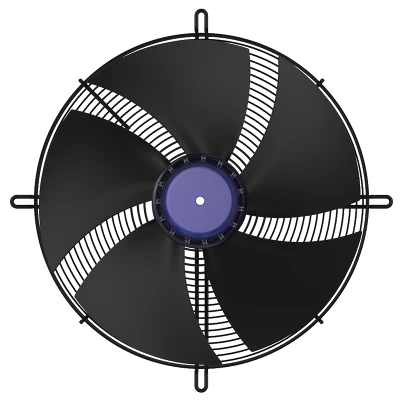
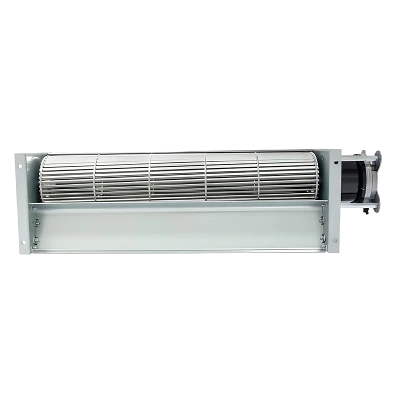
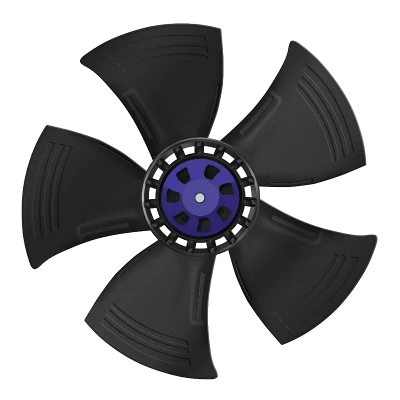
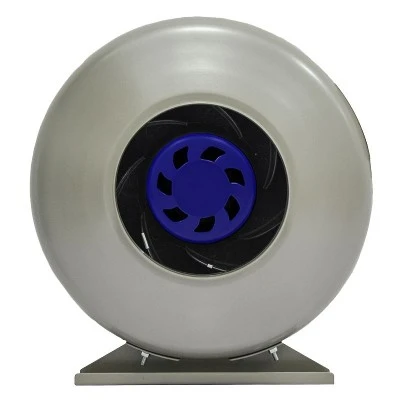


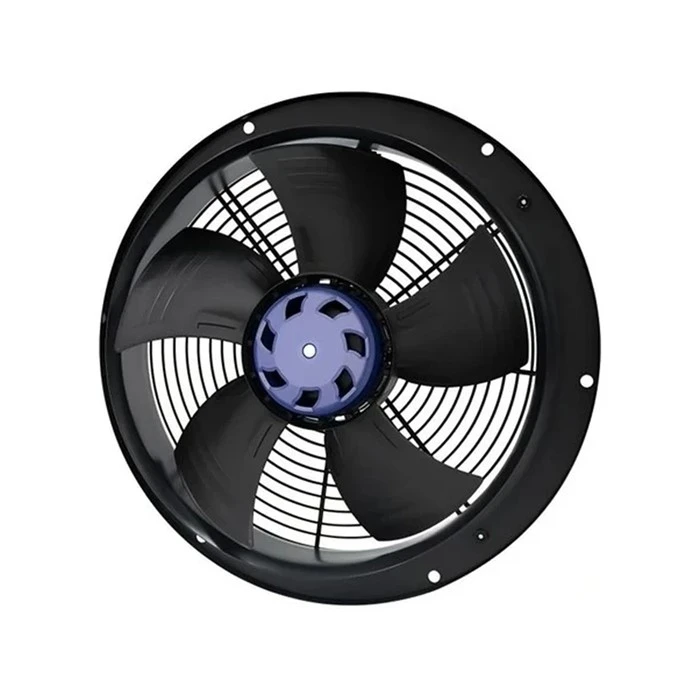
Circular grille
Circular grille axial fan
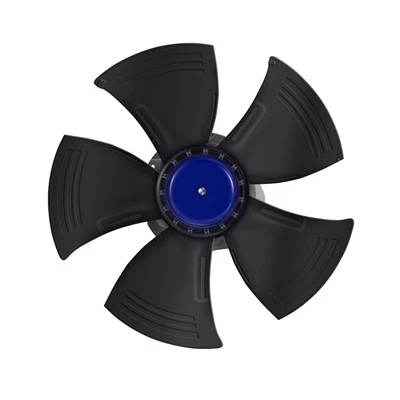
Circular air guide and wire guard grille for safer operation and controlled inlet or outlet airflow, mountable at any angle.
Datasheet & quote English
Blauberg Motoren Air movement since 1900
EC, AC and DC axial fans from 200 to 630 mm, moving up to 12,500 m³/h through a shallow flow path. External-rotor motors with IP44 / IP55 protection and 0–10 V, PWM or RS485 control — configured with a wall ring, guard grille, metal casing or square flange.
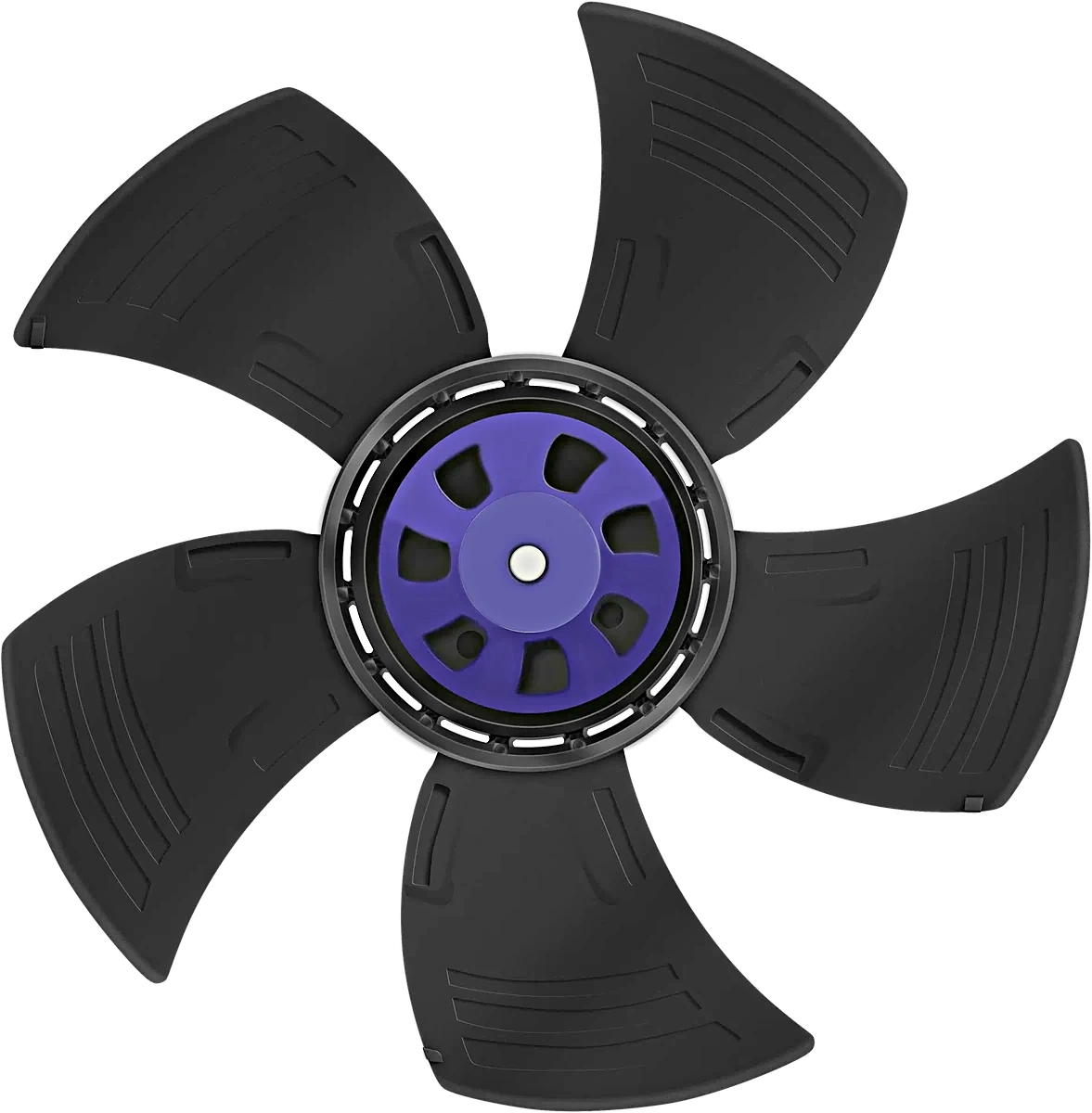
GL-A350C-EC-07R EC axial fan.. 230 VAC, 50/60 Hz, 200 W maximum input power.. 1650 RPM rated speed; IP55 protection; Class B insulation.
Certificate:UL,CE,ROHS,CCC,ISO;. Supply Ability: 400,000 pcs per year; . MOQ: 1~100 pcs based on EXW price; 100 pcs above based on FOB price.. HS Code:8414593000
Certificate:UL,CE,ROHS,CCC,ISO;. Supply Ability: 400,000 pcs per year; . MOQ: 1~100 pcs based on EXW price; 100 pcs above based on FOB price.. HS Code:8414593000
Certificate:UL,CE,ROHS,CCC,ISO;. Supply Ability: 400,000 pcs per year; . MOQ: 1~100 pcs based on EXW price; 100 pcs above based on FOB price.. HS Code:8414593000
Certificate:UL,CE,ROHS,CCC,ISO;. Supply Ability: 400,000 pcs per year;. MOQ: 1~100 pcs based on EXW price; 100 pcs above based on FOB price.. HS Code:8414593000
GL-A350C-EC-07S EC axial fan.. 230 VAC, 50/60 Hz, 200 W maximum input power.. 1650 RPM rated speed; IP55 protection; Class B insulation.
Certificate:UL,CE,ROHS,CCC,ISO;. Supply Ability: 400,000 pcs per year; . MOQ: 1~100 pcs based on EXW price; 100 pcs above based on FOB price.. HS Code:8414593000
BL-A300C-EC-07 EC axial fan.. 230 VAC, 50/60 Hz, 210 W maximum input power.. 2200 RPM rated speed; IP55 protection; Class B insulation.
01 Product range
Blauberg builds axial fans from 200 to 630 mm around one impeller and motor platform, then configures the mechanical package around your equipment — bare impeller, wall ring, circular grille, square flange or metal casing. EC, AC and DC motors on 115/230/380 V AC or 24–310 V DC, with 0–10 V, PWM or RS485 control, so an OEM can source the whole airflow assembly from one supplier.
Circular air guide and wire guard grille for safer operation and controlled inlet or outlet airflow, mountable at any angle.
Datasheet & quote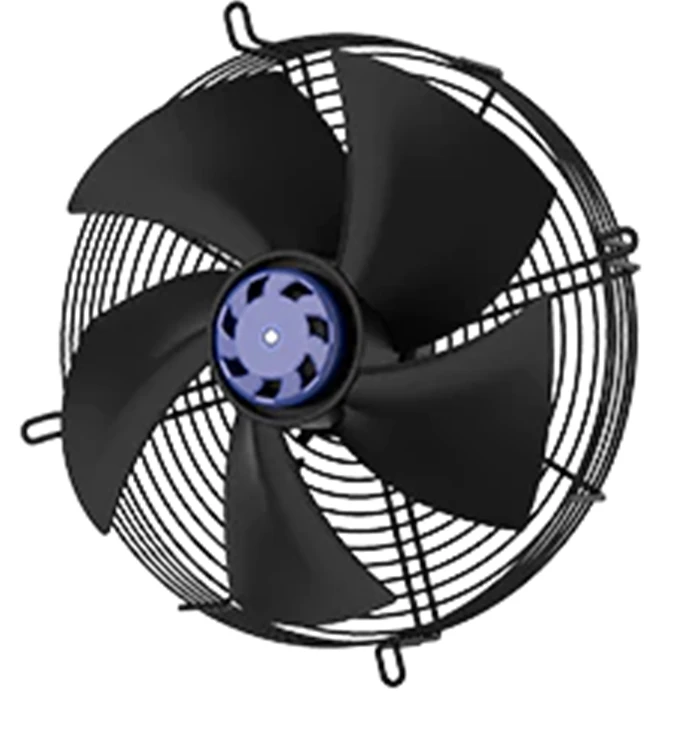
A round wall ring guides the airflow and gives a stable, compact mounting face for heat exchangers, chillers and dry coolers.
Datasheet & quote
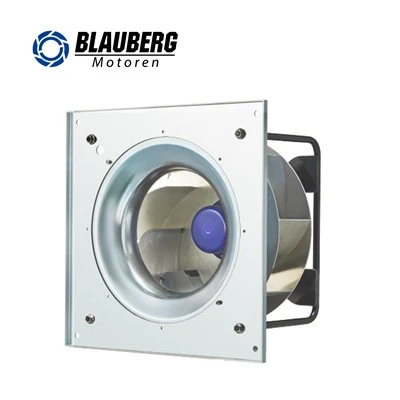
Square air guide grille for panel and flanged mounting — cabinet ventilation, automation enclosures and equipment cooling from −25 to +60 °C.
Datasheet & quoteThe core impeller and motor platform for OEM ventilation, heat exchange and cabinet airflow — 200 to 630 mm, up to 12,500 m³/h, with a swept blade profile for lower noise.
Datasheet & quoteLibrary Technical notes
Three short notes on the questions that come up in every axial fan specification — pressure, motor technology and which mechanical package to order.
An axial fan moves air parallel to the motor shaft, so it delivers high volume against low to medium static pressure through a shallow flow path. Add filters, long ducts or dense coils and the system resistance climbs — that is where a centrifugal fan earns its larger housing.
Read the noteAn EC motor integrates the drive, so the fan takes mains AC and still gives stepless 0–10 V, PWM or RS485 control, soft start and locked-rotor protection — without an external VFD or a separate starter panel.
Read the noteThe same impeller ships with a bare wall ring, a circular guard grille, a square flange or a metal casing. The choice sets the mounting face, the airflow direction and the ingress protection — not the aerodynamic performance.
Read the note02 Applications
Blauberg axial fans are specified by HVAC OEMs and equipment engineers in more than 120 countries — condensers and heat exchangers, cold rooms and clean rooms, ventilation and heat recovery. Each case is an air-exchange problem: a volume of air has to leave the space and be replaced at a controlled rate, and the fan sets that rate.


Heat rejection · dry cooling
Dry coolers, condensers and air-cooled heat exchangers share one duty: move a large air volume across a coil with only a modest pressure loss. Axial fans sit directly on the coil face, keep the unit shallow, and hold airflow as the coil fouls — EC versions trim speed to the load instead of cycling on and off.


Cold chain · clean room
Both rooms are decided by air distribution. In a cold room the axial fan drives air across the evaporator coil and down the walls, so the whole pallet stack cools evenly instead of only the top layer. In a clean room the same impeller sits in the FFU or recirculation unit, holding laminar flow and the air-change rate while the HEPA filter loads — EC speed control keeps the pressure constant without manual rebalancing.
Industries In the field
Wherever air has to move against resistance, there is usually an EC impeller doing the work.

From glass-door display cabinets and supermarket refrigeration to cold stores and distribution. EC fans run reliably at −25 °C, cut energy by 30% or more against AC motors, and use sealed bearings that need no maintenance.

The IEA expects the global public charging fleet to grow from around 4 million units in 2023 to more than 15 million by 2030, driving demand for charger-cabinet cooling and BESS thermal management. Blauberg compact DC and EC fans run on 12 or 24 V with long, reliable life.

Row cooling and heat rejection need airflow that follows IT load. EC axial fans on the condenser run in parallel for module-level N+1, modulate on differential pressure and report status over RS485 — keeping equipment cool while lowering PUE.

Containerised storage and battery cabinets rely on forced-air cooling to keep cells in their thermal window. Blauberg EC and DC axial fans hold flow against filters and louvres on 24/48 V or 230 V supply, with IP55 protection for outdoor cabinets.

Outdoor telecom cabinets run unattended through dust, rain and −40 to +55 °C. Compact EC and DC axial fans provide filtered forced ventilation and heat-exchanger airflow on 48 V DC, with speed and alarm outputs, modulating on cabinet temperature to cut part-load energy.

Industrial 3D printers need controlled chamber airflow for part cooling and filtered fume extraction. Compact DC and EC axial fans hold their flow against HEPA and activated-carbon filters, with PWM speed control synchronised to the print job.
03 EC technology
An EC motor integrates the drive on the fan, so an axial unit takes mains AC and still gives stepless speed control, soft start and fault reporting. That keeps efficiency up at part load, removes the external VFD, and lets the airflow follow the duty instead of running flat out.
RS485, 0–10 V DC or PWM gives 0–100% stepless control, with constant-pressure, constant-airflow or constant-torque operating modes.
Efficiency stays high at full and partial load. An AC motor turned down through a VFD loses efficiency on the way; an EC motor holds it, so the same airflow costs less energy.
Axial fans bank up across a condenser or plenum wall. If one fails, the rest make up the airflow and the alarm is reported, so the system stays online.
RS485 / Modbus into the building or equipment controller for live status, alarm reporting, remote start-stop and energy logging.
Locked-rotor protection, thermal monitoring, soft start and fault output built in — no external protection hardware and continuous self-diagnosis.
Direct drive with maintenance-free ball bearings: no belts, no couplings, no lubrication and no brushes to replace.
Wall ring, circular grille, square flange or metal casing — fitted horizontally, vertically or at an angle, in a shallow envelope.
Swept blade profiles and optimised hub ratios cut turbulence and airborne noise. A larger fan at lower speed is usually quieter than a small one running flat out.
| Criterion | EC axial fan | AC axial fan |
|---|---|---|
| Energy efficiency | Efficiency holds at full and partial load; no external VFD losses | Efficiency drops when turned down through a VFD |
| Power curve | Soft start, no direct-on-line inrush current | Direct-on-line start with inrush; contactor and protection required |
| System fit | High volume at low to medium pressure, in a shallow depth | Same aerodynamic limits, but fixed speed and no status feedback |
| Speed control | Built-in 0–10 V / PWM / RS485, stepless | Fixed speed, or an external VFD with screened cable |
| Housing | Wall ring, circular grille, square flange or metal casing | Same mechanical options, without integrated control |
| Maintenance | Direct drive, maintenance-free ball bearings; no brushes | Bearing service and brush or capacitor wear |
04 Replacement
An ageing condenser or cabinet fan is usually an AC axial unit running flat out. Swapping it for an EC fan in the same wall ring or flange footprint gives stepless speed control, soft start and status reporting — without touching the enclosure.
Because the EC drive sits inside the fan, the external VFD, screened cable and motor protection go away. The replacement is a mechanical like-for-like: same frame, same airflow direction, same mounting face.
Get a replacement assessment05 Selection software
Specify it yourself, in one sitting.
Filter by airflow, static pressure and electrical supply. Performance curves, key data, dimensional drawings and documentation land in one place — no back-and-forth with an inbox.
Airflow (m³/h) and static pressure (Pa), plus voltage, frequency and size limits.
The tool plots your duty point on the fan curve and reports efficiency and power.
Datasheet, dimensional drawing and curve, ready for the project submittal.

06 Blauberg Group
Founded in Munich, Germany, in 1900, Blauberg Motoren is part of Germany’s Blauberg Group, with seven manufacturing facilities worldwide and a presence in more than 120 countries. We specialize in the development and manufacture of high-performance external-rotor EC motors, covering the full value chain—from core components to complete units—for residential and industrial applications.
With a focus on reliability and durability, all EC products have a service life exceeding 40,000 hours under specified operating conditions. Most products are rated IP55. UL and CCC certifications, as well as CE conformity status, vary by model.

Stator assemblyStandard lines working alongside flexible cells

Motor windingAutomated winding with precise process control

Motor assemblyManual stations in step with automated equipment

Ageing testBatch run-in to verify stability

Digital productionWork orders, progress and tasks on one screen

Noise testingMulti-point measurement of acoustic performance

Test data loggingEquipment and test results retained end to end

Wind tunnelAirflow, pressure and operating curves verified

R&D laboratoryAerodynamic and motor performance testing

Sound power testingNoise measured in a controlled environment
Catalogue Fans & motors
Dimensional drawings, performance curves (m³/h · Pa), wiring diagrams and RS485 control interfaces for the EC, DC and AC axial ranges, 200–630 mm, with wall ring, guard grille, flange and metal casing options. Enter a work email and the PDF is yours.
Sent once. No newsletter, no resale of your data.
+86 183 6125 9525Thank you — the catalogue download link is on its way to . An application engineer will follow up within one business day.
CE · UL/ETL · CB · RoHS · ISO 9001


Support Before you specify
Straight answers on selection, control, certification and lead time — the things that decide whether a part goes on the frame.
Suzhou Blauberg Motoren Technology Co., Ltd. is one of the most professional axial flow fans manufacturers and suppliers in China, featured by quality products and good service. Please rest assured to buy bulk customized axial flow fans from our factory. Welcome to contact us for quotation.
Complete the form and our engineering team will contact you shortly.