MOST REQUESTED ENGINEERING TOPICS
FAQ built around product categories and real HVACr applications.
Product Selection
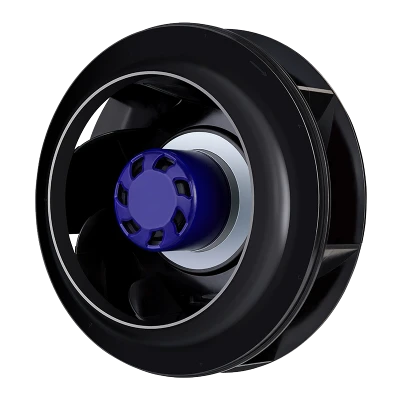
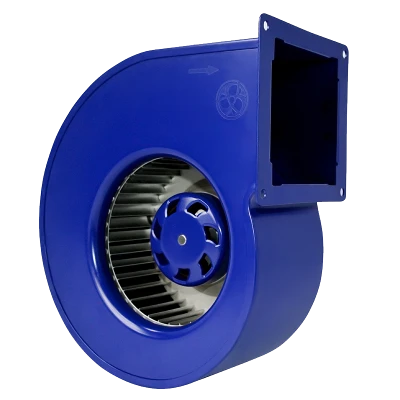
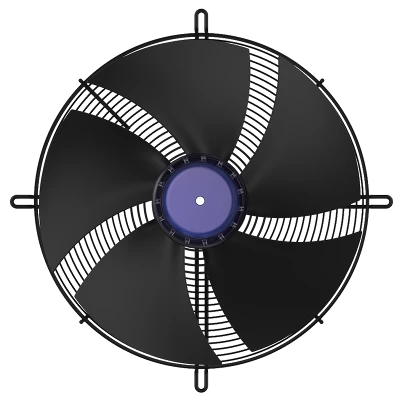
Q: How do I choose between backward centrifugal fans, forward centrifugal fans, EC plug fans, and axial fans?
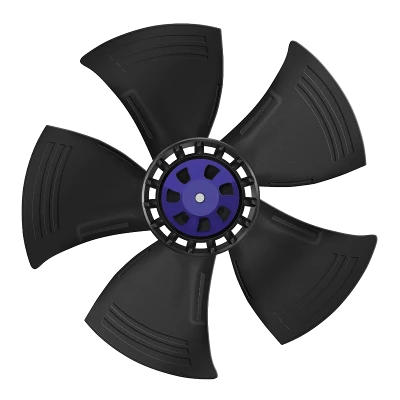
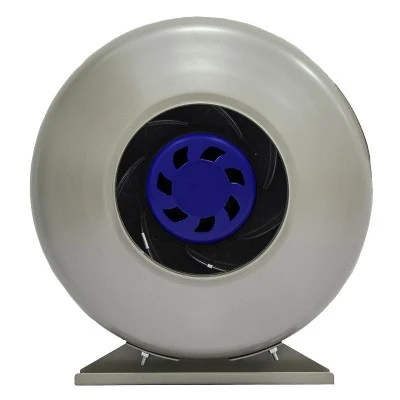
A: Start with required airflow, static pressure, installation depth, noise limit, and control method. Backward centrifugal fans usually fit medium-to-high pressure AHU and cabinet applications. Forward centrifugal fans fit compact, lower-pressure comfort airflow. EC plug fans are strong for AHU retrofit and fan-wall layouts. Axial fans are preferred where high airflow and lower static pressure dominate.
- fan selection
- static pressure
- airflow
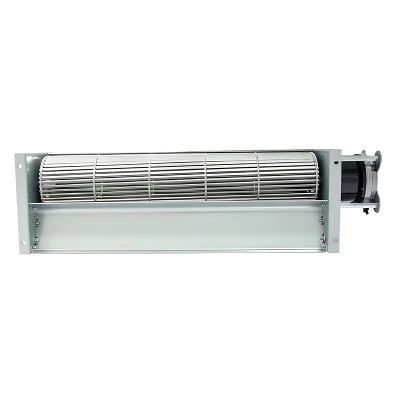
When should a cross-flow fan be selected instead of a centrifugal or axial fan?
Use cross-flow fans when the design needs a long, even air curtain across a narrow outlet, such as appliance cooling, display cases, air curtains, convectors, or compact HVAC terminals. They are not the first choice for high static pressure duct systems.
- cross flow fan
- air curtain
What information should be prepared before asking for a fan recommendation?
Provide target airflow, external static pressure, voltage, frequency, available space, mounting orientation, ambient temperature, duty cycle, noise target, control signal, certification needs, and whether the fan works inside an AHU, CRAC unit, FFU, refrigeration case, or OEM machine.
- quotation
- datasheet
Can one fan model be used across HVAC, refrigeration, and data-center products?
The same platform may be adapted, but the final model should be checked against operating temperature, moisture, corrosion risk, speed-control logic, acoustic target, and pressure curve. Refrigeration and data-center duty often need tighter validation than ordinary ventilation duty.
- OEM
- application fit
EC Motor Controls
What is the difference between 0-10V, PWM, and RS485 fan speed control?
0-10V is simple and widely used for analog speed demand. PWM is useful when the controller outputs a duty-cycle signal. RS485 is better when the system needs digital addressing, status feedback, group control, alarms, or BMS integration. The best choice depends on the controller, cable length, required feedback, and commissioning workflow.
- 0-10V
- PWM
- RS485
Why are EC fans often specified for energy-saving retrofits?
EC fans combine a high-efficiency motor, integrated electronics, and variable-speed control. In real systems, savings usually come from matching fan speed to actual demand instead of running a fixed-speed fan and throttling airflow mechanically.
- EC motor
- Energy efficiency
Do EC fans need separate VFDs?
Most EC fan assemblies include integrated motor electronics, so a separate VFD is normally not required. Engineers should still check supply voltage, EMC requirements, control wiring, grounding, and whether the BMS needs digital feedback.
- VFD
- Wiring
What causes EC fans to trip or fail at startup?
Common causes include incorrect supply voltage, reversed or shorted control wiring, an insufficient start command, locked rotor, blocked impeller, high ambient temperature, water ingress, or protection logic triggered by overcurrent or undervoltage. Commissioning should verify power, signal, rotation clearance, and alarm output before full-speed operation.
- troubleshooting
- startup
AHU Retrofit & Intelligent Fan Grid
When is a belt-driven AHU a good candidate for an EC fan-grid retrofit?
Good candidates have high run hours, frequent belt or bearing maintenance, poor part-load efficiency, uneven airflow, limited redundancy, or a need for better control. Before replacement, measure actual airflow, pressure, motor power, available section depth, access doors, and coil/filter pressure drop.
- AHU retrofit
- fan wall
Why use several EC fans instead of one large replacement fan?
A multi-fan grid can improve part-load control, service access, redundancy, and airflow distribution across coils and filters. It also allows staged operation so the system can keep running at reduced capacity if one module is isolated for service.
- N+1
- redundancy
What should be checked before sizing an AHU fan wall?
Check the required operating point, inlet conditions, wall opening, fan spacing, vibration isolation, power feed, controller architecture, service clearance, airflow bypass risk, and whether the retrofit affects coil face velocity or filter loading.
- sizing
- commissioning
AI Data-Center Cooling
Q: Why does AI computing change the fan and cooling conversation?
A: AI server racks concentrate more heat in smaller spaces. Even when liquid cooling is introduced, air-side fans still support heat rejection, room air management, rear-door heat exchangers, CRAH/CRAC units, pumps-and-fans coordination, and edge equipment rooms.
- AI cooling
- data center
Q: Does liquid cooling remove the need for fans?
A: No. Liquid cooling reduces the burden on room air movement for high-density IT hardware, but fans still appear in dry coolers, CDUs, auxiliary air paths, power rooms, edge racks, ventilation, and hybrid air/liquid systems.
- liquid cooling
- hybrid cooling
Q: Which fan topics matter most in CRAC/CRAH and data-center upgrades?
A: Engineers usually focus on airflow stability, redundancy, part-load efficiency, acoustic control, fan energy, control integration, alarm feedback, maintenance access, and whether the fan curve still fits after filters, coils, containment, or duct changes.
- CRAC
- CRAH
- DCIM
Q: How should fan control connect with DCIM or BMS platforms?
A: For simple retrofits, analog demand may be enough. For larger rooms, RS485 or gateway-based digital control can help expose speed, alarm, operating hours, and fault status to the BMS or DCIM platform for maintenance planning and energy monitoring.
-
BMS
- DCIM
- RS485
Applications & Industries
Which fan types are commonly used in FFU and air-purification systems?
FFU and air-purification systems usually need stable airflow, low noise, good controllability, and performance against filter pressure drop. EC backward-curved centrifugal fans or compact fan modules are often evaluated because speed control helps compensate as filters load.
- FFU
- air purification
What matters for refrigeration and cold-chain fan selection?
Check low-temperature startup, condensation, defrost cycles, corrosion resistance, IP protection, blade material, bearing life, service access, and whether the EC control strategy supports night setback or demand-based speed control.
- refrigeration
- cold chain
How do compact cooling fans differ from HVAC ventilation fans?
Compact cooling fans are normally selected for electronics, cabinets, power modules, chargers, and small equipment packages. The decision is driven by available space, heat load, airflow path, back pressure, dust protection, noise, and duty cycle.
- compact cooling
- electronics
Performance, Maintenance & Compliance
Why is the fan curve more important than a single max-airflow number?
Max airflow is measured near free air and does not represent installed duty. A fan curve shows how airflow changes as pressure rises, so it helps confirm whether the fan will deliver the required operating point in the real system.
- fan curve
- operating point
What does FEI mean in fan discussions?
Fan Energy Index is used in industry discussions to compare fan energy performance. For project decisions, FEI should be considered together with the exact operating point, motor/control package, installation effects, and lifecycle cost.
- FEI
- AMCA
How often should EC fans be inspected?
The interval depends on dust, humidity, temperature, vibration, and run hours. Typical checks include impeller contamination, cable glands, mounting bolts, abnormal noise, bearing condition, alarm history, and whether the operating speed has drifted from design assumptions.
- maintenance
- reliability