1. Clarify four common regulatory misconceptions
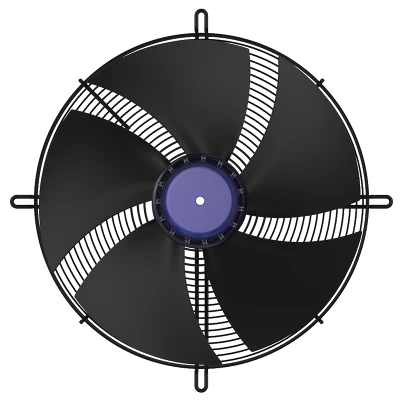
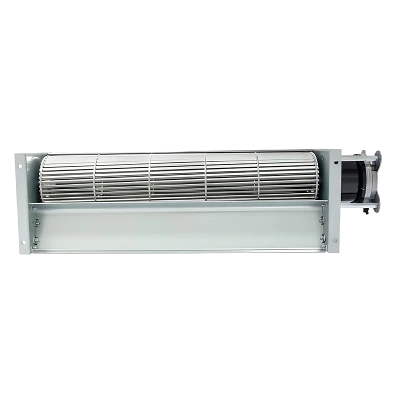
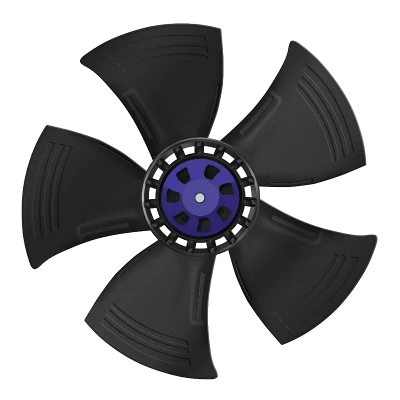
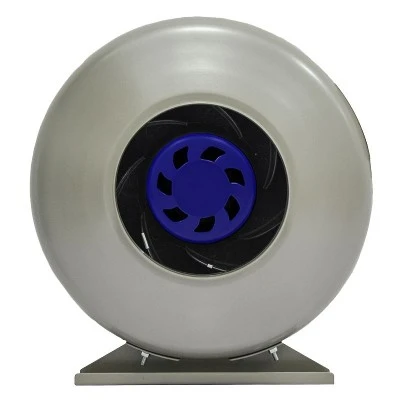
The industry often calls the new requirements "ErP 2026". The formal legal basis is Regulation (EU) 2024/1834 and its amending Regulation (EU) 2025/2481. The main requirements apply from 24 July 2026 and cover axial flow fans, centrifugal fans, cross flow fans and mixed-flow fans, including fans integrated into other energy-related products. Applicability must nevertheless be assessed against the intended use, product definitions and listed exemptions.
Four recurring misconceptions need to be corrected: the ten-year spare-parts period is not a fixed countdown from a model's launch; six weeks is not a universal delivery deadline for every order; repair information does not have to be available anonymously; and the 2027 requirements call for performance curves at different speeds, rather than simply one additional low-speed test point.
This engineering overview is based on the consolidated regulatory text dated 28 December 2025. Individual models still require assessment according to their use, the date they are placed on the market and the relevant supply-chain role.
2. Assess scope using the fan, its input power and its integration status
The regulation uses the fan's electrical input power at BEP to determine scope, rather than the motor's nameplate rating or the total power of the complete equipment. A complete fan may fall within scope even when supplied without a motor. Separately sold components, such as an impeller or motor, cannot automatically be treated as complete fan products.
Integration does not automatically exempt a fan. Integrated fans meeting specified conditions may continue to be subject to the relevant requirements of the previous Regulation (EU) No 327/2011 until 24 July 2027. Qualifying fans supplied as replacement spare parts have a transitional arrangement extending until 24 July 2037. Check when the original equipment was first placed on the market, the replacement purpose, the compliance of the original model and the relevant information requirements. Whether a suitable replacement complying with the new regulation is available is also part of the assessment. These transitional arrangements must not be treated as a general exemption.
For fans specifically designed for, and exclusively integrated into, certain products already subject to ecodesign requirements on spare-parts availability, the implementing regulation for that product must also be checked. Bespoke fans whose spare-parts availability is addressed by contract are subject to different resource-efficiency arrangements.

3. Support efficiency compliance with reproducible tests and technical documentation
Minimum efficiency requirements depend on the applicable fan type, efficiency category and relevant parameters, with separate provisions for certain special categories. OEM procurement documentation should identify the exact model, impeller diameter, inherent speed, BEP, measurement category and method, electrical input power, variable speed drive (VSD) status and equivalent models. An efficiency declaration alone is insufficient to establish compliance. In particular, confirm that the tested fan, motor and drive combination, together with the installation boundaries, corresponds to the configuration actually supplied.
The amending regulation also adjusts the definitions of BEP and inherent speed, as well as certain test-correction rules. Testing should use applicable harmonised standards or reliable, accurate and reproducible methods. If the supplied configuration changes-for example, through a different impeller, controller, speed limit or airflow geometry-reassess whether the original test report remains applicable.
A practical approach is to link regulatory identity, performance data and production changes in one evidence chain, connecting test reports, technical documentation, the bill of materials (BOM) and software versions. Applicable product information must also remain available on a free-access website for at least 20 years after the last unit of the model is placed on the market. This must not be confused with the ten-year spare-parts period. Companies therefore need to preserve not only test reports, but also long-term access to public pages, model indexes and data versions.
| Evidence layer | Minimum content | Common gap |
|---|---|---|
| Regulatory identity | Model; manufacturer, importer or authorised representative; scope and exemption assessment | Only "ErP" or "CE" is stated, without identifying the regulation or model boundaries |
| Performance evidence | BEP, airflow, pressure, input power, speed, efficiency category and test method | Only maximum airflow or a single efficiency point is provided |
| Technical documentation | Equivalent models, corrections, VSD status, installation and cleaning precautions | The report version does not match the production BOM |
| Change management | Rules that trigger reassessment after changes to the impeller, motor, drive, software, speed or structure | Compliance is not reassessed after a supplier change |

4. Put the ten-year spare-parts requirement on a timeline
For general fans to which the requirements apply, manufacturers, importers or authorised representatives must make the listed spare parts available to professional repairers. These include, where applicable, motors rated below 10 kW, motor brushes, impellers, stator elements, mechanical transmission components, variable speed drives, sensors, wear parts, connecting and fixing components, fan bearings and, under specified conditions, motor bearings. Different access conditions apply to safety-critical fans, for which the relevant repairers must be authorised by the manufacturer.
The spare-parts availability period starts on the later of 24 July 2028 or two years after the first unit of the model is placed on the market. It must end no earlier than ten years after the last unit is placed on the market. The spare-parts list and ordering procedure must be published on the website during the relevant period. Continued sales of a model therefore extend the subsequent supply obligation.
Where software or firmware updates are made available, they must also remain available free of charge as required, for at least ten years after the last unit of the model is placed on the market. Plan substitute-part validation, discontinued materials and firmware hosting in advance.
5. Six-week delivery is the third-tier fallback deadline
Delivery within six weeks of receiving a spare-parts order is a fallback rule, rather than a universal promise. First, the applicable contract with the end user takes precedence. If there is no contract, the period stated in the product information and on the publicly accessible website applies. Only when neither specifies a period does the requirement to deliver within six weeks apply.
Companies should align the delivery periods in contracts, data sheets, websites and service systems, and maintain clear records of order receipt, substitute-part approval, stock and logistics. Stock shortages or transport restrictions should not simply be treated as automatic exemptions from the delivery deadline.
In principle, spare parts must be replaceable without permanently damaging the product. The supply chain should plan availability for motors, impellers, drives and bearings, and validate the technical compatibility of substitute components. Product development should also account for disassembly, fastening methods and required repair tools, so that repair difficulties are addressed before a product is discontinued.
6. Manage repair information through a controlled access process
Professional repairers may be required to demonstrate technical competence, compliance with applicable repair regulations and liability insurance. The manufacturer, importer or authorised representative must accept or refuse an application within five working days of receipt. Once access has been approved, the requested information must be provided within one working day. Access fees must be reasonable and proportionate, and must not discourage access.
The information may include product identification, disassembly or exploded views, repair manuals, necessary tools, component and diagnostic information, wiring diagrams, fault codes, software or firmware installation and reset procedures and, where applicable, fault records and instructions for accessing them. Companies should establish procedures for model identification, repairer verification, document version control and authorisation records.
Information for safety-critical fans may be restricted to professional repairers authorised by the manufacturer. High-voltage, electrical safety and software integrity requirements must still be observed.
7. Schedule testing now for the 2027 part-load requirements
From 24 July 2027, fans subject to the general part-load information rules must have at least three performance curves at different speeds: the inherent speed; a speed between 40% and 50% of the inherent speed; and a speed around the midpoint between those two speeds, with a tolerance of ±10 percentage points. Bespoke fans, jet fans and fans with multi-speed motors are excluded from this general rule, but their specific data requirements must be checked separately.
Each curve should contain enough test points to cover the normal operating range and provide airflow, pressure, electrical input power, speed and efficiency. Digital data may be provided through an online catalogue or selection software, while also meeting the disclosure requirements for technical documentation, conformity-assessment documentation and a free-access website. Any links or QR codes must meet the relevant requirements.
This involves establishing traceable performance curves at multiple speeds, rather than adding two isolated test points. Testing should consistently address measurement uncertainty at low speeds, VSD efficiency, speed stability, air-condition corrections and curve version control. Public catalogues, selection software and original laboratory records must remain aligned. The control and test configurations used for the different-speed curves should also be identifiable in the technical documentation.
| Data item | Minimum preparation | Engineering purpose |
|---|---|---|
| Speed levels | Inherent speed; a low speed at 40–50%; an intermediate speed within ±10 percentage points of the midpoint | Cover common part-load operation in variable-speed systems |
| Each curve | Enough points to cover the normal operating range | Avoid substituting isolated points for performance characteristics |
| Each test point | Airflow, pressure, electrical input power, speed and efficiency | Support selection, energy-use assessment and market-surveillance verification |
| Publication format | Selection software or an online catalogue may be used | Make data accessible to customers while maintaining version control |
| Technical documentation | Characteristics of the speed-control device and the speed of each curve | Link published data to the test configuration |
8. Use a 90-day internal plan to complete the evidence and prepare for 2027 testing
An internal 90-day plan can help identify and close gaps; it is not a regulatory grace period. First, review the model range by BEP input power, fan type, integration status, bespoke status and spare-part status. Next, check efficiency, resource efficiency, technical information, website disclosures and the 2027 curves. Finally, complete missing tests and documents, assign owners and establish a version index.
Engineering should manage design changes and disassembly. The laboratory should own BEP testing and multi-speed curves. The supply chain should track spare parts and the date the last unit is placed on the market. After-sales service should manage repairer admission and information delivery, while the regulatory team should own applicability and conformity assessment. All departments should share one evidence record for each model and regularly check consistency between technical reports, website product pages, spare-parts lists and after-sales processes. This is how a 90-day internal plan can produce compliance information that is reusable and verifiable.
-
Check scope, integration status and exemptions using BEP input power.
-
Connect the BEP report, BOM, technical documentation and software versions.
-
Establish records for spare-parts availability periods and delivery processes.
-
Prepare the 2027 performance curves and the access process for professional repair information.
Conclusion: build a lifecycle compliance system around each fan model
Fan compliance now extends beyond evidence of BEP efficiency. It also involves model scope, traceable testing, production consistency, spare-parts and software availability, repairability and access to repair information. From 2027, fans subject to the general requirements must also provide performance curves at multiple speeds. Connecting the laboratory, BOM, website, selection software and after-sales data around each model helps prevent "ten years" and "six weeks" from becoming misleading, unconditional promises.
For an AHU fan wall retrofit or redundant data center cooling project, assess the selected EC centrifugal fan against its actual duty and supplied configuration. The same model-specific approach applies when selecting a heat pump axial fan or a data center cooling fan. An application label alone does not establish whether a fan falls within the regulation's scope.