Understanding Cross Flow Fans and Axial Fans: Key Differences and Applications
Fans are integral to many systems across industries, from HVAC to electronics cooling. Among the numerous types of fans, cross flow fans and axial fans are widely used but serve distinct functions. Understanding their differences in design, functionality, and application helps users make informed choices based on specific requirements.
What is a Cross Flow Fan?
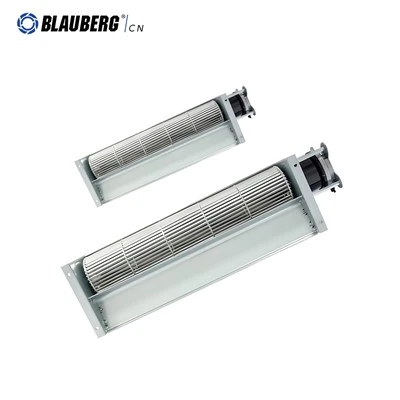
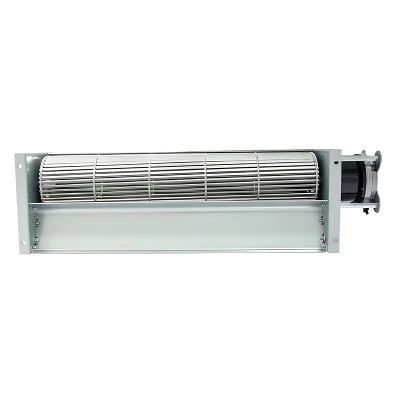
A cross flow fan, also known as a tangential or transverse blower, moves air perpendicularly across its axis. These fans are designed to draw air through the fan twice, which produces a consistent laminar airflow. This type of fan has a unique cylindrical design, with the air entering axially and exiting radially.
Cross flow fans are primarily used in applications where space is limited and quiet operation is required. Some common examples include electronics cooling, air curtains, ovens, and appliances.

Key Features of Cross Flow Fans:
Compact Design: Cross flow fans are ideal for use in confined spaces where other types of fans may not fit.
Laminar Airflow: They provide a smooth, even flow of air, making them suitable for electronics and appliances requiring precise cooling.
Low Noise: These fans operate quietly due to their efficient airflow design.
High Pressure Coefficient: They can achieve higher pressure levels than axial fans, making them ideal for applications requiring controlled airflow at higher pressures.
What is an Axial Fan?
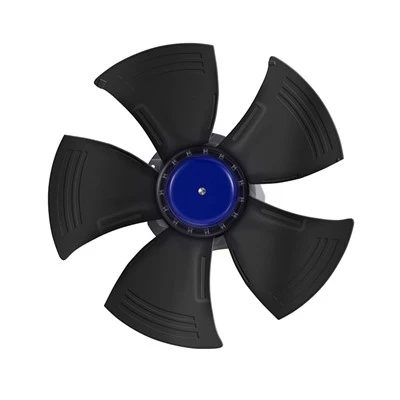
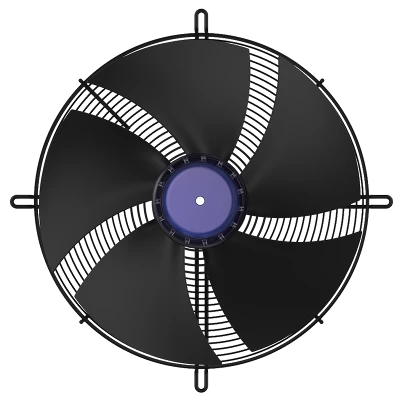
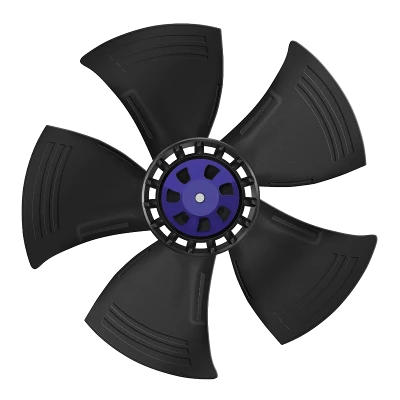
An axial fan is a type of fan where the airflow moves parallel to the fan's axis. These fans are common in industrial and household applications and are characterized by their ability to move large volumes of air with relatively low energy consumption. Axial fans are straightforward in their design, with blades rotating around a central hub that directs air in a straight line.
Axial fans are frequently used in HVAC systems, exhaust applications, and in cooling systems for electronics, where the primary concern is high airflow rates rather than high pressure.

Key Features of Axial Fans:
High Airflow: Axial fans excel in applications where large volumes of air must be moved, such as cooling systems and ventilation.
Energy Efficiency: Their simple design allows them to move air with minimal power consumption.
Flexibility in Application: Axial fans can be used in a variety of systems, from small appliances to large industrial machines.
Relatively Noisy: Compared to cross flow fans, axial fans tend to be noisier, especially when used in high airflow applications.
Comparing Cross Flow Fans and Axial Fans
When deciding between cross flow fans and axial fans, it's essential to consider the specific needs of the system in which the fan will be installed.
Airflow Direction and Type
Cross Flow Fans: The air moves perpendicularly across the axis, creating a smooth, laminar flow ideal for applications that require uniform airflow.
Axial Fans: The air flows parallel to the axis, which is perfect for applications that require high airflow rates over a large area.
Pressure and Efficiency
Cross Flow Fans: These fans are suitable for applications with higher pressure requirements, but they tend to be less efficient in energy use compared to axial fans.
Axial Fans: Axial fans are more energy-efficient and are best suited for applications where the emphasis is on airflow rather than pressure.
Noise Levels
Cross Flow Fans: Operate at lower noise levels, making them ideal for noise-sensitive environments such as offices, home appliances, and electronics cooling.
Axial Fans: Produce more noise, especially in industrial applications where large volumes of air are moved at higher speeds.
Space Constraints
Cross Flow Fans: Their compact and cylindrical design makes them a better choice for tight spaces where other types of fans may not fit.
Axial Fans: Require more space to operate effectively, particularly in high-performance applications that demand larger blades and motors.
Applications of Cross Flow Fans
Electronics Cooling
Cross flow fans are frequently used in electronics cooling, where consistent and quiet airflow is essential. Their ability to provide laminar airflow makes them ideal for sensitive electronics that require even cooling to prevent overheating.
Air Curtains
In commercial environments, cross flow fans are used in air curtains to maintain temperature separation between indoor and outdoor spaces. The laminar airflow prevents the mixing of different air temperatures, improving energy efficiency in climate-controlled environments.
Home Appliances
Cross flow fans are also common in home appliances such as ovens, microwave ovens, and air conditioners. Their compact design and ability to produce low noise levels make them an ideal choice for use in household products.
Applications of Axial Fans
HVAC Systems
Axial fans are the backbone of many HVAC systems, providing high airflow to ventilate large spaces, whether in industrial, commercial, or residential settings. These fans can handle high volumes of air while consuming minimal energy, making them efficient for large-scale ventilation needs.
Exhaust Systems
Axial fans are also used in exhaust systems where air needs to be moved out of an environment quickly. For example, in industrial exhaust systems, axial fans are commonly installed to remove heat, fumes, or smoke.
Cooling Towers
In large industrial applications, axial fans are used in cooling towers to dissipate heat from machinery and processes. The fans efficiently move massive volumes of air to reduce temperatures, making them critical components in many manufacturing environments.

Advantages and Disadvantages of Cross Flow Fans
Advantages:
Uniform Airflow: Provides laminar airflow, making it suitable for precise cooling applications.
Quiet Operation: Low noise levels are ideal for residential and office use.
Compact Design: Fits into small spaces where other fan types may not be practical.
Disadvantages:
Lower Efficiency: Cross flow fans tend to be less energy-efficient compared to axial fans.
Limited Airflow: While they provide smooth airflow, cross flow fans are not ideal for high-volume airflow applications.
Advantages and Disadvantages of Axial Fans
Advantages:
High Airflow: Capable of moving large volumes of air efficiently.
Energy-Efficient: Their straightforward design allows for minimal energy consumption.
Versatility: Suitable for a wide range of applications, from small-scale household uses to large industrial systems.
Disadvantages:
Noise: Axial fans tend to be louder, especially in high-speed or high-airflow applications.
Space Requirements: Larger axial fans require more space for installation.
Selecting the Right Fan for Your Application
When choosing between cross flow fans and axial fans, it's essential to consider factors such as:
Space Constraints: Cross flow fans are better suited for compact spaces, while axial fans require more room.
Airflow Requirements: If high airflow rates are needed, axial fans are the better option. For uniform, precise airflow, cross flow fans excel.
Noise Considerations: Cross flow fans are quieter, making them ideal for environments where noise is a concern.
Energy Efficiency: Axial fans are more energy-efficient, which is critical for systems running continuously or over long periods.
Conclusion: Choosing the Optimal Fan for Your Needs
Both cross flow fans and axial fans offer distinct advantages depending on the application. Cross flow fans are best suited for applications where compact design, quiet operation, and consistent airflow are necessary, while axial fans excel in high-airflow, energy-efficient environments. Understanding the unique characteristics of each type of fan will help you make the most informed decision for your system's needs.