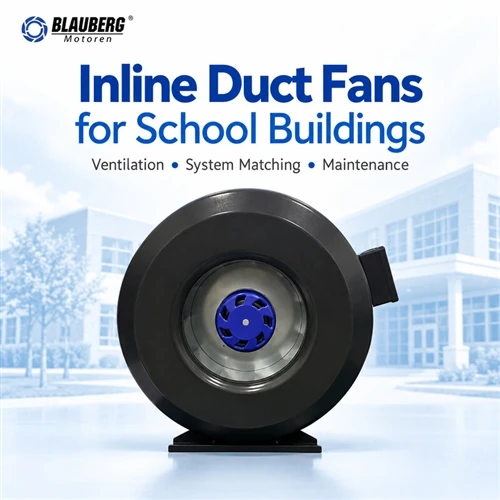
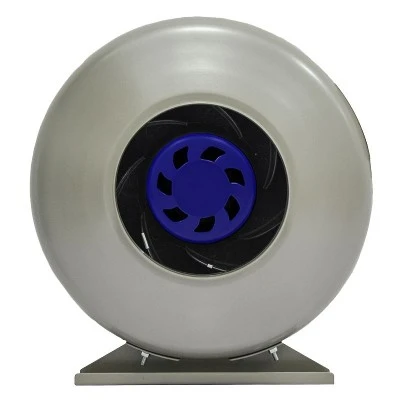
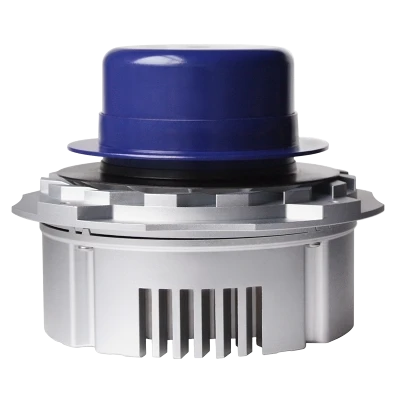

If you walk through a school building-from a cramped classroom to a gymnasium, a cafeteria, or a science lab-you'll notice a lot more than just desks and textbooks. You'll also notice the quiet thrum of systems that keep the air clean, fresh, and safe for hundreds of students and staff. For years, schools relied on basic exhaust fans or overhead ventilation setups that often struggled with noise, uneven airflow, or high energy costs. That's where centrifugal inline duct fans come in, and as a supplier who's worked with K-12 and higher education facilities for nearly a decade, I can tell you these fans aren't just a good fit for a school-they're often the best choice. Let's break down why, how, and which models work best for different spaces in a campus.
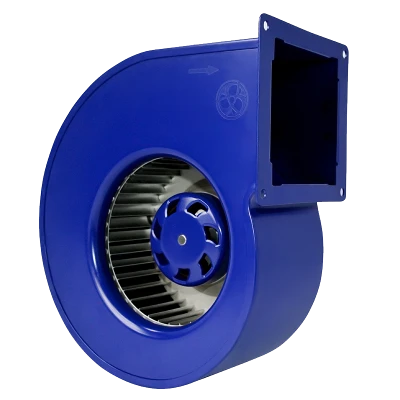
First, let's address a common misperception: centrifugal inline duct fans aren't just for grow rooms or industrial warehouses. Sure, we make fans for hydroponic setups too-our 6 Inch 150MM Hydroponic Silent China Centrifugal Blower Fan is a go-to for indoor farms, but its core design solves many of the same problems schools face. Unlike axial fans (which push air in a straight line, like a box fan), centrifugal fans use a spinning impeller that draws air in perpendicular to the blades and expels it at higher pressure. That pressure is key for ductwork, which is the backbone of school ventilation. Most classrooms rely on a network of ducts that run through ceilings, walls, and basements to move air without taking up floor space. Centrifugal fans handle the resistance of those long, narrow ducts far better than axial models, which often drop airflow rates mid-system, leaving one side of a classroom stuffy and the other too drafty.
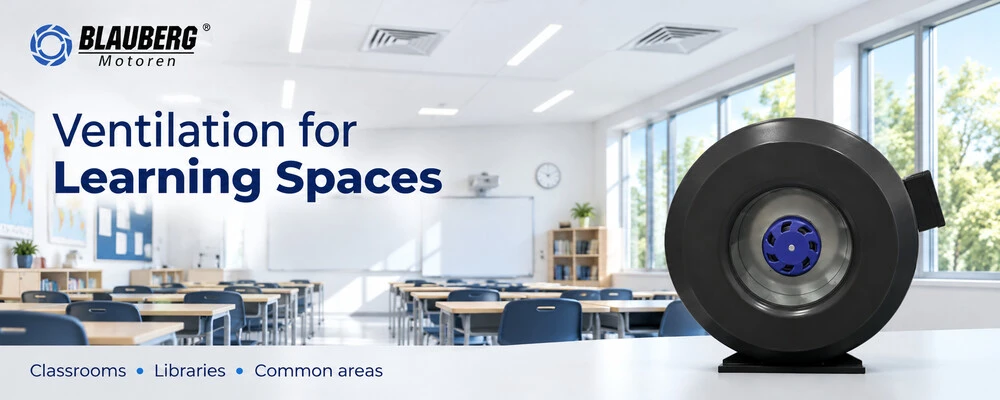
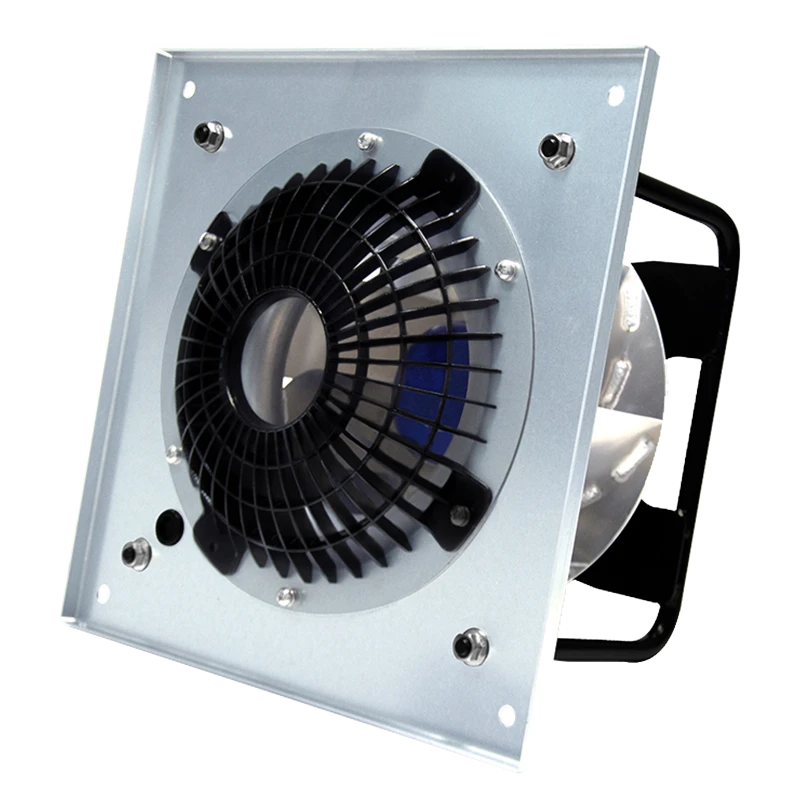
Schools have unique ventilation needs that make centrifugal inline fans stand out. Think about a middle school: 30 students crammed into a 800-square-foot classroom, a gym with 500 people during assembly, a cafeteria where hot food and grease fumes build up fast, and lab spaces with chemical vapors that need to be extracted immediately. All of these spaces require consistent, controlled airflow-and centrifugal fans deliver that. Let's start with noise, a huge concern in schools. A classroom with a loud fan is disruptive; it makes it hard for teachers to lecture and students to focus. Many older ventilation systems use noisy inline fans that rattle ceiling tiles or hum so loud it's audible from the hallway. Our inline centrifugal fans, especially the EC (electronically commutated) models, are designed with noise reduction in mind. For example, the 125mm EC Ventilation in Line Duct Fan Exhaust Fan for FFU (fan filter units, common in clean spaces like labs) operates at less than 35 decibels at low speed-about as quiet as a library conversation. That's a game-changer for classrooms, where a 40-decibel fan might add enough background noise to disrupt reading or group work.
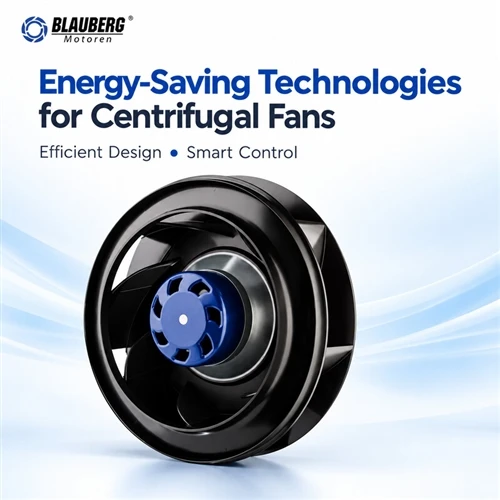
Energy efficiency is another big win for schools, which have tight budgets and often face rising utility costs. Traditional ventilation systems run at full speed 24/7, even when spaces are empty (like a classroom after school or a gym on weekends). Centrifugal inline EC fans, though, have built-in variable speed controls that adjust airflow based on demand. If a classroom only has 10 students after a study session, the fan can slow down instead of running at maximum power. Compare that to a standard axial fan, which wastes energy by blowing air faster than needed. We've worked with a high school in Ohio that swapped 12 old axial exhaust fans for our centrifugal models and cut their annual ventilation energy bill by 38% in the first year-money they reallocated to classroom supplies and tech upgrades.
Now, let's get specific about different school spaces and which centrifugal inline fan works best for each.
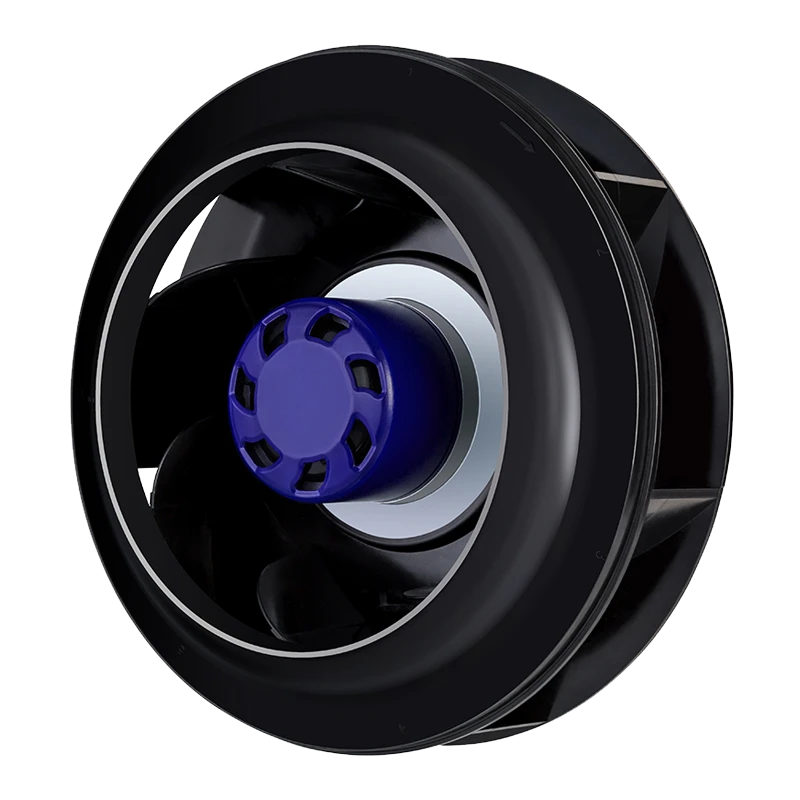
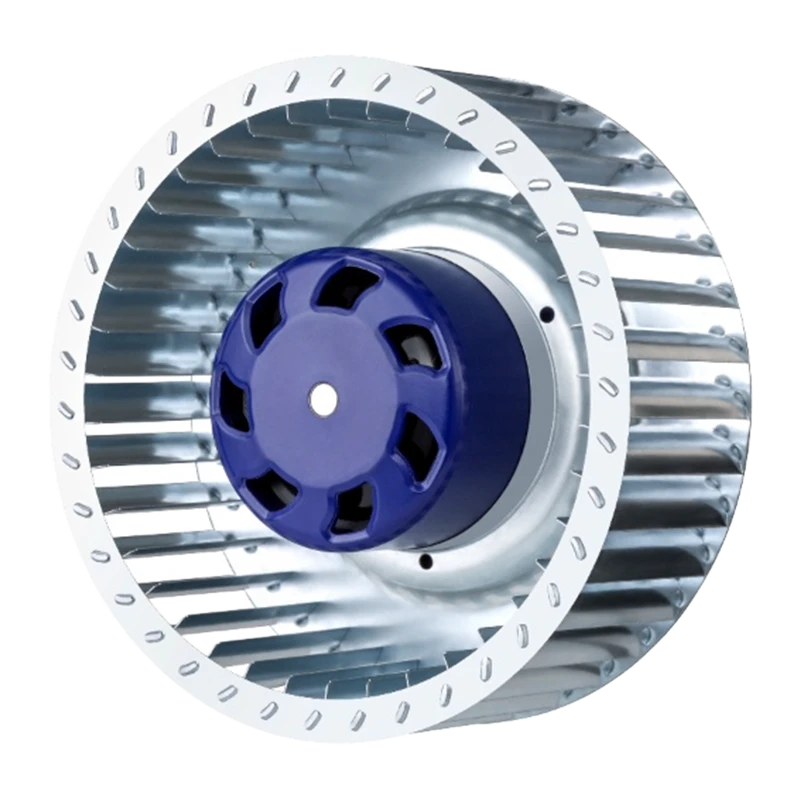
Classrooms and lecture halls: These need consistent, quiet airflow that doesn't disrupt learning. For smaller classrooms (under 1,000 square feet), the Air Inline Duct Fans Centrifugal Ducted Exhaust Fan is perfect. It's compact enough to fit in a standard ceiling plenum, and its dual-inlet design balances airflow across the entire duct network, so no corner of the room gets left with stale air. For larger lecture halls or spaces with complex duct runs, a bigger model is better-we often recommend the 250mm EC External Rotor Duct Fan Strong Wind Duct Fan for Cold Room here. Its high static pressure handles the longer ducts needed for large spaces, and its variable speed control lets facility managers adjust airflow during assemblies or guest lectures when extra ventilation might be needed.
Cafeterias and kitchens: These are the toughest spaces for ventilation, with grease, steam, and strong odors that need to be exhausted quickly, while keeping outside air from leaking in (which would make heating and cooling costs skyrocket). Centrifugal fans are ideal here because their strong airflow can handle the high volume of air needed to clear cooking fumes. The 250mm 115V EC Duct Fan Strong Wind Duct Fan for Computer Room Cooling (wait, why a computer room fan for a cafeteria? Don't let the name fool you-this model's 1,200 CFM (cubic feet per minute) airflow and high static pressure make it perfect for busy kitchen ducts. It can move enough air to clear a full-size cafeteria of grease vapors in 10 minutes, and its corrosion-resistant coating stands up to the occasional spill or steam exposure. We've also added noise-dampening insulation to these fans, so even in a busy cafeteria, the fan runs at a volume that doesn't interfere with lunchtime conversations.
Science labs and computer rooms: Labs have unique needs-some require fume hoods that extract hazardous chemicals, while computer rooms need constant cooling to prevent overheating. For lab fume hoods, our 125mm EC inline fan works seamlessly with fume hood controls: when a hood is opened, the fan ramps up speed to pull in fumes, and slows when the hood is closed, saving energy. For computer rooms, the 250mm 115V EC model is a fit because it's built to run 24/7 without overheating, and its consistent airflow keeps server racks at the ideal temperature-critical for preventing downtime, which would disrupt online classes or student research.
Which inline duct fan models should you review?

125mm EC Ventilation in Line Duct Fan Exhaust Fan for FFU
EC inline duct fan. View product details and specifications.

125mm EC Exhaust Duct Blower Centrifugal Fan for Condense Units
EC inline duct fan. View product details and specifications.

125mm EC Energy Saving Quiet Duct Fan Exhaust Fan Duct for Cooling Area
EC inline duct fan. View product details and specifications.

250mm EC External Rotor Duct Fan Strong Wind Duct Fan for Cold Room
EC inline duct fan. View product details and specifications.

315mm EC Ventilation Duct Blower Fan Manufacturers for Machine Cooling
EC inline duct fan. View product details and specifications.

315mm EC Fan Manufacturers Ducted Exhaust Fan Garage Exhaust Fan for Air Purifier
EC inline duct fan. View product details and specifications.

100mm EC Exhaust Strong Wind Duct Fan for Heat Pumps
EC inline duct fan. View product details and specifications.

100mm EC Strong Wind Duct Fan Energy Saving Quiet Duct Fan for Air Purifier
EC inline duct fan. View product details and specifications.
Explore the Blauberg inline duct fan range. Confirm the operating temperature range, moisture protection and airflow at the required pressure for your installation.
Now, let's address a common worry: installation and maintenance. School facilities teams don't have extra time for complicated installations, and they need fans that are easy to upkeep. The good news is, centrifugal inline duct fans are designed for quick, no-hassle installation. They mount directly into existing ductwork-you don't need to rebuild entire ventilation systems. Most of our models come with universal flanges that fit standard duct sizes, so a technician can swap an old fan for a new centrifugal one in a matter of hours, not days. Maintenance is simple too: these fans have sealed motors that don't require frequent lubrication, and their impellers are made of durable, dust-resistant materials-important in schools, where dust from hallways and playgrounds can build up. We recommend a quick cleaning every six months, which just means removing a small access panel and wiping down the impeller-no specialized tools needed.
I've seen firsthand how centrifugal inline fans transform school ventilation. A middle school in rural Pennsylvania had a problem: their old exhaust fans were so loud that teachers in adjacent classrooms couldn't hear each other, and mold was growing in the back of the gym because of poor airflow. They swapped their 10 old axial fans for our centrifugal models-five of the Air Inline Duct Fans for classrooms, two 250mm EC models for the gym, and three 125mm fans for the cafeteria. Within a month, teachers reported that background noise was down, and the gym's mold problem was gone because the new fans moved enough air to keep humidity low. The district saved $12,000 on their first energy bill after installation, too.
Another example: a small college in Arizona was struggling with classroom ventilation during hot summer months. Their old system used a lot of energy to push air through long ducts, and students complained about stuffy rooms. They installed our 6 Inch 150MM Hydroponic Silent China Centrifugal Blower Fan in their small lecture halls. Wait-why a hydroponic fan? It's not just for grow rooms; that model's high static pressure and low noise make it perfect for spaces with shorter but narrow ducts, and its energy efficiency is unmatched. The college saw a 42% drop in ventilation energy costs, and students reported being more comfortable during afternoon classes when the heat and stuffiness were worst.
Of course, no two schools are the same. A small elementary school with 200 students has very different needs than a 1,000-student high school, and a school with a woodshop needs a different fan than a school with only classrooms. That's why as a supplier, we don't just sell fans-we work with facilities managers to assess their space, calculate the right CFM and static pressure needed, and pick the best model for their budget. We can also help with customizations, like adding humidity sensors to adjust airflow in gyms or corrosion-resistant coatings for spaces with heavy cooking.
If you're a school administrator, facilities manager, or architect planning a new building or renovation, it's worth taking a closer look at centrifugal inline duct fans. They solve many of the longstanding problems with school ventilation: noise, uneven airflow, high energy costs, and poor air quality that can lead to student absences. Multiple studies have linked poor indoor air quality in schools to increased asthma attacks, fatigue, and lower test scores-good ventilation isn't just a comfort; it's a learning tool. A 2022 study by the American Society of Heating, Refrigerating and Air-Conditioning Engineers (ASHRAE) found that schools with properly functioning centrifugal ventilation systems had 15% fewer student absences due to respiratory issues and 8% higher average test scores than schools with outdated systems.
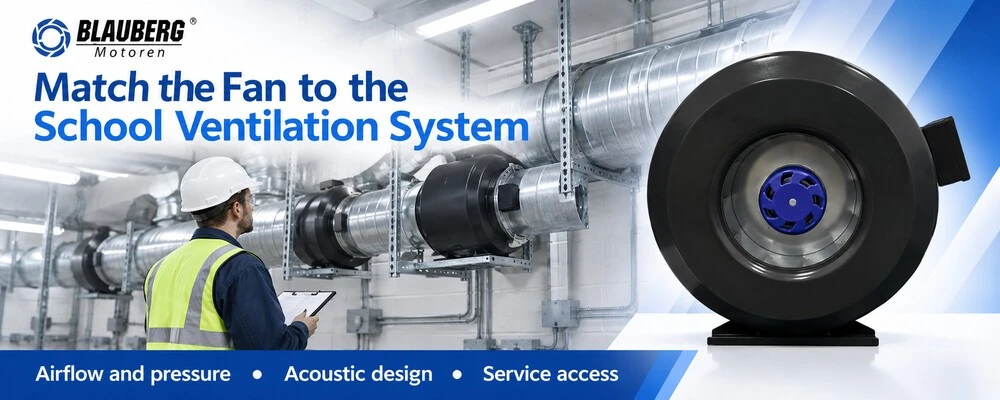
The bottom line is: centrifugal inline duct fans aren't just a viable option for schools-they're a smart investment. They're quiet, energy-efficient, versatile enough for every space in a campus, and easy to install and maintain. As someone who's spent years working with educational facilities, I've seen how the right ventilation can make a big difference in the learning environment. If you're interested in exploring which model is right for your school, don't hesitate to reach out to our team for a custom consultation. We're here to help you find the right solution that fits your budget and your campus's unique needs.
References
- American Society of Heating, Refrigerating and Air-Conditioning Engineers (ASHRAE). (2022). Indoor Air Quality in K-12 Schools: Impact on Student Outcomes. Atlanta, GA: ASHRAE.
- U.S. Department of Education. (2021). Facilities Management Guidelines for School Ventilation Systems. Washington, DC: Office of Elementary and Secondary Education.
- National Education Association. (2020). Cost-Saving Ventilation Solutions for School Districts. Washington, DC: NEA Health and Safety Division.
Category of Blauberg Products
Built on German engineering principles, focusing on precision, reliability, and long-term performance. Through efficient and scalable manufacturing, we deliver high-quality ventilation solutions with optimized cost structure, ensuring strong value for global OEM and project-based customers.