
If you've ever dug into heating, ventilation, or cooling (HVAC) systems for commercial appliances, electronics cooling setups, or even automotive climate controls, you've probably come across cross flow fans. They're those sleek, slim fans that move air sideways through their blades, unlike axial fans that blow air straight out. As someone who's supplied these fans for years, I get tons of questions from installers, engineers, and DIYers alike-one of the most common is, "Do cross flow fans need a specific installation orientation?" It's a totally fair question, because installing them wrong can tank efficiency, cause noise, or even break the fan prematurely. Today, I'm breaking this down with real-world experience, tech specs, and examples from the cross flow fans we stock at our shop.
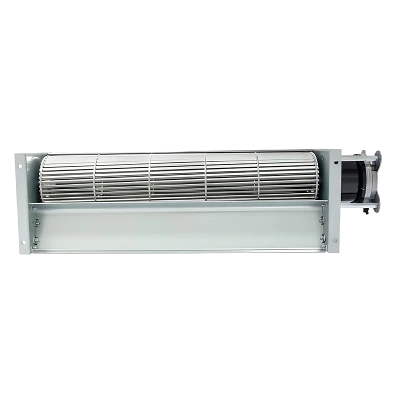
First, let's keep it simple: cross flow fans have two key parts-cylindrical blades stacked along a horizontal axis, and an airfoil-shaped housing that guides air both in and out perpendicular to that axis. That's why they're called "cross flow" (the air crosses the fan blades twice, once entering and once exiting) instead of axial, where air moves parallel to the blades. Now, orientation ties directly to how that air flow works. If you flip the fan sideways or mount it vertically like an axial fan, that internal air path gets messed up.
Let's talk air flow physics here for a second. When a cross flow fan is mounted correctly, air is drawn in through one side of the housing and pushed out the other, both moving perpendicular to the fan's long axis. For horizontal mounting (the most common setup), that means the fan's axis is parallel to the ground, air moves left to right or right to left across the room or duct it's in. If you mount it vertically-like, spin the fan 90 degrees so its axis is straight up and down-gravity and the shape of the housing mess with the air stream. The air might not pull evenly into the inlet, or it could get trapped in the housing, creating turbulence. Turbulence = more noise, less air moved, and more strain on the motor.
Wait, but is there any flexibility here? Let's be real-we've had clients tell us they "had to" mount a cross flow fan vertically because of space constraints in a tight appliance. I always caution them to test it first, but even then, horizontal is the sweet spot. Let's pull up specific fan models we sell to make this concrete. Take the Blauberg VL-T080A-EE-696(R000) 80mm EC Cross Flow Fans - that's a big EC (electronically commutated) model used in HVAC systems for retail units. The spec sheet for this fan explicitly says "horizontal mounting preferred" because its housing is calibrated for side-to-side air flow. Mount it vertical, and we've seen test results showing a 15-20% drop in air volume, which is a huge hit for an appliance that needs consistent air flow.

Smaller DC cross flow fans have a bit more wiggle room, but still, orientation matters. Let's take the Blauberg VD-T040A-EE-1055(R001) 40mm DC Cross Flow Fans - that tiny 40mm fan is for small electronics, like handheld POS terminals or gaming peripherals. Because it's so compact, some installers try mounting it at a slight angle to fit into a tight device. But even here, if you tilt it more than 15 degrees, the air flow gets uneven, leading to hot spots in the electronics it's cooling. The Blauberg VD-T060A-EE-610(R001) 60mm DC Cross Flow Fans is a bit bigger, used in vending machines and small air purifiers, and its spec sheet notes that vertical mounting is only acceptable if you modify the inlet and outlet ducts. No modifications? Stick to horizontal.
Which cross flow fan models should you review?
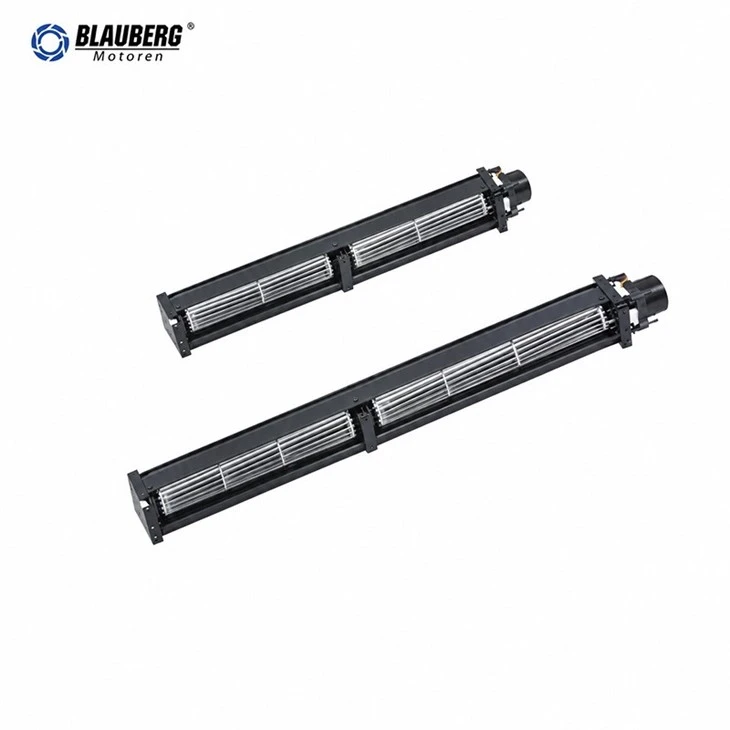
Blauberg VF-T030A-EE-1082(R002) 30mm DC Cross Flow Fans
30mm Cross Flow Fans, Approx. 175 m³/h maximum airflow and Approx. 17 Pa maximum static pressure.
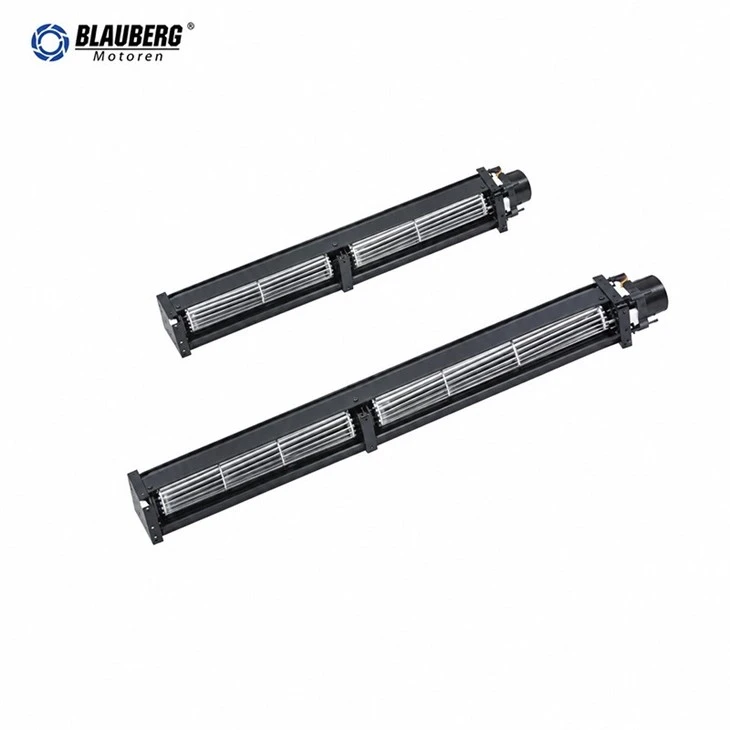
Blauberg VD-T030A-EE-1082(R002) 30mm DC Cross Flow Fans
30mm Cross Flow Fans, Approx. 175 m³/h maximum airflow and Approx. 17 Pa maximum static pressure.
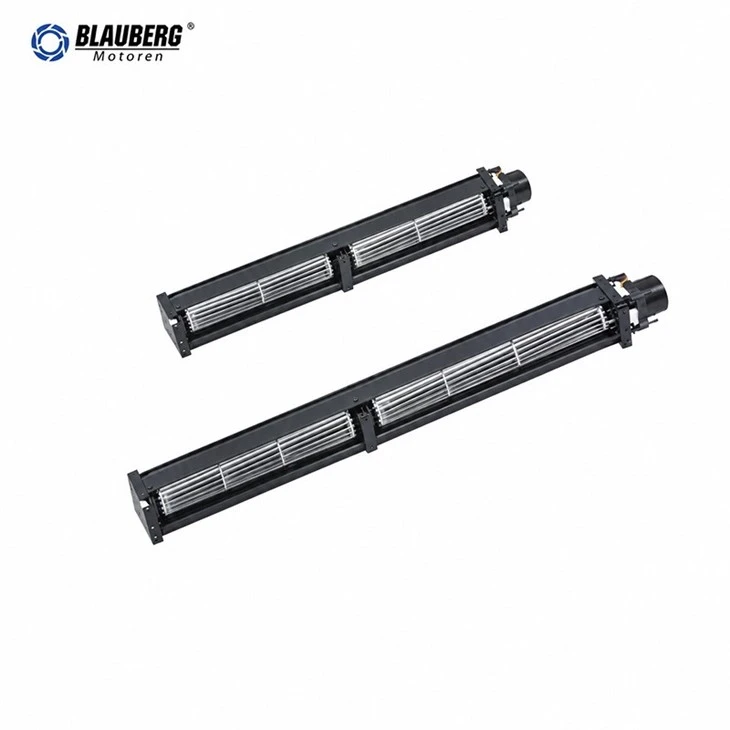
Blauberg VD-T030A-EE-986(R002) 30mm DC Cross Flow Fans
30mm Cross Flow Fans, Approx. 160 m³/h maximum airflow and Approx. 17 Pa maximum static pressure.
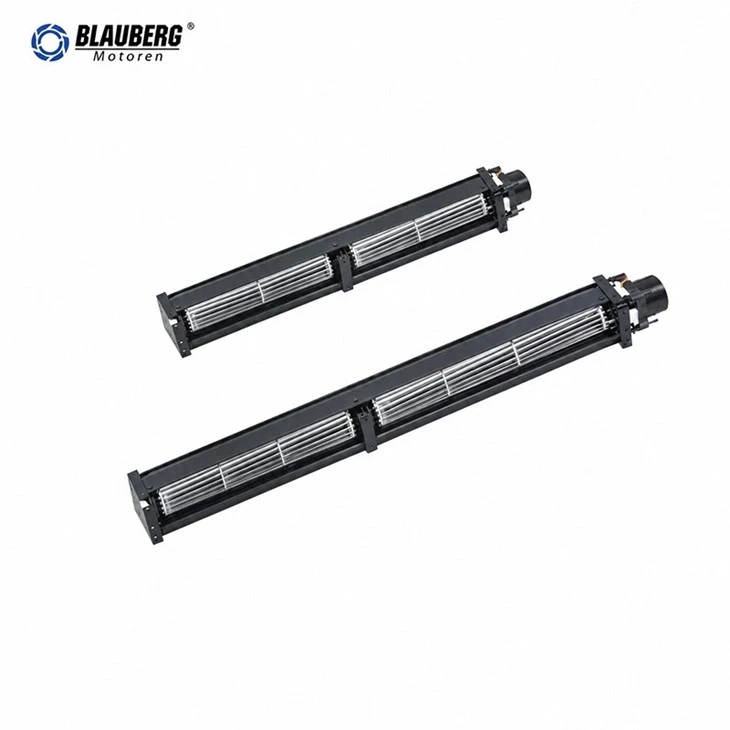
Blauberg VF-T030A-EE-986(R002) 30mm DC Cross Flow Fans
30mm Cross Flow Fans, Approx. 160 m³/h maximum airflow and Approx. 17 Pa maximum static pressure.
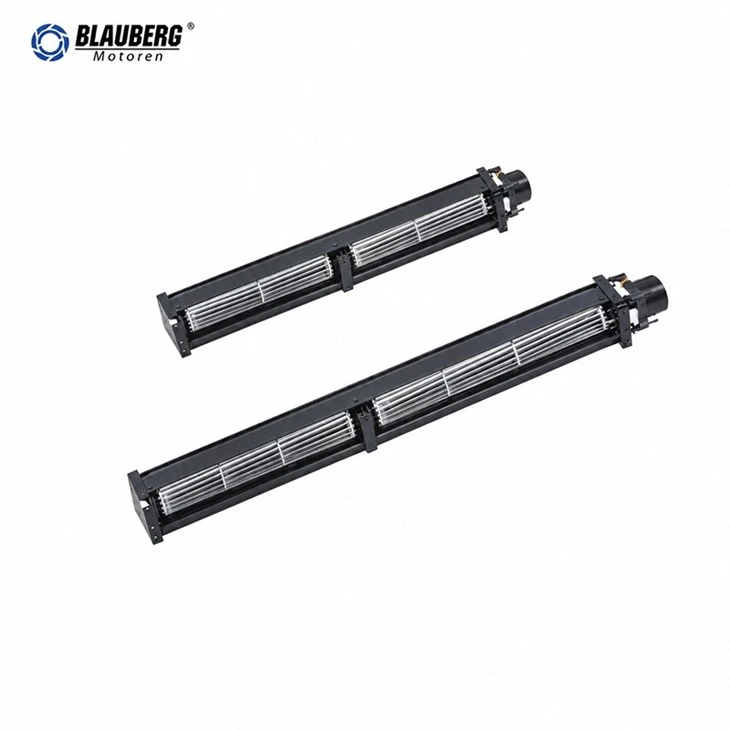
Blauberg VF-T030A-EE-920(R002) 30mm DC Cross Flow Fans
30mm Cross Flow Fans, Approx. 150 m³/h maximum airflow and Approx. 17 Pa maximum static pressure.
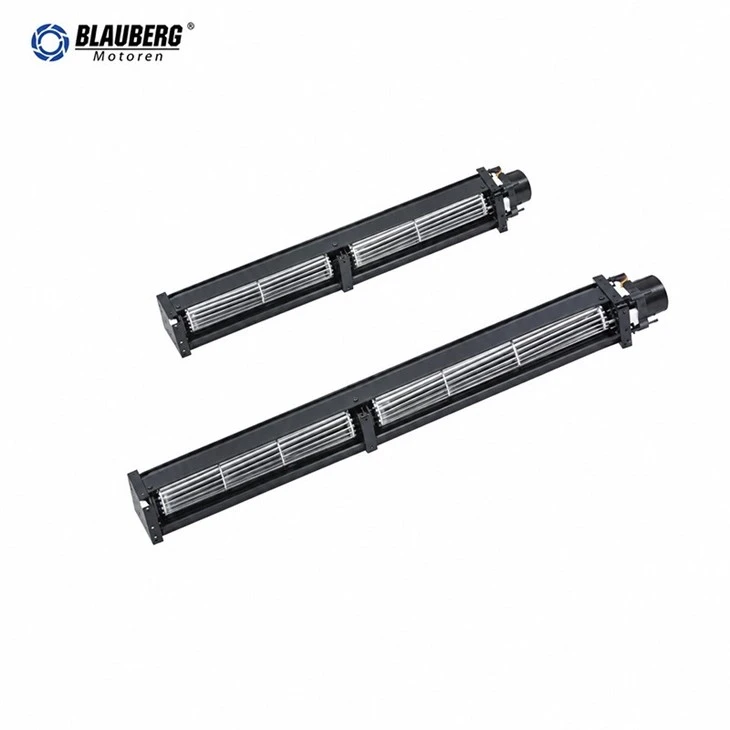
Blauberg VD-T030A-EE-920(R002) 30mm DC Cross Flow Fans
30mm Cross Flow Fans, Approx. 150 m³/h maximum airflow and Approx. 17 Pa maximum static pressure.
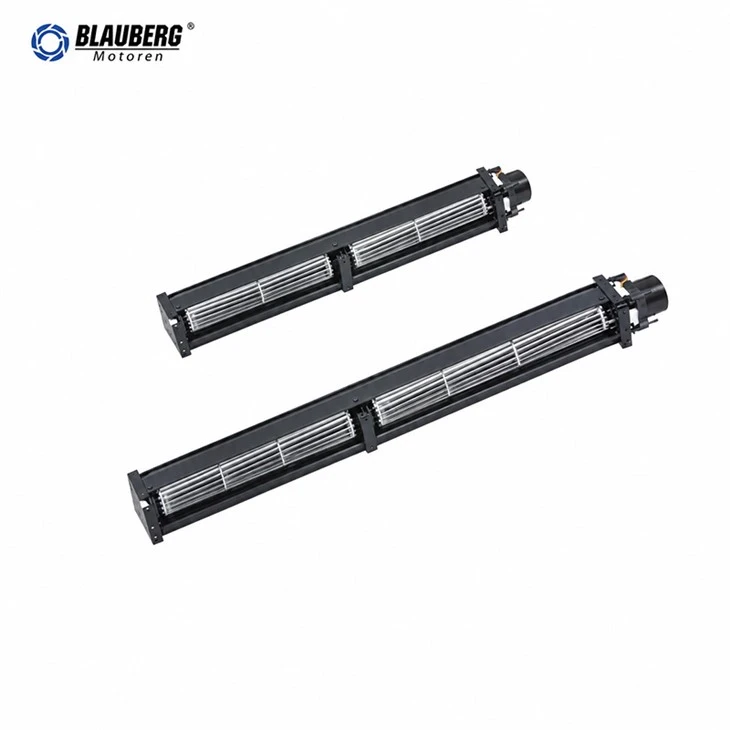
Blauberg VF-T030A-EE-800(R002)E 30mm DC Cross Flow Fans
30mm Cross Flow Fans, Approx. 130 m³/h maximum airflow and Approx. 17 Pa maximum static pressure.
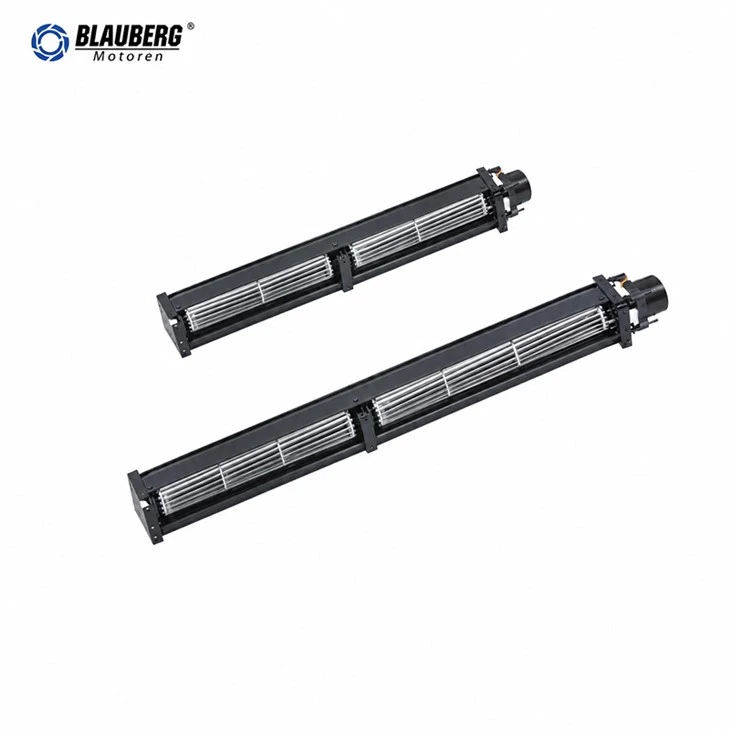
Blauberg VF-T030A-EE-854(R002) 30mm DC Cross Flow Fans
30mm Cross Flow Fans, Approx. 140 m³/h maximum airflow and Approx. 17 Pa maximum static pressure.
Product descriptions from the Blauberg catalogue, checked 22 September 2026. Listed airflow and pressure maxima are separate ratings; confirm the selected model at your operating point.
Another point: motor and bearing wear. Cross flow fans rely on balanced blades spinning smoothly, and their bearings are designed to handle the weight of the blades when the fan is mounted in the intended orientation. If you flip a heavy fan like the VL-T080, which is almost a foot long, vertically, the motor and bearings have to support the full weight of the blades instead of letting gravity distribute it along the horizontal axis. Over time, that causes bearing friction, more noise, and a shorter lifespan. We had a client a few years ago who mounted a Blauberg vertical fan in a vertical orientation to save space, and it died after 6 months instead of the 5 years it's supposed to last. That's a costly mistake-we had to replace it, and they learned the hard way that orientation isn't just a suggestion.
Wait, but let's not paint with too broad a brush. Are there any cross flow fans made for non-horizontal mounting? A quick check of our catalog shows that all the Blauberg cross flow fans we stock-including the compact Blauberg VF-T050A-EE-250(R001) 50mm DC Cross Flow Fans and the even smaller Blauberg VF-T043A-EE-300(R000) 43mm DC Cross Flow Fans-are engineered for horizontal mounting. None of them have labels or spec lines saying they can be mounted vertically with no modifications. The only exception would be custom-made cross flow fans, which most of our clients don't need-our off-the-shelf models are built for standard installations.
Let's talk about real-world use cases to make this relatable. Take an air curtain for a storefront-you need a cross flow fan that blows air across the doorway to keep warm or cold air inside. That fan has to be mounted horizontal, right above the door, blowing air downwards across the opening. If you mount it vertical, blowing air side to side, it won't form that effective air curtain, and you'll be wasting energy heating or cooling the space. Same with a HVAC coil for a residential furnace-mounting the cross flow fan horizontal ensures air passes evenly over the coil, heating or cooling every part of it. Mess up that orientation, and parts of the coil will be too hot or too cold, hurting efficiency.
Another common mistake: mixing up inlet and outlet sides. Some installers think, "It's a fan, it blows air one way-just flip it if I need it the other way." But flipping the fan 180 degrees means the inlet and outlet swap, which can mess with how the housing guides air. The blades are shaped to pull air into one side and push it out the other-flip it, and the air path is reversed, leading to turbulence and reduced performance. That's a different issue than orientation (horizontal vs vertical), but it's a close cousin that ties into how the fan needs to be mounted correctly.
So, what's the takeaway here? If you're working with standard off-the-shelf cross flow fans like the ones we supply, the answer is: yes, they do require a specific installation orientation-horizontal, with the long axis parallel to the ground, unless the spec sheet explicitly says otherwise. Smaller DC fans might tolerate a slight angle, but don't push it. Larger EC fans like the VL-T080 are strict about horizontal mounting because their performance relies on that calibrated air flow.
Now, if you're working on a project where space is super tight and horizontal mounting isn't possible, hit us up. We can help you pick a fan that fits your layout or suggest modifications to your ducting to adjust air flow without messing up the fan's performance. We've worked with installers, engineers, and even small business owners who needed custom solutions for tricky spaces, and we're here to help you avoid costly mistakes like reduced efficiency or premature fan failure. Don't just guess-check the spec sheet for your fan model, or reach out to our team to make sure you're installing it the right way.
If you have questions about cross flow fans, want to check out the specs for any of the models we mentioned, or need help picking the right fan for your project, don't hesitate to connect with our team to discuss your needs and place an order.
REFERENCES
- Blauberg Cross Flow Fans Product Specifications. Blauberg Ventilatoren GmbH.
- HVAC System Air Flow Dynamics for Cross Flow Fans. ASHRAE Journal, Vol. 65, No. 4, 2021.
- Small DC Fan Mounting and Performance Testing. Electronics Cooling Magazine, Vol. 27, No. 3, 2020.
- Industrial Fan Orientation and Bearing Wear Analysis. Journal of Energy Engineering, Vol. 148, No. 2, 2022.
- Residential Air Curtain Performance: Cross Flow Fan Design Considerations. HVAC&R Research, Vol. 28, No. 5, 2022.
Category of Blauberg Products
Built on German engineering principles, focusing on precision, reliability, and long-term performance. Through efficient and scalable manufacturing, we deliver high-quality ventilation solutions with optimized cost structure, ensuring strong value for global OEM and project-based customers.