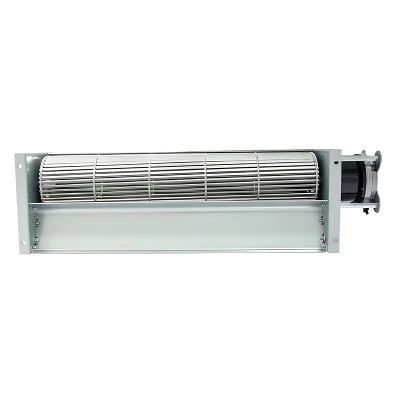
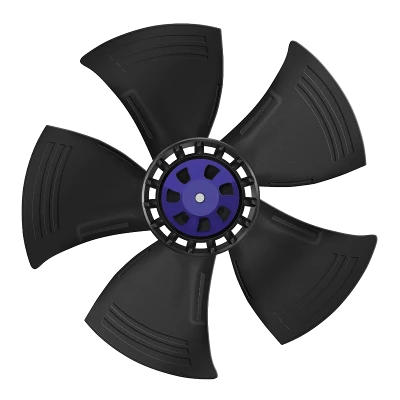
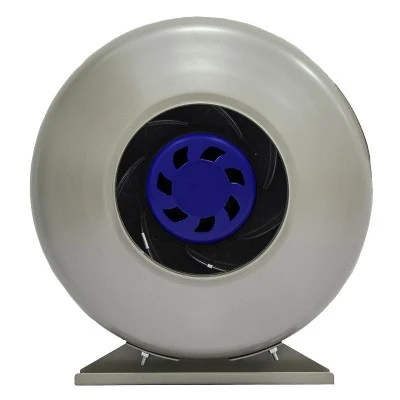
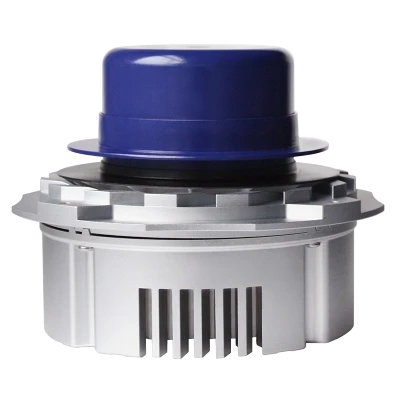

In the dynamic landscape of industrial ventilation and air-handling solutions, backward centrifugal fans have long been a cornerstone. These fans are known for their high efficiency, reliable performance, and wide range of applications in various industries such as HVAC, manufacturing, and power generation. As a leading supplier of backward centrifugal fans, I've witnessed firsthand how new technologies are revolutionizing the performance of these essential devices.
Aerodynamic Design Innovations
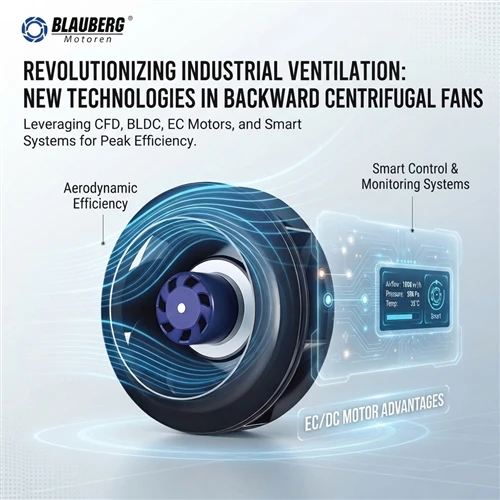
One of the most significant areas where new technology has enhanced the performance of backward centrifugal fans is in aerodynamic design. Traditional fan designs were often limited by a lack of precise computational tools. However, the advent of Computational Fluid Dynamics (CFD) has allowed engineers to simulate and optimize the air flow within the fan with unprecedented accuracy.
CFD software enables the analysis of complex air flow patterns, including areas of turbulence, pressure drop, and velocity distribution. By using this technology, we can design fan impellers with more efficient blade shapes. For example, modern backward - curved blades can be optimized to minimize boundary - layer separation and reduce eddy formation. This results in a more streamlined air flow through the fan, increasing the overall efficiency and reducing energy consumption.
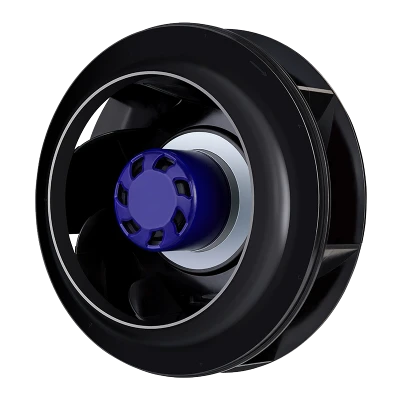
In our product lineup, the 133mm DC Backward Curved Centrifugal Fan benefits greatly from these aerodynamic improvements. The precisely engineered blade profile ensures that air is smoothly accelerated and directed, providing a high volume of air flow at a relatively low power input. This not only saves energy but also reduces operating costs for our customers.
Motor Technology Advancements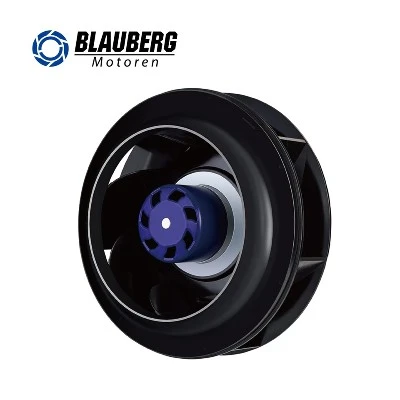
The motor is the heart of any centrifugal fan, and recent technological breakthroughs in motor design have had a profound impact on the performance of backward centrifugal fans. Brushless DC (BLDC) motors, in particular, have become increasingly popular due to their superior efficiency, reliability, and controllability.
Unlike traditional brushed motors, BLDC motors do not have physical brushes that wear out over time. This eliminates the need for regular maintenance and reduces the risk of motor failure. Additionally, BLDC motors can be precisely controlled using electronic speed controllers (ESCs). This allows for variable speed operation, which is crucial for applications where the air flow requirements may change.
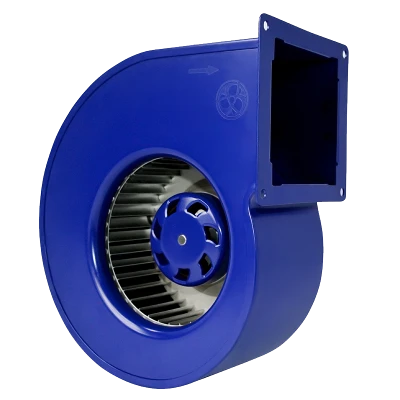
For instance, our 250mm DC Radial Brushless forward Curved Centrifugal Fan for Extruders is equipped with a high - performance BLDC motor. The ESC enables the fan to adjust its speed according to the temperature and pressure conditions in the extruder. This not only ensures optimal ventilation but also extends the lifespan of the fan and the extruder equipment.
Another significant advancement is the use of electronically commutated (EC) motors. These motors combine the advantages of BLDC motors with advanced control algorithms. EC motors can automatically adjust their speed and power consumption based on the actual air flow demand, resulting in even greater energy savings. Our 280mm EC Backward Curved Centrifugal Fan is a prime example of how EC motor technology can enhance fan performance. It offers precise speed control, high efficiency, and quiet operation, making it ideal for applications where noise reduction is a priority.
Material and Manufacturing Improvements
New materials and advanced manufacturing techniques have also played a crucial role in improving the performance of backward centrifugal fans. High - strength plastics and composites are increasingly being used in fan impeller construction. These materials offer several advantages over traditional metals, including lower weight, corrosion resistance, and better acoustic properties.
The reduced weight of plastic and composite impellers means that the motor has to work less to rotate the fan, resulting in energy savings. Additionally, these materials can be molded into complex shapes, allowing for more efficient aerodynamic designs. For example, our 355mm EC/DC External Rotor Motor Radial Backward Curved Centrifugal Fan for Extruders features a lightweight composite impeller that not only improves the fan's efficiency but also reduces vibration and noise.
In terms of manufacturing, precision machining and 3D printing technologies have enabled the production of fan components with higher accuracy and consistency. 3D printing, in particular, allows for rapid prototyping and the production of custom - designed fan parts. This means that we can quickly develop and test new fan designs, and also offer customized solutions to meet the specific requirements of our customers.
Smart Control and Monitoring Systems
The integration of smart control and monitoring systems is yet another area where new technology is enhancing the performance of backward centrifugal fans. These systems use sensors and advanced algorithms to continuously monitor the fan's operating parameters, such as air flow, pressure, temperature, and power consumption.
Based on the data collected, the smart system can automatically adjust the fan's speed, blade pitch, or other operating parameters to optimize performance. For example, if the air flow in a HVAC system drops below a certain level, the smart control system can increase the fan speed to maintain the desired ventilation rate. This not only ensures optimal performance but also improves the overall energy efficiency of the system.
Our 250mm EC Industrial Centrifugal Low Noise Centrifugal Fan with Ec Motor for Air Conditioner is equipped with a smart control system that monitors the air temperature and humidity in the air - conditioning unit. It then adjusts the fan speed accordingly to ensure efficient cooling and dehumidification while minimizing energy consumption.
Conclusion
As a supplier of backward centrifugal fans, I'm excited to see how new technologies are continuously improving the performance of these essential devices. From aerodynamic design innovations and motor technology advancements to material and manufacturing improvements and smart control systems, these technological breakthroughs are enabling our fans to offer higher efficiency, better reliability, and more precise control.
If you're in the market for high - performance backward centrifugal fans, we invite you to explore our extensive product range and discuss your specific requirements with our experts. Our team is committed to providing you with the best ventilation solutions that meet your needs and exceed your expectations. Contact us today to start the procurement and negotiation process and take advantage of the latest technological advancements in backward centrifugal fans.
References
- John D. Anderson, Jr. "Fundamentals of Aerodynamics". McGraw - Hill Education.
- Craig R. Armstrong. "Motor Technology and Applications". CRC Press.
- Michael P. Jensen. "Composites in Engineering Applications". Wiley - Blackwell.