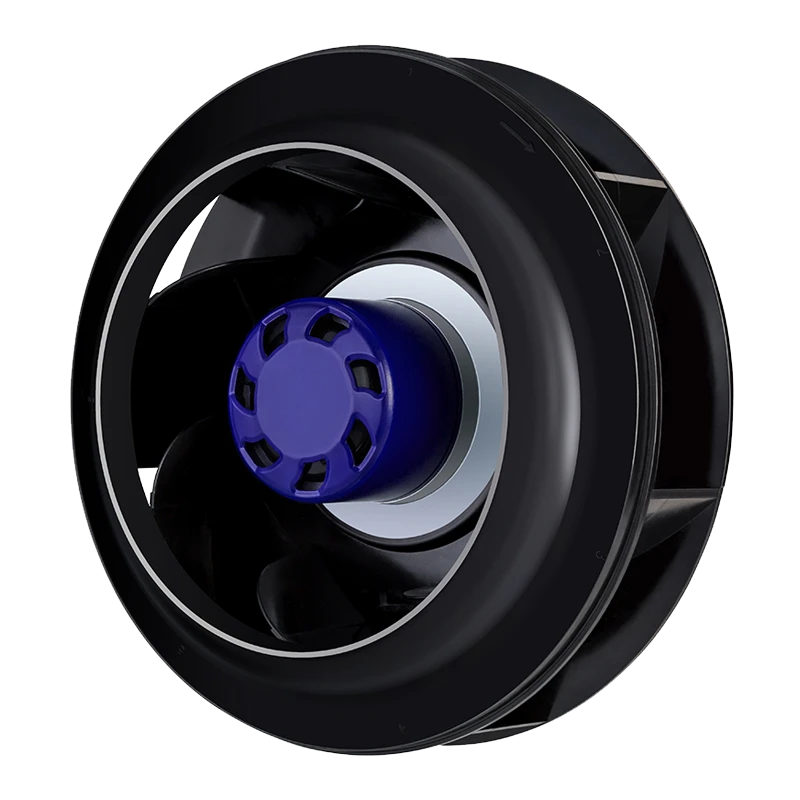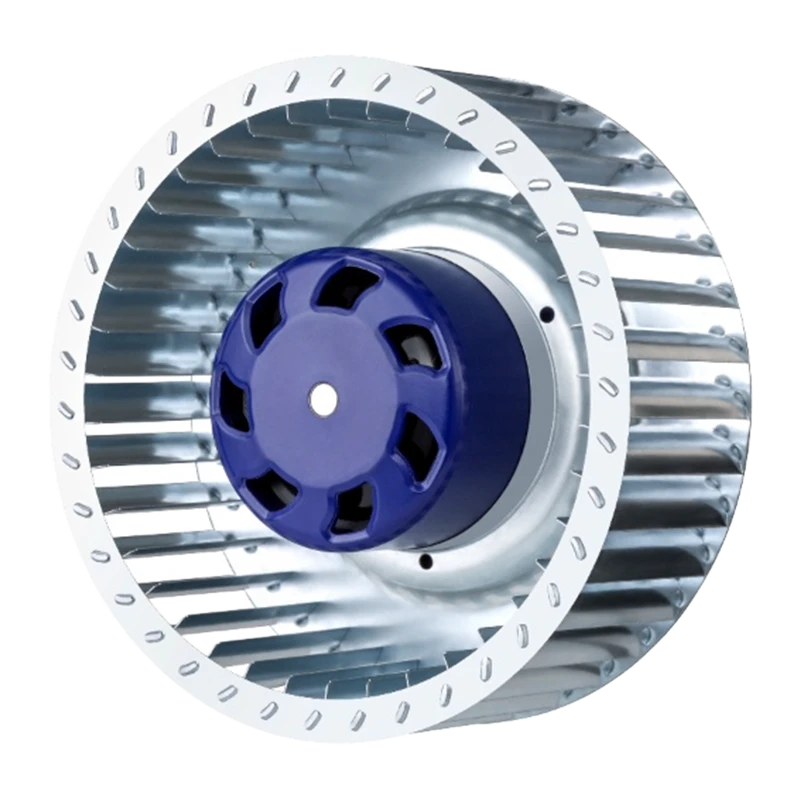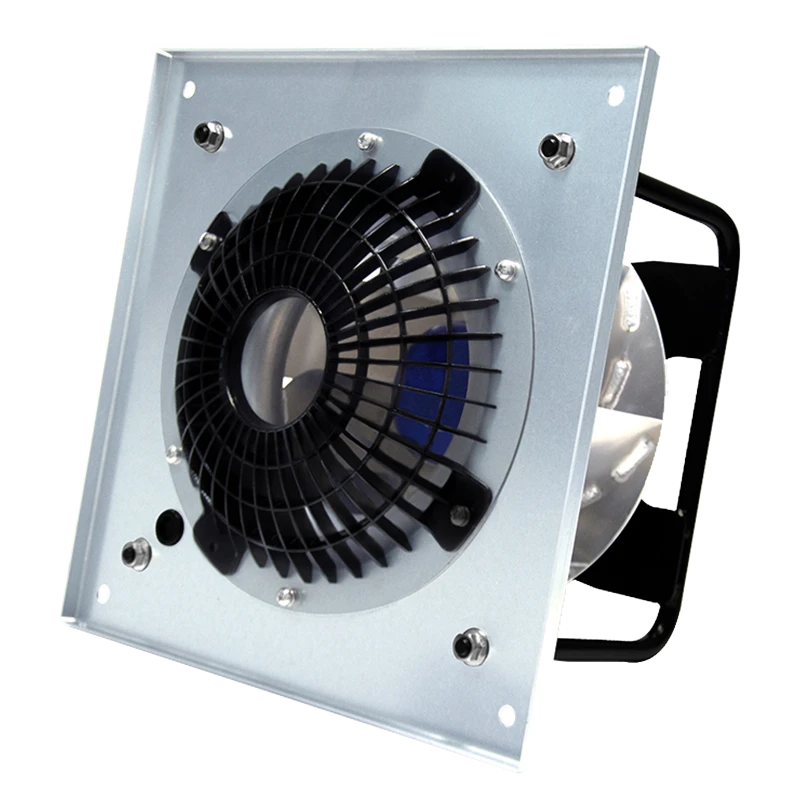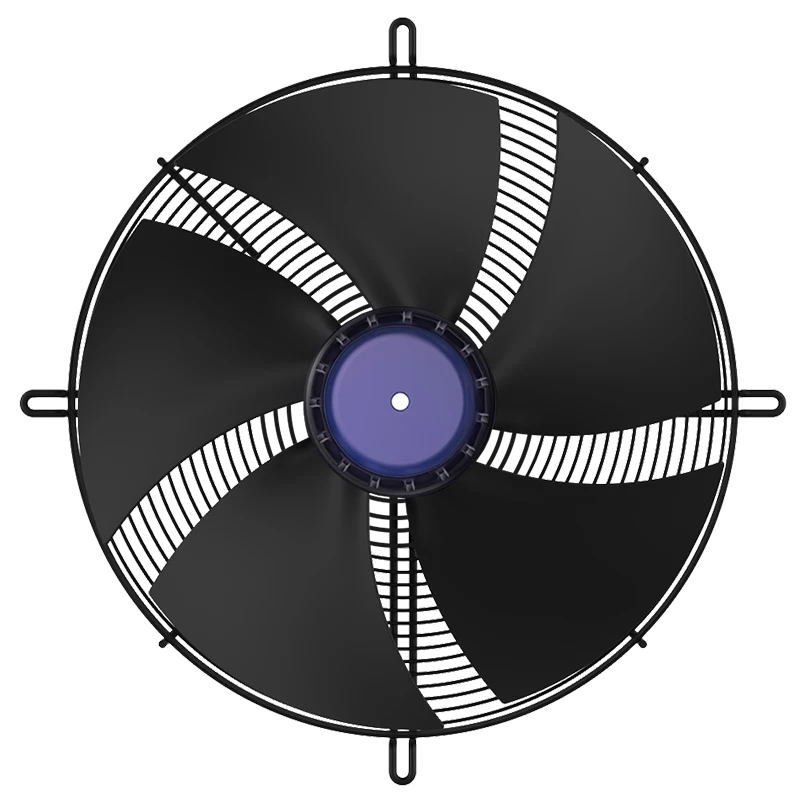

Hey there, fellow engineers, product managers, and anyone who's ever stared at a cooling fan wondering if it'll play nice with their power supply. I'm Alex, part of the team at AB, and let's cut to the chase: when it comes to DC cross flow cooling fans, matching 'em up with the right power supply isn't just a "plug and pray" situation-get this wrong, and you're looking at overheating, shorter fan life, or even dead electronics down the line. Today, I'm breaking down exactly how these fans work with different power supplies, sharing real examples from our line, and giving you the lowdown on what to look for so you don't waste time or money.
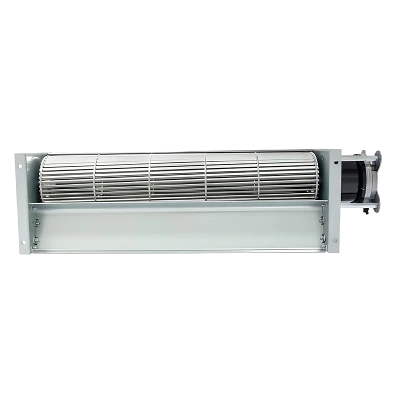
First off, let's recap what a DC cross flow fan actually is, because if you're here, you probably know, but it never hurts to make sure we're on the same page. Unlike axial fans that blow air straight out the front, cross flow fans push air sideways through the rotor-so they're perfect for narrow spaces, like in vending machines, HVAC units, medical devices, or even gaming PCs. DC models run on direct current, which is the stuff you get from batteries, adapters, or DC buses, unlike AC cross flow fans that need alternating current from wall outlets. But here's the thing: even DC fans aren't one-size-fits-all when it comes to power supplies. Let's dive into the main compatibility factors.

First big one: Voltage rating. DC cross flow fans are built for specific voltages-12V, 24V, 48V are the most common-cranking up or down more than a volt or two is a no-go. Run a 24V fan on 12V, and it'll spin too slow, barely moving air, leaving your device to bake. Hit a 12V fan with 24V, and you'll fry the motor winder before you can say "overcurrent." Let's use our products to make this concrete. Our Blauberg VD-T050A-EE-200(R001) is a 50mm DC cross flow fan built for 24V DC. If someone tried to hook that up to a 12V power supply, its airflow would drop by like 60%-we tested that in our lab last quarter, actually. On the flip side, our Blauberg VF-T040A-EE-250(R000) is a 40mm DC fan made for 12V. We've had customers reach out saying they swapped it into a custom project using a 9V battery adapter, and guess what? It barely moved any air, so they had to bump up to 12V to get it working as intended.
Wait, but what if you need a DC cross flow fan that works with AC? No, I'm not talking about AC cross flow fans-those are a different beast, like the Blauberg VL-T065A-SP-242(R000) 65mm AC Cross Flow Fan. Wait, no, wait-important distinction here: AC cross flow fans run on alternating current, so they need an AC power supply (like a standard wall outlet). DC cross flow fans, though, can sometimes work with AC if you have the right power conversion, right? No, hold on-actually, that's where people mess up. You can't just plug a DC fan straight into an AC wall outlet without a power adapter that converts AC to DC. That's why our AC cross flow models, like the Blauberg VL-T030A-SP-800(R000) 30mm AC Cross Flow Fan or the Blauberg VL-T150A-AI-270(R000) 150mm AC Cross Flow Fan, are built to handle that 120V or 240V AC straight from the wall-no adapter needed, but they can't work with DC power supplies at all. I've had a customer ask us once if they could use a DC power supply for that 150mm AC fan, and they ended up blowing the circuit board because the AC motor just doesn't respond to DC current. So first rule: match the power type (AC vs DC) to the fan's intended power supply type.
Next up, current draw and power ratings. This is a big one that a lot of guys skip over. A fan's voltage is important, but its rated current (in amps) tells you how much power it needs to run properly, and that's what your power supply needs to deliver. If your power supply can't put out enough current, the fan won't spin at full speed, maybe will stall, or even trip the power supply's overcurrent protection. If it puts out too much current? Wait, no-actually, DC power supplies are constant voltage, so they only push as much current as the fan needs. But the power supply has to have a maximum current rating higher than the fan's rated current to avoid issues. Let's take our Blauberg VF-T040A-EE-250(R000) 40mm DC fan: its rated current is 0.15A at 12V, so that's 1.8W of power. If someone uses a 12V power supply rated for only 0.1A, it can't supply enough current, so the fan will spin slow. But a 12V power supply rated for 0.5A is totally fine-because the fan only draws what it needs. It's like plugging your phone into a 2A charger vs a 1A charger; the phone only pulls the current it needs, as long as the charger can handle at least that. For the Blauberg VD-T050A-EE-200(R001) 50mm DC fan, rated current is 0.25A at 24V, so 6W total. Our lab tests show that if you use a 24V, 0.2A power supply, the fan's RPM drops by 30%, and it runs hotter because it's underpowered. So always check the fan's current draw and make sure your power supply can deliver at least that, no exceptions.
Then there's the curveball: PWM control and fan speed regulation. A lot of modern devices use PWM (Pulse Width Modulation) to control fan speed, which is super energy-efficient, but only works with DC fans, not AC ones. PWM uses pulses of DC current to adjust the fan's speed, so your power supply needs to support that if you want variable speed. If you hook a PWM-enabled DC fan up to a standard DC power supply without PWM control, it'll run at full speed all the time, which is fine if you don't need to adjust it, but if you thought you could save energy by turning it down, you're out of luck. Our Blauberg VD-T050A-EE-200(R001) has PWM control built-in, so when customers use it in server racks or gaming PCs that have PWM headers, they can adjust the fan speed based on temperature, which is awesome for noise and energy use. But if someone uses a fixed DC power supply with that fan, it's just screaming at full speed 24/7. So if speed control is a feature you need, make sure your power supply and fan both support PWM.
Which cross flow fan models should you review?
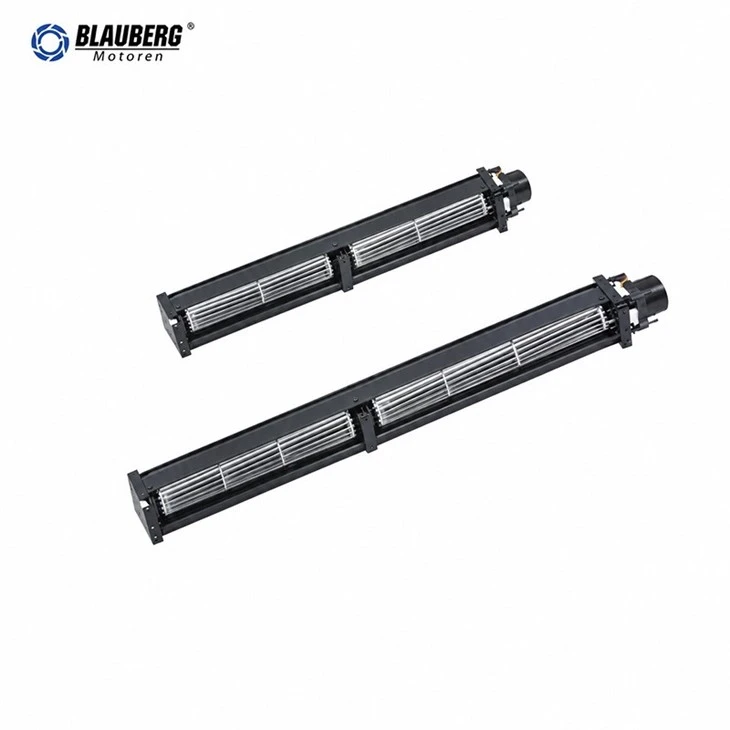
Blauberg VF-T030A-EE-1082(R002) 30mm DC Cross Flow Fans
30mm Cross Flow Fans, Approx. 175 m³/h maximum airflow and Approx. 17 Pa maximum static pressure.
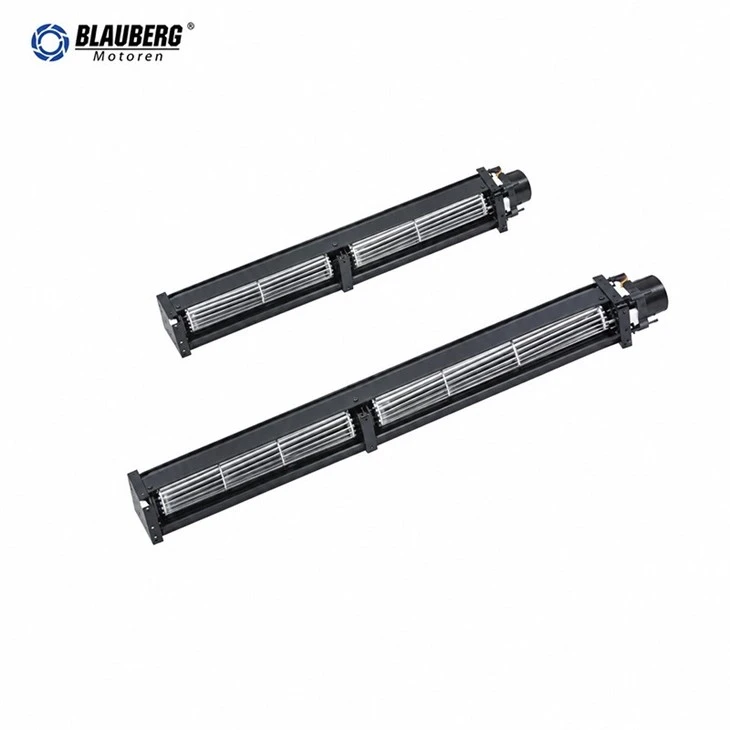
Blauberg VD-T030A-EE-1082(R002) 30mm DC Cross Flow Fans
30mm Cross Flow Fans, Approx. 175 m³/h maximum airflow and Approx. 17 Pa maximum static pressure.
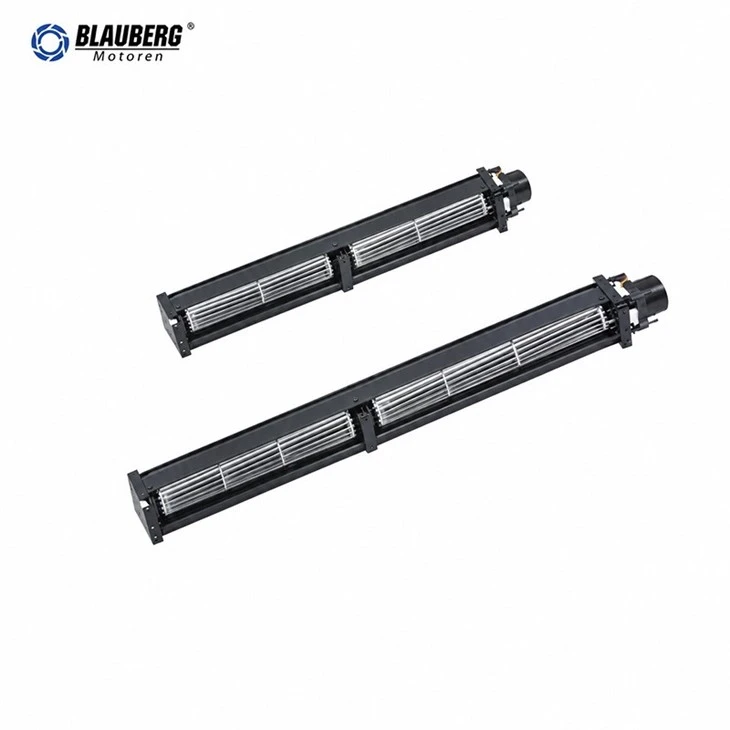
Blauberg VD-T030A-EE-986(R002) 30mm DC Cross Flow Fans
30mm Cross Flow Fans, Approx. 160 m³/h maximum airflow and Approx. 17 Pa maximum static pressure.
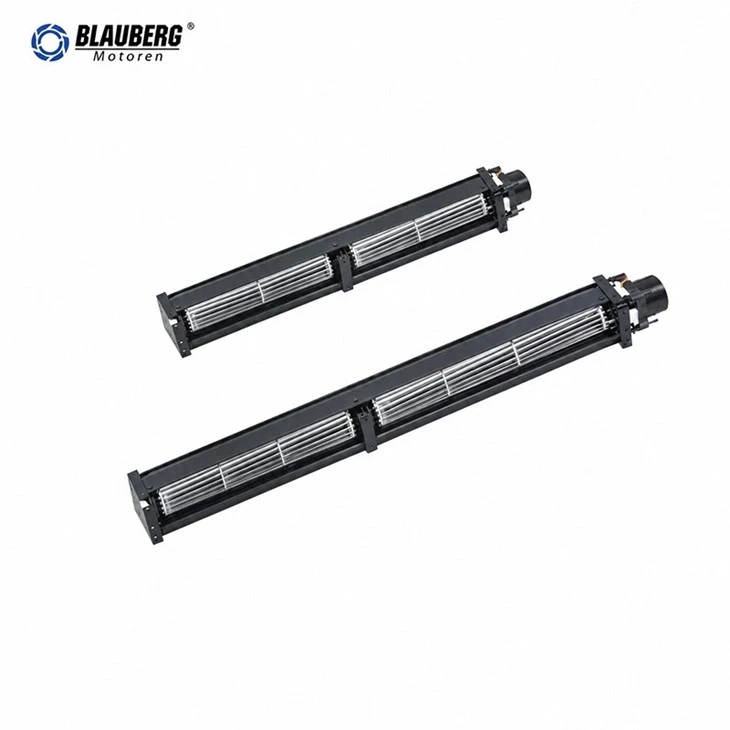
Blauberg VF-T030A-EE-986(R002) 30mm DC Cross Flow Fans
30mm Cross Flow Fans, Approx. 160 m³/h maximum airflow and Approx. 17 Pa maximum static pressure.
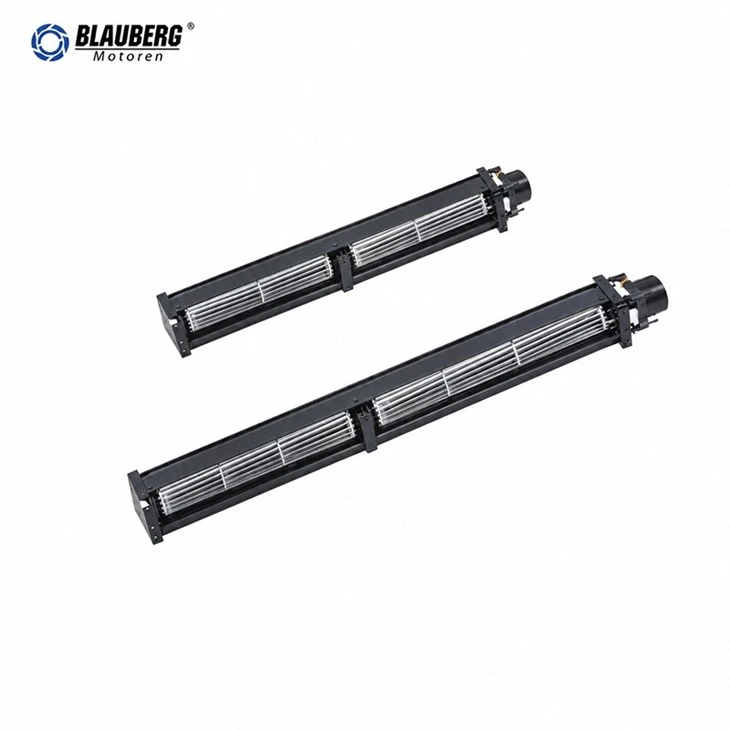
Blauberg VF-T030A-EE-920(R002) 30mm DC Cross Flow Fans
30mm Cross Flow Fans, Approx. 150 m³/h maximum airflow and Approx. 17 Pa maximum static pressure.
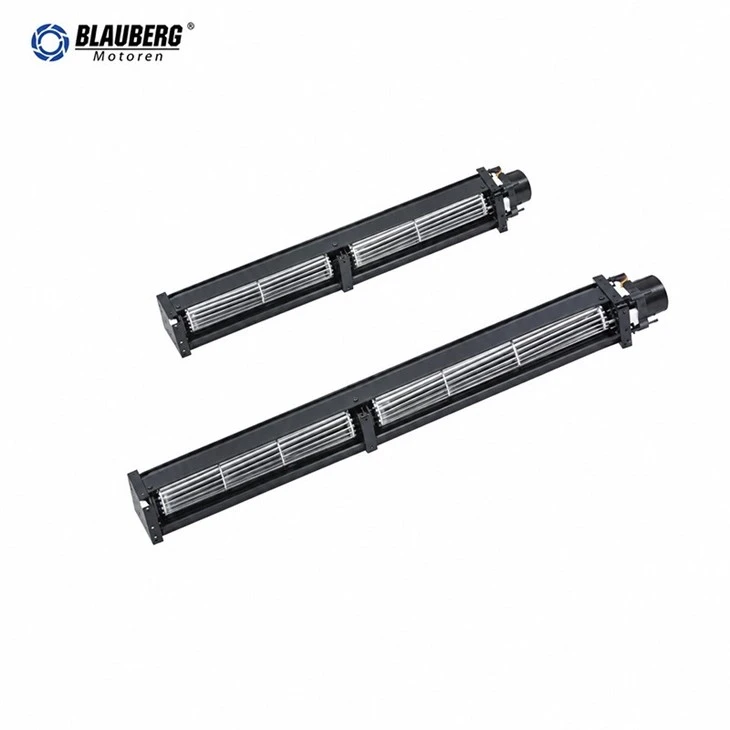
Blauberg VD-T030A-EE-920(R002) 30mm DC Cross Flow Fans
30mm Cross Flow Fans, Approx. 150 m³/h maximum airflow and Approx. 17 Pa maximum static pressure.
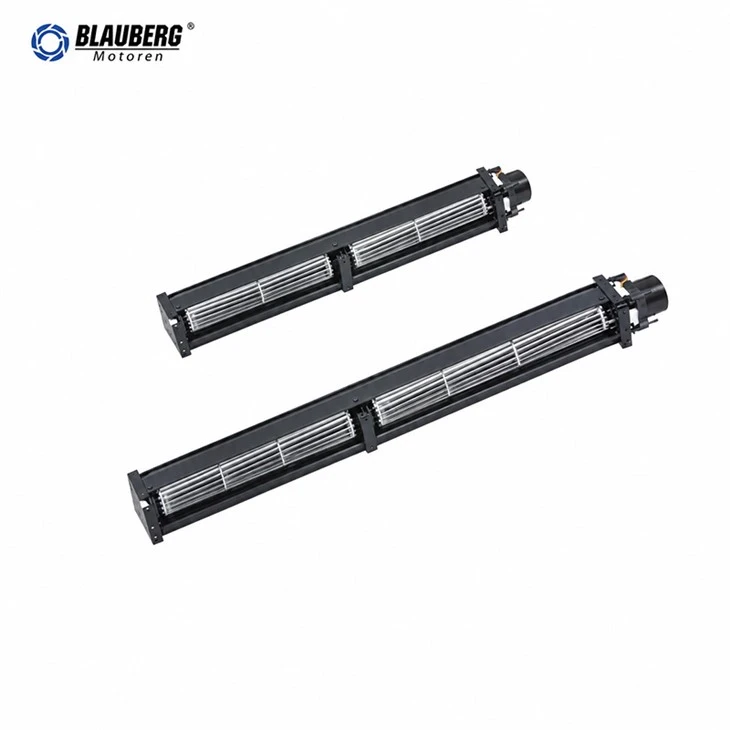
Blauberg VF-T030A-EE-800(R002)E 30mm DC Cross Flow Fans
30mm Cross Flow Fans, Approx. 130 m³/h maximum airflow and Approx. 17 Pa maximum static pressure.
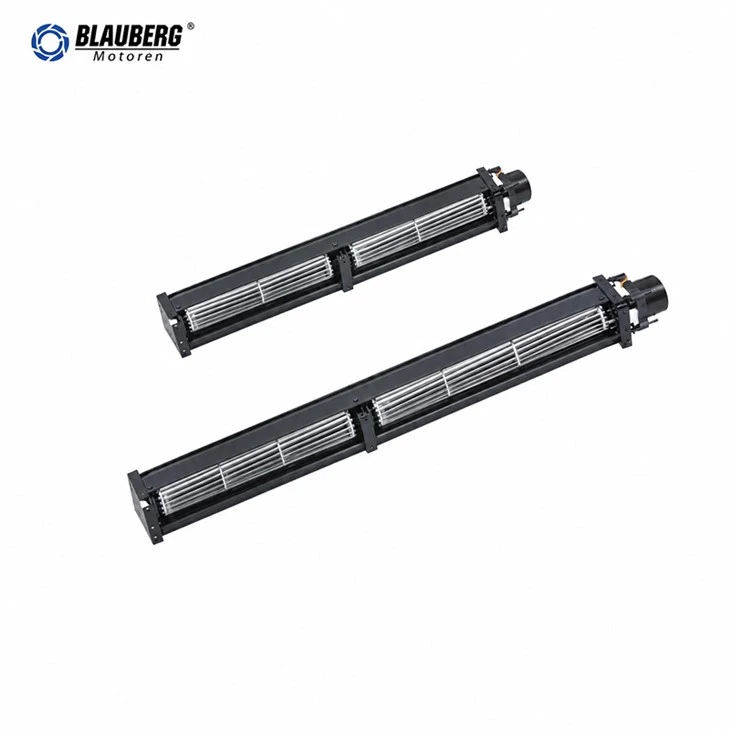
Blauberg VF-T030A-EE-854(R002) 30mm DC Cross Flow Fans
30mm Cross Flow Fans, Approx. 140 m³/h maximum airflow and Approx. 17 Pa maximum static pressure.
Product descriptions from the Blauberg catalogue, checked 22 September 2026. Listed airflow and pressure maxima are separate ratings; confirm the selected model at your operating point.
Another thing: power supply noise and ripple. This is more of an advanced point, but it can cause problems if you're working with sensitive electronics. DC power supplies that have high electrical noise or excessive AC ripple (even in a DC output) can mess with the fan's motor control circuit, leading to weird speed fluctuations, or even cause interference with nearby sensors or microcontrollers. For example, if you're using a DC cross flow fan in a medical device that needs to be super precise, you don't want the fan's speed jumping around because of bad power supply noise. Our team recommends using switching power supplies with low ripple (under 100mV) for these applications, not cheap no-name adapters that you find on Amazon. We've seen that happen a few times-customer uses a $5 12V power supply with our Blauberg VF-T040A-EE-250(R000) 40mm DC fan, and the fan's RPM fluctuates by 200 RPM, which causes temperature spikes in their device. Swapping to a mean well power supply fixed it right up.
Wait, let's go back to the AC vs DC distinction, because I know that's a common point of confusion. Let's list out the differences clearly with our products: AC cross flow fans, like the Blauberg VL-T065A-SP-242(R000) 65mm AC Cross Flow Fan, run directly on 110V or 220V AC-no conversion needed, but they can't work with DC power supplies. DC cross flow fans, like the Blauberg VD-T050A-EE-200(R001) 50mm DC Cross Flow Fan, run on DC, so you need an AC-to-DC adapter if your power source is a wall outlet. If you try to power an AC fan with DC, you'll get nothing or a blown motor, because the AC motor is designed for alternating current. If you try to power a DC fan with AC without an adapter, same thing-you're not converting the current type, so it won't spin, or it'll fry. That's why our product pages clearly label each fan as AC or DC, so you don't mix them up.
Now, what about when you need to use a DC cross flow fan with a different voltage than its rated one? Is there a work-around? Not really-we don't recommend it, because it will either underperform or fail prematurely. For example, if you have a 12V DC fan and you need to run it on 24V, you'd need a voltage regulator to drop it down, but even then, it's not ideal because the fan's motor is built for 12V, and running it at higher voltage will make it spin faster than designed, increasing noise and wear. If you have a 24V fan that you need to run on 12V, a boost converter could step it up, but again, the fan won't move enough air to cool your device properly. It's always better to pick a fan that's rated for the voltage your power supply provides, rather than trying to hack it.
Let's throw in a real customer story to make this relatable. Last year, a guy from a custom HVAC startup hit us up saying he was having a problem with their new unit overheating during testing. They'd picked a cheap DC cross flow fan from another supplier, rated for 24V, and paired it with a 12V power supply because they had a bunch on hand. We ran some tests on our end with our Blauberg VD-T050A-EE-200(R001) 50mm DC fan, which is 24V, and found that at 12V, airflow was only 40% of its rated output. That's exactly what was happening to his unit-didn't have enough air flow, so it was overheating. Once he swapped to a 24V power supply, everything worked perfectly. He even said our fan was quieter too, which was a bonus. That's the kind of thing we see all the time-people cutting corners on power supply compatibility and paying for it later.
Another common question: can I use a DC power supply that's higher voltage than the fan's rating? Wait, no-DC power supplies are constant voltage, so if your fan is 12V, you can't use a 24V power supply, because it will force 24V through the fan, instantly burning out the motor. That's a hard no. Always match the fan's rated voltage exactly to the power supply's output. Don't try to "split the difference" either-like, if you have a 12V fan, don't use a 15V power supply, that's too high. Stick to the rated voltage for the fan.
Now, let's talk about when you might want an AC vs DC cross flow fan. If you're working with a wall outlet and don't want to mess with adapters, our AC models like the Blauberg VL-T030A-SP-800(R000) 30mm AC Cross Flow Fan are great. But if your project uses batteries, a DC bus, or has a separate power supply, a DC fan like the Blauberg VF-T040A-EE-250(R000) 40mm DC Cross Flow Fan is the way to go. DC fans are also more energy-efficient, which is a big plus for battery-powered devices, and they're easier to control with PWM if you need variable speed.
Wait, what about power supply efficiency? Does that matter for fan compatibility? Not directly, but it matters for your overall project. A more efficient power supply uses less energy, which is good for battery life, and it produces less heat itself, which helps keep your device cool. If you're using a low-efficiency power supply, it might get hot, adding to the load on your cooling fan, which is something to consider. Our team usually recommends power supplies with at least 80+ efficiency, because they're reliable and don't add extra heat.
Let's wrap this up with a quick checklist so you don't forget anything. When pairing a DC cross flow cooling fan with a power supply:
- Match the power type: DC fan needs DC power (AC to DC adapter if from wall), AC fan needs AC power.
- Exact voltage match: Fan's rated voltage (12V, 24V, etc.) must equal power supply's output.
- Current rating: Power supply's max current must be at least the fan's rated current.
- Speed control: If you need PWM, make sure both fan and power supply support it.
- Noise/ripple: For sensitive applications, use a power supply with low electrical noise (under 100mV ripple).
- No hacks: Don't try to run a fan on a different voltage without proper conversion.
At AB, we've been supplying cross flow fans for all kinds of projects for years, and we've seen every power compatibility mistake in the book. That's why all our product pages-whether it's the Blauberg VL-T150A-AI-270(R000) 150mm AC Cross Flow Fan, the Blauberg VL-T065A-SP-242(R000) 65mm AC Cross Flow Fan, or any of our DC models like the Blauberg VD-T050A-EE-200(R001) 50mm DC Cross Flow Fan-list exact voltage, current, and control specs so you don't have to guess.
If you're working on a project and aren't sure which fan will work with your power supply, or you have questions about power compatibility, hit us up and we'll help you figure it out. We don't do one-size-fits-all, and we're happy to walk through your specific needs-whether it's a small medical device, a large HVAC system, or something in between. Don't let bad power compatibility ruin your build, reach out and we'll get you the right fan and power pairing.

References:
- Blauberg Product Technical Datasheets: Cross Flow Cooling Fans (2024)
- DC Fan Power Supply Compatibility Guidelines, Delta Electronics (2023)
- Electrical Ripple and Noise Effects on DC Fan Performance, Panasonic Industrial Components (2022)
- Cross Flow Fan Application Notes: Voltage and Current Matching, ABB Motion (2023)
- PWM Control for DC Cooling Fans, ON Semiconductor (2022)
Category of Blauberg Products
Built on German engineering principles, focusing on precision, reliability, and long-term performance. Through efficient and scalable manufacturing, we deliver high-quality ventilation solutions with optimized cost structure, ensuring strong value for global OEM and project-based customers.