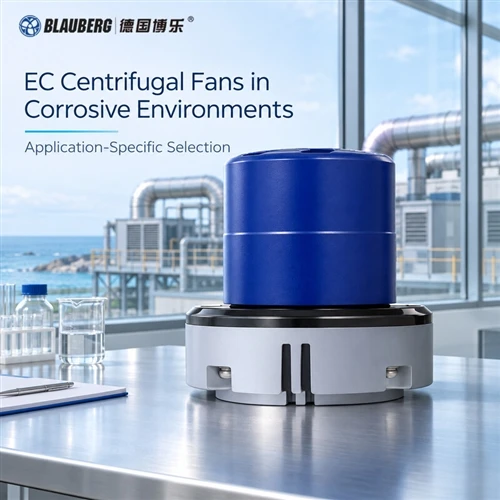
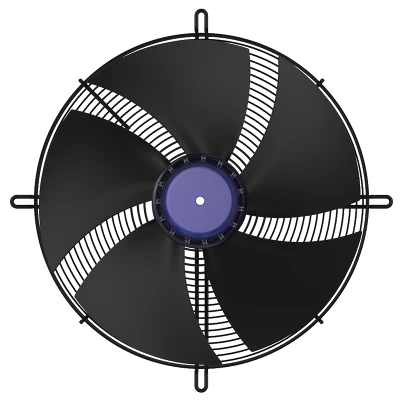
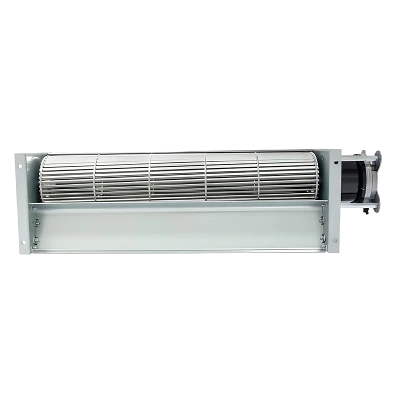
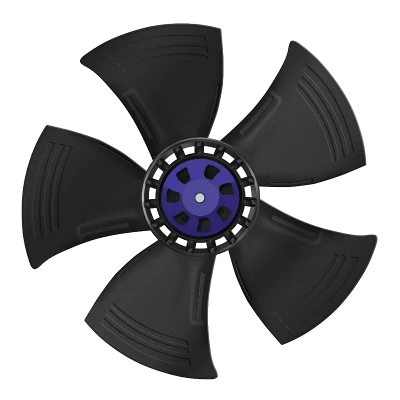
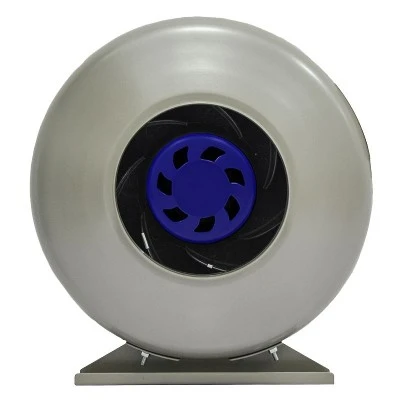

Hey everyone, it's Jake from [My Company Name] – I get asked this question all the time: "Can an EC centrifugal fan handle a corrosive environment?" And honestly, I don't blame folks for asking. If you're working in a place with stuff like fumes from chemical processing, salt air near a coast, or even the sticky, corrosive mess from food manufacturing, your fan's got to pull its weight without crapping out on you. I've been selling EC centrifugal fans for years, and I've seen everything from a fan that died in a seafood processing plant (salt air ate through its motor housing in 6 months) to ones that are still running strong in a paint shop after 3 years. So let's break this down straight – no engineering jargon that makes your eyes glaze over.
First, let's keep it simple: what's a corrosive environment for a fan? It's not just "a little damp." We're talking about environments where chemicals like ammonia, sulfur dioxide, salt spray, or acids/bases hang in the air, or even sit in standing water around the unit. These things eat away at metal, plastic, and wiring over time – way faster than normal dust or humidity. A standard AC fan might rust through or get its coils corroded, but EC fans are different – their whole design is built with more durable parts, right? Wait, but it's not just the fan itself, it's how you spec it.
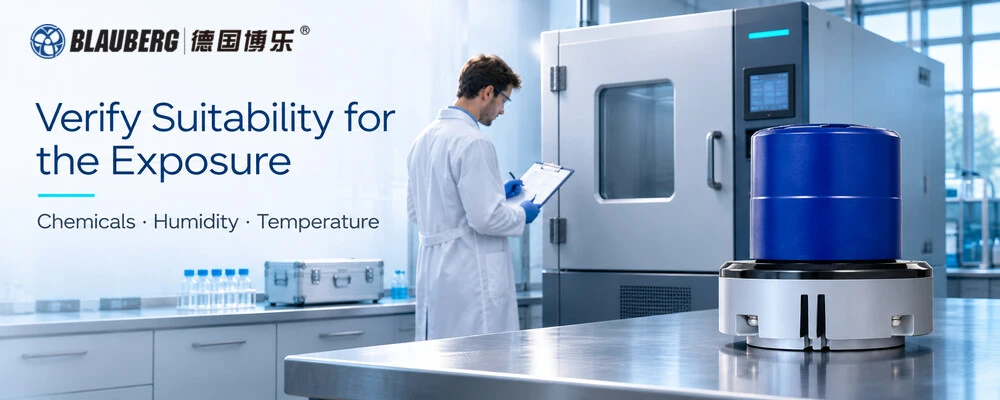
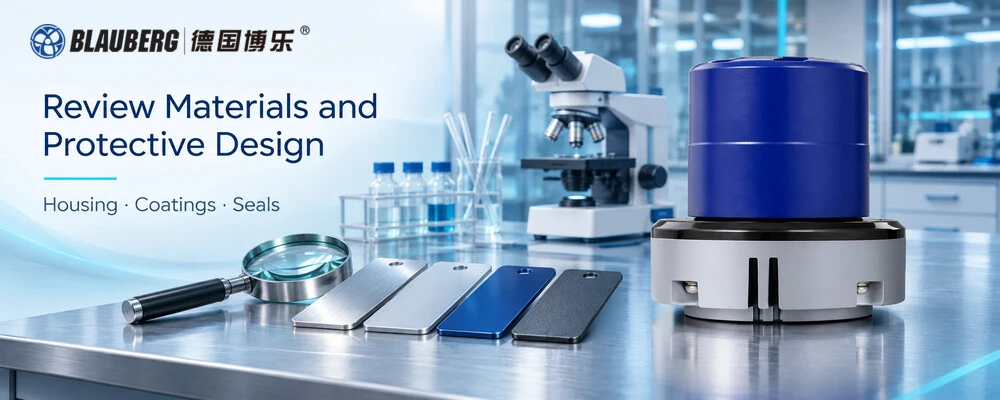
Here's the big secret: EC centrifugal fans aren't one-size-fits-all for corrosive environments. You can't grab the first fan off the shelf and plop it in a chemical storage room and expect it to survive. But if you pick the right model with the right coatings and materials, they absolutely can work. Let's talk about the key parts that get hit hardest in corrosive conditions: the fan housing, the impeller, the motor, and the wiring.
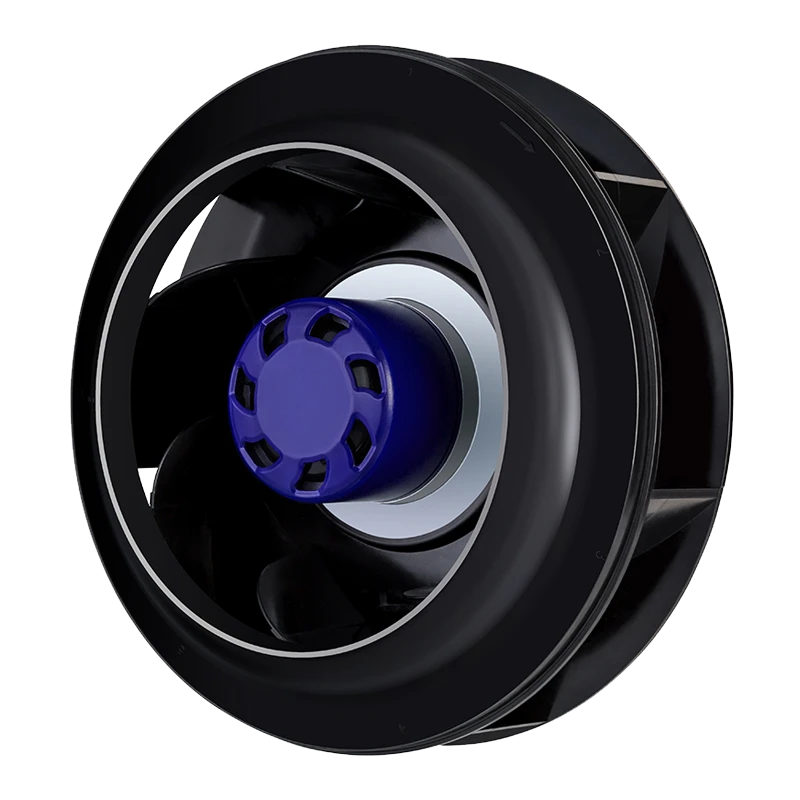
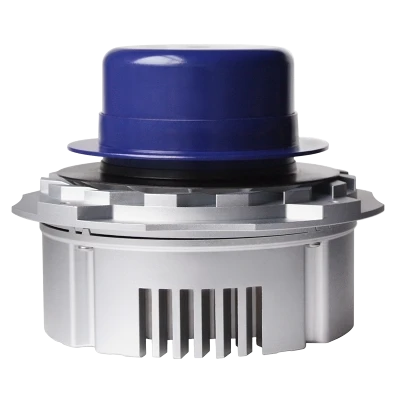
Take the motor, for example. That's the heart of the fan, right? If the motor's windings get corroded, the whole thing dies. Most basic EC fan motors use regular aluminum or steel housings. But for corrosive spots, you want motors with coated housings – like epoxy or powder-coated steel, or even stainless steel. Wait, we've got a few models here that are built for this. Like our 230v 170W Big Motor Ec Centrifugal Fan Motors Electrical – that one comes with an optional powder-coated steel housing that resists salt and mild chemical fumes. I sold a bunch of these to a HVAC contractor doing a coastal apartment complex last year, and they said not one fan had rust spots, even after 12 months of near-constant salt spray. Compare that to the old AC fans they used to use there – those were getting pitted within 3 months.
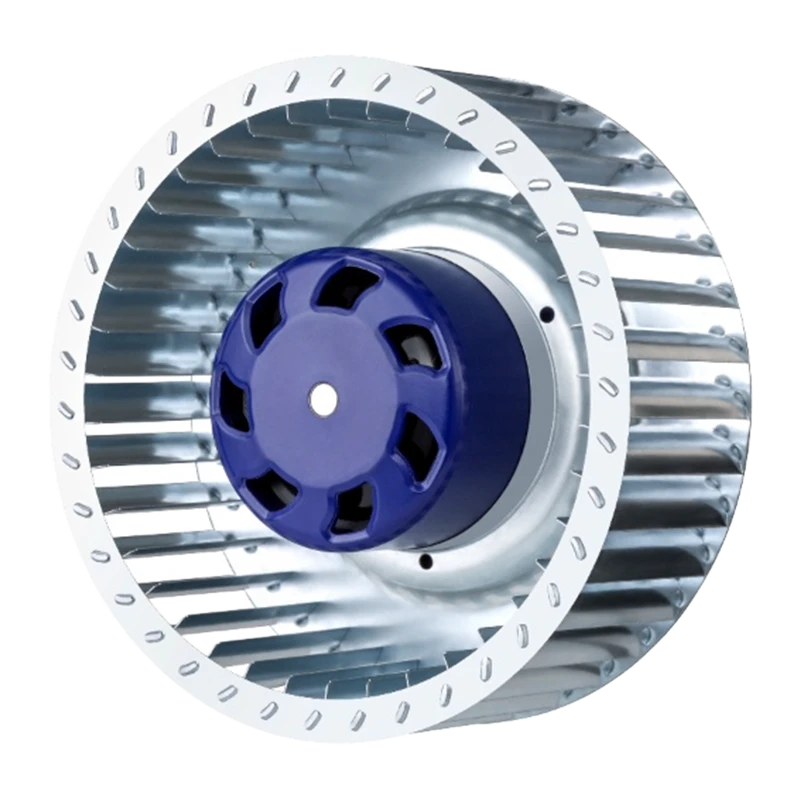
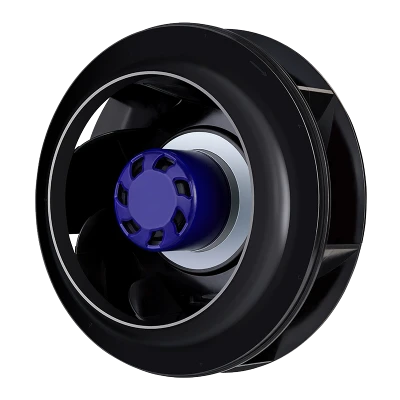
Then there's the impeller – that's the spinning blade part that moves the air. If that gets corroded, it gets off-balance, vibrates like crazy, and breaks down. For mild corrosive environments (like regular outdoor coastal areas or light chemical fumes), a powder-coated steel impeller works. But for harsher stuff, like a plating shop where acid mist is flying, you need a stainless steel impeller. Some of our models let you swap that out – like the 230v Centrifugal Fans with External Rotor Motor 0-10v – you can spec it with either coated steel or 304 stainless impellers, depending on how nasty the environment is. I had a client in a small printing shop with ink fumes that used the coated impeller, and it's still running smooth 2 years later. If he'd gone with a regular steel impeller, it would've rusted solid in a year, easy.
What about the motor's internal parts? EC motors use brushless technology, right? That's different from brushed motors, which have carbon brushes that wear out and can get contaminated. The brushless design means fewer moving parts, so less places for corrosive stuff to get in. Plus, the windings on EC motors are usually coated with a protective varnish that keeps chemicals and moisture out. That's a big upgrade over old AC motors that often have bare windings inside. Our 230v 115W Big Motor Ec Centrifugal Fan Brushless Motor is a perfect example – the brushless build alone makes it more resistant to corrosion than comparable AC fans, and adding an optional conformal coating on the windings takes it even further for medium-corrosion jobs. I recommended that to a wood treatment plant with chemical preservative fumes, and they said the fan's motor hasn't had any issues, whereas their old brushed fans would short out every 8 months.
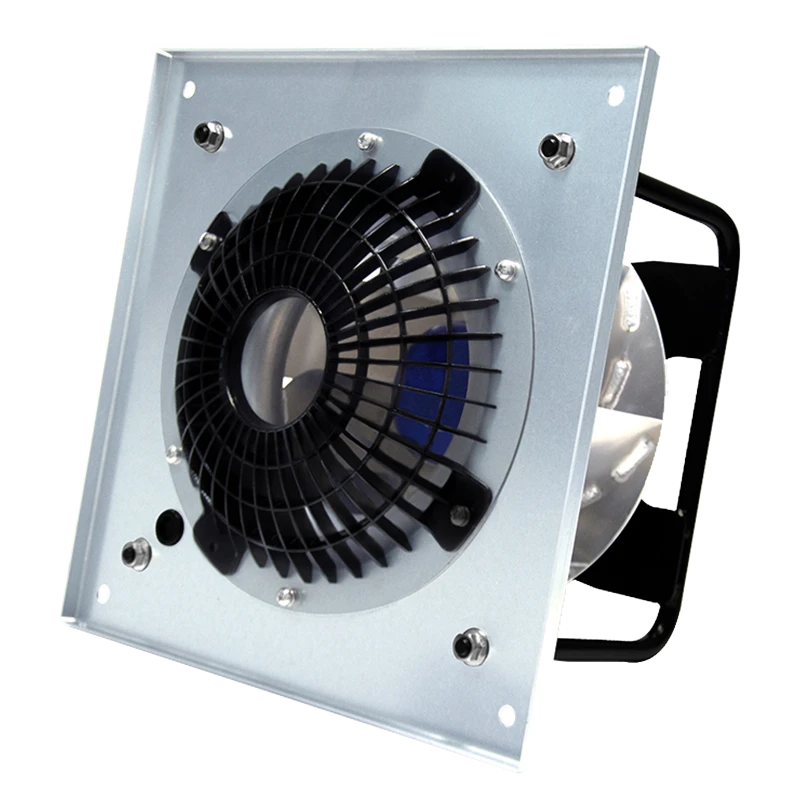
Wait, but let's be real – EC fans aren't invincible. For super harsh environments, like a chemical processing plant with strong acid or alkali fumes, even the most coated EC fan might not hold up. I had a client that tried to use a standard coated EC fan in a fertilizer plant (ammonia is brutal) and the housing started to swell after 6 months. So what do you do there? You step up to full stainless steel construction. We've got models like the 48V 85W 5060hz Motor Centrifugal Exhaust Fan Motor Blower Ec Fan Manufacturers that can be fully spec'd with 316 stainless steel housing, impeller, and motor shaft – that stuff can handle almost any mild to moderate chemical corrosion. Yeah, it's a bit pricier, but it's way cheaper than replacing a fan every 6 months. That same fertilizer plant switched over to our stainless spec EC fans 2 years ago, and they haven't had to replace a single unit since. They saved like $12k last year alone on replacement parts and labor.
Which centrifugal fan models should you review?

Blauberg BE-B400H-EC-05 400mm DC Backward Centrifugal Fan
View product details and specifications.
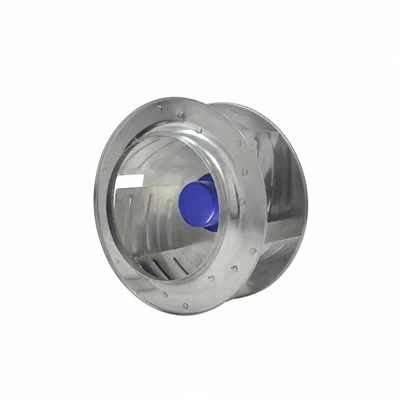
Blauberg BE-B400D-EC-05 400mm DC Backward Centrifugal Fan
View product details and specifications.
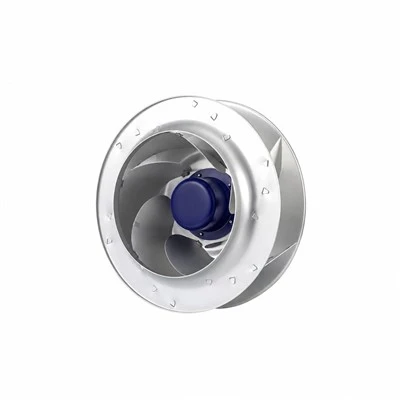
Blauberg BE-B355C-EC-05 355mm DC Backward Centrifugal Fan
View product details and specifications.
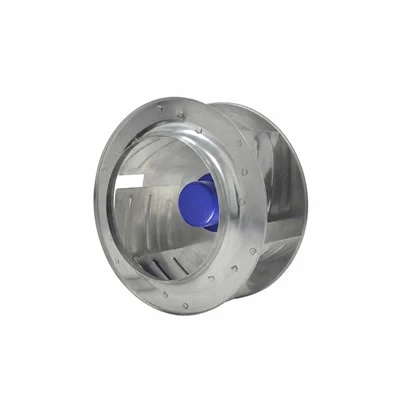
Blauberg BN-B310C-EC-01 310mm DC Backward Centrifugal Fan
View product details and specifications.
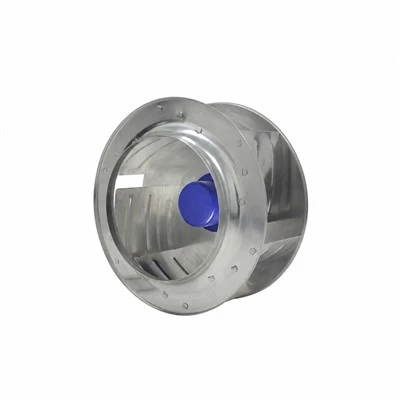
Blauberg BE-B310D-EC-N07 310mm DC Backward Centrifugal Fan
View product details and specifications.
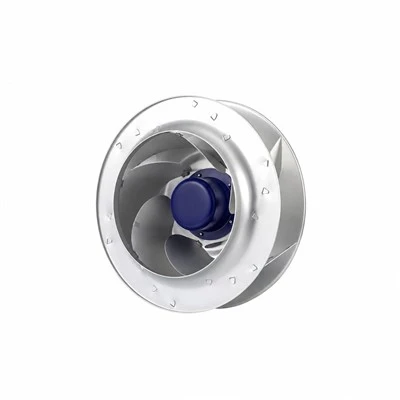
Blauberg BE-B310D-EC-05 310mm DC Backward Centrifugal Fan
View product details and specifications.
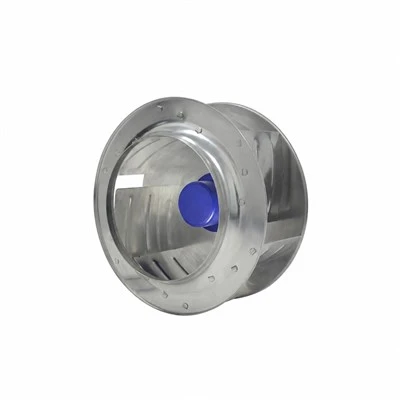
Blauberg BE-B310C-EC-01 310mm DC Backward Centrifugal Fan
View product details and specifications.
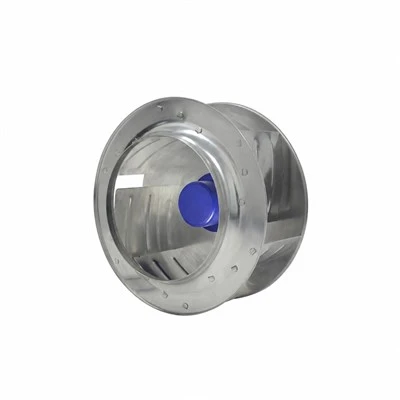
Blauberg BD-B310D-EC-N07 310mm DC Backward Centrifugal Fan
View product details and specifications.
Another thing people forget: installation and maintenance. Even the best fan will die fast if you install it wrong. Like, if you mount it where standing water can pool around the base, or if you don't vent the motor housing properly so corrosive fumes get trapped inside. We always tell clients to make sure the fan is tilted so water runs off, and to do quarterly checks – wipe down the housing, make sure the wiring is still sealed, and check the impeller for any buildup that could cause corrosion. It's not hard, just takes 10 minutes every few months. I had a guy who skipped maintenance on his fan, and it got a layer of dust plus chemical residue that ate through the coating – after that, I send him a reminder every quarter, and it's been fine since.
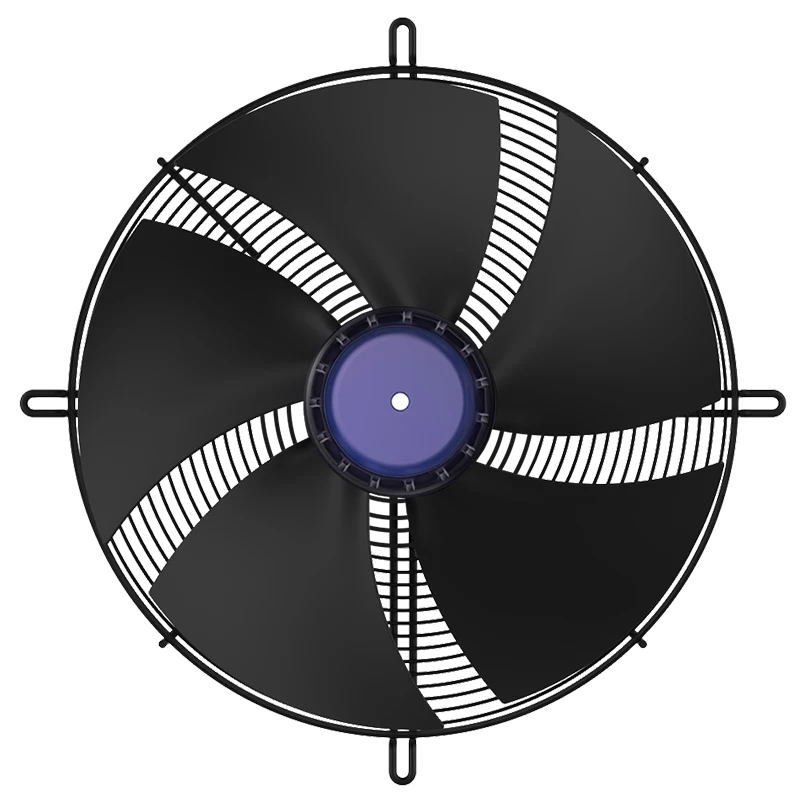
What about low-voltage EC fans? A lot of people think low-voltage (like 12v or 24v) are wimpy and can't handle corrosion, but that's not true. Our 12v 85W 5060hz Centrifugal Fan Motor Out Centrifugal Fan – that's a low-voltage model, and it can be spec'd with the same corrosion-resistant coatings as the bigger 230v models. We sold a bunch of these to a solar panel manufacturer, where they have clean room exhaust with mild chemical fumes from cleaning solutions, and those low-voltage fans are still running strong after 18 months. The low voltage actually helps a little too – less electrical arcing, which can happen with corroded wiring on higher voltage motors, so that's an extra bonus.
Let me also talk about why EC fans are better than AC fans in corrosive environments, not just equal. EC fans are electronically commutated, so they run at a more consistent speed, which means less vibration. Vibration makes it easier for corrosive particles to work their way into seals and coatings, right? So less vibration = longer life. Also, EC fans are way more efficient, so they don't run as hot as AC fans. Heat can break down coatings over time – if a motor is running hot, the epoxy coating can start to crack, letting corrosive stuff in. EC fans run cooler, so their coatings stay intact longer. That's a huge point I don't see a lot of other people talking about.
Now, I'm not saying you can stick an EC fan in a strong acid bath and expect it to survive. If you're in a place with constant, direct exposure to concentrated chemicals, you're probably looking at a different type of equipment – like a fan made with Hastelloy or something, which is way more expensive. But 90% of the "corrosive environments" my clients deal with are mild to moderate: coastal areas, paint shops, food processing, light chemical storage, printing facilities, wastewater treatment. For those, EC centrifugal fans are absolutely a great choice, if you spec them right.
Wait, let's give a quick example. Last quarter, I worked with a dairy farm that had a problem with ammonia fumes from the milk storage barn. They were using AC fans that would rust out in 10 months, and they were sick of replacing them. We recommended our 230v 170W fan, with the powder-coated housing and windings, and mounted it high up where fumes could vent without pooling around it. 8 months later, the farm manager texted me a pic of the fan, no rust, no issues, and said their energy bill was down 22% too (thanks to EC efficiency). That's a win-win – it works in the corrosive space, and saves them money on electricity.
Another client: a local plating shop, which is about as close to a "harsh" environment as you get without being a chemical plant. They had AC fans that would corrode the impeller in 7 months, leading to uneven air flow and product defects. We swapped them out for our 230v external rotor EC fan, spec'd with 304 stainless impeller and housing. 14 months later, they called to say the fan was still moving air perfectly, and they haven't had to adjust it once. They said it's already paid for itself in not having to scrap bad batches of metal parts from bad air flow.
So here's the takeaway: yes, EC centrifugal fans can absolutely be used in corrosive environments – but only if you match the fan's materials and spec to the specific corrosion level of your space. Don't just grab the cheapest model; talk to someone who knows about EC fans and corrosion (that's me, by the way). We've got a range of models tailored for different levels of harshness, from mild coastal fumes to moderate chemical mist. We even offer custom spec'ing if your environment is extra unique.
If you're tired of replacing fans every year because your current one can't handle the corrosive stuff at your job, hit us up. We can walk you through the different models, like our 230v 170W Big Motor Ec Centrifugal Fan Motors Electrical, our 230v 115W Big Motor Ec Centrifugal Fan Brushless Motor, our 48V 85W 5060hz Motor Centrifugal Exhaust Fan Motor Blower Ec Fan Manufacturers, our 230v Centrifugal Fans with External Rotor Motor 0-10v, and our 12v 85W 5060hz Centrifugal Fan Motor Out Centrifugal Fan, and figure out exactly what you need. No salesy nonsense, just straight advice based on what I've seen work for other clients in the same spot. Don't waste money on short-lived AC fans – go with EC, and spec it right, and your fan will last years, even in a corroding environment.
At the end of the day, the key isn't that EC fans are magic – it's that their design lets you build in the corrosion resistance you need, without sacrificing efficiency or performance. I've seen too many guys write off EC fans because they tried a cheap, generic model in a harsh space, but that's not the fan's fault, that's the spec'er's fault. Do it right, and EC centrifugal fans are a solid, long-lasting choice for any corrosive environment you're working with.
References:
- Industrial Ventilation: A Manual of Recommended Practice for Design, American Conference of Governmental Industrial Hygienists (ACGIH), 2022.
- EC Motor Technology: Principles and Applications, International Electrotechnical Commission (IEC), 2021.
- Corrosion Resistance of Metal Coatings for HVAC Equipment, National Association of Corrosion Engineers (NACE), 2020.
- Centrifugal Fan Selection Guide for Harsh Environments, Air Movement and Control Association (AMCA), 2023.
Category of Blauberg Products
Built on German engineering principles, focusing on precision, reliability, and long-term performance. Through efficient and scalable manufacturing, we deliver high-quality ventilation solutions with optimized cost structure, ensuring strong value for global OEM and project-based customers.