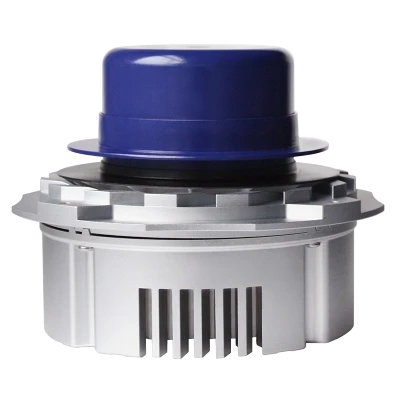
In ventilation, air conditioning, refrigeration, air purification, and equipment cooling systems, centrifugal fans are widely used to overcome resistance created by filters, heat exchangers, air ducts, and cabinet structures. Compared with axial fans, centrifugal fans are more commonly used in applications that require a certain level of static pressure. However, even within the centrifugal fan category, different blade designs can lead to differences in airflow organization, installation methods, and suitable operating conditions.
Common centrifugal impeller designs mainly include forward-curved and backward-curved types. They are not simply a matter of which one is better. Instead, they are two different solutions for different equipment structures and system resistance conditions. When selecting a fan, airflow, static pressure, available space, noise requirements, operating hours, and control methods should all be considered together.
1. Start with the Blade Structure
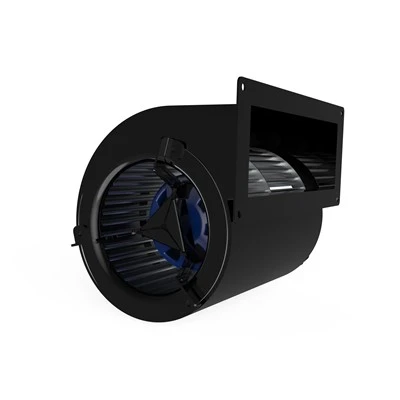
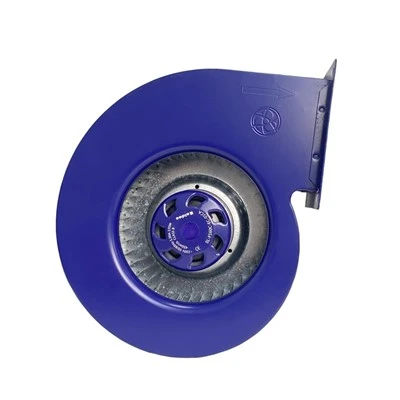
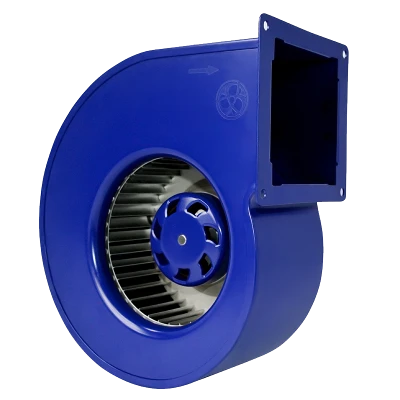
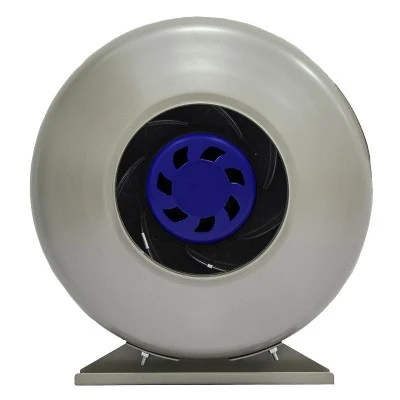
The blades of a forward-curved centrifugal fan generally curve in the same direction as the rotation of the impeller. This type of fan usually uses a multi-blade structure and is often combined with a scroll housing. Air enters from the center of the impeller, is driven by the blades, and is then discharged circumferentially. The scroll housing helps organize and guide the airflow.
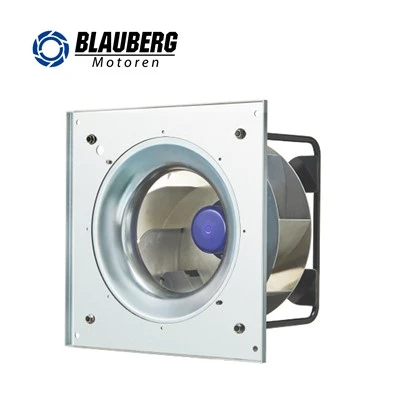
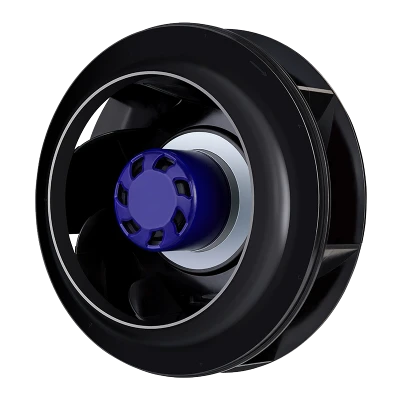
In a backward-curved centrifugal fan, the blades curve in the opposite direction to the rotation of the impeller. Compared with forward-curved impellers, backward-curved impellers usually have fewer blades, and the blade profile focuses more on airflow behavior. This type can be used with a scroll housing, but it is also commonly seen as a free impeller without a scroll housing. Air enters the impeller axially and is discharged radially, making it suitable for installation inside air handling units, fresh air units, filtration equipment, and other cabinet-type systems.
Simply put, forward-curved fans are more oriented toward compact air delivery, while backward-curved fans are more suitable for system ventilation. Only after the airflow path and resistance conditions of the equipment are clearly understood can the motor, control, and installation solutions be properly matched.

2.Where Are Forward-Curved Centrifugal Fans Suitable?
Forward-curved centrifugal fans are characterized by a compact structure and relatively concentrated airflow output. They are suitable for equipment with limited installation space, short airflow paths, and relatively low system resistance. Typical applications include fan coil units, small air conditioning equipment, air curtains, commercial refrigerated display cabinets, appliance air delivery, and local ventilation devices.
Because forward-curved fans are usually used together with a scroll housing, the overall structure is mature and convenient for equipment manufacturers to standardize. Under suitable operating conditions, they can meet the air delivery requirements of medium-to-low static pressure applications.
It should be noted that forward-curved fans are relatively sensitive to the operating point. When filter resistance increases, duct length becomes longer, or air discharge is obstructed, the fan may deviate from its original design condition, which can affect noise and energy consumption. Therefore, in systems with multiple filtration stages, complex ductwork, or long-term continuous operation, airflow, static pressure, and operating margins should be carefully calculated.

3.Where Are Backward-Curved Centrifugal Fans Suitable?
Backward-curved centrifugal fans are better suited for equipment with higher system resistance, longer operating hours, and higher requirements for noise and energy management. Typical applications include fresh air units, air handling units, air purification equipment, cleanroom circulation systems, data center cooling, laboratory ventilation, and industrial equipment cooling.
Backward-curved impellers usually provide relatively stable operating characteristics across a wider range of conditions. They are well suited for integrated design with cabinets, filters, heat exchangers, and silencers. When used as a free impeller, the fan does not necessarily rely on a traditional scroll housing, leaving more space for equipment layout and making modular equipment design easier.
For equipment that operates for long periods, fan selection should not be based only on purchase cost. Motor efficiency, speed control method, maintenance convenience, and system compatibility will all influence the long-term cost of use. In these applications, backward-curved fans are generally more suitable for variable air volume and demand-based control strategies.

4.After Choosing the Impeller Type, Consider the Motor and Control Method
Forward-curved and backward-curved designs address the matching of airflow organization and system resistance. EC and AC solutions, on the other hand, are related to operating control, speed regulation, and system integration. In actual selection, the impeller type should usually be determined first based on airflow path, static pressure requirements, and available installation space. Then the motor solution can be selected according to operating hours, control requirements, and project budget.
AC centrifugal fans have a mature structure and are suitable for equipment with relatively stable operating conditions and simple control requirements. EC centrifugal fans integrate the motor, drive, and speed control functions, making them suitable for systems that require speed regulation, linkage control, or demand-based air delivery.
For fresh air units, air purification equipment, data center cooling, cold chain equipment, and other applications with long operating hours, EC solutions can help improve system adjustability. They also make it easier to integrate with pressure, temperature, air quality, and other control signals. During selection, the control interface, speed range, installation space, working environment, and overall control logic of the equipment should all be confirmed.
5.Five Key Factors in Centrifugal Fan Selection
First, consider system resistance.
For short airflow paths and medium-to-low resistance equipment, forward-curved fans can be considered. For systems with more filters, heat exchangers, silencers, and long duct runs, backward-curved fans should be carefully evaluated.
Second, consider installation space.
Forward-curved fans are often used in integrated scroll housing structures and are suitable for fixed duct layouts. Backward-curved free impellers are more suitable for cabinet-type equipment and offer greater flexibility in layout.
Third, consider operating hours.
For intermittent or conventional operation, both structure and cost can be balanced. For long-term operation, energy consumption, noise, and maintenance conditions should be evaluated more carefully.
Fourth, consider noise requirements.
Fan noise does not come only from the motor and impeller. It is also closely related to inlet and outlet conditions. Uneven inlet airflow, obstructed discharge, and sharp duct bends may all affect the overall noise performance of the equipment.
Fifth, consider control requirements.
If the system requires speed control, linkage, monitoring, or demand-based air delivery, an EC solution can be evaluated. At the same time, the control interface should be checked to ensure compatibility with the complete equipment system.
6.Blauberg Centrifugal Fan Selection Approach
The Blauberg Motoren product line covers forward-curved centrifugal fans, backward-curved centrifugal fans, EC/AC motors, and a range of ventilation components, offering corresponding solutions for different equipment structures. For equipment with compact space and short airflow paths, forward-curved centrifugal fans can be evaluated. For systems with higher resistance, longer operating hours, and speed control requirements, backward-curved EC centrifugal fans can be considered.
The key to centrifugal fan selection is not to compare one impeller type in isolation, but to match the impeller, motor, air duct, filter, and control system as a whole. Only by returning to the actual operating conditions can the fan operate within a suitable working range.
Conclusion
Forward-curved and backward-curved centrifugal fans each have their own application boundaries. Forward-curved fans are suitable for compact structures and medium-to-low resistance air delivery. Backward-curved fans are suitable for equipment with higher system resistance, longer operating hours, and more control requirements. In engineering selection, airflow, static pressure, noise, space, control method, and maintenance conditions should all be considered together, rather than relying on a single parameter. A suitable centrifugal fan does more than meet the required airflow. It must also match the overall equipment structure and system operating conditions. For equipment manufacturers and engineering projects, choosing the right blade type and motor solution helps the ventilation system run more stably, more controllably, and more in line with long-term operating requirements.