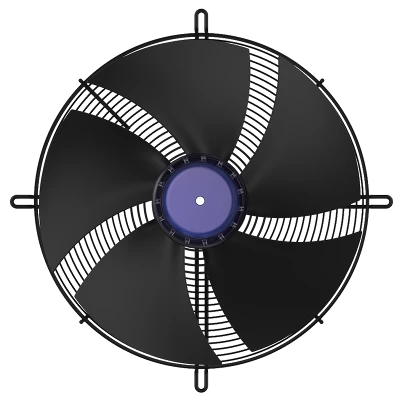
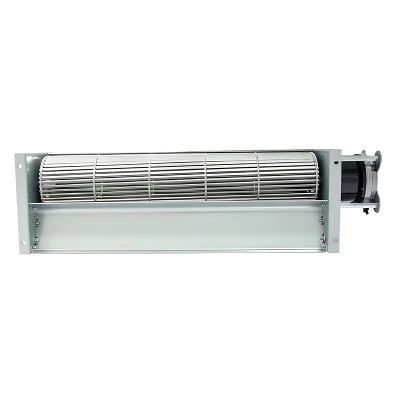
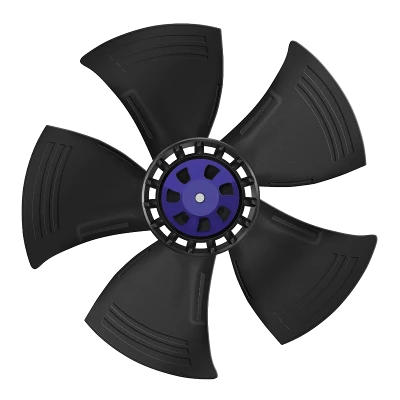
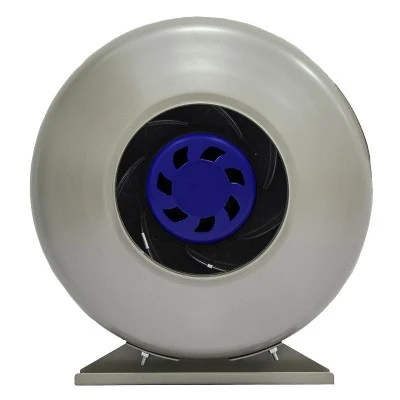
In HVACR equipment, fans have often been treated as supporting components. If the airflow, static pressure, dimensions and price matched the project requirements, the purchasing process could usually move forward. With the introduction of ErP 2026, this approach is changing.
Fan efficiency data, test conditions, technical documentation and supplier responsibility are becoming increasingly important. For air handling units, heat pumps, condensers, cleanroom FFU systems, data centre cooling and industrial ventilation equipment, fan selection now has a direct impact on compliance, delivery and long-term operating performance.
ErP 2026 generally refers to the latest round of EU ecodesign requirements for fans, with Regulation (EU) 2024/1834 as the key regulatory text. The regulation applies to motor-driven fans with an electric input power from 125 W to 500 kW and updates the existing ecodesign framework for fan products. For companies exporting to the European market or supplying international equipment manufacturers, fan selection is no longer only a performance issue. It is also a compliance matter that needs to be considered early in the procurement process.
1. From individual components to complete fan systems
The focus of ErP 2026 is not simply a higher efficiency threshold. More importantly, it places greater emphasis on the actual performance of the complete fan system. The motor, impeller, aerodynamic design, electronic control and installation conditions can all affect final efficiency.
For buyers, this means the key question is no longer only whether the motor is efficient. The more important question is whether the complete fan can operate efficiently at the required airflow and static pressure. If a fan runs far from its best efficiency range for long periods, energy consumption, noise, vibration and temperature rise may all increase.
Efficiency data under different test arrangements should also not be compared too casually. Inlet conditions, outlet conditions, duct connections and external structures can all influence the measurement category and final efficiency result. If a purchasing document only states "ErP compliant", the requirement may still leave room for interpretation. A more reliable approach is to ask the supplier to specify the applicable category, test conditions and corresponding efficiency data.
2. Why EC fans are becoming more important
EC fans are gaining attention not simply because they are a higher-grade alternative, but because they better match the way HVACR systems actually operate.
Air conditioning, refrigeration and ventilation equipment rarely run at full load throughout the year. In most applications, systems spend a large proportion of operating time under partial-load conditions. Traditional fixed-speed fans usually operate at a fixed state, while EC fans use electronically commutated motors and integrated controls to adjust speed according to actual demand.
In variable air volume systems, cleanroom pressure control, condenser pressure control and data centre cooling, demand-based fan operation is often more important than full-load efficiency alone. EC speed control can help reduce power consumption, control noise and lower the mechanical stress of long-term operation.
From a procurement perspective, EC fans should not be evaluated only by purchase price. They should be assessed in terms of total lifecycle cost, including initial cost, electricity consumption, commissioning convenience, control compatibility, maintenance requirements and future compliance risk.

3. Centrifugal fan selection depends on system matching
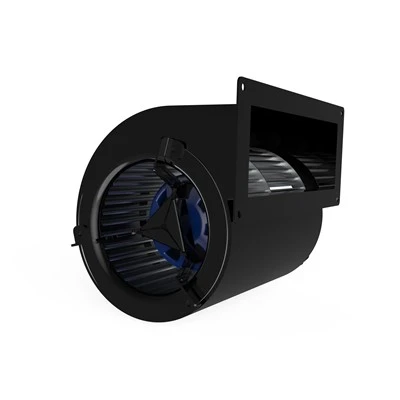
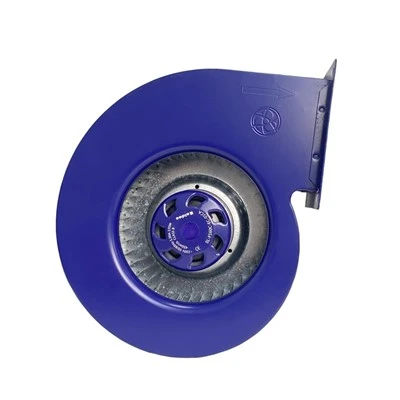
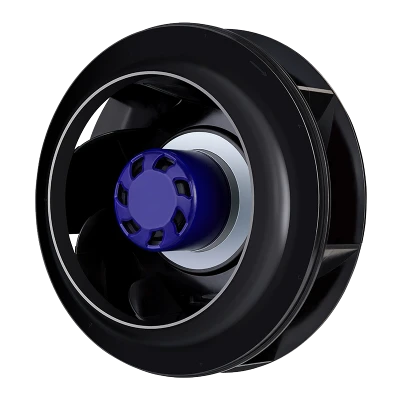
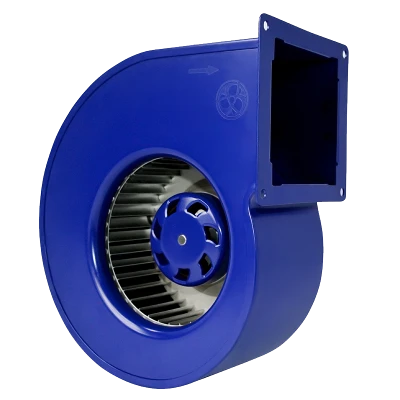
Centrifugal fans are widely used in HVACR systems, especially where airflow must overcome resistance from filters, coils, heat exchangers, ducts and compact equipment housings. Backward-curved centrifugal fans and plug fans are commonly used in air handling units, FFU systems, precision cooling, cooling modules and industrial ventilation equipment because of their compact structure, pressure capability and ease of integration.
However, centrifugal fan selection should not be based only on maximum airflow or maximum static pressure. What truly determines operating performance is whether the duty point, defined by the required airflow and external static pressure, falls within an efficient operating range. If a fan operates outside this range for long periods, energy use may rise, while noise, vibration and heat generation may also increase.
In the context of ErP 2026, buyers should also pay attention to the test conditions and operating points behind the efficiency data. Different installation methods, inlet and outlet conditions and system resistance can all affect actual fan performance. Efficiency values shown in a catalogue are only meaningful when they correspond to the real project conditions.
Therefore, buyers should clearly define target airflow, external static pressure, installation space, inlet and outlet conditions, operating hours, control method and noise requirements during the procurement stage. Only by checking these factors against the fan performance curve can buyers determine whether the selected product is truly suitable for the system, rather than relying on a single figure in the datasheet.

4. Compliance purchasing requires proper documentation
Under ErP 2026, technical documentation is becoming more important. Purchasing a fan is not only about buying a physical product. It also means obtaining a set of technical documents that can be traced, verified and reviewed.
Efficiency data, measurement category, product information, installation instructions, declarations of conformity and traceability documents may all be reviewed during project acceptance, export approval or customer audits. Products with low prices but unclear documentation may create additional costs later during equipment certification, export procedures or project approval.
This is especially important for equipment manufacturers. If the motor, impeller and controller are sourced from different suppliers and then assembled into a complete fan system, performance verification and documentation responsibility can become more complicated. By contrast, a complete fan solution provides clearer responsibility boundaries and can help shorten development, testing and delivery cycles.
5. Five points to confirm before ordering
First, confirm whether the supplier can provide applicable regulatory information, measurement category and efficiency data, rather than only general descriptions such as "high efficiency" or "energy saving".
Second, confirm the airflow, static pressure, power consumption and noise performance of the selected model at the actual duty point. Avoid selecting fans only by maximum parameters.
Third, confirm whether the control method meets equipment requirements, such as 0–10 V, PWM, Modbus or other interfaces, so that the fan can be integrated smoothly into the overall control logic.
Fourth, confirm whether the documentation is complete, including product information, installation instructions, efficiency data, declarations of conformity and traceability information.
Fifth, confirm the supplier's long-term support capability, including replacement models, spare parts availability, selection assistance and project response speed.
These points should be clarified at the RFQ and technical agreement stage, rather than being added after prototype testing.

6. Brand selection is returning to system capability
Against the background of new regulatory requirements, competition among fan suppliers is no longer limited to individual parameters. Efficiency, aerodynamic design, control technology, documentation capability and application experience are all becoming part of the product value.
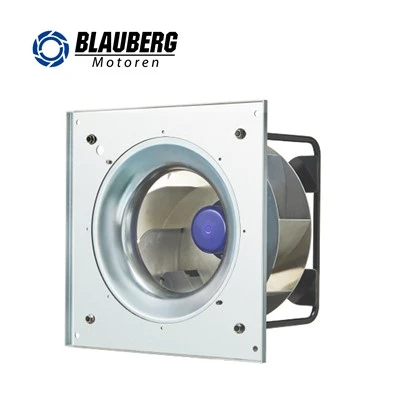
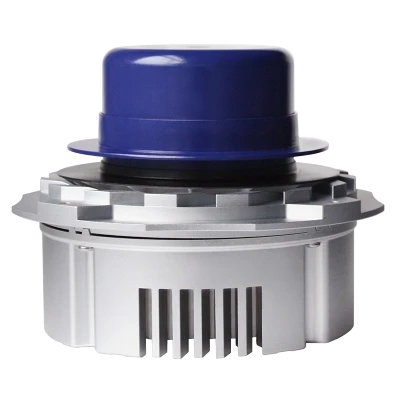
Blauberg's EC backward-curved centrifugal fans and plug fan solutions are built around EC external rotor motors, backward-curved impellers, speed control and application integration. They are suitable for ventilation, air conditioning, air purification, refrigeration and equipment cooling applications. For buyers, the real value lies not in one isolated specification, but in stable aerodynamic performance, clear technical documentation and selection support based on actual system conditions.
Conclusion
ErP 2026 is making fan procurement more precise and more technically demanding. Future purchasing specifications should not stop at airflow, static pressure, power and price. They should also include efficiency evidence, test conditions, control methods, documentation requirements and supplier responsibility.
EC centrifugal fans should no longer be viewed only as an energy-saving option. They are becoming a practical foundation for regulatory compliance, lower energy consumption and long-term reliability in HVACR systems.