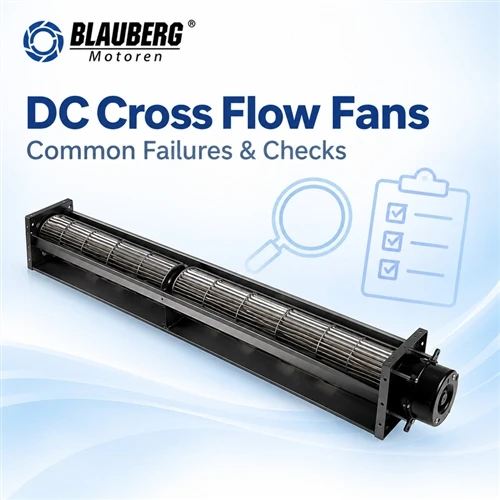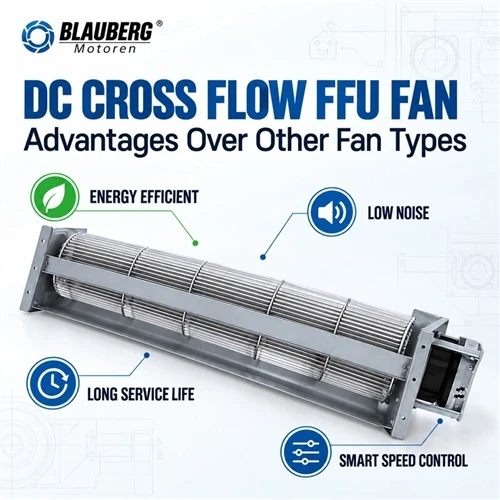
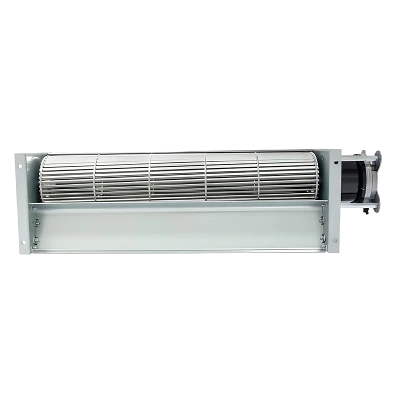

If you've ever worked with electronics, HVAC systems, industrial automation equipment, or even commercial refrigeration units, you've likely relied on a DC cross flow cooling fan to keep components from overheating. As a supplier of these critical cooling solutions, I've seen firsthand how even a small fan failure can trigger costly downtime, equipment damage, or product defects. DC cross flow fans differ from standard axial fans in their aerodynamic design-they move air perpendicular to the fan axis, creating a smooth, uniform airflow ideal for long, narrow spaces like laptop chassis, server racks, vending machines, and LED lighting panels. But like any electromechanical device, they aren't immune to failures. Over years of supporting clients across industries, I've noticed common issues that tend to pop up repeatedly, often due to improper selection, installation, maintenance, or design oversight. Understanding these failures is key to choosing the right fan for your application and avoiding preventable headaches.
The first and most frequent failure I encounter is airflow reduction or complete fan stalling, and most of the time, it's linked to inadequate or dirty airflow. DC cross flow fans rely on unobstructed intake and exhaust paths to pull and push air effectively. When air filters, grilles, or the fan's own blades get clogged with dust, lint, pet hair, or industrial debris, the airflow drops dramatically. I once worked with a small manufacturing client whose vending machines kept tripping temperature sensors, and after inspection, we found their 50mm DC cross flow fans were caked with dust from a nearby fabrication facility. The clogged blades meant the fan couldn't circulate enough air over the vending machine's refrigeration coils, leading to overheating and component wear. Another common cause of airflow issues is improper fan sizing or placement. If you select a fan with too low airflow rating for the heat load of your application, it will run constantly (instead of cycling as designed) which accelerates wear and eventual stalling. We often recommend clients reference their thermal load calculations closely, and for reference, our Blauberg VD-T050A-EE-418(R000) 50mm DC Cross Flow Fans are designed for compact, low-heat applications like point-of-sale terminals where space is tight but consistent airflow is non-negotiable. Even minor placement mistakes, like mounting the fan too close to a wall or blocking one end of the fan's air outlet, can disrupt the cross flow design and reduce performance by 30% or more, according to internal testing.

Next, bearing failure is another top culprit behind DC cross flow fan issues, and it tends to sneak up on users rather than causing sudden breakdowns. The bearings are the core component that allows the fan's shaft and blades to rotate smoothly, and they're subject to constant friction and stress during operation. There are two main types of bearings in these fans: sleeve bearings and ball bearings. Sleeve bearings, common in lower-cost or small fans, use a porous material soaked in oil to reduce friction. Over time, the oil can dry out, break down, or become contaminated with dust, leading to increased friction, uneven rotation, and eventually, the fan seizing up. Ball bearings, which are more durable, use metal balls in a race to reduce friction, but they're still vulnerable to damage from overloading, misalignment, or poor lubrication during manufacturing. I've seen ball bearing fans fail prematurely when they're subjected to constant vibration, like in heavy industrial equipment or moving vehicle applications. For harsher operating conditions, we offer larger fans with reinforced bearing systems, such as our Blauberg HD-T100A-EE-980(L000) 100mm DC Cross Flow Fans, which feature double ball bearings and a sealed housing to resist dust and vibration. A little foresight here-choosing the right bearing type for your environment-can save you from replacing fans every year.
Electrical failures are also extremely common, and they can be triggered by a range of factors from power surges to poor wiring. DC cross flow fans run on low-voltage power (typically 12V or 24V), which makes them more sensitive to voltage fluctuations than AC-powered devices. Power surges from unregulated power supplies, lightning strikes, or even switching on other large equipment in the same circuit can damage the fan's internal motor controller, which regulates speed and power delivery. I've had a client in the telecom industry lose a batch of 80mm DC fans after a temporary power spike during a storm; the motor boards fried, and the fans stopped working entirely. Another electrical issue is wiring damage, which can happen during installation, shipping, or ongoing use. If the fan's leads are crimped, pinched, or exposed to moisture or corrosive substances (like salt in marine applications), the connections can break or corrode, leading to intermittent operation or full failure. Even the fan's motor can fail if it's exposed to overvoltage, which forces the motor to work beyond its design limits, overheating and burning out the windings. To avoid these issues, it's important to use compatible power supplies-for example, our Blauberg VD-T080A-EE-1116(L000) 80mm DC Cross Flow Fans are engineered with built-in overvoltage protection, making them ideal for applications in areas with inconsistent power quality, like remote monitoring stations.
Which cross flow fan models should you review?
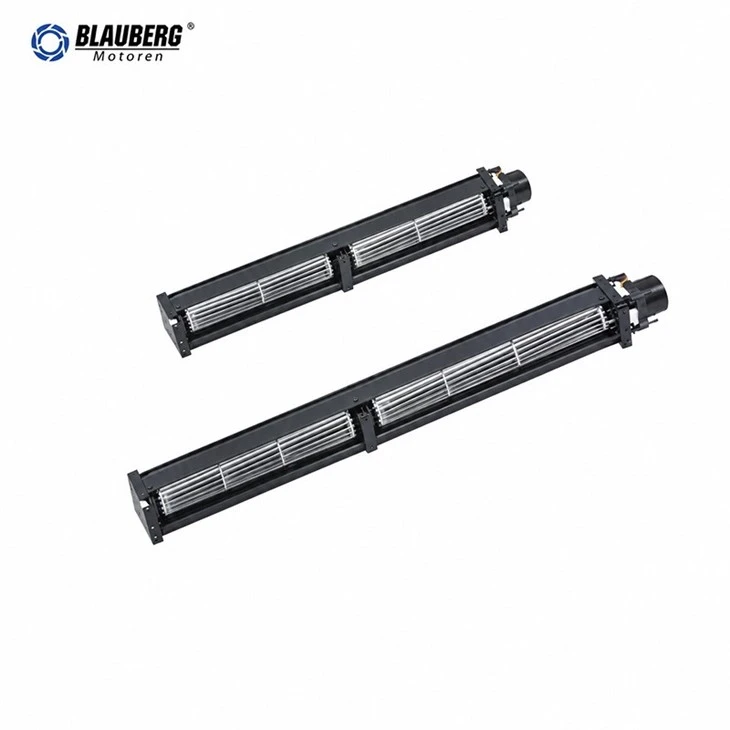
Blauberg VF-T030A-EE-1082(R002) 30mm DC Cross Flow Fans
30mm Cross Flow Fans, Approx. 175 m³/h maximum airflow and Approx. 17 Pa maximum static pressure.
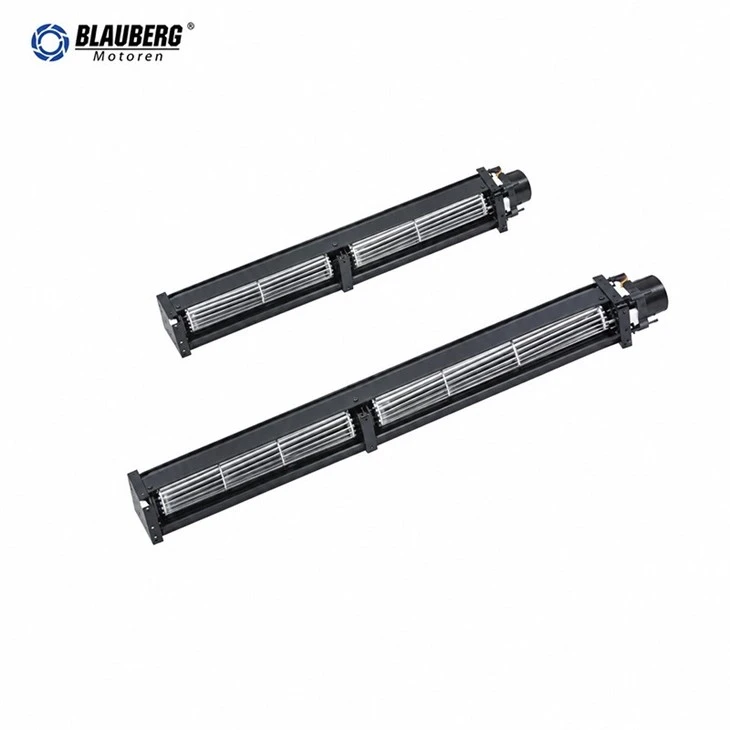
Blauberg VD-T030A-EE-1082(R002) 30mm DC Cross Flow Fans
30mm Cross Flow Fans, Approx. 175 m³/h maximum airflow and Approx. 17 Pa maximum static pressure.
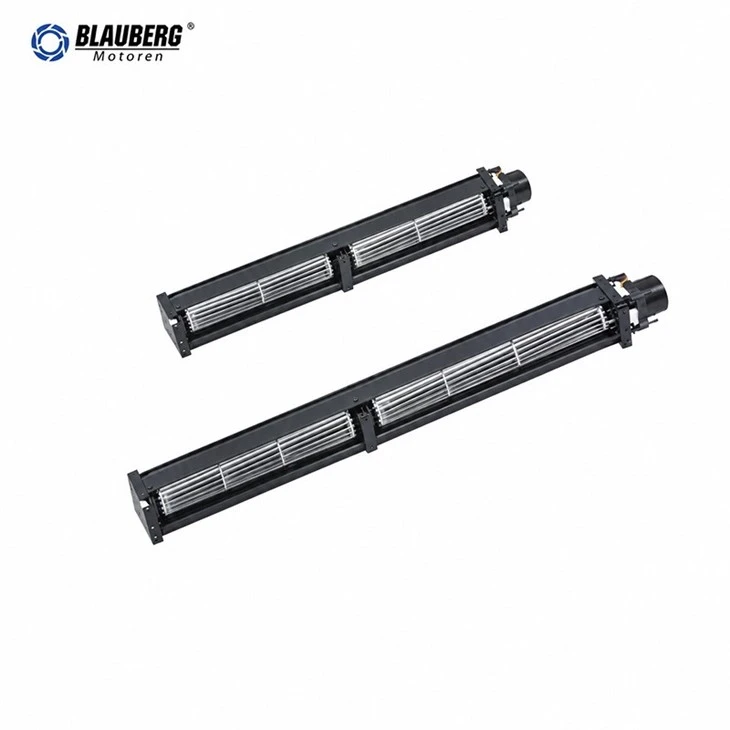
Blauberg VD-T030A-EE-986(R002) 30mm DC Cross Flow Fans
30mm Cross Flow Fans, Approx. 160 m³/h maximum airflow and Approx. 17 Pa maximum static pressure.
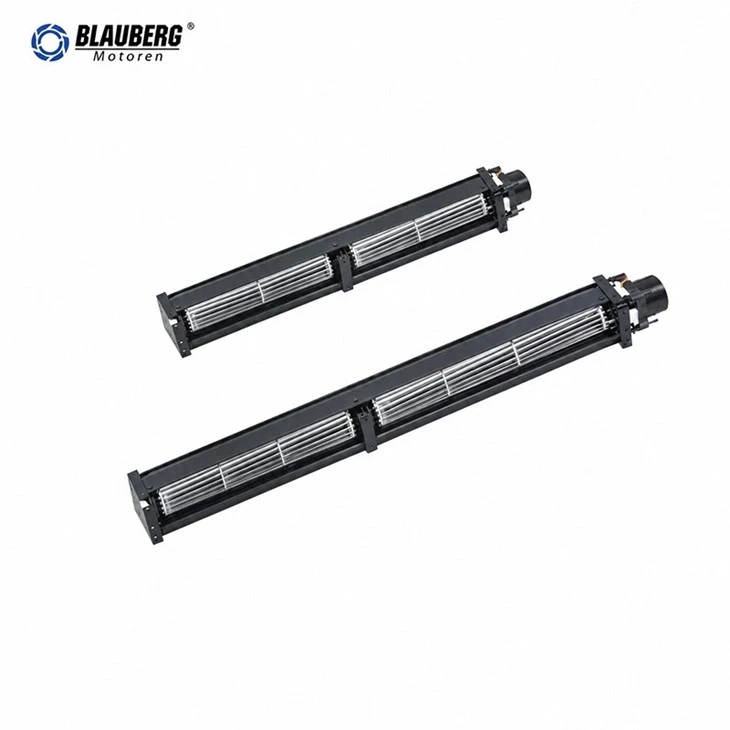
Blauberg VF-T030A-EE-986(R002) 30mm DC Cross Flow Fans
30mm Cross Flow Fans, Approx. 160 m³/h maximum airflow and Approx. 17 Pa maximum static pressure.
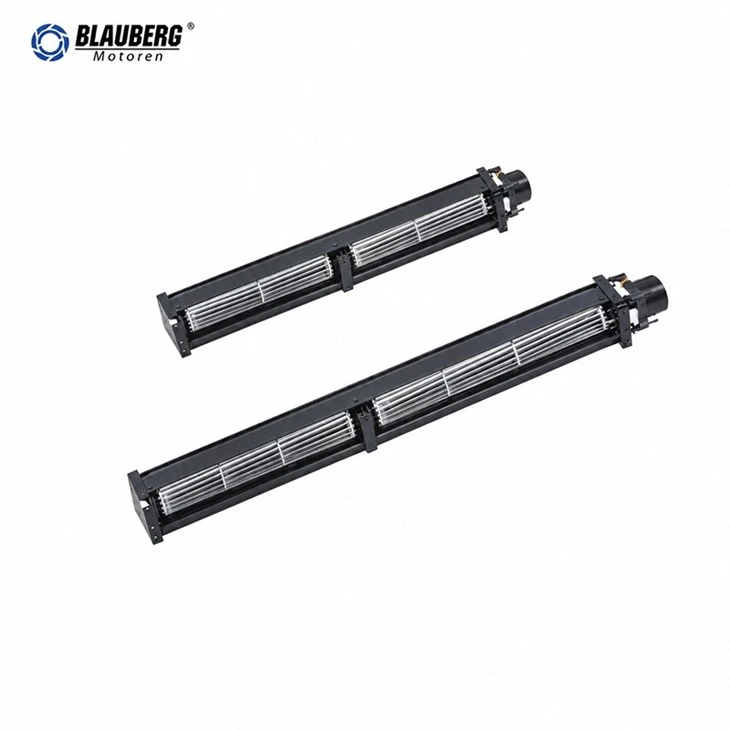
Blauberg VF-T030A-EE-920(R002) 30mm DC Cross Flow Fans
30mm Cross Flow Fans, Approx. 150 m³/h maximum airflow and Approx. 17 Pa maximum static pressure.
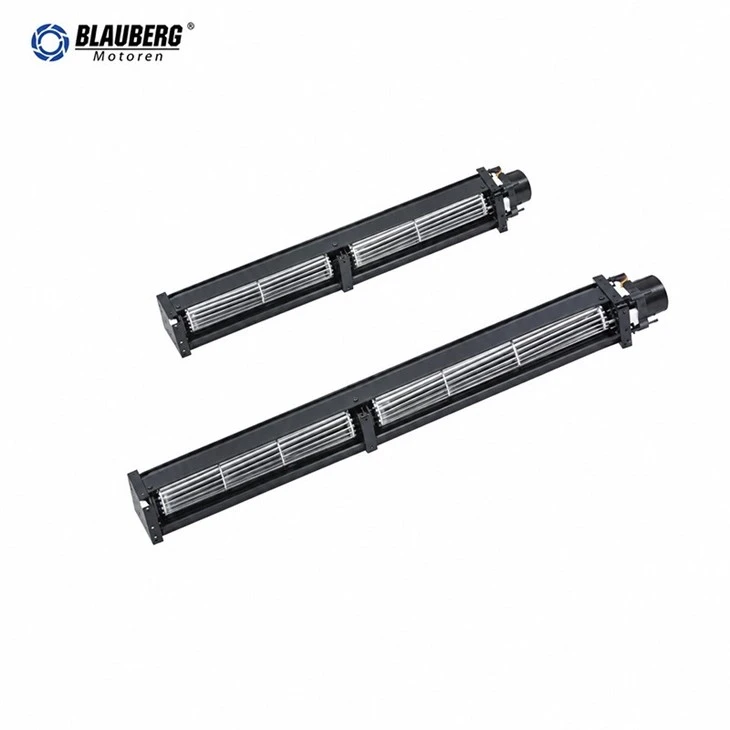
Blauberg VD-T030A-EE-920(R002) 30mm DC Cross Flow Fans
30mm Cross Flow Fans, Approx. 150 m³/h maximum airflow and Approx. 17 Pa maximum static pressure.
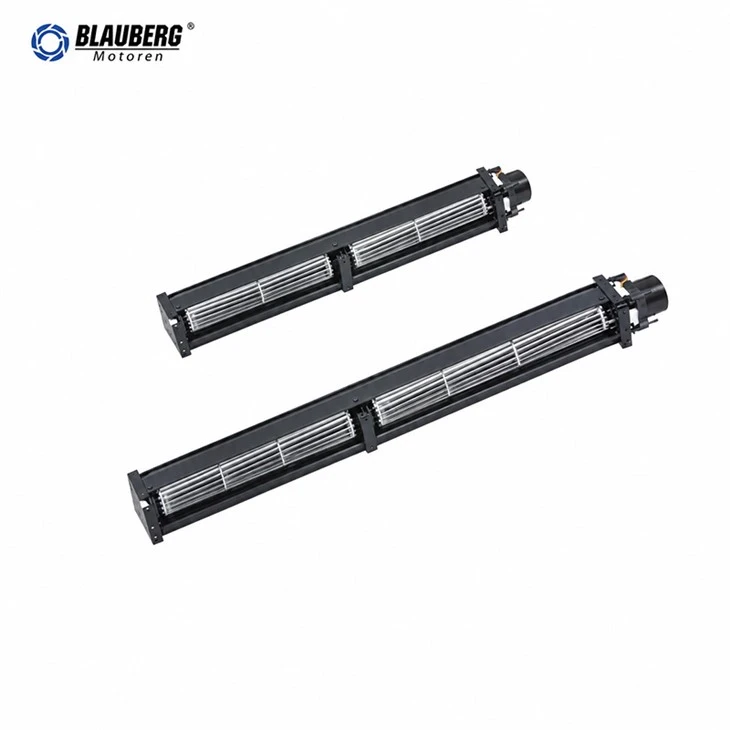
Blauberg VF-T030A-EE-800(R002)E 30mm DC Cross Flow Fans
30mm Cross Flow Fans, Approx. 130 m³/h maximum airflow and Approx. 17 Pa maximum static pressure.
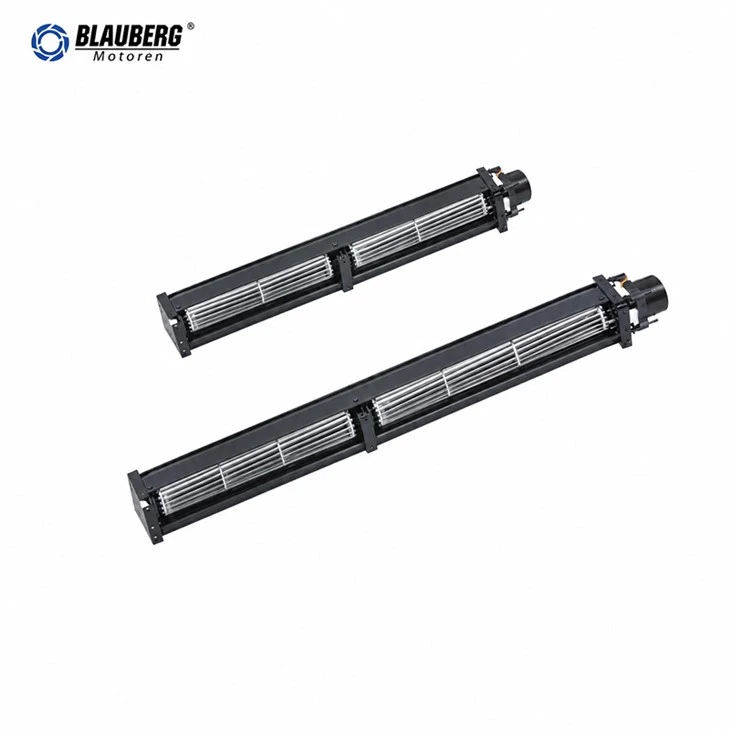
Blauberg VF-T030A-EE-854(R002) 30mm DC Cross Flow Fans
30mm Cross Flow Fans, Approx. 140 m³/h maximum airflow and Approx. 17 Pa maximum static pressure.
Product descriptions from the Blauberg catalogue, checked 22 September 2026. Listed airflow and pressure maxima are separate ratings; confirm the selected model at your operating point.
No fan failure list would be complete without blade damage, which can range from minor dents to complete breakage. The blades of DC cross flow fans are thin, precision-molded components designed to move air efficiently, and they're surprisingly vulnerable to physical damage. During shipping, rough handling can cause the blades to bend or crack, and even small bends can disrupt the fan's aerodynamics, leading to reduced airflow, increased noise, and added stress on the motor and bearings. In end-use environments, the blades can hit debris that's sucked into the fan, or be damaged during maintenance-like when a technician uses a rigid brush to clean the blades and nicks the edge. I once had a client who was repairing a bank of server fans and accidentally dropped a small screwdriver into one fan, which chipped a blade; within a week, that fan's bearings wore out prematurely because the uneven blade was creating vibration. Even extreme temperature changes can cause blade damage, especially if the blades are made of a material that doesn't expand or contract evenly. Our fans are made from high-grade ABS plastic or aluminum (depending on the model) to resist thermal stress, but it's still important to protect them from extreme impacts. For applications where physical damage is a high risk-like in rugged industrial equipment-our Blauberg VL-T060A-SP-304(R002) 60mm AC Cross Flow Fans feature reinforced, impact-resistant blades that hold up better in harsh working conditions.
Noise and vibration issues, while not always a complete failure, are still considered common performance problems that can indicate underlying issues. DC cross flow fans are designed to operate quietly, but when something goes wrong, they can produce a noticeable whir, rattle, or grinding sound. This is often a sign of blade imbalance-from bending, dirt buildup, or damage-that creates uneven rotation and vibration. Over time, that vibration can loosen internal components, damage mounting brackets, and shorten the fan's lifespan. Noise can also come from bearing wear, as we discussed earlier, or from air turbulence when airflow is blocked. In some cases, a fan that's not properly grounded can produce electrical hum, which is a nuisance for applications like audio equipment or medical devices where noise sensitivity is critical. Intermittent operation, another common issue, can be caused by a variety of electrical or mechanical problems: loose connections, a faulty motor controller, or even a dirty sensor that cycles the fan on and off erratically. I once worked with a manufacturer of home automation systems where their control panels had fans that would randomly turn off and on; after testing, we found the fans had loose wiring connections from poor soldering during assembly, and securing the leads fixed the issue.
So how do you avoid these common failures as a user? The key starts with selecting the right fan for your specific application-not just picking the smallest or cheapest option. Consider factors like thermal load, operating environment, power supply, and space constraints. For example, if you're building a small LED lighting fixture that runs at low temperatures, our Blauberg VL-T050A-SP-98(R000) 50mm AC Cross Flow Fans are a great choice, offering reliable cooling for low-heat electronics. Once you've selected the right fan, proper installation is crucial: make sure intake and exhaust paths are unobstructed, use compatible mounting hardware to avoid vibration, and follow all wiring guidelines to prevent electrical damage. Regular maintenance, like cleaning the fan and air paths every 6 to 12 months (depending on your environment), can prevent clogging and extend the fan's lifespan. If you're experiencing any of these failures in your equipment, don't hesitate to reach out to a specialist who can help diagnose the issue and find the right solution.
At the end of the day, DC cross flow cooling fans are small but critical components, and their failure doesn't have to be inevitable. By understanding the common issues that come up-clogged airflow, bearing wear, electrical damage, blade issues, and noise/vibration-you can take proactive steps to avoid downtime and keep your equipment running smoothly. If you have questions about selecting the right fan for your application, or need support troubleshooting existing issues, our team is here to help. We work with businesses of all sizes, from small startups to large industrial manufacturers, to deliver high-quality cross flow fans tailored to their needs.

References
- ASHRAE Handbook: HVAC Systems and Equipment, Chapter 21 (Fans and Air Distribution)
- "DC Cross Flow Fan Performance and Failure Mode Analysis," Journal of Electromechanical Design, 2021
- Blauberg Cross Flow Fan Technical Datasheets, Internal Engineering Documentation, 2022
- Industrial Vibration and Bearing Failure Prevention Guide, National Institute of Occupational Safety and Health (NIOSH), 2020
Category of Blauberg Products
Built on German engineering principles, focusing on precision, reliability, and long-term performance. Through efficient and scalable manufacturing, we deliver high-quality ventilation solutions with optimized cost structure, ensuring strong value for global OEM and project-based customers.