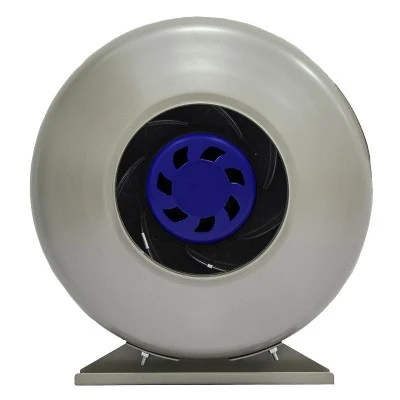
In HVAC & Ventilation applications, when airflow decreases but a backward centrifugal fan becomes louder, sound alone cannot establish that stall has occurred. First determine whether the airflow reduction results from an intentional speed reduction or from an operating-point shift caused by increased resistance in filters, coils, or dampers. Then check the performance curve for the corresponding speed to confirm whether the actual operating point remains within the permitted range. Also check for resonance, loose components, and control fluctuations.
Air handling unit fans may sound normal when first installed, but develop a low rumble after a period of use. Dirty filters are one possible area to investigate, but quieter operation after cleaning does not prove that stall occurred beforehand. The more useful troubleshooting question is: when the noise appeared, what changed in airflow, pressure, rotational speed, and control output?
01 First Ask: What Caused the Airflow to Decrease?
At a constant rotational speed, increased resistance in the filter section changes the system curve. The new system curve typically intersects the fan performance curve for that speed at a lower airflow. With demand based fan speed control, intentionally reducing speed to match demand means operating on a different speed curve. Both situations may appear as 'reduced airflow', but their aerodynamic conditions cannot be treated as equivalent.
For EC fans for air handling units, the control mode also affects what you observe. Constant-airflow control may compensate for increased filter or heat exchanger resistance by raising the speed until a system or drive limit is reached. A clogged filter therefore does not necessarily first appear as reduced airflow; it may instead cause higher speed, greater pressure demand on the fan, and potentially increased input power. Once the fan reaches its maximum speed, power, or another operating limit and can no longer compensate for the increased system resistance, actual airflow will usually begin to fall progressively below the setpoint.
02 Check the Curve Intersection Rather Than Guessing a Stall Percentage
When selecting backward centrifugal fans, pay particular attention to operation on the low-airflow, high-pressure side. Backward-curved impellers often offer favorable efficiency and power characteristics, but 'non-overloading' does not mean that the entire low-airflow region is suitable for stable, continuous operation. The stable operating range for each impeller design, speed, and installation condition must still be determined from the performance information for the specific model.
 The following example uses a constant speed: after system resistance increases, the new system curve intersects the fan curve at point B, where airflow is lower than at the original point A. Point B alone does not indicate that the fan has entered a stalled or unstable region. This must be assessed using the performance curve for the specific model and the operating range specified by the manufacturer.
The shape of a performance curve alone cannot establish whether stall is occurring in the actual installation. Even a curve without an obvious dip does not mean that the entire low-airflow region is suitable for continuous operation. Similarly, 'non-overloading' primarily describes power characteristics under particular operating conditions. It is a separate issue from whether the fan stalls or can operate stably at different speeds and under different installation conditions.
When a 'stall margin' is specified, clarify how the figure was obtained: which boundary it references, which parameters are used in the calculation, and which speeds and installation conditions it applies to. A percentage alone is insufficient to determine whether actual operating conditions fall within the permitted range.
03 When You Hear Rumbling, Distinguish Between the Possible Causes
Stall is generally associated with flow separation on the blades or within the blade passages; rotating stall involves localized stalled regions propagating around the circumference. Surge is an oscillation in airflow and pressure resulting from interaction between the fan and the system. These phenomena may produce abnormal sound, but not every low-frequency sound should be called 'surge'.
These observations are only troubleshooting clues; sound alone cannot confirm stall. The installed assembly affects the system's resonance characteristics, so abnormal sound on site cannot be assessed solely from the fan's performance curve.
04 Fan Selection by Airflow and Static Pressure: Check Clean and Loaded Filters
For AHU fans, providing only 'maximum airflow' makes it difficult to identify the operating point accurately in the actual application. Filter and coil resistance also matters when selecting fresh air unit and dehumidifier fans. Selection should confirm the following operating conditions:
-
The airflow and pressure required under normal and minimum-demand conditions; noise reduction must not compromise the project's specified outdoor-air volume or differential-pressure requirements.
-
The operating points with clean filters and with filters at the project's specified final resistance. If the final resistance requirement has not been defined, establish this parameter first rather than assuming a value.
-
The manufacturer's permitted speed, power, temperature, and stable operating ranges for these conditions, and how alarms or corrective actions are handled when a limit is reached.
-
Whether the inlet, outlet, and nearby obstructions in the actual enclosure match the conditions used for selection.
When selecting a high static pressure centrifugal fan, allowing some pressure margin is not simply a matter of choosing a larger unit. If actual operating conditions remain in an unstable or non-recommended region of the curve, meeting airflow and pressure requirements does not by itself mean that operation is suitable. Inlet turbulence, swirl, and obstructions also affect the actual inlet flow field and fan performance. When abnormalities occur on site, check the actual installation conditions as well as the product performance curve.

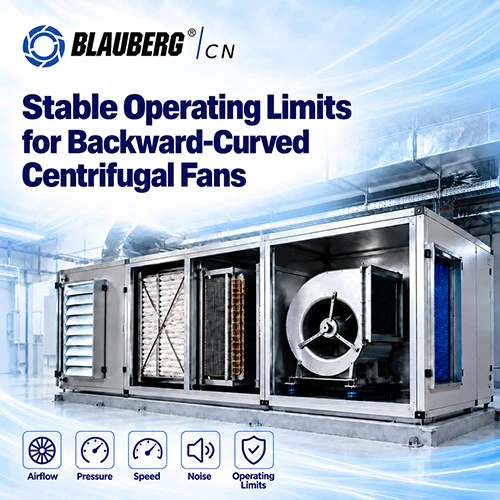
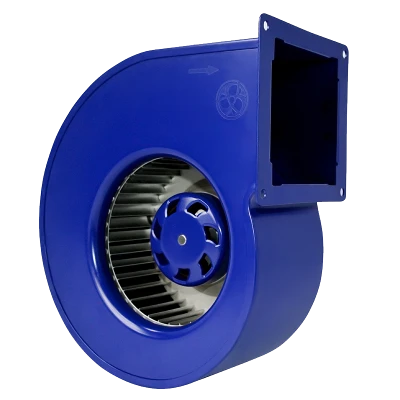
Illustration of a backward-curved AHU centrifugal fan and filter section in an air handling unit
05 Record Key Operating Conditions to Support Later Troubleshooting
The following parameters are primarily intended for on-site records and subsequent comparisons; they do not represent universal acceptance limits. For an AHU or cleanroom ventilation fan project, both parties should agree on measurement locations, instruments, operating conditions, and acceptance methods before comparing results.
If the enclosure needs to be opened or the impeller cleaned or inspected, qualified personnel should first shut down the equipment and isolate the relevant energy sources to prevent unintended startup and accidental impeller rotation. Do not deliberately close dampers to push the equipment into an abnormal operating region, or bypass protection to 'find the stall point'.
06 Conclusion
For backward centrifugal fans, lower airflow accompanied by higher noise should prompt a review of the operating conditions, rather than an immediate diagnosis of stall. The first distinction is whether airflow has fallen because speed was deliberately reduced or because system resistance increased. Control mode matters: a constant-airflow system may initially respond to filter loading by increasing speed, pressure, and power before airflow falls. Assess the actual operating point against the performance curve and permitted operating range for the specific fan model, speed, and installation. Neither a non-overloading power characteristic nor an undefined stall-margin percentage establishes stable operation. Investigate aerodynamic instability alongside resonance, loose components, rubbing, and control fluctuations, using synchronized airflow, pressure, speed, control, noise, and vibration records. Selection should cover normal demand, minimum demand, clean filters, and the specified final filter resistance, while respecting ventilation requirements and manufacturer limits. Actual enclosure geometry and inlet conditions must also match the selection assumptions. Agree on measurement methods and acceptance conditions so that comparisons remain meaningful. Any inspection requiring access to the impeller must follow shutdown and energy-isolation procedures. Reliable diagnosis and stable operation depend on matching measured conditions to documented limits, then making adjustments supported by evidence rather than by sound alone or a single headline performance figure.