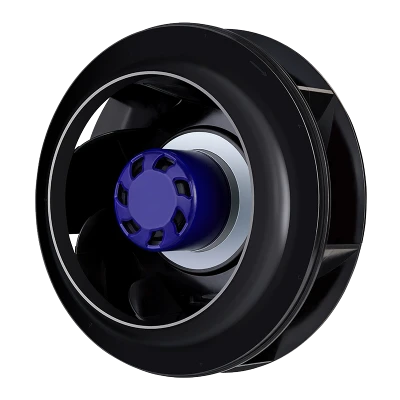
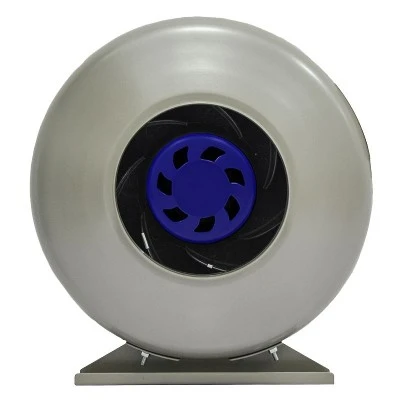
If documentation for a backward centrifugal fan with an EC drive states 'static efficiency of 73% to 82%', do not immediately compare it with other products. First establish which power input is used in the efficiency calculation, which operating point it represents, and which components fall within the measurement boundary. This range is an illustrative claim to be verified, not a measured result for any Blauberg Motoren model.
01 First Clarify: What Is the Denominator in This Efficiency Calculation?
When reviewing an EC centrifugal fan, a few missing words beside 'efficiency' can change the comparison. First confirm whether the documentation gives fan static efficiency or static efficiency including the drive. The former uses mechanical power input to the fan, or shaft power, as its power boundary; the latter uses electrical power input to the drive system. EC describes the motor and electronic drive arrangement. Motor efficiency must not be equated directly with the aerodynamic efficiency of the complete fan.
Another easily overlooked detail is that fan static pressure cannot simply be replaced by the static-pressure difference between two arbitrary measurement locations. Total pressure, static pressure, outlet dynamic pressure, and power boundaries each have defined meanings. When comparing products, confirm that the test reports use consistent definitions.
02 Use Hypothetical Numbers to Make the Difference Clear
Assume an operating point with an airflow of 1.0 m³/s, equivalent to 3600 m³/h; a fan static pressure of 600 Pa; mechanical power input to the fan of 800 W; and electrical power input to the drive system of 1000 W. Under simplified conditions that neglect compressibility corrections, multiplying airflow by static pressure gives approximately 600 W of static air power.
Using mechanical power input to the fan as the denominator gives a static efficiency of approximately 600 ÷ 800 = 75%. Using electrical power input to the drive system gives a corresponding static efficiency including the drive of approximately 600 ÷ 1000 = 60%. These are results for the same hypothetical operating point using two different power boundaries; they do not mean that a particular fan's efficiency has dropped from 75% to 60%. Formal testing still requires the necessary corrections under the agreed standard and consideration of measurement uncertainty.
An efficiency range such as '73% to 82%' therefore requires further confirmation of the corresponding model, speed, operating point, and efficiency definition. A curve without axes and test conditions is insufficient to establish whether the figures apply to a particular project.
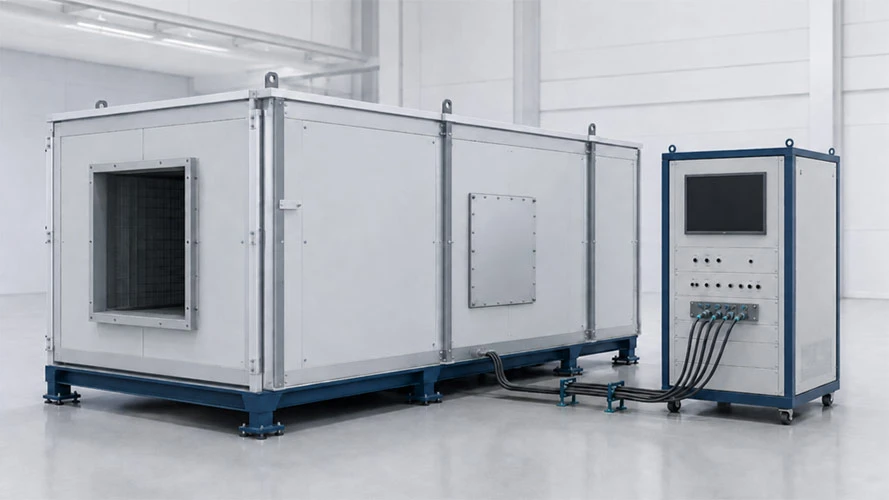
An enclosed air-performance test chamber and instrument cabinets;
actual laboratory qualifications and testing capabilities must be verified
03 A Test Standard Must Be More Than a Name on the Cover
Identifying a test standard in the report is the starting point for verifying results. AMCA 210 covers laboratory testing of fan aerodynamic performance, including measurements of airflow, pressure, power, and speed; ISO 5801 specifies standardized test installations and test methods. Naming a standard alone does not establish that results are comparable. The specific edition, test conditions, and data-processing methods must also be checked.
Procurement documents or test specifications should state the standard edition and acceptance requirements. The edition applicable to a project and the criteria for determining acceptance should be defined in the test specification or contract. A universal 'allowable deviation' cannot be inferred from the standard's name alone.
Test results should also document the following conditions:
- Model and configuration: whether the impeller, motor, controller, flow-guiding components, guards, and other items match the product actually supplied.
- Test apparatus and arrangement: whether the apparatus type, measurement sections, inlet and outlet accessories, and installation conditions are clearly defined and traceable.
- Operating conditions: actual rotational speed, electrical supply conditions, air density, and the definitions used for airflow and pressure.
Measurement and data processing: raw measurements, measurement locations, conversion conditions, how power values were obtained, instrument calibration information, and measurement uncertainty.
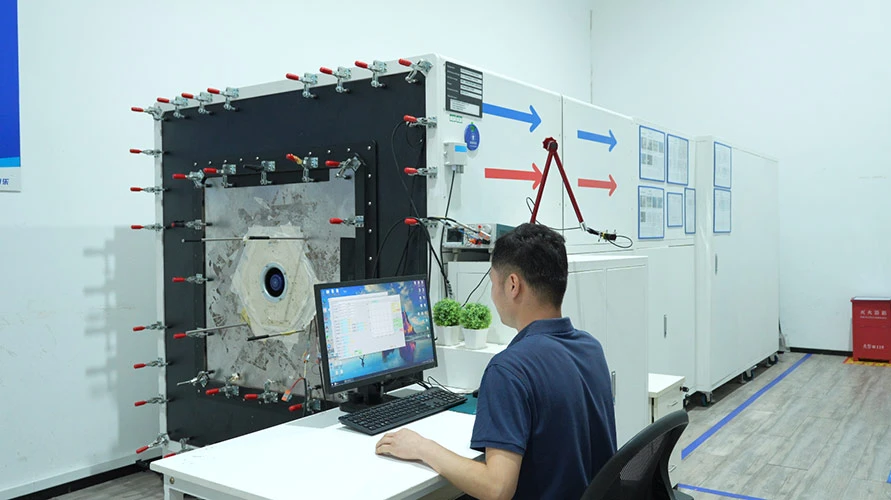
Blauberg Motoren Aerodynamic Laboratory
04 Prioritize Efficiency at the Actual Operating Point
Peak efficiency occurs at a specific operating point. In HVAC & Ventilation projects, how closely the equipment approaches that efficiency in service also depends on airflow, pressure, and the control strategy, including demand based fan speed control. If part-load performance or operating energy use matters, assess frequently used part-load conditions as well as rated conditions. Fan selection by airflow and static pressure should not rely on the highest efficiency figure alone.
When comparing EC fans for air handling units or other EC fan solutions, record the actual electrical input power to the fan and its drive system at each agreed operating point. Evaluating fan energy consumption also requires defined airflow and pressure conditions and consideration of the motor and drive system. One peak-efficiency percentage cannot represent every operating condition.
Similarly, a claim of EC fan retrofit energy savings of '8% to 12%' must identify the comparison baseline. For an AHU fan wall retrofit, for example, compare both solutions under the same air-delivery duty, with consistent airflow, pressure, accessories, and power boundaries. Then use the hours spent at each operating condition to estimate actual electricity savings. Full-speed power alone, without a load profile, cannot support a reliable annual savings estimate.
If acceptance testing covers an entire air handling unit, distinguish its measurement boundary from that of individual air handling unit fans. Laboratory fan test results cannot directly replace testing of the complete installed unit. On-site measurements must also follow methods agreed for the actual system.
05 Turn Efficiency Claims into Verifiable Records
'Tested to a particular standard', 'the laboratory has the relevant testing capability', and 'the product holds the relevant certification' are different statements. Certification must be verified against the specific product, certification scope, and supporting documents. It cannot be established solely from a standard number on a test report.
When reviewing documentation from an EC centrifugal fan supplier, start with the test conditions behind the efficiency figures, then trace them to the test report and the configuration actually supplied. If information is missing, list what must be provided rather than inferring results from experience.
06 Conclusion
Verifying an efficiency claim for backward centrifugal fans starts with a clear definition of what is measured. Confirm whether the denominator is shaft power or electrical input to the motor and drive, and keep static and total efficiency separate. The hypothetical example demonstrates why the same operating point can yield 75% using shaft power and 60% using electrical input without any change in fan performance. Neither result validates a product claim of 73% to 82%. Meaningful comparisons require matching airflow, pressure, speed, configuration, accessories, and power boundaries, supported by traceable measurements and stated uncertainty. AMCA 210 or ISO 5801 on a report is only a starting point: verify the edition, test arrangement, corrections, and agreed acceptance criteria. Product certification requires separate evidence. For operating-cost decisions, compare electrical input at the duty points the equipment actually uses, including part-load conditions, and combine these values with operating hours. A peak efficiency or full-speed power figure cannot establish annual savings. Keep the supplied configuration linked to its curves, measurement tables, report number, and acceptance records. Document missing information and resolve discrepancies through agreed checks or retesting. This approach makes efficiency comparisons more useful for selection and procurement while keeping conclusions tied to the actual air-delivery task.