A Comprehensive Guide to Design, Function, and Applications
In many industrial settings-from HVAC systems and industrial ventilation to air purification-efficient air movement is crucial. Among various fan designs, the backward curved centrifugal fan has gained prominence for its superior efficiency, low noise, and reliable performance. This article provides an in-depth look at the design, working principles, advantages, and applications of backward curved centrifugal fans, while also highlighting how our high-quality products play a role in achieving optimal air management.
Overview and Significance
Centrifugal fans are widely used to move air or gases at high pressures, and the backward curved variant is particularly effective for applications that demand steady airflow with minimal energy loss. With backward curved blades, these fans efficiently convert the kinetic energy of moving air into static pressure. This makes them ideal for ventilation in industrial plants, air conditioning systems, and air purification units.
Search engine results and industry-leading publications highlight that the design of backward curved fans not only maximizes airflow efficiency but also helps reduce operational noise-an essential factor in applications such as hospitals, educational facilities, and office environments.
Structural Features
Impeller Design:
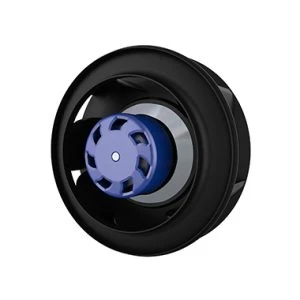
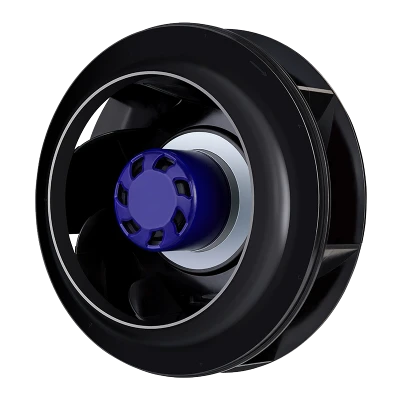
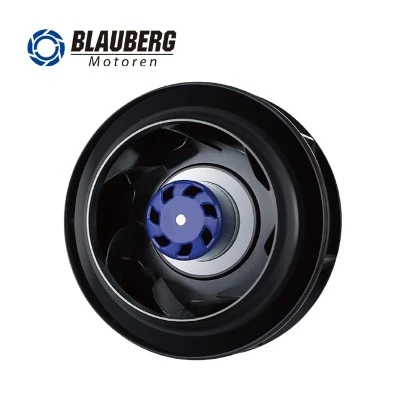
At the core of a backward curved centrifugal fan is its impeller. Unlike forward curved or radial blade designs, the blades in a backward curved fan are angled away from the rotation direction. Key design characteristics include:
Aerodynamic Airfoil Shape: The blades resemble wings, optimizing airflow by minimizing separation and turbulence along the surface.
Variable Blade Thickness: The radial variation in blade thickness is designed to maintain uniform pressure distribution and reduce energy loss.
Reverse Curvature: This specific curvature directs airflow outward more efficiently, ensuring that air is expelled with increased static pressure.
Fan Housing:
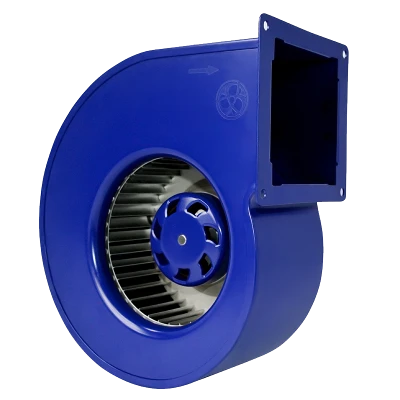
The housing, typically designed as a volute (spiral casing), plays a significant role in the overall performance:
Optimized Airflow Path: The volute collects the air accelerated by the impeller and gradually converts its kinetic energy into pressure energy, resulting in a steady airflow output.
Minimal Losses: The precise shape and dimensions of the housing ensure that air losses are minimized, which further enhances fan efficiency.
Working Principle
Backward curved centrifugal fans operate on the principle of centrifugal force. When the fan motor drives the impeller, air is drawn in axially from the fan's center. As the impeller rotates, the backward curved blades force the air radially outward. Here's a step-by-step breakdown:
Air Intake: Air is drawn into the center of the fan.
Acceleration: The impeller blades accelerate the air as they rotate.
Air Discharge: The backward curvature of the blades directs the air towards the outer edge.
Energy Conversion: As the high-velocity air enters the volute housing, its kinetic energy is converted into static pressure, enabling the fan to overcome system resistance.
This process is highly efficient and is a key reason why backward curved fans are favored in systems requiring consistent pressure and airflow.
Aerodynamic and Operational Advantages
High Efficiency:
Backward curved fans typically outperform other centrifugal fan designs in terms of efficiency. Studies show that these fans can be 10%–20% more efficient than forward curved fans under similar conditions. This efficiency translates to reduced energy consumption and lower operational costs-an important consideration for continuous industrial applications.
Low Noise Operation:
The smooth aerodynamic flow provided by the backward curved design significantly reduces turbulence. Reduced turbulence means lower noise levels, which is particularly beneficial in noise-sensitive environments such as hospitals, schools, and modern office spaces.
Stable Performance:
The relatively flat performance curve of backward curved fans allows them to maintain consistent airflow and pressure even when system conditions change. This reliability is critical in industries where stable ventilation is mandatory, such as in chemical processing or pharmaceutical manufacturing.
Comparison with Other Fan Types
When evaluating fan options, it's essential to understand how backward curved centrifugal fans compare to other types:
Forward Curved Fans: While forward curved fans are often quieter at lower pressures, they tend to be less efficient at higher pressures. In contrast, backward curved fans excel in energy efficiency and maintain better performance stability.
Radial Blade Fans: These fans are designed for robust applications but may generate more turbulence. Backward curved fans offer a balance between high pressure output and smooth operation.
Top-ranking pages on this topic emphasize that the backward curved design strikes an optimal balance between energy efficiency, pressure generation, and noise reduction, making it a versatile choice for many applications.
Applications in Various Industries
Industrial Ventilation:
In large factories, plants, and warehouses, maintaining proper ventilation is critical for worker safety and process efficiency. Backward curved centrifugal fans are widely used to expel heat, dust, and fumes while ensuring that fresh air is continuously supplied to the facility.
HVAC Systems:
Both commercial and residential HVAC systems benefit from the steady and efficient airflow provided by backward curved fans. Their ability to maintain consistent static pressure makes them ideal for air handling units in shopping malls, hotels, and central air conditioning systems in residential complexes.
Air Purification:
In environments where air quality is paramount-such as hospitals, laboratories, and cleanrooms-backward curved fans drive the filtration systems efficiently. Their low noise and high efficiency ensure that air is continuously purified without adding to environmental noise pollution.
Energy Savings and Environmental Impact:
Because of their efficiency, backward curved fans contribute to significant energy savings over time. Reduced energy consumption not only lowers operational costs but also minimizes the environmental footprint of ventilation systems, making these fans an eco-friendly option.
Blauberg-motoren's Expertise and Product Range
At Blauberg-motoren, our commitment to innovation and quality is reflected in our range of high-performance centrifugal fans. Our backward curved centrifugal fans are engineered to deliver:
Superior Energy Efficiency: Optimized aerodynamic designs minimize energy loss, ensuring maximum airflow with reduced power consumption.
Low Operational Noise: The advanced blade geometry and housing design reduce turbulence, resulting in quieter operation.
Robust and Stable Performance: Our fans are built to operate consistently even under varying loads and system resistances, making them ideal for demanding industrial applications.
Some of our standout products include our 280mm EC Backward Curved Centrifugal Fan and other models engineered for specific industry needs. Certified with UL, CE, ROHS, CCC, and ISO standards, our products provide reliable, high-quality solutions for ventilation, air conditioning, and air purification systems.
Conclusion
Backward curved centrifugal fans represent a significant advancement in fan technology, combining advanced aerodynamic design with practical efficiency and reliability. Their unique construction enables high static pressure output, low noise levels, and stable performance across a range of applications-from industrial ventilation to modern HVAC systems and air purification.
For industries looking to optimize energy consumption and enhance system performance, backward curved centrifugal fans offer a compelling solution. With our expertise at Blauberg-motoren and a commitment to quality, we are proud to deliver products that meet the high demands of modern industrial and commercial environments.
By understanding the principles behind backward curved fans and their advantages over other fan types, you can make informed decisions to enhance your ventilation and air management systems. Whether you are upgrading an existing system or designing a new one, consider the benefits of backward curved centrifugal fans for a more efficient and quieter operation.