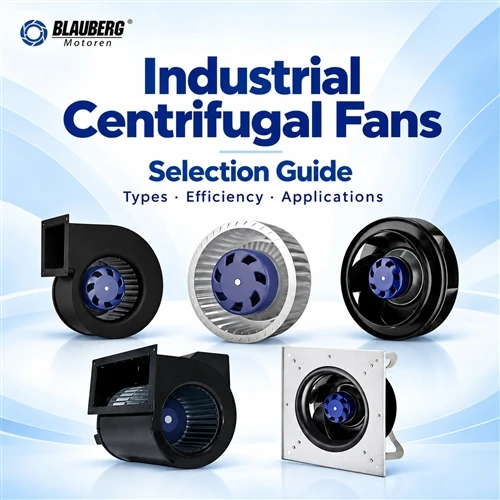
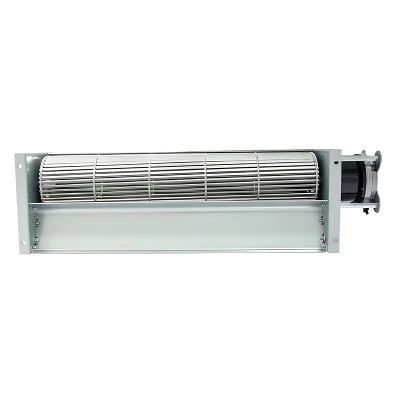
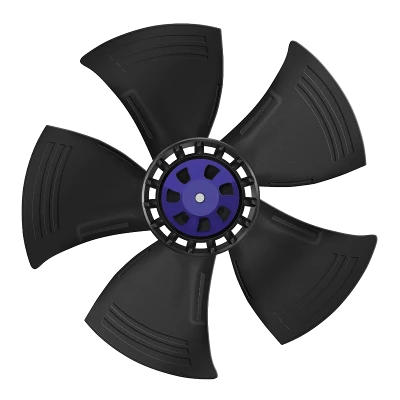
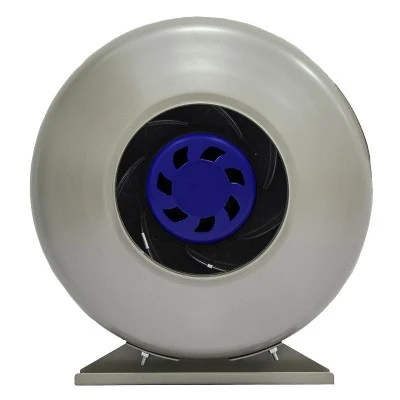
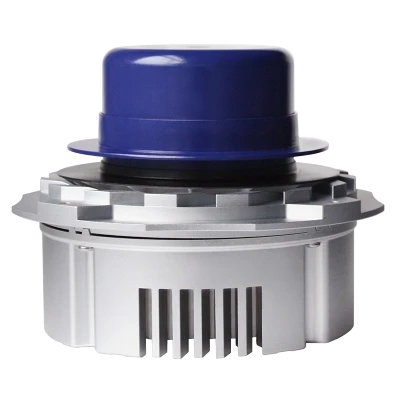
When selecting a centrifugal fan for industrial ventilation, HVAC systems, or air purification, one of the most common questions is: Which is better, forward centrifugal fan or backward centrifugal fan? Both types have distinct designs, performance characteristics, and ideal applications. In this article, we compare the two to help you determine the best choice for your specific requirements.
Understanding the Basics
Forward Centrifugal Fans:
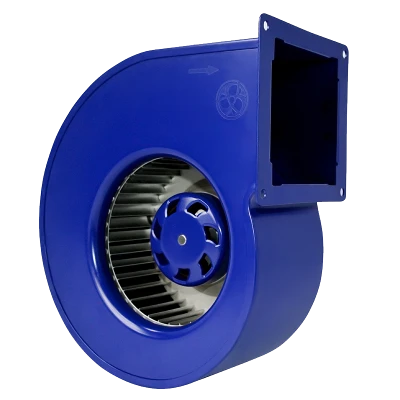
Forward (or forward-curved) centrifugal fans feature blades that curve in the same direction as the impeller rotation. This design allows air to be discharged in the same direction as the incoming airflow. Key characteristics include:
High Volume, Low Pressure: These fans are optimized for moving large volumes of air at relatively low pressure, making them ideal for applications with minimal resistance.
Low Noise at Low Loads: Their design generally results in quieter operation at lower flow rates, which is beneficial in noise-sensitive settings.
Backward Centrifugal Fans:
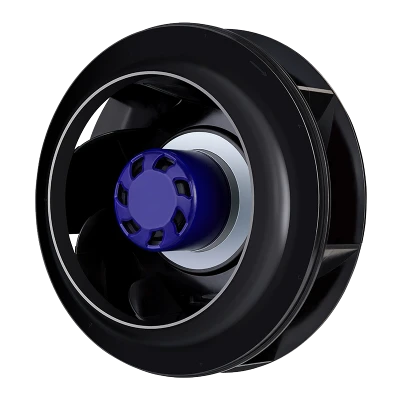
Backward (or backward-curved) centrifugal fans use blades that are angled opposite to the direction of rotation. This design leads to smoother airflow and improved energy conversion. Their main attributes include:
High Efficiency: Backward fans convert kinetic energy to static pressure more effectively, resulting in higher efficiency and lower energy consumption.
Stable Performance: They maintain a flatter performance curve, meaning consistent airflow even when system resistance changes, and tend to operate with lower noise levels under high-load conditions.
Performance Comparison
Airflow and Pressure:
Forward Fans: Best suited for applications where a high volume of air is needed at low static pressures. They excel in environments with minimal ductwork resistance.
Backward Fans: Designed to deliver higher static pressures. Their aerodynamic design reduces turbulence and increases energy efficiency, making them ideal for systems with significant duct resistance or higher pressure demands.
Efficiency and Energy Consumption:
Forward Fans: While efficient in low-pressure scenarios, they tend to have lower overall efficiency when required to generate higher pressures.
Backward Fans: Often 10%–20% more efficient than forward fans under comparable conditions, leading to significant energy savings over time.
Noise Levels:
Forward Fans: Can be quieter at lower operating loads, but may become noisier as load increases due to airflow turbulence.
Backward Fans: Typically provide smoother, quieter operation across a broader range of conditions due to their optimized blade design that minimizes turbulence.
Ideal Applications
Forward Centrifugal Fans:
Low Resistance Environments: Ideal for ventilation in open spaces, residential exhaust systems, and scenarios where large air volumes are needed without significant pressure.
Cost-Effective Solutions: Their simpler design makes them generally more affordable for applications that do not require high pressure.
Backward Centrifugal Fans:
High-Pressure Systems: Best for industrial ventilation, air conditioning, and air purification systems where overcoming system resistance is crucial.
Energy-Efficient Operations: The higher efficiency and stable performance make backward fans a preferred option in facilities where energy savings and consistent performance are critical, such as in chemical processing plants or modern HVAC systems.
Which One Should You Choose?
The decision between a forward or backward centrifugal fan depends on your system's specific needs:
Choose a Forward Fan if:
Your application requires high air volume at low static pressures.
The environment has minimal duct resistance, and cost is a primary concern.
Noise at low loads is an important factor.
Choose a Backward Fan if:
You need higher static pressure to overcome system resistance.
Energy efficiency and reduced operational costs are priorities.
You require stable performance and lower noise levels in high-demand settings.
Blauberg-motoren's Expertise
At Blauberg-motoren, we provide both forward and backward centrifugal fans designed to meet diverse application requirements. Our product range includes high-performance fans that are UL, CE, ROHS, CCC, and ISO certified. Whether you're looking for energy-efficient ventilation solutions or high-pressure air handling systems, our innovative designs ensure you get the best performance and reliability.
For example, our backward curved centrifugal fans have been engineered for superior efficiency and stable operation, making them an excellent choice for industrial HVAC and air purification systems. Conversely, our forward curved fans are ideal for high-volume, low-pressure applications where cost-effectiveness is paramount.
Conclusion
Both forward and backward centrifugal fans offer unique benefits tailored to different operating environments. Forward fans are optimal for low-pressure, high-volume applications, while backward fans deliver higher efficiency and stable performance in systems with greater resistance. By evaluating your specific airflow, pressure, and energy efficiency needs, you can choose the fan that best meets your requirements.
For further details or product inquiries, consider reaching out to Blauberg-motoren for expert advice and tailored solutions.