Introduction
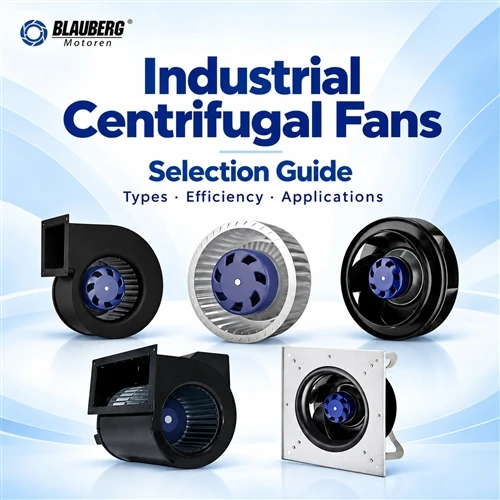
A forward curved fan, also known as a forward curved centrifugal fan, is one of the most widely used airflow solutions in HVAC systems, air conditioning units, and household ventilation equipment.
Although it is commonly used in modern air handling applications, many engineers, procurement managers, and system integrators still ask:
What exactly is a forward curved fan, and when should it be used?
From an airflow engineering perspective, this guide explains:
- Its structural design
- How it works
- Performance characteristics
- Advantages and limitations
- Typical industrial applications
- How to select the right model
What Is a Forward Curved Fan?
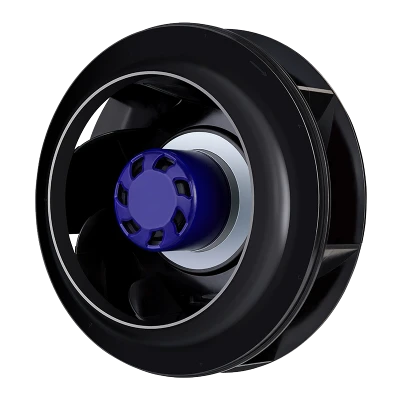
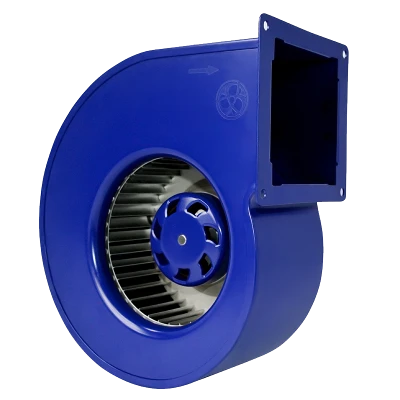
A forward curved fan is a type of centrifugal fan in which the blades curve in the same direction as the impeller rotation.
Because of its characteristic blade shape, it is sometimes called:
- Forward curved centrifugal fan
- Multi-blade centrifugal fan
- Sirocco fan
Key Structural Features
- Multiple small, closely spaced blades
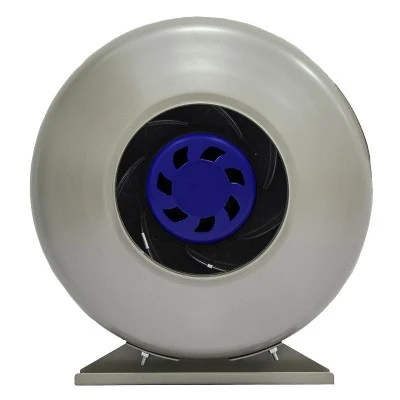
- Scroll (volute) housing
- Compact impeller diameter
- Low-to-medium rotational speed
- Belt-driven or direct-driven configuration
This design allows the fan to generate high airflow volume at relatively low static pressure, making it ideal for specific ventilation environments.
How Does a Forward Curved Fan Work?
Like all centrifugal fans, a forward curved fan operates based on centrifugal force.
Working Principle:
- Air enters the center of the impeller.
- The rotating blades accelerate the air outward.
- The scroll housing converts velocity into pressure.
- Air exits through the outlet at 90 degrees to the inlet.
Because the blades are curved forward:
- Air is "scooped" and accelerated smoothly.
- The fan produces high airflow at lower speeds.
It is particularly effective in low-resistance systems.
Performance Characteristics
High Airflow Volume
Forward curved fans can deliver large airflow rates in compact structures, making them suitable for:
- Air conditioning indoor units
- Fan coil units
- Heating systems
- Household appliances
Moderate Efficiency
Compared with backward curved centrifugal fans, forward curved fans typically have:
- Lower peak efficiency
- Higher power consumption at high loads
However, for small and medium systems where pressure requirements are limited, they remain cost-effective and practical.
Low to Medium Static Pressure
Forward curved fans are best suited for:
- Short duct systems
- Low resistance airflow environments
- Systems without heavy filtration
They are not ideal for high-resistance industrial ductwork.
Noise Characteristics
At low to medium speed, forward curved fans operate relatively quietly.
However:
- Noise increases significantly at higher rotational speeds.
- Turbulence rises if system resistance increases.
- Proper matching between airflow and system resistance is essential.
Forward Curved Fan vs Backward Curved Fan
A common technical question is how forward curved fans differ from backward curved centrifugal fans.
| Feature | Forward Curved Fan | Backward Curved Fan |
|---|---|---|
| Blade Shape | Curved forward | Curved backward |
| Airflow | High | Moderate to High |
| Static Pressure | Low to Medium | Medium to High |
| Efficiency | Moderate | High |
| Energy Saving | Standard | Excellent |
| Noise at High Load | Higher | Lower |
| Application Scale | Small to Medium | Medium to Large |
In modern energy-saving HVAC systems, backward centrifugal fans are often preferred for higher efficiency.
However, forward curved fans remain highly relevant in compact, cost-sensitive applications.
Typical Applications
Forward curved centrifugal fans are widely used in:
HVAC and Air Conditioning
- Indoor air handling units
- Fan coil units
- Compact ventilation modules
Heating Systems
- Electric heaters
- Gas heating equipment
Household Appliances
- Air purifiers
- Range hoods
- Compact ventilation systems
Commercial Ventilation
- Light-duty air movement
- Office building ventilation
Because of their compact design, they are especially valuable in equipment where space is limited.
Integration with Modern Motor Technology
Today, forward curved fans can be integrated with:
- AC motors
- DC motors
- EC motors
When combined with EC motor technology, forward curved fans can achieve:
- Improved motor efficiency
- Speed control capability
- Lower power consumption
- Smart building integration
This combination makes them suitable for modern intelligent HVAC systems.
Engineering Considerations Before Selection
When selecting a forward curved fan, engineers should evaluate:
- Required airflow (CFM / m³/h)
- Static pressure (Pa)
- Installation space
- Noise limits
- Operating hours
- Energy efficiency targets
- Incorrect selection may lead to:
- Motor overloading
- Increased noise
- Reduced lifespan
- Energy waste
Professional airflow calculation and performance curve analysis are essential.
Quality Verification and Testing Capabilities
- Reliable fan performance depends on strict testing and engineering validation.
- At Blauberg-motoren, forward curved centrifugal fans are developed and verified through:
- Multi-size airflow performance testing systems
- 16dBA background Noise Lab
- Motor software and electronic testing laboratory
- Salt spray corrosion testing
- High and low temperature chambers
- Vibration and shaking test equipment
- Dynamometer performance testing
Our R&D team, including software engineers and mechanical engineers, ensures that every product meets international performance and durability standards across HVAC, cold storage, medical, and electronic cooling industries.
Advantages of Forward Curved Fans
- Compact and space-saving
- High airflow at lower speed
- Cost-effective solution
- Suitable for small to medium systems
- Easy integration into HVAC units
Limitations to Consider
- Lower efficiency compared to backward fans
- Not suitable for high static pressure systems
- Noise increases under heavy load
- Understanding these limitations helps optimize system performance.
Is a Forward Curved Fan Right for Your Project?
Forward curved fans are ideal when:
- Airflow demand is high but pressure requirement is moderate
- Installation space is limited
- Budget sensitivity is important
- System operates at stable load conditions
For higher efficiency and high-pressure applications, backward centrifugal fans may be more appropriate.
Need Expert Support for Fan Selection?
Selecting the right centrifugal fan directly impacts:
- Energy consumption
- Equipment lifespan
- Noise performance
- Overall system reliability
- Our engineering team provides:
- Professional airflow calculation
- Custom centrifugal fan solutions
- OEM / ODM manufacturing
- Application-based technical support
Whether you are designing HVAC equipment, heating systems, purification devices, or specialized ventilation equipment, we can help you select the most suitable forward curved fan for your application.
Contact us today to discuss your project requirements and receive tailored technical support.