Introduction
In modern HVAC systems, data centers, medical equipment, and industrial ventilation projects, motor technology directly impacts energy efficiency, noise performance, and long-term operating cost.
A common question engineers and buyers ask is:
What is the difference between a DC fan and an EC fan?
Although both technologies offer improved efficiency compared to traditional AC fans, they are not the same. Understanding the structural, electrical, and performance differences between DC and EC fans is essential when selecting the right solution for applications such as:
- Air Conditioning systems
- Cloud Data Centers
- Ventilation & Purification
- Cold Storage & Cold Chain
- Medical Industry
- IT and Electronics Industry
- Mechanical Equipment
From an engineering perspective, this guide explains the technical differences and helps you determine which option is better suited for your project.
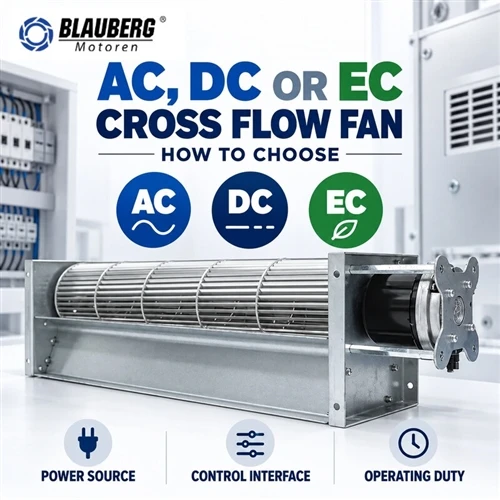
What Is a DC Fan?
A DC fan is powered by a direct current (DC) motor. It typically requires an external DC power supply or internal rectification system to convert AC power to DC.
Key Characteristics of DC Fans:
- Operates on direct current
- High motor efficiency
- Compact size
- Simple speed control
- Common in low-voltage systems
- DC fans are widely used in:
- Electronics cooling systems
- Automotive applications
- Small ventilation systems
- Battery-powered devices
They are often chosen for their simplicity and cost-effectiveness in low-power applications.
What Is an EC Fan?
An EC fan (Electronically Commutated fan) uses an EC motor, which combines:
AC power input
Internal electronic controller
Brushless DC motor technology
EC motors integrate the controller and rectifier into one intelligent system.
Key Characteristics of EC Fans:
- Operates on AC power supply
- Internal electronic commutation
- High energy efficiency
- Variable speed control
- Intelligent communication capability
- Soft start and overload protection
EC fans are commonly used in:
- Air Handling Units (AHU)
- HVAC systems
- Data centers
- Medical ventilation systems
- Energy-saving retrofit projects
Core Technical Difference
Although EC motors are technically based on brushless DC motor technology, the system design differs significantly.
| Aspect | DC Fan | EC Fan |
|---|---|---|
| Power Input | Direct Current (DC) | AC input with internal conversion |
| Controller | External or basic | Integrated intelligent controller |
| Speed Control | Simple voltage control | Advanced electronic control |
| Energy Efficiency | High | Very High |
| Installation | Smaller systems | Commercial & industrial systems |
| Communication | Limited | Supports BMS / smart systems |
In short:
A DC fan refers to the power type.
An EC fan refers to an advanced motor system integrating electronics and AC compatibility.
Efficiency Comparison
Energy efficiency is often the deciding factor in commercial projects.
DC Fans:
- Efficient in low-power systems
- Suitable for compact devices
- Good for battery-based systems
EC Fans:
- Higher overall system efficiency
- Reduced energy loss
- Optimized for continuous operation
- Significant savings in large HVAC systems
For large-scale installations such as cloud data centers or central air conditioning systems, EC fans typically provide better long-term energy performance.
Control and Intelligence
One of the biggest differences lies in control capability.
DC Fans:
- Basic speed adjustment
- Limited integration with smart building systems
EC Fans:
- 0–10V speed control
- PWM control
- MODBUS / BMS integration
- Real-time monitoring capability
- Precise airflow adjustment
- This makes EC fans ideal for:
- Smart buildings
- Energy management systems
- Precision cooling applications
Noise Performance
Because EC fans allow more precise speed control and optimized motor operation, they typically offer:
- Lower vibration
- Reduced mechanical loss
- Quieter operation
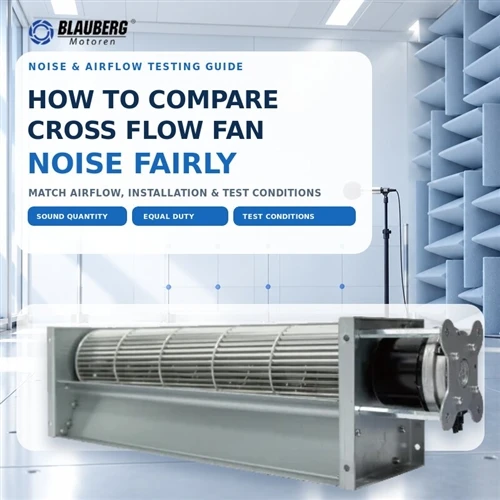
In our Noise Lab (16dBA background noise), both DC and EC configurations undergo strict testing to ensure suitability for:
- Medical Industry
- Electronics Manufacturing
- Data Centers
However, EC fans generally provide better noise optimization in variable-speed systems.
Application-Based Recommendation
Choose a DC Fan When:
- Application is low voltage
- System size is small
- Budget sensitivity is high
- Simple control is sufficient
- Typical examples:
- Electronics cooling
- Automotive systems
- Compact appliances
Choose an EC Fan When:
- Energy efficiency is critical
- Long-term operating cost matters
- Intelligent control is required
- System operates continuously
- Large airflow and static pressure are needed
- Typical examples:
- HVAC systems
- Cloud Data Centers
- Air Conditioning units
- Cold Storage
- Ventilation & Purification systems
Engineering Validation and R&D Support
Motor performance depends on engineering precision and testing validation.
At Blauberg-motoren, our R&D department includes:
- Fluid Lab with multi-size airflow testing equipment
- Noise Lab with 16dBA background
- Electronic Lab for motor software testing
- Shaking test equipment
- Salt spray testing
- High/Low temperature chambers
- Dynamometer testing systems
Our multidisciplinary team of software engineers, mechanical engineers, and customization designers ensures that both DC and EC fan solutions meet strict quality and durability standards.
Which Is Better: DC Fan or EC Fan?
There is no universal answer.
For small, low-power applications → DC fans are practical and cost-effective.
For commercial HVAC, industrial systems, and energy-saving retrofits → EC fans are generally the superior choice.
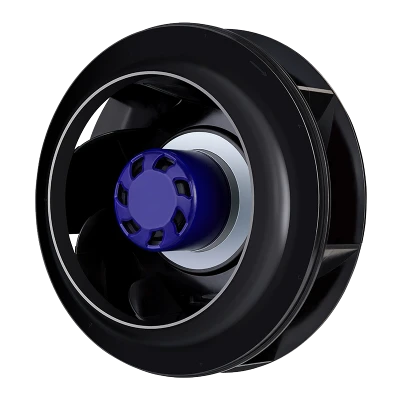
In modern high-efficiency systems, EC backward centrifugal fans are becoming the mainstream solution due to their intelligent control and energy-saving advantages.
Need Help Selecting the Right Motor Technology?
Choosing between DC and EC fans requires evaluating:
- Airflow requirements (CFM / m³/h)
- Static pressure (Pa)
- Operating hours
- Noise limits
- System integration requirements
- Energy-saving targets
- Our engineering team provides:
- Technical consultation
- Customized airflow solutions
- OEM / ODM support
- Project-based motor selection guidance
If you are developing HVAC equipment, upgrading a ventilation system, or designing a data center cooling solution, contact us today for professional support tailored to your application.