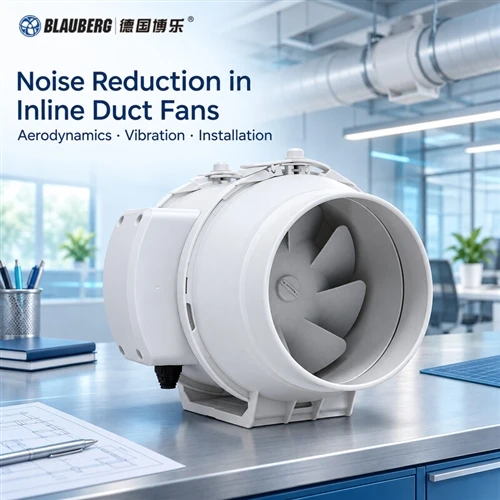

If you've ever installed a centrifugal inline duct fan in a home office, commercial kitchen, or HVAC system, you know the balance isn't just about airflow - it's about keeping noise low enough that the fan doesn't become more of a disturbance than a solution. As a supplier of centrifugal inline duct fans, I've spent thousands of hours walking customers through why their fan hums too loud, and how noise reduction technology actually works for this specific type of fan. This isn't just about wrapping something in foam; it's about targeting the two main sources of noise in centrifugal inline duct fans, and every design choice ties back to both airflow efficiency and quiet operation.

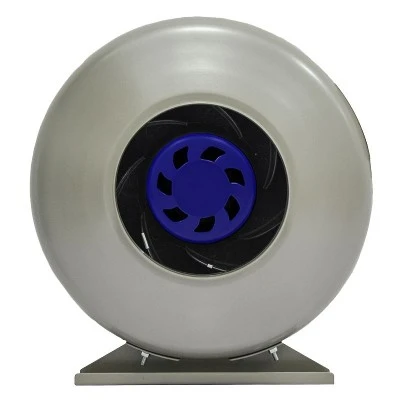
First, let's cut through the jargon to get to the basics: a centrifugal inline duct fan moves air at right angles to the fan's shaft, using a rotating impeller that pulls air in one side and pushes it out the other. That design delivers the high static pressure needed to move air through long ducts, filters, and vents - the main reason they're used in tight spaces like commercial HVAC systems, exhaust hoods, and whole-house ventilation setups - but that same impeller and airflow path are where noise starts. Most people don't realize centrifugal inline duct fans have two distinct noise sources: aerodynamic noise from air moving through the fan and ducts, and mechanical noise from the fan's motor, impeller, and mounting parts. Effective noise reduction technology targets both, and the best designs balance them without cutting down on performance.
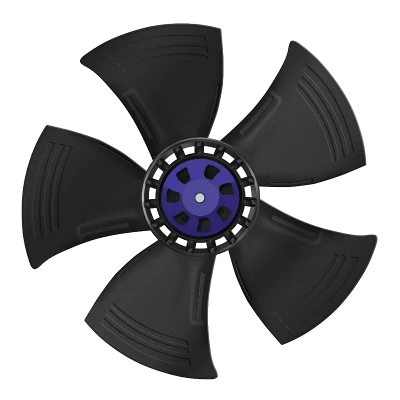
Aerodynamic noise is often the bigger culprit for centrifugal inline duct fans. When air flows at high speed through the fan's impeller and the duct housing, it creates turbulence: tiny, uneven shifts in air pressure that produce sound. For a centrifugal fan, that turbulence comes from three main spots: the impeller blades, the gap between the impeller and the housing (called the volute), and how air exits the fan into the duct. Early fan designs just made the impeller bigger to move more air, but that only increased turbulence and noise. Instead, modern noise reduction technology starts with impeller design.
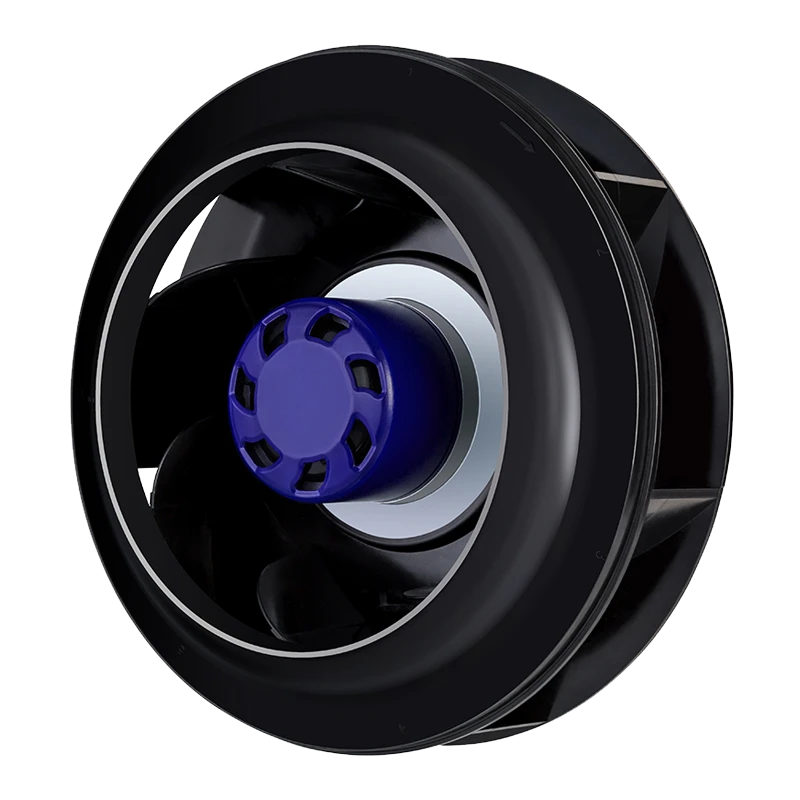
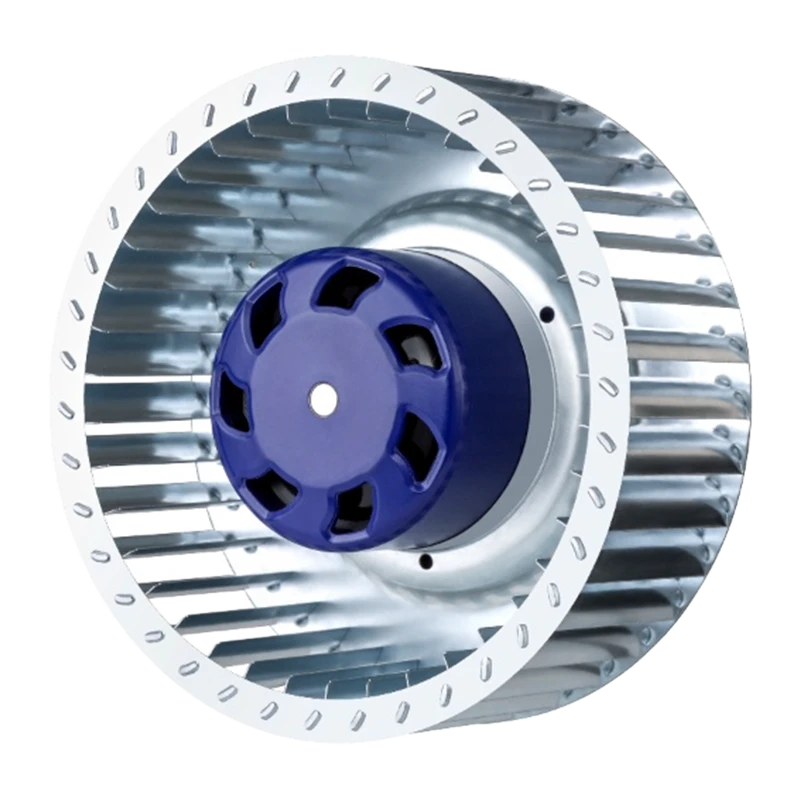
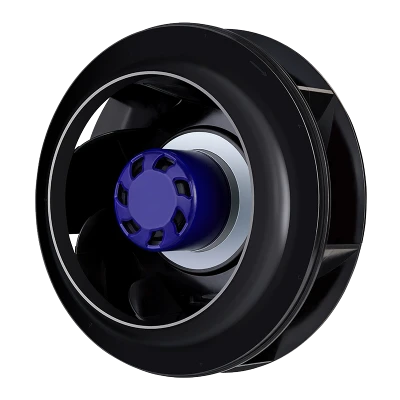
Our team, for example, tests impellers with curved backward blades instead of the old flat or forward-curved blades. Backward curved blades push air more smoothly, cutting down on the abrupt pressure shifts that create turbulence. We also tune the number of blades: too many blades, and they create overlapping pressure waves that amplify noise; too few, and the gaps between blades create more individual turbulence. For the Air Inline Duct Fans Centrifugal Ducted Exhaust Fan, we use an impeller with 12 backward curved blades, a number we found through testing that minimizes overlapping pressure waves. That's one reason these fans run 20% quieter than standard centrifugal inline fans of the same airflow rate.
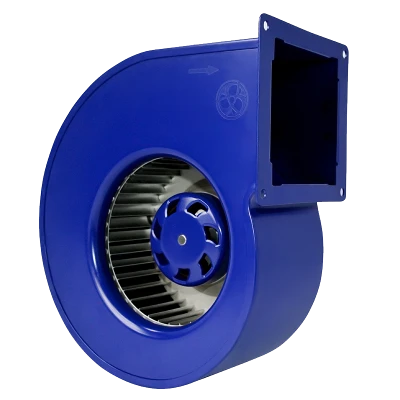
Next is the volute, the curved housing that wraps around the impeller to collect and direct air out of the fan. If the volute is a perfect circle, air bounces off the walls as it exits the impeller, creating extra turbulence and noise. The best volutes are "tapered," meaning they get gradually wider from the point where air enters the volute (the throat) to the outlet. This shape lets air expand slowly without sudden pressure drops, cutting down on turbulence. Some cheaper designs just fill the volute with foam, but that doesn't fix the root cause of uneven airflow. We adjust the volute's angle for each fan size: for the 100mm EC Exhaust Strong Wind Duct Fan for Heat Pumps, a smaller fan for residential heat pumps, we made the volute narrower and steeper than for larger models, since smaller impellers create more localized turbulence that needs tighter shaping.

Which inline duct fan models should you review?

125mm EC Ventilation in Line Duct Fan Exhaust Fan for FFU
EC inline duct fan. View product details and specifications.
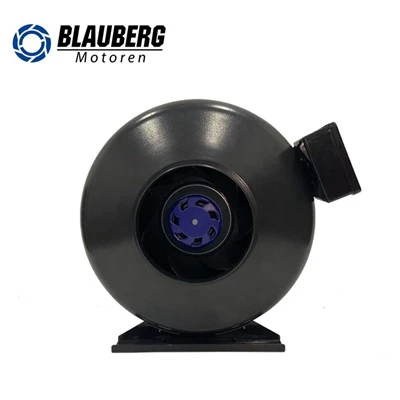
125mm EC Exhaust Duct Blower Centrifugal Fan for Condense Units
EC inline duct fan. View product details and specifications.
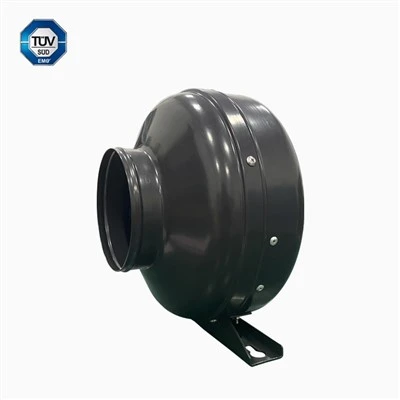
125mm EC Energy Saving Quiet Duct Fan Exhaust Fan Duct for Cooling Area
EC inline duct fan. View product details and specifications.

250mm EC External Rotor Duct Fan Strong Wind Duct Fan for Cold Room
EC inline duct fan. View product details and specifications.
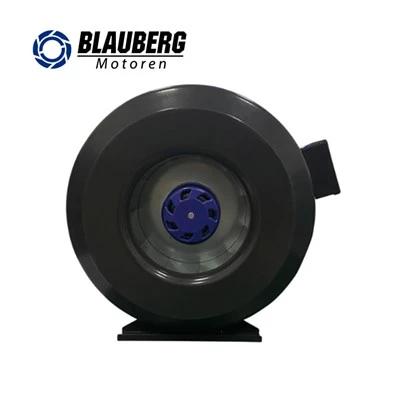
315mm EC Ventilation Duct Blower Fan Manufacturers for Machine Cooling
EC inline duct fan. View product details and specifications.
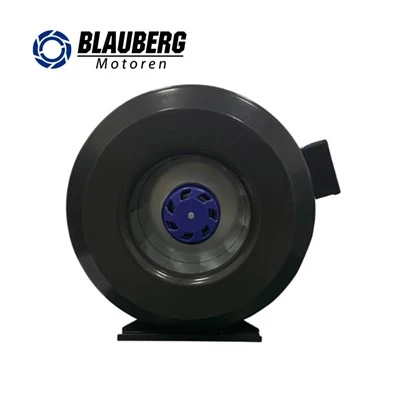
315mm EC Fan Manufacturers Ducted Exhaust Fan Garage Exhaust Fan for Air Purifier
EC inline duct fan. View product details and specifications.
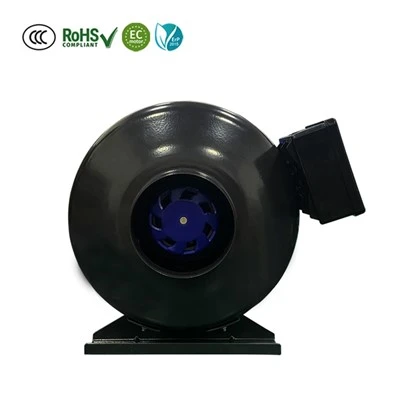
100mm EC Exhaust Strong Wind Duct Fan for Heat Pumps
EC inline duct fan. View product details and specifications.
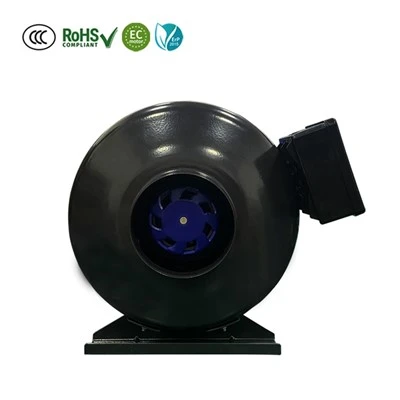
100mm EC Strong Wind Duct Fan Energy Saving Quiet Duct Fan for Air Purifier
EC inline duct fan. View product details and specifications.
Explore the Blauberg inline duct fan range. Confirm the operating temperature range, moisture protection and airflow at the required pressure for your installation.
Mechanical noise is the second key source, and it comes from the fan's motor, impeller, and how the fan is mounted. In centrifugal inline duct fans, the motor is often inside the airstream to save space, which means it vibrates as it spins, and that vibration transfers to the fan's housing and ducts, creating noise. A common fix is to mount the motor and impeller on flexible rubber or silicone mounts, which act like a shock absorber to stop vibration from moving between parts. But the best mechanical noise reduction technology goes further: we balance the impeller to within 0.5 grams of weight, which means it spins evenly without wobbling, so there's less vibration to begin with. Unbalanced impellers are a top reason customers call to say their fan is too loud - even a tiny wobble amplifies mechanical noise far more than most people expect.
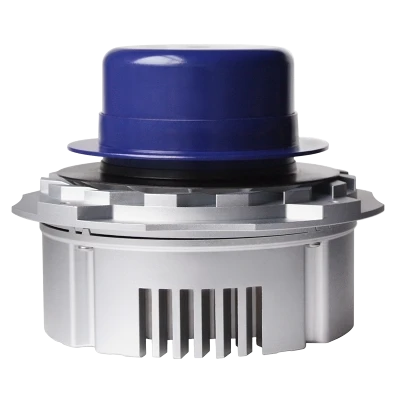
Motor type also matters here. For EC (electronically commutated) motors, which are more energy efficient than traditional AC motors, we found they run smoother, with less vibration, than AC motors of the same power. That's why all our larger models use EC motors: the 250mm EC External Rotor Duct Fan Strong Wind Duct Fan for Cold Room has an external rotor EC motor, meaning the rotor spins around the motor shaft instead of inside it, which lowers the fan's overall profile and reduces vibration transfer to the housing. It's a small design choice, but it makes a big difference in quiet operation for applications like cold rooms where even a small hum can disrupt temperature-controlled environments.
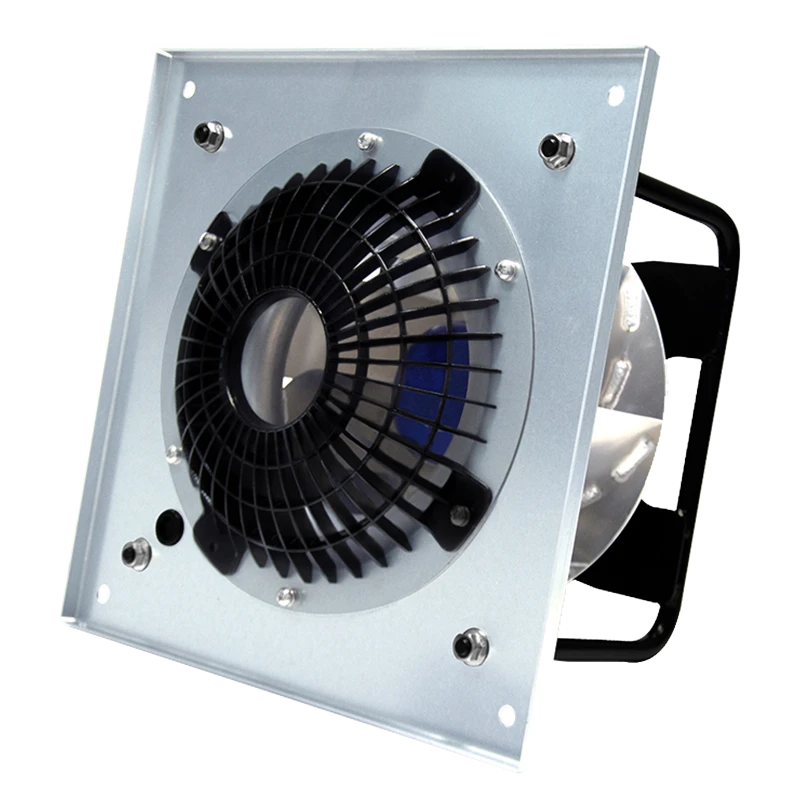
Another area people overlook is duct connection. If a centrifugal inline duct fan is directly connected to hard ducts without a transition piece, the sudden shift from the fan's rectangular or circular outlet to the duct's size creates turbulence and noise. We include flexible transition ducts with every unit, which not only smooth the airflow but also absorb vibration between the fan and the building's ductwork. For the 315mm EC Fan Manufacturers Ducted Exhaust Fan Garage Exhaust Fan for Air Purifier, we tested direct connections vs. transition ducts and found that transition ducts cut noise by about 15% on average, while also reducing duct leakage, which saves energy.
Noise reduction technology for centrifugal inline duct fans isn't one-size-fits-all, either. Different applications have different noise requirements, so we adjust our designs for each use case. For evaporative air coolers, like the 160mm EC in Line Duct Fan Centrifugal Fan for Evaporative Air Cooler, the fan needs to move moist, cool air without adding extra noise that would be noticeable in a home setting. We added a thin sound-absorbing liner inside the fan's housing made of porous polyester, which absorbs high-frequency noise without restricting airflow. For commercial kitchen exhaust fans, which handle grease and high temperatures, we use a heavier, metal housing with a thicker rubber seal around the motor, since grease buildup can create extra vibration over time - a tradeoff between durability and quiet operation that we've refined through years of working with kitchen ventilation contractors.
I've seen too many customers buy cheap centrifugal inline duct fans because they're cheaper upfront, only to replace them a year later because the noise is unbearable. Those fans often cut corners: flat impellers, rigid mounts, and no balancing, all of which lead to higher noise. The best noise reduction technology for centrifugal inline duct fans integrates with every part of the design, from the impeller blades to the volute shape to the motor, so you don't have to choose between airflow performance and quiet operation.
If you're in the market for a centrifugal inline duct fan, whether for a home, commercial space, or industrial application, reaching out to us to discuss your needs is the best way to find the right balance. We can help you select the right size and type - from compact models for residential setups to larger units for commercial HVAC - and walk you through how our noise reduction design works for your specific space. Whether you're looking for a fan for a heat pump, cold room, air purifier, or evaporative cooler, we have options built to deliver both strong airflow and quiet operation.
References
- ASHRAE. (2021). HVAC Systems and Equipment Handbook: Fan Noise and Vibration Control. American Society of Heating, Refrigerating and Air-Conditioning Engineers.
- Miller, E. (2019). Aerodynamic Noise in Centrifugal Fans: Impeller and Volute Design Impacts. Journal of Fluid Machinery, 47(2), 89–96.
- European Commission. (2020). Energy Efficiency of Electric Motors and Drives: EC Motor Performance and Noise Characteristics. European Commission Energy Office.
- Building Science Corporation. (2018). Duct Design and Noise Reduction for Residential Ventilation Systems. Building Science Press.
Category of Blauberg Products
Built on German engineering principles, focusing on precision, reliability, and long-term performance. Through efficient and scalable manufacturing, we deliver high-quality ventilation solutions with optimized cost structure, ensuring strong value for global OEM and project-based customers.