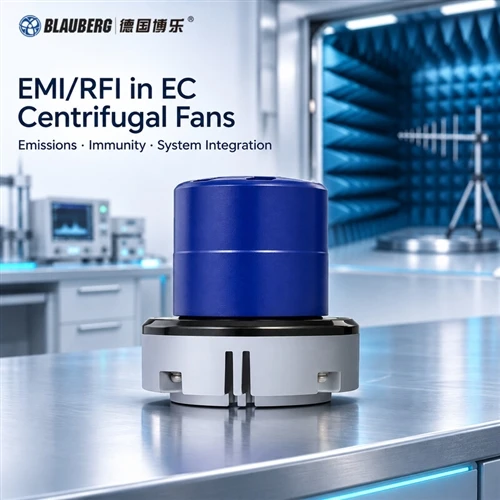

If you've ever worked with industrial equipment, HVAC systems, or even certain automotive tech, you've probably heard people mumble "EMI/RFI" like it's some kind of industry secret code. But for anyone shopping for EC centrifugal brushless fans-like the ones I sell for a living-understanding what that code actually means for your setup is make-or-break. Let's break this down, no confusing jargon, just real talk about how our EC centrifugal brushless fans handle EMI and RFI, and why that matters for you.
First off, let's get the basics straight: EMI stands for Electromagnetic Interference, and RFI is Radio Frequency Interference-essentially, they're both unwanted signals that mess with other electronics nearby. If you've ever had your WiFi drop because a space heater kicked on, or your factory PLC act glitchy when a big fan turns on, that's EMI/RFI at work. Regular AC fans are pretty bad for this because they use brushed motors that have physical parts sparking every time they switch, which is like a tiny antenna sending out noise. EC (Electronically Commutated) centrifugal brushless fans, though? They're designed to eliminate that spark, which is a huge head start. But that doesn't mean we just cut corners and call it a day-protection is built in, layer by layer.

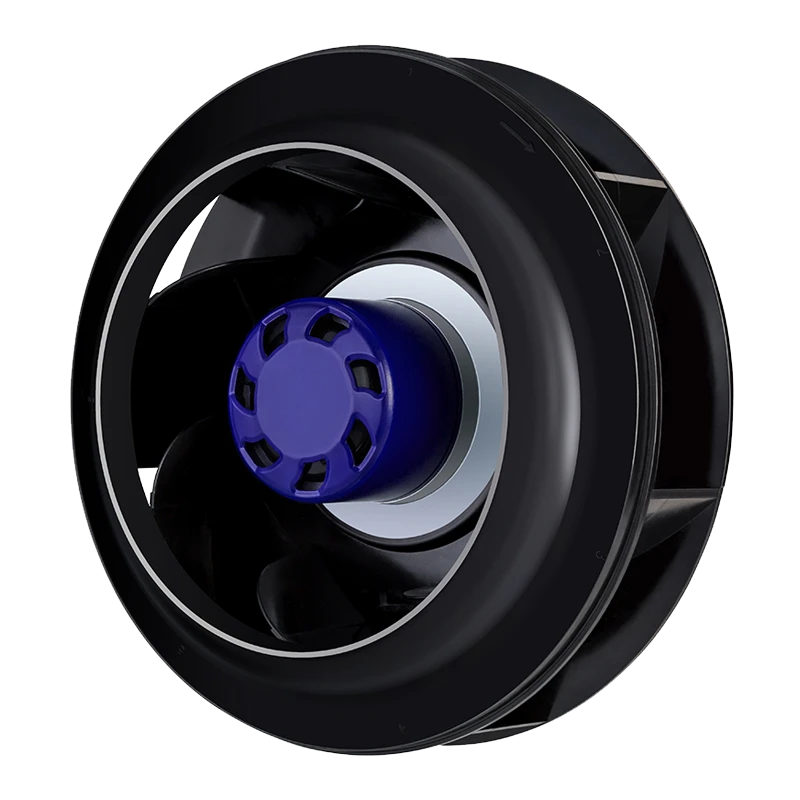
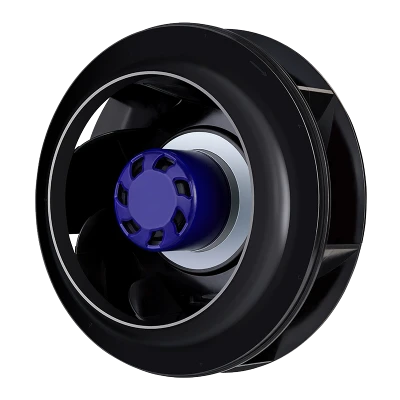
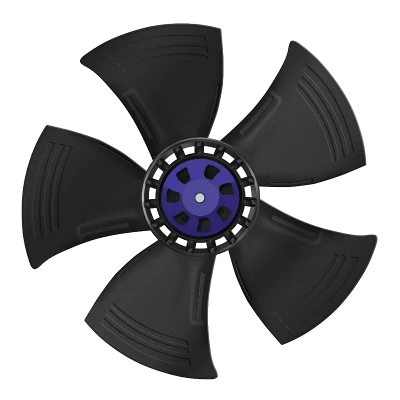
Let me give you a quick example of one of our models that nails this. Take our 230v Centrifugal Fans with External Rotor Motor Big Motor Ec Centrifugal Fan. That big external rotor design isn't just for airflow-it's part of how we shield the internal electronics. Unlike brushed motors, EC fans use a small circuit board (called a motor driver) to control the rotating field electronically, no brushes, no sparks. But that driver is the heart of the fan, so we have to protect it from both sending out noise and getting messed up by noise from other parts of your system.
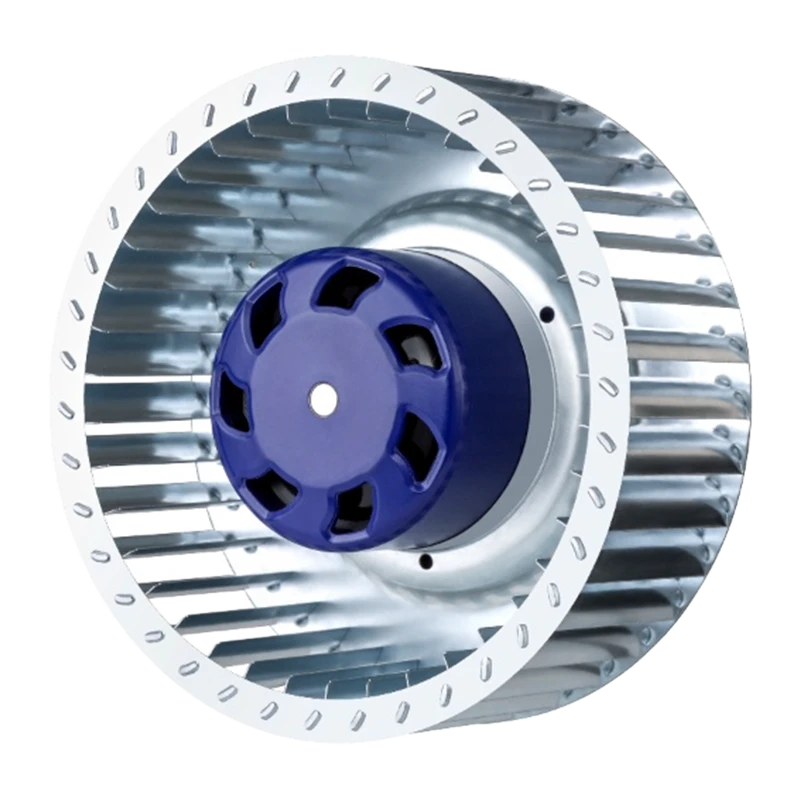
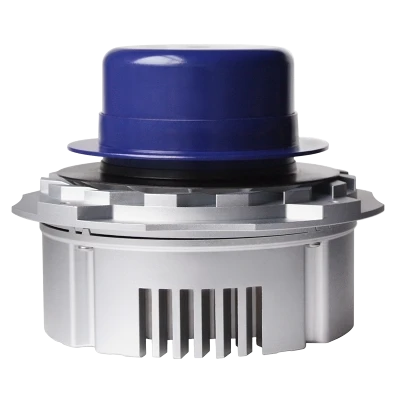
The first line of defense in our EC centrifugal brushless fans is the input filter. This is a small component that sits between your power supply and the fan's driver. It blocks high-frequency noise from coming into the fan (which could fry the driver) and also stops the fan's own switching noise from going back into your building's power grid. For industrial setups, where you might have dozens of fans or other high-power equipment on the same circuit, this is non-negotiable. I've seen customers buy cheap EC fans without proper filters, and within a month, their entire control system was glitching because the fan was dumping noise back into the grid. Our filters are calibrated specifically for our fan's power draw, too-like in the 230v 750W Big Motor Ec Centrifugal Fan Motors Electrical 0-10v model, the filter is sized to handle that higher wattage without adding unnecessary bulk or power loss.
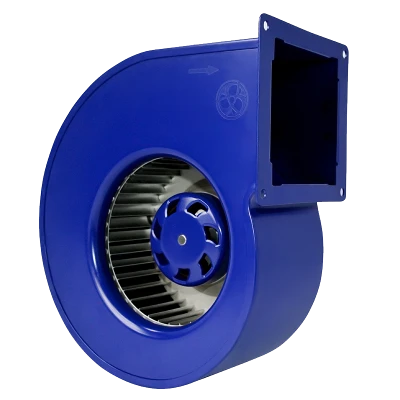
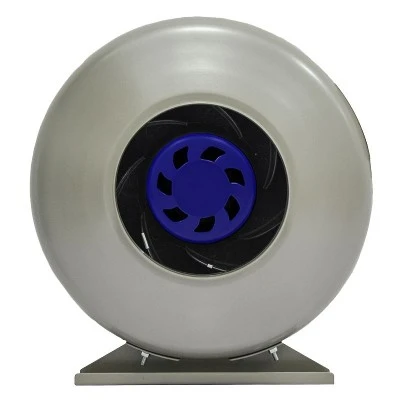
Next up, shielding of the motor itself. Since it's a centrifugal fan, the external rotor spins around the stator coils inside. We use a metal housing (usually galvanized steel or aluminum, depending on the model) that acts as a Faraday cage. Any electromagnetic noise generated by the coils is contained inside that housing, so it doesn't leak out to mess with nearby sensors, WiFi, or other electronics. This is especially important for commercial buildings where you might have IoT sensors, security cameras, or building automation systems all running on the same floor. For smaller setups, like the 115v Motor Out Centrifugal Fan Motor 0-10v Motor Blower, the shielding is just as effective, even though it's a more compact unit-we don't skimp on that just because the fan is smaller.
Another thing people don't talk about enough is the switching frequency of EC fans. Traditional brushed fans use a simple DC or AC signal to power the motor, so their noise is low-frequency and easy to filter. EC fans, on the other hand, use pulse-width modulation (PWM) to adjust speed, which is super efficient-but the PWM pulses can create high-frequency noise if not handled right. Our engineering team tunes the PWM frequency for each fan model to sit outside the bands that cause the most interference. For example, in our 230v 170W Big Motor Ec Centrifugal Fan Motors Electrical, we set the PWM to 16kHz, which is above the range that interferes with most consumer and commercial electronics, so you won't get that weird static on your radio or glitchy security cameras when the fan is running.
Which centrifugal fan models should you review?

Blauberg BE-B400H-EC-05 400mm DC Backward Centrifugal Fan
View product details and specifications.
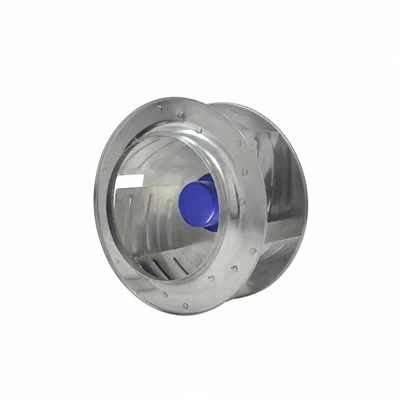
Blauberg BE-B400D-EC-05 400mm DC Backward Centrifugal Fan
View product details and specifications.
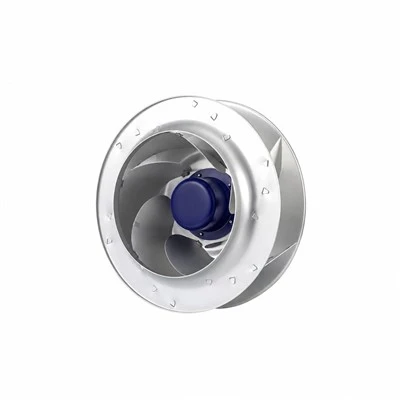
Blauberg BE-B355C-EC-05 355mm DC Backward Centrifugal Fan
View product details and specifications.
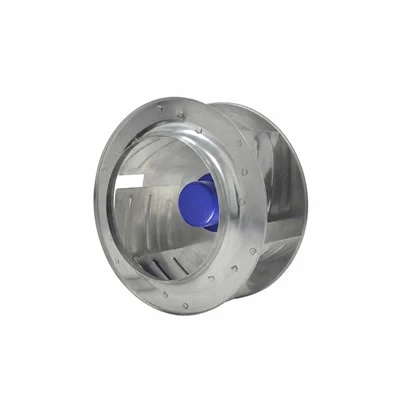
Blauberg BN-B310C-EC-01 310mm DC Backward Centrifugal Fan
View product details and specifications.
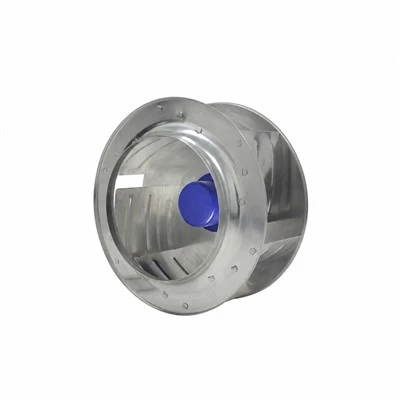
Blauberg BE-B310D-EC-N07 310mm DC Backward Centrifugal Fan
View product details and specifications.
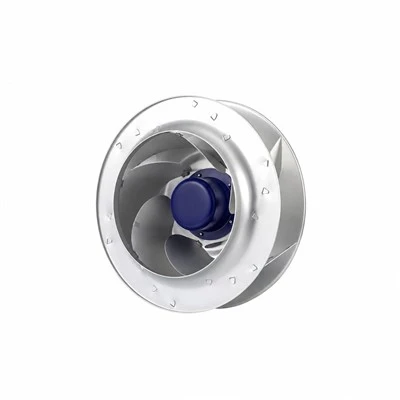
Blauberg BE-B310D-EC-05 310mm DC Backward Centrifugal Fan
View product details and specifications.
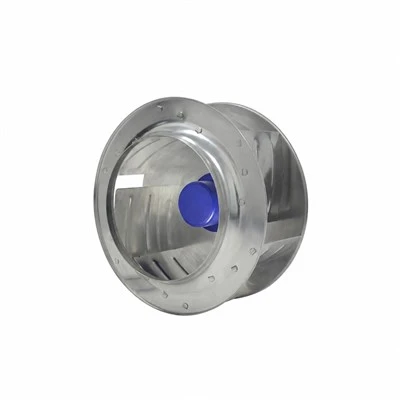
Blauberg BE-B310C-EC-01 310mm DC Backward Centrifugal Fan
View product details and specifications.
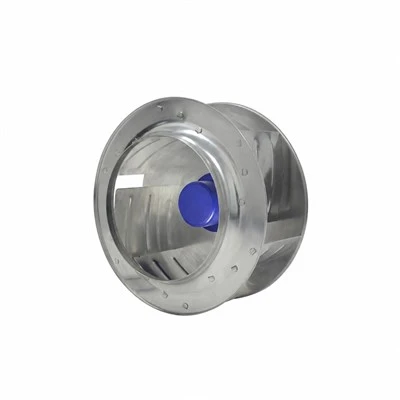
Blauberg BD-B310D-EC-N07 310mm DC Backward Centrifugal Fan
View product details and specifications.
Wait, but what about the reverse? What if other equipment in your factory is noisy, like welding machines or variable frequency drives (VFDs)? A fan's electronics could get damaged by that, right? Yep, that's why we also build in transient protection. Transients are sudden spikes in voltage, like when a big motor turns on or off. We add metal-oxide varistors (MOVs) and transient voltage suppressor diodes to the input of every EC fan we sell. These components absorb those spikes before they reach the motor driver, so the fan keeps running, and your whole system doesn't go down. I had a customer a few months back who was running a new packaging line with spot welders that create huge voltage spikes. They tried a cheap EC fan from a no-name brand, and it died within a week because of a spike. Switched to our 230v Centrifugal Fans with External Rotor Motor 0-10v model, and it's been running flawlessly for six months now. That's the kind of real-world test that matters, not just lab specs.
Now, let's talk about certifications, because numbers and labels help. All of our EC centrifugal brushless fans are tested to meet global EMI/RFI standards, like FCC Part 15 (for the US), CE (for Europe), and CISPR 11 (for industrial environments). What does that mean for you? It means you don't have to do extra testing to get the fan approved for your setup. If you're a system integrator building HVAC for a commercial office, you don't have to worry about delays because of EMI/RFI issues. If you're an industrial engineer setting up a production line, you can plug our fans in alongside sensitive PLCs without worrying about glitches.
But here's the thing-EMI/RFI protection isn't one-size-fits-all. A fan for a quiet office space has different requirements than a fan for a factory floor with heavy machinery. That's why we offer a range of EC centrifugal models to match different needs. For example, the 115v 0-10v motor blower is perfect for small commercial applications, like server room cooling, where you don't want noise messing with the server's electronics. The 750W big motor model is made for heavy-duty industrial use, like ventilation in a warehouse, where you might have other large equipment running nearby. We also make sure that even when you use the 0-10v speed control feature (which is super popular for variable airflow), that control signal is isolated from the power circuit, so the signal itself doesn't pick up interference and cause the fan to speed up or slow down randomly.

I know a lot of people shopping for fans just look at CFM (cubic feet per minute) and price, and EMI/RFI is an afterthought. But skip that, and you'll end up with a fan that costs a little less upfront, but costs you way more in downtime, repair bills, and headaches later. Let's be real-nothing kills a project timeline faster than a HVAC fan glitching and making a whole office's WiFi drop, or a production line stopping because a fan is sending noise to the control system. Our EC centrifugal brushless fans take the guesswork out of EMI/RFI, so you can focus on your setup, not troubleshooting interference.
If you're in the market for a new EC centrifugal brushless fan, or you're tired of dealing with EMI/RFI issues from your current fans, get in touch with our team. We can help you pick the right model for your application-whether that's a small 115v unit for a server room, a big 750W model for a warehouse, or anything in between. We'll answer your questions, walk you through the specs, and make sure you get a fan that works reliably, without causing interference. Don't wait until you run into problems with your current setup-reach out today, and let's find the perfect EC centrifugal fan for you.
References
- NEMA Standards Publication ICS 6-2018, Electromagnetic Compatibility (EMC) for Industrial Control and Systems
- CISPR 11:2020, Industrial, scientific, and medical equipment-Radio-frequency disturbance characteristics-Limits and methods of measurement
- Federal Communications Commission (FCC) Part 15, Subpart B-Unintentional Radiators
- IEEE Standard 1159-2019, IEEE Recommended Practice for Monitoring Electric Power Quality
- External Rotor Motor Technology: Design and Applications, Industrial Motor Control Magazine, 2022
Category of Blauberg Products
Built on German engineering principles, focusing on precision, reliability, and long-term performance. Through efficient and scalable manufacturing, we deliver high-quality ventilation solutions with optimized cost structure, ensuring strong value for global OEM and project-based customers.