Blauberg Motoren · Engineering guide
What makes a cross flow fan suitable for your OEM assembly?
A cross flow fan uses a long cylindrical impeller to distribute air across a wide outlet. It is worth considering when an OEM assembly needs airflow along an elongated surface and has a shallow installation envelope. Suitability still depends on the required airflow at the equipment's resistance, the inlet and outlet arrangement, and the electrical and environmental limits of the selected model.

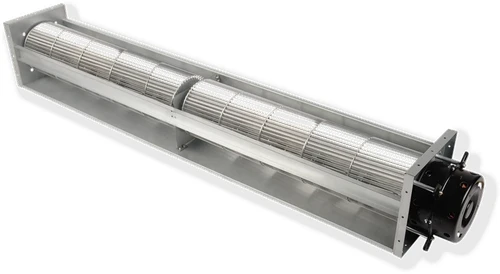
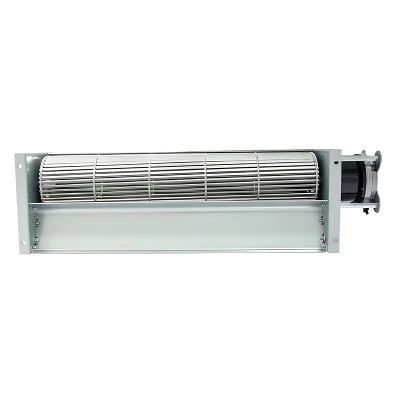
A DC cross flow fan from the Blauberg website, shown as a product-category illustration. The photograph is not a test setup or a dimensional drawing.
What information should accompany a fan's product name?
Use the product name to find a product family, then move to a complete assembly identifier. A shared name does not establish the same brackets, rotation, connector or airflow direction. A replacement request that contains only a photograph and the words "tangential fan" leaves these questions open. Include the nameplate, the equipment model and a drawing showing how the blower sits inside it.

The EC assembly places the motor at one end of a long impeller and housing. Use the complete assembly identity when requesting a drawing or sample; the render alone does not identify its electrical rating.
Source: Company-supplied EC cross flow fan render.
How should you map airflow in your assembly?
For integration, draw the rotor axis, inlet and outlet on the same assembly sketch. Then add the surrounding equipment. Is the inlet open across its useful length? Does a mounting rail cover part of it? Where does the discharged air go after leaving the fan? This sketch connects the cross flow fan working principle to the product being designed.
Keep "wide airflow" separate from a claim of perfectly uniform or laminar flow. A long outlet establishes a useful distribution geometry; it does not prove an identical velocity at every position. If even cooling or heating matters, specify the surface to be served and measure the installed distribution there.

The animation illustrates an air path through the housing and across the elongated outlet. The light beams communicate the concept; they are not a measured velocity map or a validated flow simulation.
Source: Blauberg product-animation frame, 11 seconds.
Which equipment requirements make a cross flow fan worth evaluating?
Start with the shape of the task. The relevant question is whether an elongated discharge helps deliver air where the equipment needs it. The following decision table is an original screening tool; it records design questions, not measured product performance.
| Requirement | Why evaluate cross flow? | What still needs verification? |
|---|---|---|
| Air along a long heat exchanger | The discharge geometry can follow an extended surface. | Coverage across the coil and the required pressure. |
| A shallow equipment envelope | The elongated layout offers a different packaging option. | Complete dimensions, including motor ends and connectors. |
| An air curtain assembly | A wide discharge is relevant to the nozzle layout. | The completed unit's opening coverage and site conditions. |
| Cooling a narrow component row | Air can be directed along the component arrangement. | Temperatures at the least-cooled locations. |
| A duct with substantial resistance | Possible candidates require a curve-based check. | Whether any proposed model reaches the duty point. |
| An existing replacement position | The original layout may suit the same fan category. | Mechanical, electrical and performance compatibility. |
Leave a requirement unresolved when evidence is missing. That is more useful than selecting a fan because the overall silhouette looks familiar.

The exploded view separates the motor, impeller, end plates and housing panels. This helps an OEM locate packaging interfaces before checking the complete installation envelope.
Source: Blauberg product-animation frame, 14 seconds. Assembly illustration, not a disassembly instruction.
Which cross flow fan models should you review?
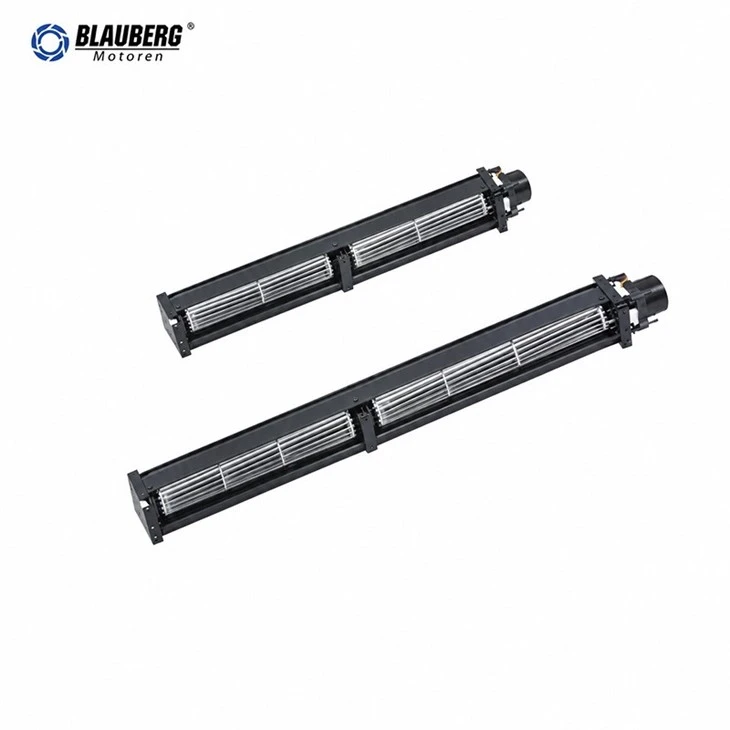
Blauberg VF-T030A-EE-1082(R002) 30mm DC Cross Flow Fans
30mm Cross Flow Fans, Approx. 175 m³/h maximum airflow and Approx. 17 Pa maximum static pressure.
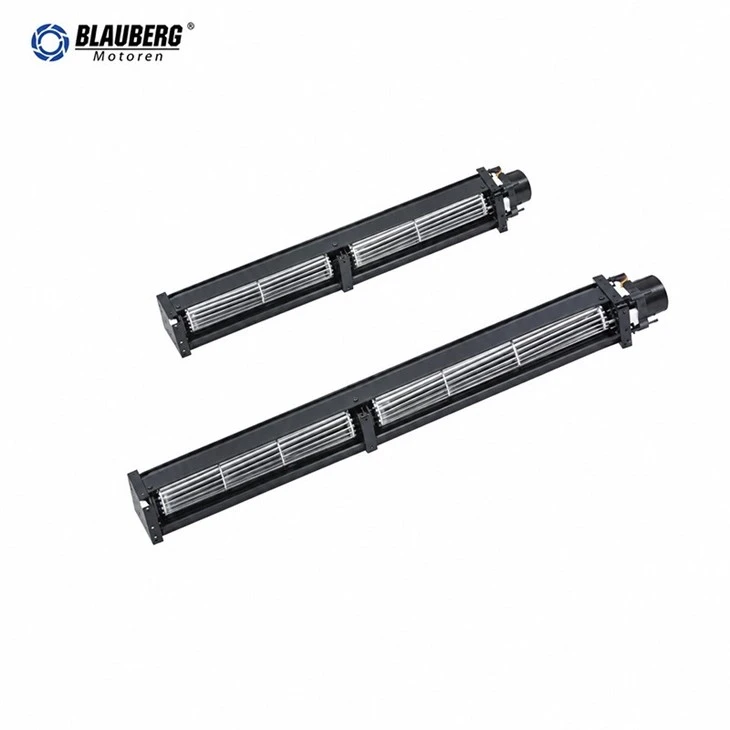
Blauberg VD-T030A-EE-1082(R002) 30mm DC Cross Flow Fans
30mm Cross Flow Fans, Approx. 175 m³/h maximum airflow and Approx. 17 Pa maximum static pressure.
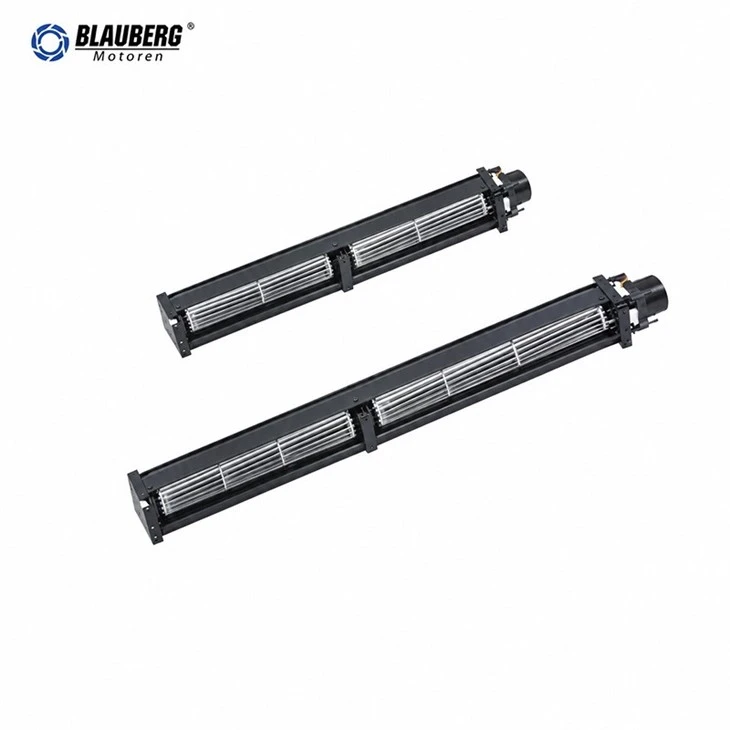
Blauberg VD-T030A-EE-986(R002) 30mm DC Cross Flow Fans
30mm Cross Flow Fans, Approx. 160 m³/h maximum airflow and Approx. 17 Pa maximum static pressure.
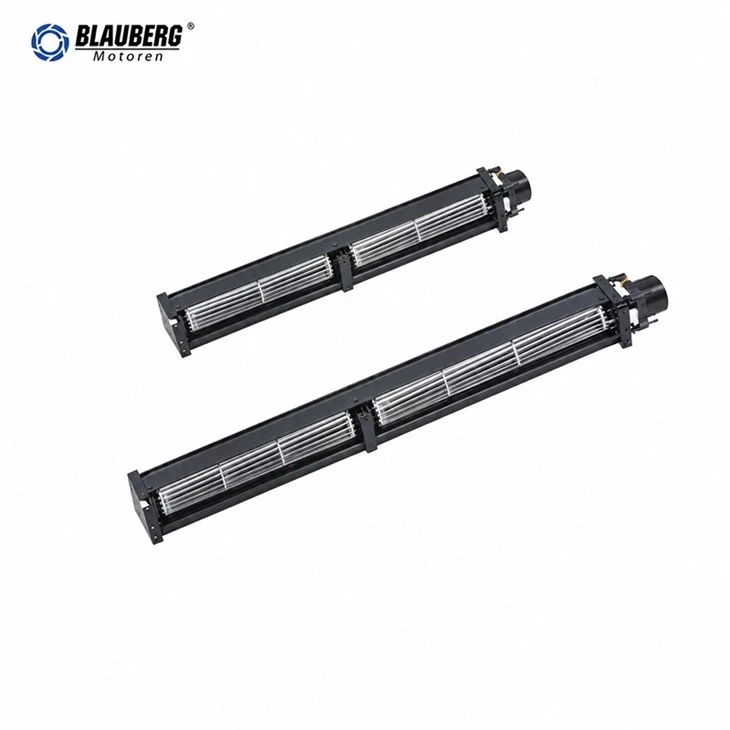
Blauberg VF-T030A-EE-986(R002) 30mm DC Cross Flow Fans
30mm Cross Flow Fans, Approx. 160 m³/h maximum airflow and Approx. 17 Pa maximum static pressure.
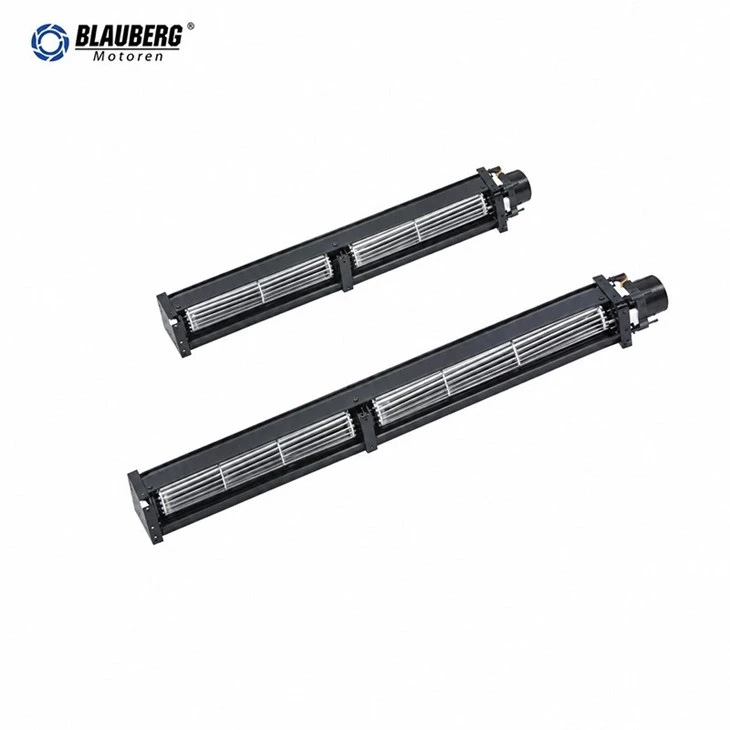
Blauberg VF-T030A-EE-920(R002) 30mm DC Cross Flow Fans
30mm Cross Flow Fans, Approx. 150 m³/h maximum airflow and Approx. 17 Pa maximum static pressure.
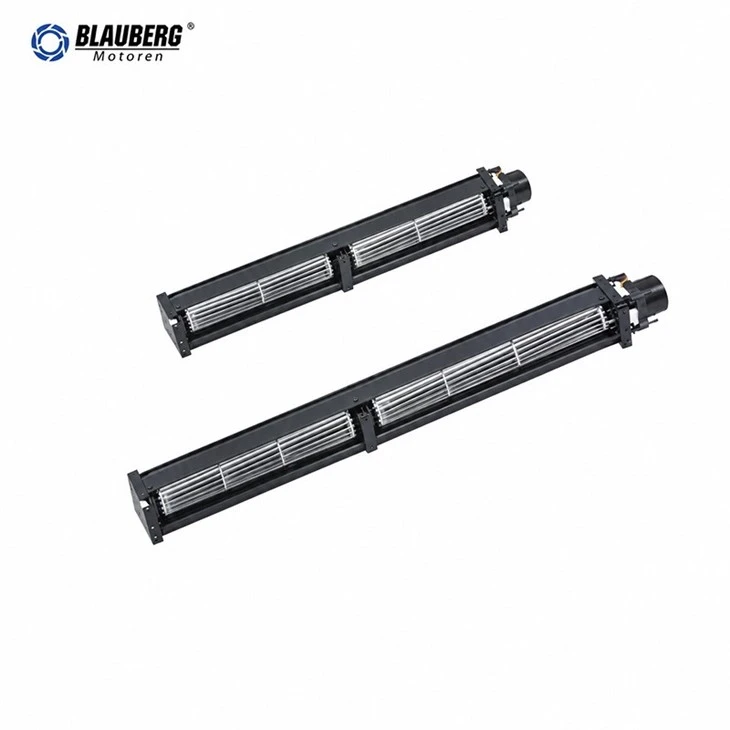
Blauberg VD-T030A-EE-920(R002) 30mm DC Cross Flow Fans
30mm Cross Flow Fans, Approx. 150 m³/h maximum airflow and Approx. 17 Pa maximum static pressure.
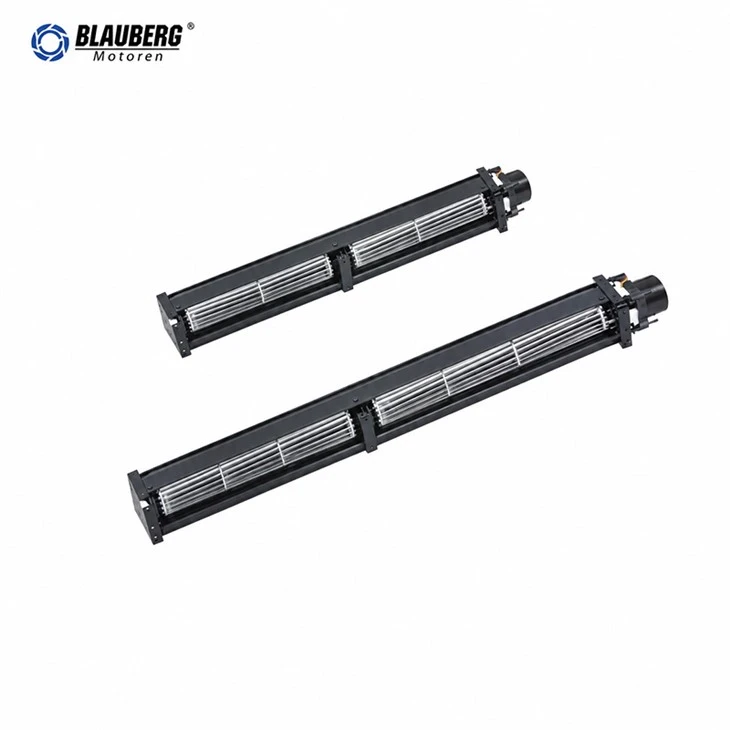
Blauberg VF-T030A-EE-800(R002)E 30mm DC Cross Flow Fans
30mm Cross Flow Fans, Approx. 130 m³/h maximum airflow and Approx. 17 Pa maximum static pressure.
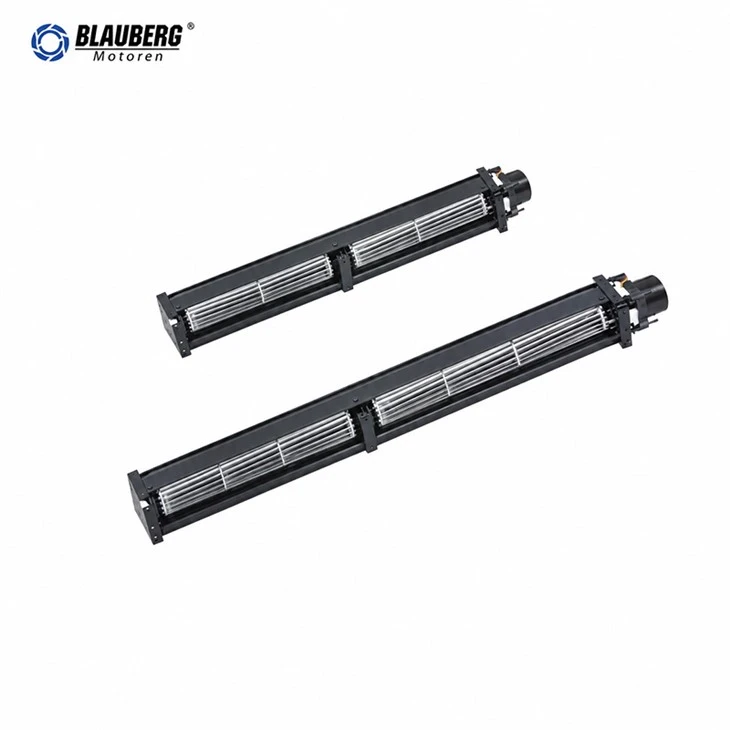
Blauberg VF-T030A-EE-854(R002) 30mm DC Cross Flow Fans
30mm Cross Flow Fans, Approx. 140 m³/h maximum airflow and Approx. 17 Pa maximum static pressure.
Product descriptions from the Blauberg catalogue, checked 22 September 2026. Listed airflow and pressure maxima are separate ratings; confirm the selected model at your operating point.
What can a product name or headline airflow figure not tell you?
Ask for a curve at the intended supply and speed, then relate it to equipment resistance. A photograph also cannot establish the allowed air temperature, bearing arrangement, ingress protection or control input. Treat these as separate questions for the exact model.
Noise deserves the same discipline. Before comparing two catalogue entries, ask which acoustic quantity was measured and under what conditions. "Low noise" is a selection objective; it becomes an assessable requirement only when the operating state, measurement position and acceptable level are defined for the equipment.
How can you read a Blauberg model entry without over-interpreting it?
The Blauberg series catalogue, accessed 22 September 2026, lists the following examples. These are published catalogue values, not measurements made for this article. The airflow and pressure columns do not establish a simultaneous duty point.
| Catalogue category | Model | Listed supply | Listed airflow | Listed pressure |
|---|---|---|---|---|
| DC | VF-T030A-EE-1082(R002) | 12 V DC | 175 m³/h | 17 Pa |
| AC | VL-T030A-SP-986(R000) | 230 V, 50 Hz | 170 m³/h | 17 Pa |
| EC | VL-TO80A-EE-415(L000) | 230 V, 50/60 Hz | 430 m³/h | 33 Pa |
The full part number is the useful starting point for requesting documentation. Do not conclude that similar airflow values imply an interchangeable assembly, equal power consumption or equal installed noise. Request the matching dimensional drawing, performance curve and electrical information before choosing a sample.

Read across one model row so voltage, speed, airflow and dimensions stay attached to the same product. The listed sound levels require their measurement conditions before they can support an acoustic comparison.
Source: Blauberg Cross Flow Fan | 2025 brochure, PDF page 1, EC Technical Data. Published catalogue data; not a new test performed for this article.
Swipe horizontally to view the full technical figure.
What should you collect before requesting a sample or replacement?
Use the accompanying identification worksheet to connect the equipment requirement to a specific assembly. It is an original editorial checklist, not a completed test report or an approved mechanical drawing. Start with the nameplate and orientation; add dimensions, duty point, electrical requirements and the documents still needed.
For a replacement, retain the distinction between observed information and assumed information. Mark a connector pin assignment as unknown until it is documented. Record the direction of the outlet relative to the mounting face rather than relying on "left-hand" or "right-hand" without a viewing reference.
For a new design, send the equipment sketch and completed requirement fields when you request model information from Blauberg. Ask which proposed model and document revision the response refers to. This gives mechanical design, electrical design and purchasing one identifiable assembly to evaluate.

The CA230-F100A-EC-06 reference sheet shows the motor side, overall envelope, mounting features and airflow orientation. Confirm the model and current drawing revision before using its dimensions in production.
Source: Company-supplied CA230-F100A-EC-06 reference drawing and 3D illustration.
Swipe horizontally to view the full technical figure.
What should you record before making a decision?
Original editorial worksheet for collecting assembly information. Blank values are for the user's records; this is not a completed test, an official service manual or an approved drawing.
This original worksheet is a record template, not a completed measurement report, certification procedure or manufacturer-approved service instruction. Define project acceptance criteria before testing; leave unmeasured values blank.
Download the editable CSV worksheet| Check | What to record | Acceptance basis |
|---|---|---|
| Assembly identity | Full model and suffix; nameplate photograph | Matches the requested or original assembly |
| Equipment identity | Equipment manufacturer, model and revision | Correct equipment version identified |
| Terminology | Catalogue description and supplier name | Linked to a complete model, not a generic name |
| Airflow orientation | Rotor axis, inlet and outlet on a sketch | Matches the equipment airflow path |
| Viewing reference | View used to describe motor side and rotation | Same reference used by supplier and OEM |
| Mechanical envelope | Length, depth, height and end clearances | Approved equipment drawing |
The download contains all 12 checks and a blank result column for your project.
What else should you check?
Does a longer impeller automatically produce a more uniform discharge?
No. Length helps define the span of the outlet, but it does not establish the installed velocity distribution. Check the inlet, housing and downstream components, then measure across the surface where uniformity matters.
Is a cross flow fan the same as a complete air curtain?
No. A fan can be a component inside an air curtain assembly. The housing, nozzle, controls and installation together determine how the completed unit serves the opening; the component name alone cannot establish doorway performance.
Can I identify the supply voltage from the appearance of the motor?
Use the nameplate and model-specific electrical documentation. Similar-looking assemblies may require different supplies. A physical resemblance is insufficient evidence for connecting power or choosing a replacement.
What if the fan label is unreadable?
Record the equipment manufacturer and model, photograph the complete assembly and connector, and measure accessible mounting features with the equipment safely isolated. Ask the equipment supplier to identify the original part before treating a visually similar fan as equivalent.
Sources and scope
Sources checked on 22 September 2026. Published catalogue values describe the cited models only. This article provides an engineering decision framework; it does not report a new Blauberg laboratory test.
- Blauberg Motoren - Cross Flow Fans - Company catalogue naming and selected published values; accessed 2026-09-22; not an independent test.
Category of Blauberg Products
Built on German engineering principles, focusing on precision, reliability, and long-term performance. Through efficient and scalable manufacturing, we deliver high-quality ventilation solutions with optimized cost structure, ensuring strong value for global OEM and project-based customers.