Blauberg Motoren · Engineering guide
Should you choose a cross flow fan or an axial fan?
Compare a cross flow fan and an axial fan against the airflow route and distribution required by your equipment. Make the final choice using the airflow and pressure required in the installed assembly, with the actual inlet, outlet and restrictions in place. Neither fan type is automatically quieter, more efficient or interchangeable with the other.
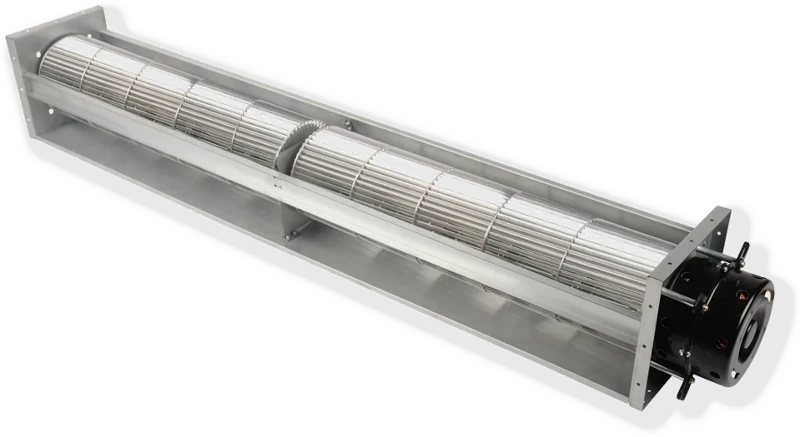
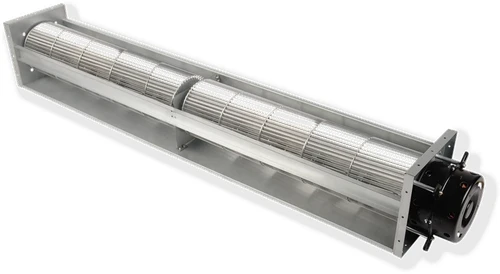
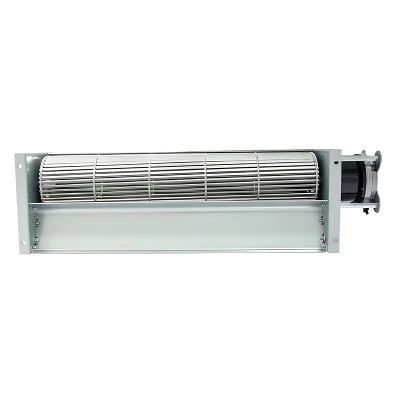
A Blauberg AC cross flow fan, shown to illustrate the elongated assembly layout. The image does not represent a tested comparison with an axial fan.
Where does the air need to go inside the equipment?
Sketch the complete route from inlet to discharge. Mark the components that must receive air and the places where air could bypass them. A convenient fan opening is not necessarily aligned with the cooling task. For example, a wall-mounted fan may fit neatly but still require an internal guide to serve a component hidden behind another assembly.
In an axial vs tangential fan comparison, the useful first question is how much additional routing each option needs. Include that routing in the proposed assembly rather than comparing the two bare fans in isolation.
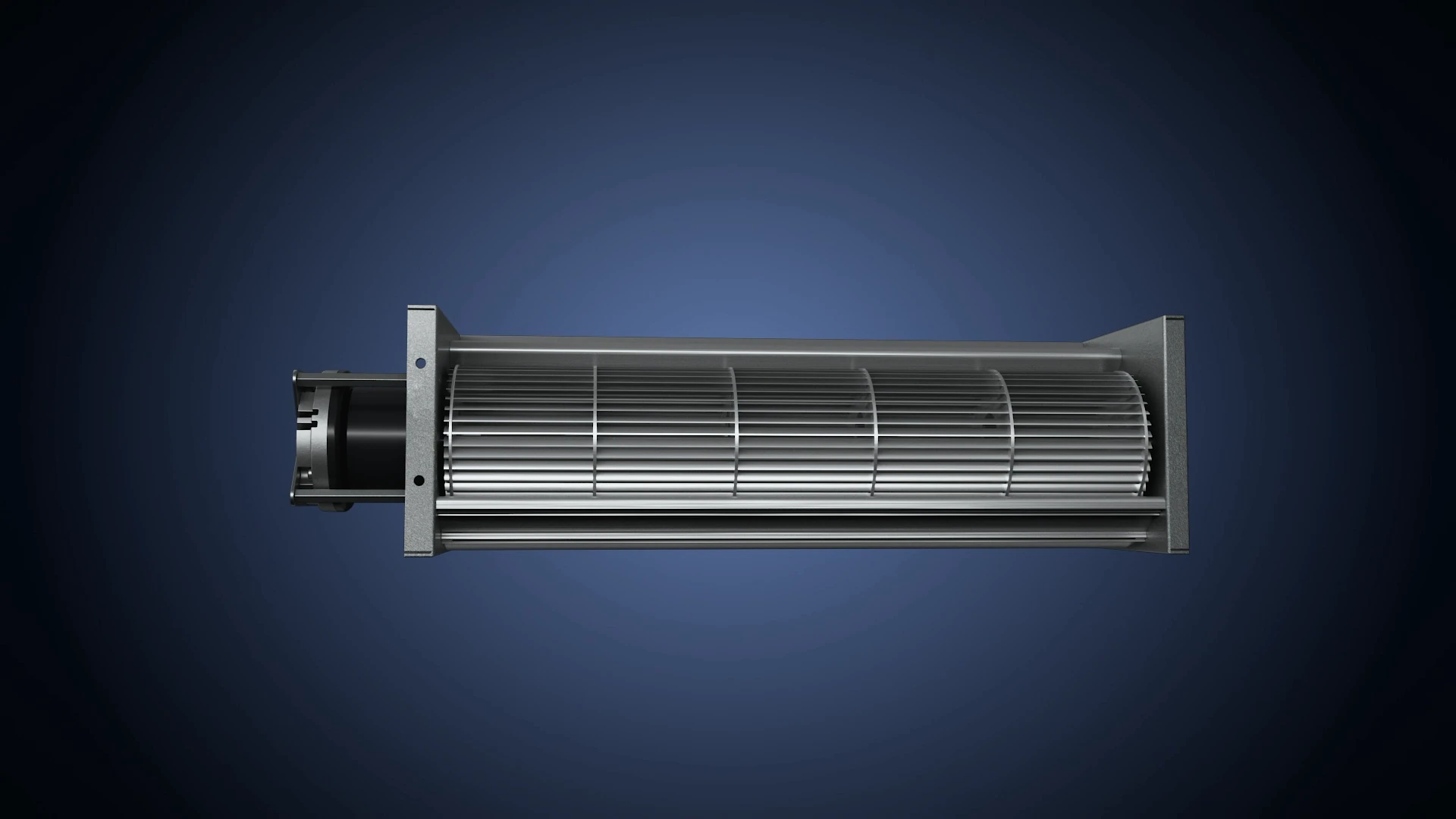
The long outlet is visible across the impeller span. Compare this packaging arrangement with the opening and airflow path required by the equipment before choosing a fan type.
Source: Blauberg product-animation frame, 35 seconds.
Which design differences belong in the selection matrix?
This original decision matrix keeps six issues visible before a model is chosen. It provides questions for a design review, not a performance ranking.
| Decision | Cross flow candidate | Axial candidate | Evidence needed |
|---|---|---|---|
| Air distribution | Evaluate delivery along a long outlet. | Evaluate through-flow from the fan opening. | Equipment airflow sketch and coverage requirement. |
| Package shape | Check total length and motor-end space. | Check fan face, depth and inlet access. | Complete assembly dimensions. |
| Pressure requirement | Read the proposed model's curve. | Read the proposed model's curve. | Required airflow at equipment resistance. |
| Acoustics | Assess the mounted blower and its housing. | Assess the mounted fan and its panel. | Comparable operating and acoustic conditions. |
| Electrical integration | Confirm the offered motor and interface. | Confirm the offered motor and interface. | Supply, wiring and control documentation. |
| Service access | Plan access along the assembly and its ends. | Plan access to the frame and connection. | Removal route and maintenance instructions. |
Do not assign equal importance to every row. An enclosure with a fixed panel opening may make geometry decisive; a redesigned product may allow geometry to change while holding thermal and acoustic requirements fixed.
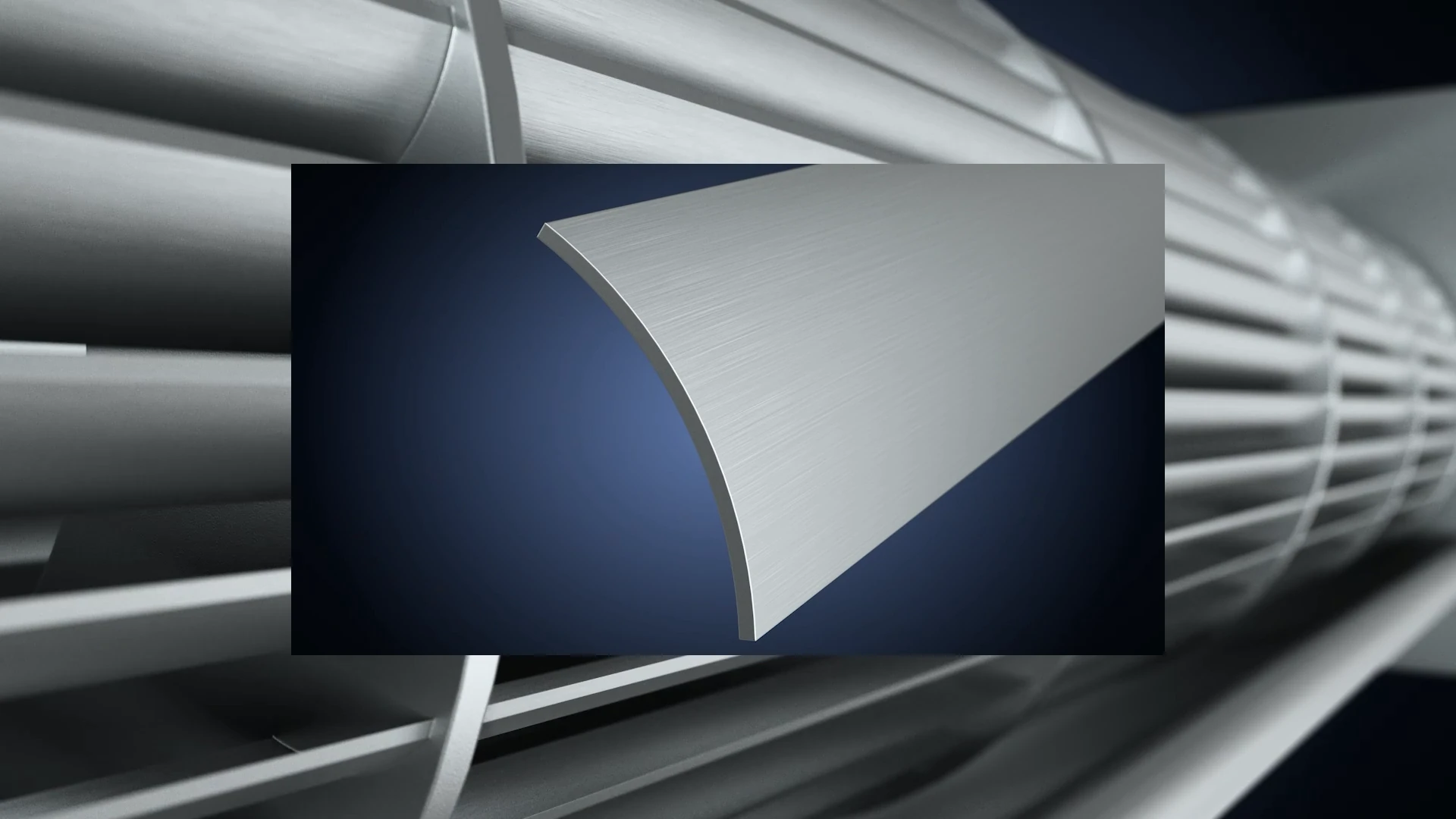
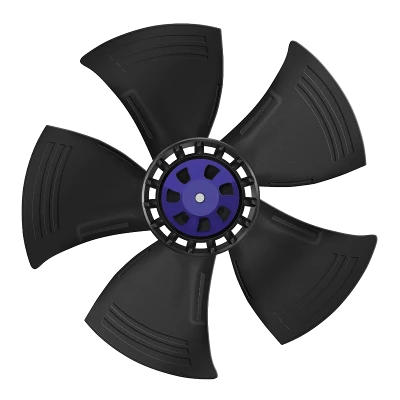
The blade-profile inset identifies one part of the rotor geometry. A visible blade shape does not establish airflow, pressure or noise performance; those still belong in the model-specific comparison record.
Source: Blauberg product-animation frame, 37 seconds. Geometric illustration.
How do you compare airflow when the equipment adds resistance?
Prepare an identical requirement sheet for both candidates: the useful airflow target, the location where pressure is defined, the permitted operating range and the intended supply. Record whether each curve includes accessories. If one proposal includes a grille and another is measured without one, resolve that difference before ranking them.
Changing the fan type may also change the housing and flow path. In that case, the fair comparison is between two complete concepts delivering the same equipment function. Keep each concept's own resistance characteristic, and compare the resulting service to the same acceptance criteria.
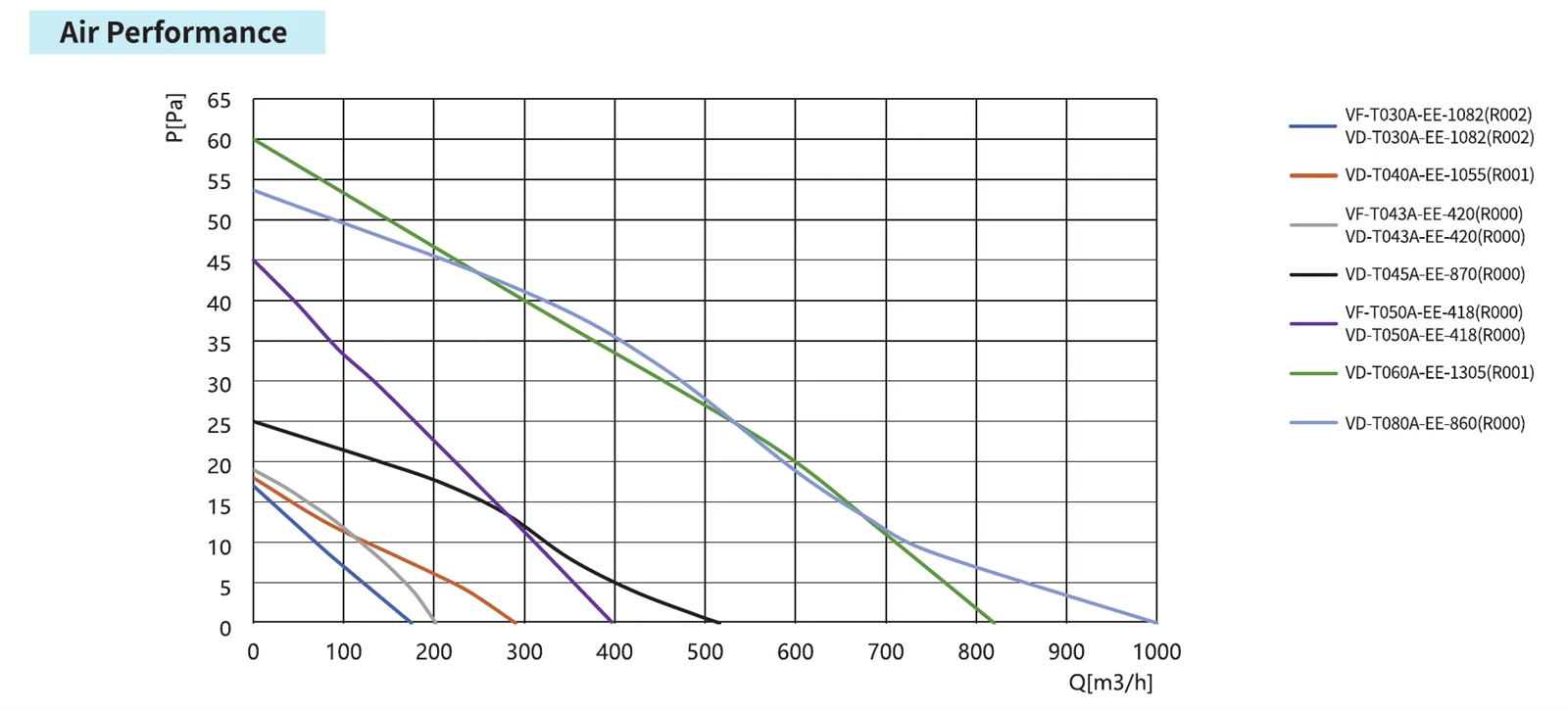
Select the curve identified by the candidate model, then compare it with the assembly requirement. The graph describes the DC models in its legend; it is not a head-to-head test against an axial fan.
Source: Blauberg Cross Flow Fan | 2025 brochure, PDF page 2, DC Air Performance. Axes: pressure in Pa and volume flow in m³/h; test conditions are not stated in this excerpt.
Swipe horizontally to view the full technical figure.
Which cross flow fan models should you review?
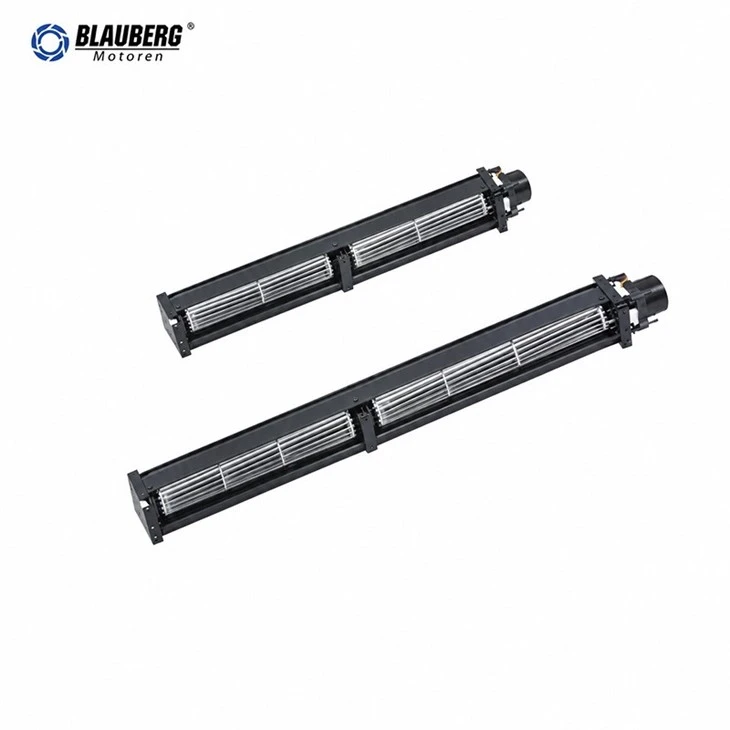
Blauberg VF-T030A-EE-1082(R002) 30mm DC Cross Flow Fans
30mm Cross Flow Fans, Approx. 175 m³/h maximum airflow and Approx. 17 Pa maximum static pressure.
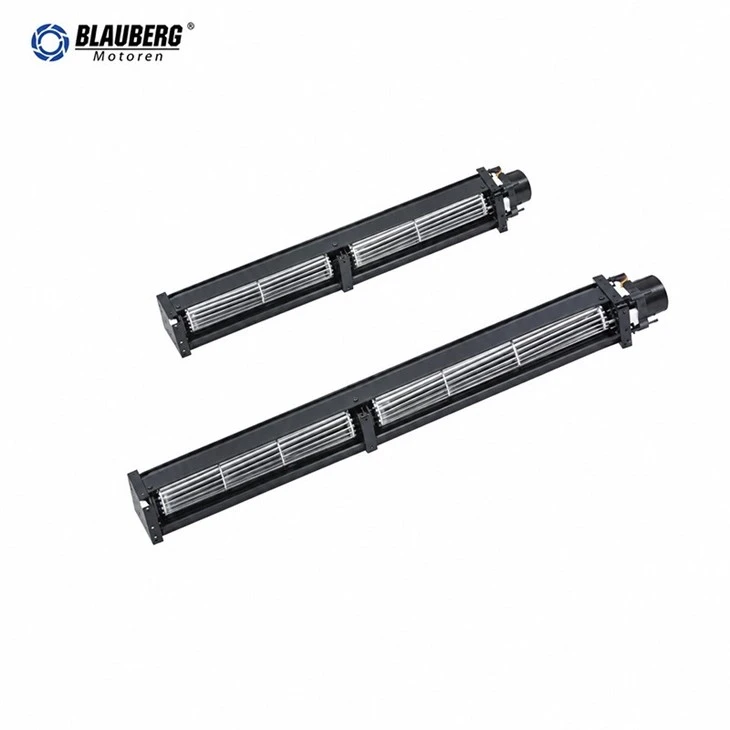
Blauberg VD-T030A-EE-1082(R002) 30mm DC Cross Flow Fans
30mm Cross Flow Fans, Approx. 175 m³/h maximum airflow and Approx. 17 Pa maximum static pressure.
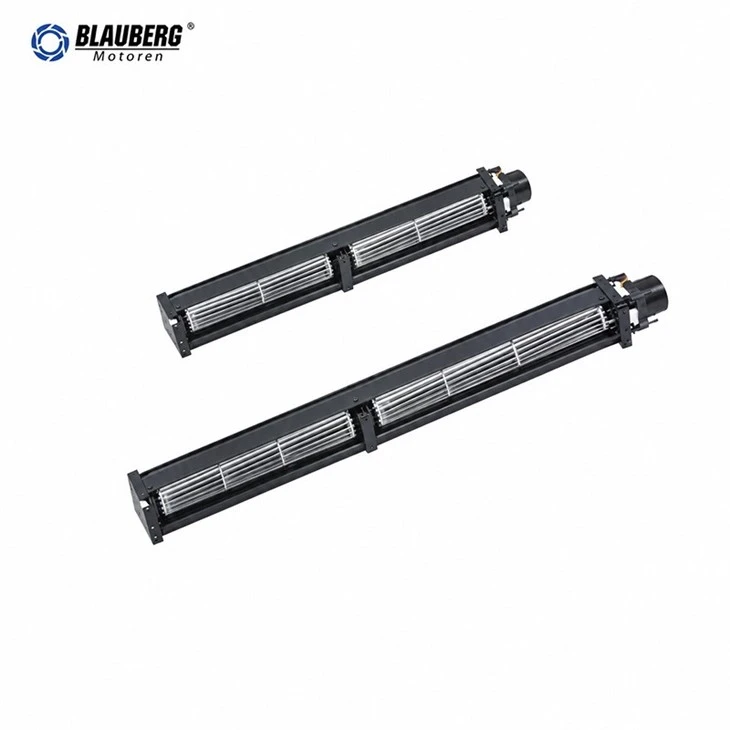
Blauberg VD-T030A-EE-986(R002) 30mm DC Cross Flow Fans
30mm Cross Flow Fans, Approx. 160 m³/h maximum airflow and Approx. 17 Pa maximum static pressure.
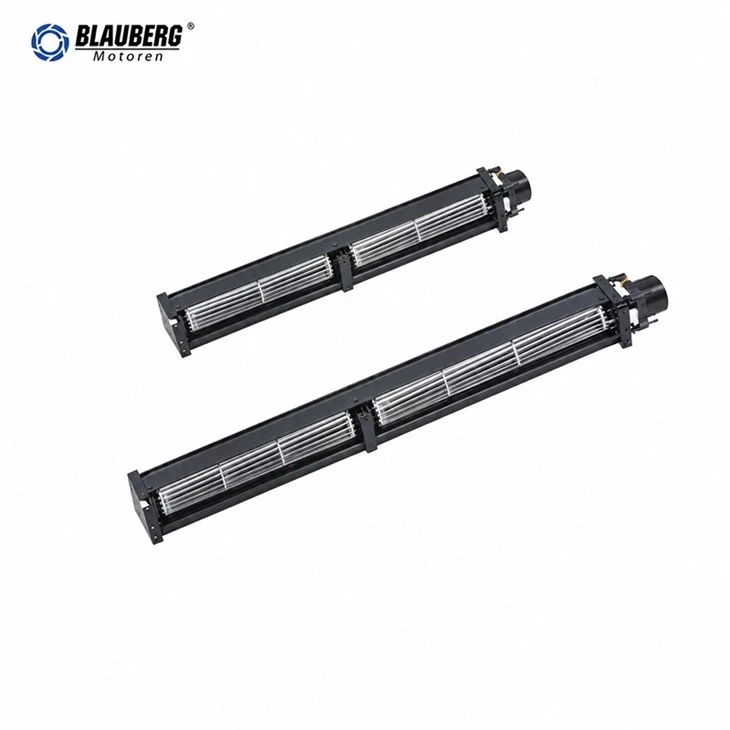
Blauberg VF-T030A-EE-986(R002) 30mm DC Cross Flow Fans
30mm Cross Flow Fans, Approx. 160 m³/h maximum airflow and Approx. 17 Pa maximum static pressure.
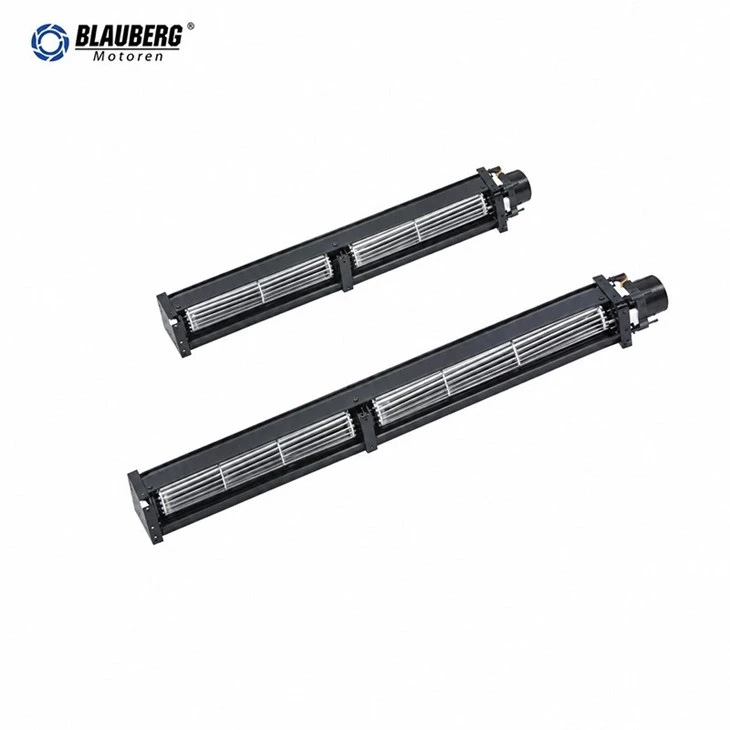
Blauberg VF-T030A-EE-920(R002) 30mm DC Cross Flow Fans
30mm Cross Flow Fans, Approx. 150 m³/h maximum airflow and Approx. 17 Pa maximum static pressure.
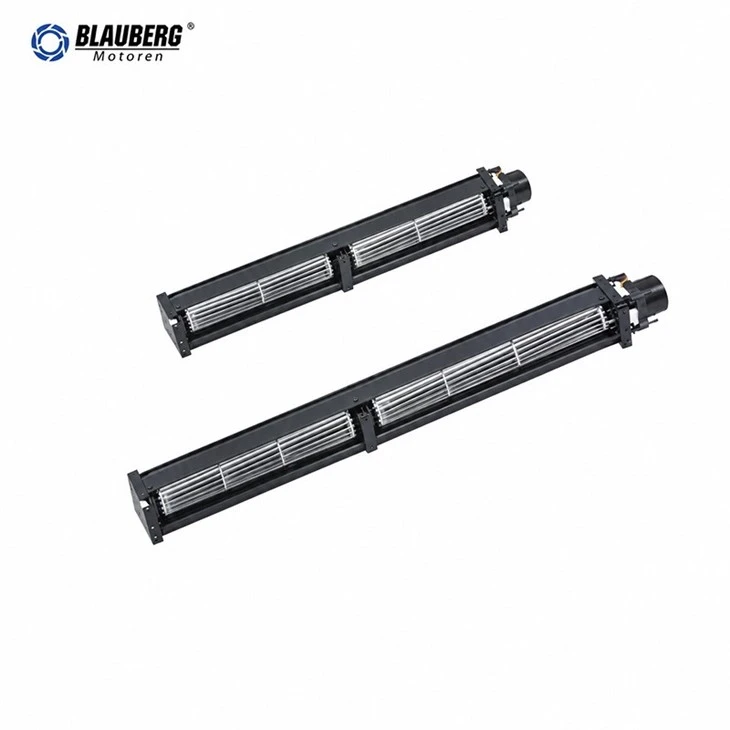
Blauberg VD-T030A-EE-920(R002) 30mm DC Cross Flow Fans
30mm Cross Flow Fans, Approx. 150 m³/h maximum airflow and Approx. 17 Pa maximum static pressure.
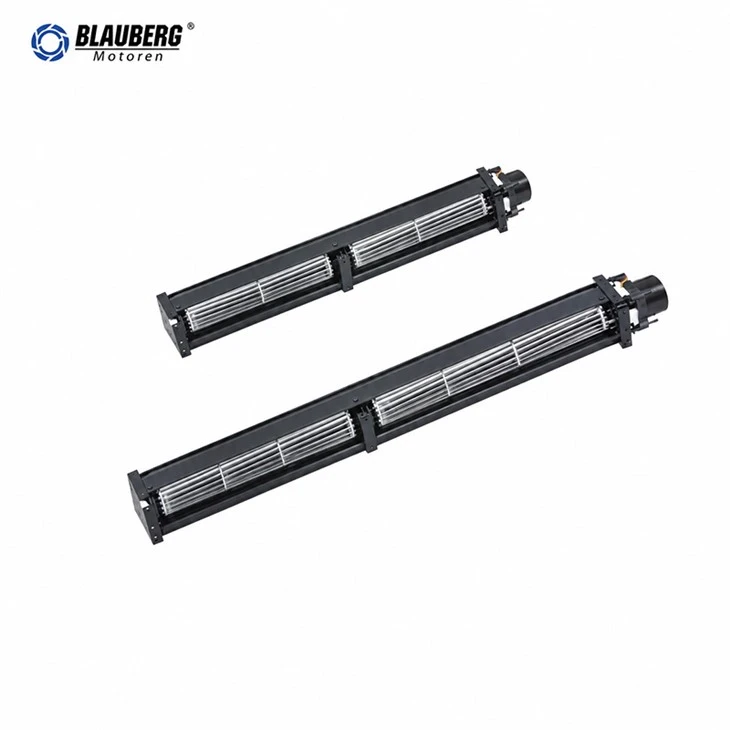
Blauberg VF-T030A-EE-800(R002)E 30mm DC Cross Flow Fans
30mm Cross Flow Fans, Approx. 130 m³/h maximum airflow and Approx. 17 Pa maximum static pressure.
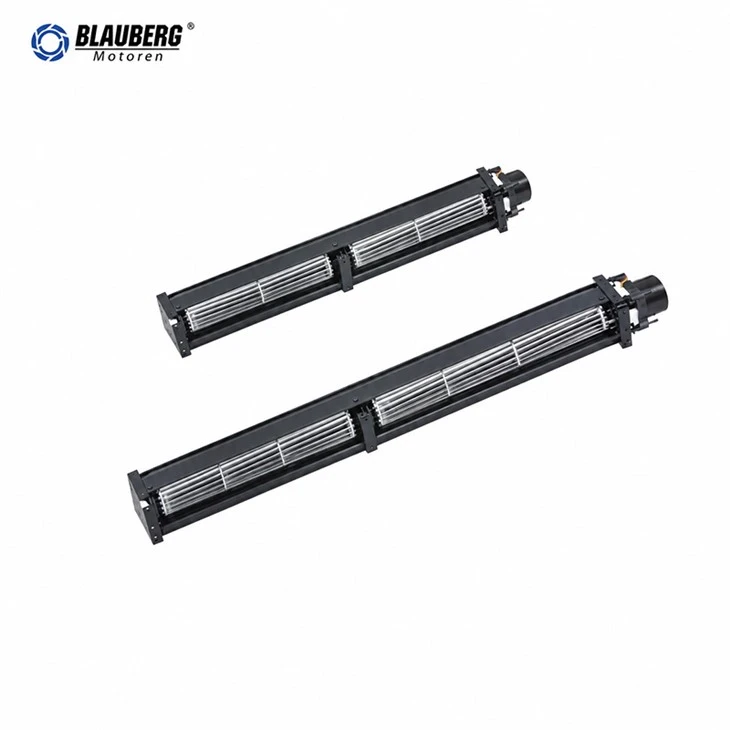
Blauberg VF-T030A-EE-854(R002) 30mm DC Cross Flow Fans
30mm Cross Flow Fans, Approx. 140 m³/h maximum airflow and Approx. 17 Pa maximum static pressure.
Product descriptions from the Blauberg catalogue, checked 22 September 2026. Listed airflow and pressure maxima are separate ratings; confirm the selected model at your operating point.
How would the choice change between a long outlet and an open enclosure?
Illustrative design scenario: a long heat-exchanger face
Assume a shallow enclosure needs airflow along an elongated coil and permits a long blower assembly. A cross flow layout is a reasonable candidate to investigate. The design review should check the available inlet area, coverage near the ends of the coil, motor clearance and the curve at coil resistance.
An axial alternative is still worth evaluating if the equipment can accommodate a distribution chamber or another arrangement that serves the coil. Include that space and any added parts in the comparison. Neither concept has passed until the assembled equipment meets the defined thermal and acoustic requirements.
Illustrative design scenario: through-ventilation of an enclosure
Assume the equipment has a suitable panel opening and needs air exchanged through a clear internal route. An axial layout may provide a straightforward starting point. Check whether the inlet air actually passes the heat sources before it reaches the outlet.
A cross flow alternative needs a reason for its longer discharge, such as serving an extended component row. These are hypothetical design scenarios, not Blauberg customer cases or measured results. Their purpose is to show how the airflow task changes the questions asked of a supplier.
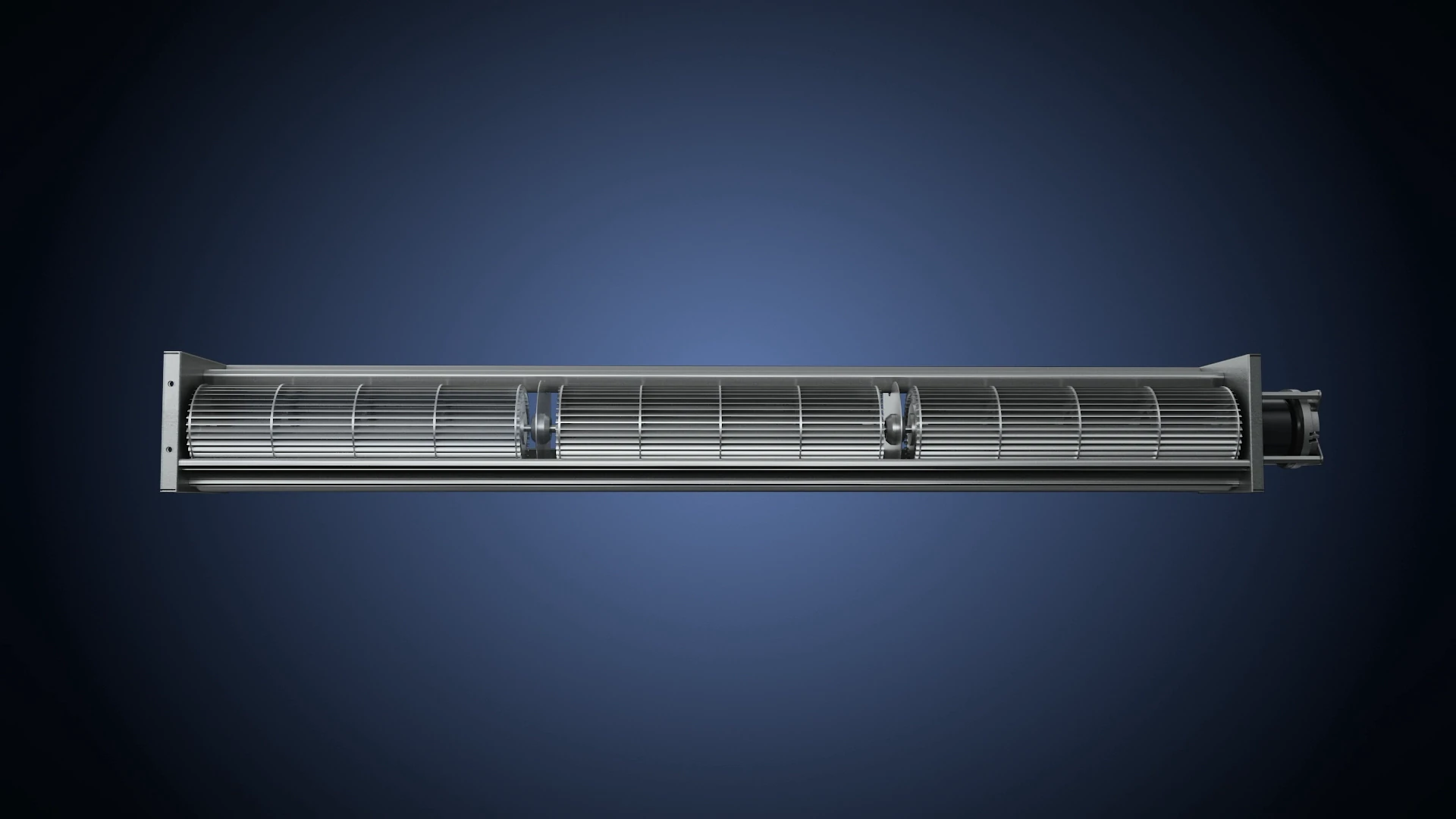
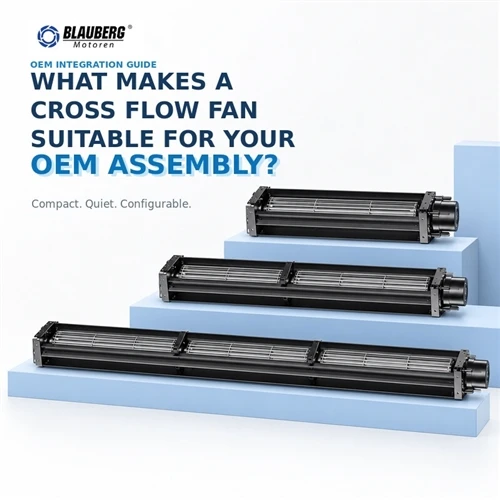
This long-format assembly illustrates why outlet length matters in the equipment layout. Check useful outlet coverage and end clearances in the installed product rather than choosing only by overall fan length.
Source: Blauberg product-animation frame, 48 seconds. Configuration illustration.
Can you decide which type is quieter from catalogue noise values?
Only compare acoustic values after aligning the measurement quantity, operating state and setup. Sound power and sound pressure are different quantities, as explained in AMCA's fan-noise material. The notation dB(A) by itself does not establish a like-for-like comparison.
For an equipment decision, specify the acoustic condition that matters to its user: the relevant operating mode, assembly configuration and measurement position. Then document the chosen method, background sound and fan command for both concepts. A low-speed result is not a substitute for the required full-load condition.
Retain the production grille and mounting panel during the comparison. AMCA's system-effect guidance identifies inlet and outlet disturbances as potential causes of performance loss, noise and vibration. A quiet bare fan is only one input to an installed fan noise assessment.
What must be checked before replacing one fan type with the other?
Treat a change of fan type as an equipment change. Check where the new assembly admits and discharges air, which surfaces receive the flow and whether the mounting creates new obstructions. Confirm the supply and connector from documentation; matching cable colours are not a pinout.
The accompanying comparison worksheet records both concepts against the same requirement. It is an original editorial tool, not a completed validation report. Use it to identify open decisions before ordering hardware, then attach the relevant drawing and curve revisions to the test record.
When reviewing the Blauberg cross flow fan range, retain the full proposed model number alongside the equipment sketch. Send the duty requirement and installation constraints through the technical enquiry channel so the response can address the actual assembly rather than only a headline airflow target.
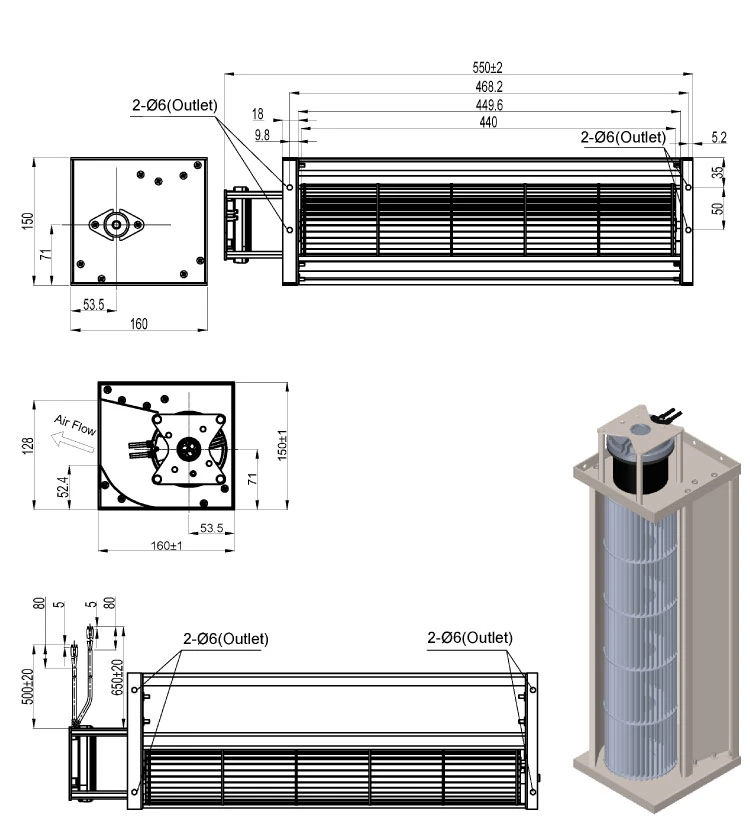
A replacement review should compare motor position, mounting points, outlet orientation and the full envelope. Dimensions on this CA230-F100A-EC-06 reference sheet do not establish interchangeability with another fan type.
Source: Company-supplied CA230-F100A-EC-06 reference drawing. Confirm the controlled revision before manufacture.
Swipe horizontally to view the full technical figure.
What should you record before making a decision?
Original editorial comparison tool for two equipment concepts. Record evidence and unresolved decisions; this is not a completed test report or a claim that either concept is approved.
This original worksheet is a record template, not a completed measurement report, certification procedure or manufacturer-approved service instruction. Define project acceptance criteria before testing; leave unmeasured values blank.
Download the editable CSV worksheet| Check | What to record | Acceptance basis |
|---|---|---|
| Useful function | Surface or equipment region requiring airflow | Equipment thermal or process requirement |
| Air route | Inlet, outlet, bypass routes and obstructions for both concepts | Documented equipment airflow layout |
| Candidate identity | Full cross flow and axial model identifiers | Current supplier documentation |
| Assembly geometry | Envelope, brackets, motor ends and connector access | Approved mechanical envelope |
| Target airflow | Required flow and definition of measurement location | Equipment requirement |
| Pressure requirement | Resistance characteristic for each concept | Same useful equipment service |
The download contains all 13 checks and a blank result column for your project.
What else should you check?
Can several axial fans replace one long cross flow fan?
They may be evaluated as a different assembly concept, but matching the summed catalogue airflow is not enough. Check distribution between the fans, the surrounding chamber, wiring, control behaviour and the equipment's acoustic result.
Should I compare fans at the same rotational speed?
Not as the main acceptance test. Different geometries can deliver different service at the same speed. Compare each complete concept at the airflow and pressure needed by the equipment, while recording its actual speed and electrical input.
Does adding a finger guard matter if the fan already fits?
Include the intended guard in the equipment assessment. Fit only establishes a mechanical condition; the guard's position and its interaction with the inlet or outlet also belong in the installed performance and noise check.
Can a fan comparison be completed before the final housing is available?
A preliminary shortlist can be made from documented requirements and curves. Record which housing features remain provisional and repeat the relevant checks on the production-intent assembly before treating the selection as validated.
Sources and scope
Sources checked on 22 September 2026. Published catalogue values describe the cited models only. This article provides an engineering decision framework; it does not report a new Blauberg laboratory test.
- AMCA - Basics of Fan Noise - Acoustic quantity distinction; no reproduced figures.
- AMCA - Mitigating System Effect - Installation effects; large-duct distance rules not transferred.
- Blauberg Motoren - Cross Flow Fans - Company product-family entry point.
Category of Blauberg Products
Built on German engineering principles, focusing on precision, reliability, and long-term performance. Through efficient and scalable manufacturing, we deliver high-quality ventilation solutions with optimized cost structure, ensuring strong value for global OEM and project-based customers.