Blauberg Motoren · Engineering guide
How do you select a tangential blower for an OEM assembly?
Select a tangential blower against the airflow and pressure required inside the finished equipment, then check its mechanical envelope, electrical interface and operating environment. A catalogue airflow number alone cannot establish that a blower will deliver the required flow through a coil, grille or enclosure. For an OEM assembly with an unmeasured pressure loss, use the first sample to establish an installed operating point before approving the production model.

What airflow and pressure must the assembly deliver?
Start cross flow fan selection with a requirement stated at the equipment boundary. Write down what the airflow must accomplish: move air across a coil, cool a defined surface or feed an outlet. Then specify where airflow and pressure will be measured. A requirement measured at an open fan outlet is different from one measured after the production grille.
If system resistance is unknown, mark it as unmeasured and define a prototype measurement task. Ask the supplier for curves covering the intended electrical supply and speed range. A guessed percentage margin is not a substitute for the missing pressure-loss evidence. Identify the expected normal condition and the most demanding credible condition separately, particularly when a filter, movable grille or alternative enclosure is part of the product.
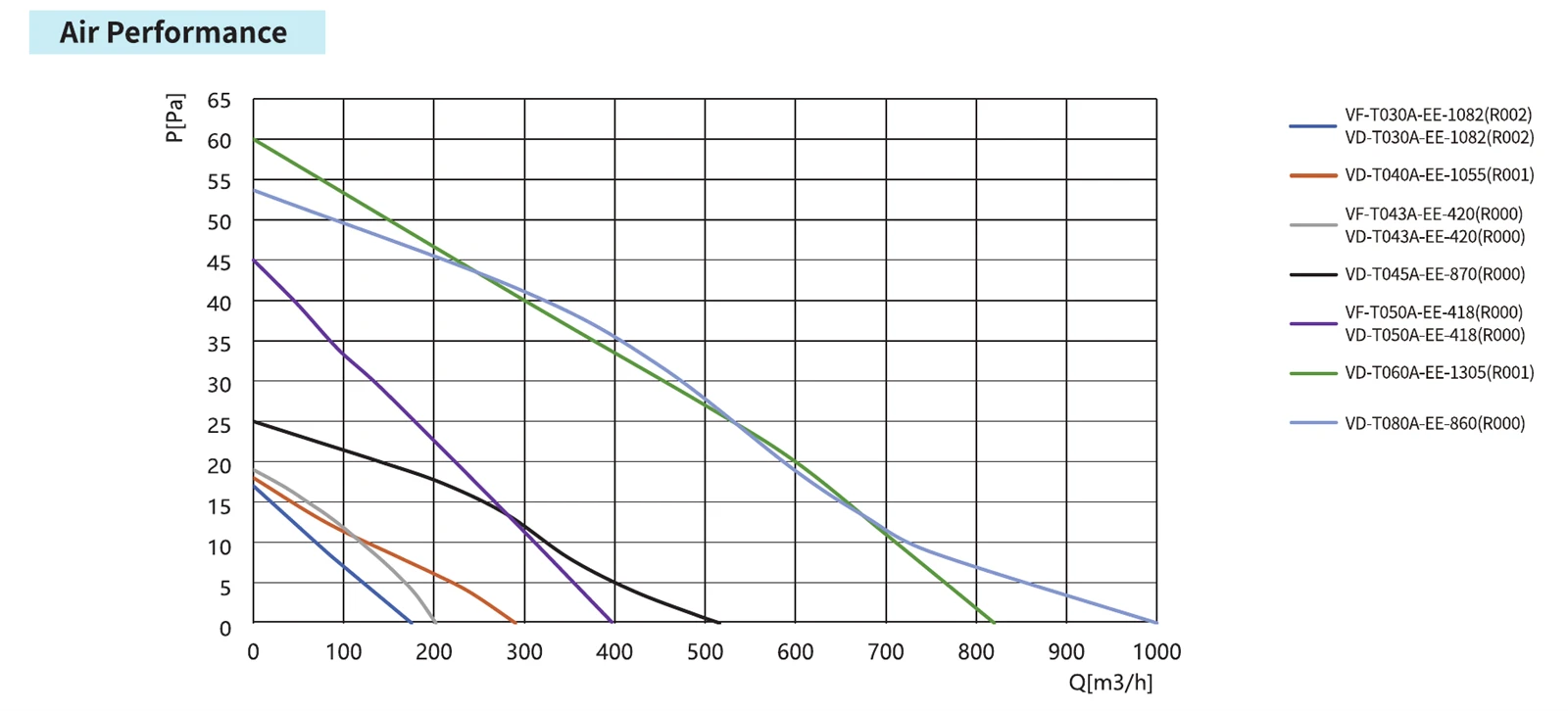
The curve keeps pressure and flow on the same performance relationship. Identify the correct model and obtain the relevant test conditions before using the curve to shortlist a blower for an installed duty point.
Source: Blauberg Cross Flow Fan | 2025 brochure, PDF page 2, DC Air Performance. Published catalogue curves; not an installed-equipment measurement.
How should you read a blower catalogue without inventing a duty point?
A Blauberg example shows how to separate identification from approval. The cross flow fan series catalogue, accessed 22 September 2026, lists VF-T030A-EE-1082(R002) with 12 V DC, 175 m³/h airflow and 17 Pa pressure. These are separate published catalogue values, not a simultaneous duty point and not measurements performed for this article. The listing supports a shortlist entry; it does not establish the flow through your assembly.
Use the VF-T030A-EE-1082(R002) model page as a model reference when requesting a current drawing and performance curve. If your requirement calls for a 12 V DC cross flow fan, still confirm the permitted supply range, connection diagram and available control options for the exact ordered variant.
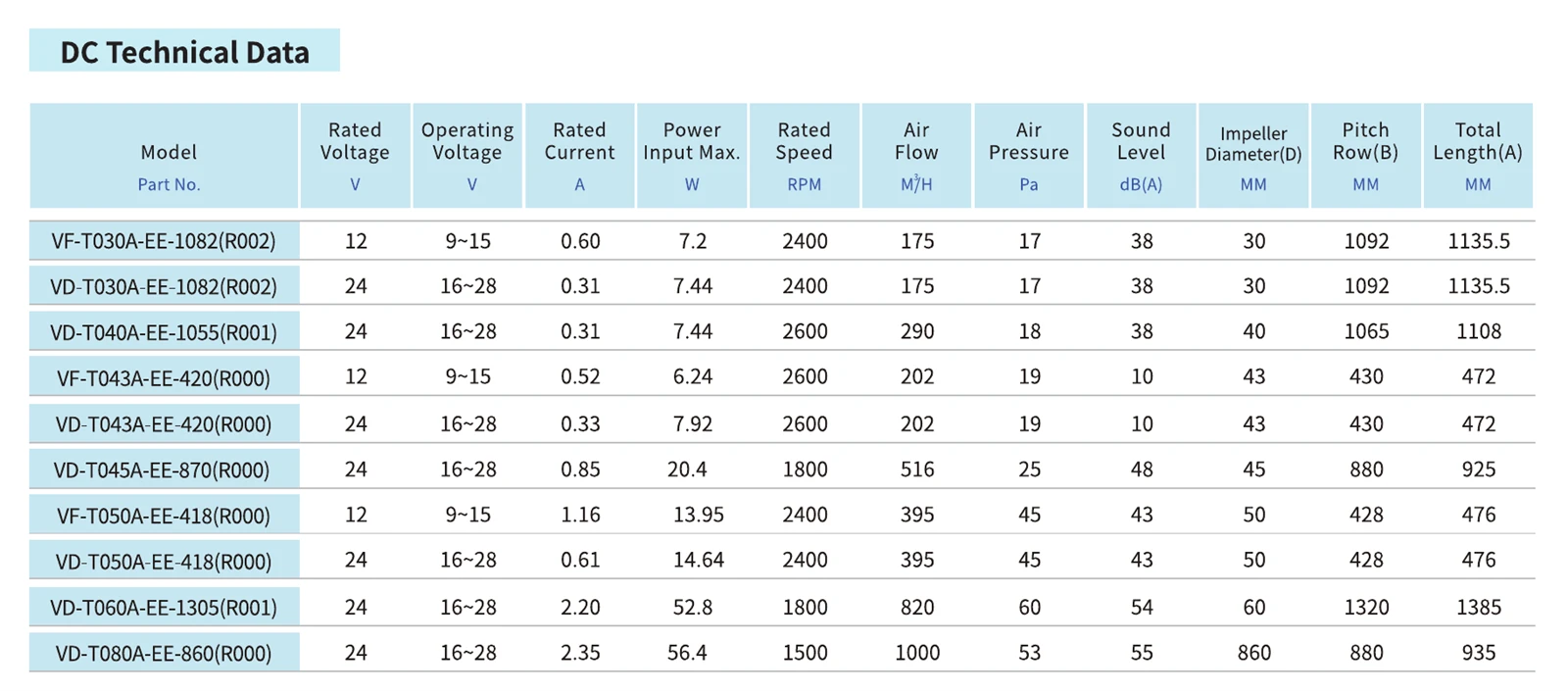
The first VF-T030A-EE-1082(R002) row provides the DC example discussed above. Keep its supply and performance fields attached to that model. The final VD-T080A-EE-860(R000) row's impeller-diameter entry needs confirmation against the current drawing before dimensional selection.
Source: Blauberg Cross Flow Fan | 2025 brochure, PDF page 2, DC Technical Data. Original table reproduced without correcting its entries.
Which installation dimensions can change the shortlist?
Compare the complete assembly envelope, including the motor end, supports, connectors and cable bend space. Rotor length alone does not describe the space needed to install or service a tangential fan. Put the inlet, outlet and rotation information on the same drawing review so that a mechanically convenient orientation does not become an airflow-path mistake.
Nearby obstructions and unsuitable inlet or outlet conditions can change delivered performance, noise and vibration; AMCA's discussion of system effect explains the underlying installation issue. For a compact OEM product, verify the actual geometry instead of borrowing a universal clearance from an unrelated fan installation.
| Design decision | Evidence to request | Reason to reopen selection |
|---|---|---|
| Available envelope | Dimensioned drawing and connector location | The motor or wiring interferes with the enclosure |
| Useful outlet span | Outlet geometry and installed distribution check | The target surface extends beyond the effective air path |
| Inlet and outlet access | Assembly drawing with grille and coil fitted | Production parts alter the tested flow path |
| Mounting and support | Specified mounting arrangement and assembly tolerances | The proposed support differs from the intended arrangement |
| Service access | Removal sequence and access drawing | A replaceable part cannot be reached in the finished product |
This is an original design-review matrix, not an approved mechanical drawing. Attach revision identifiers to both the fan drawing and the host enclosure drawing so later changes remain visible.
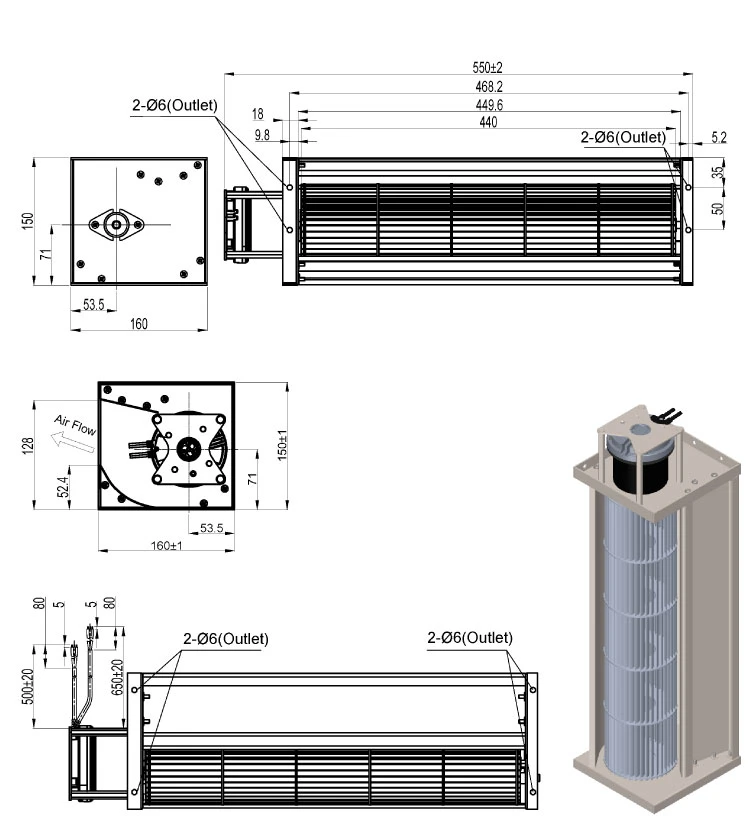
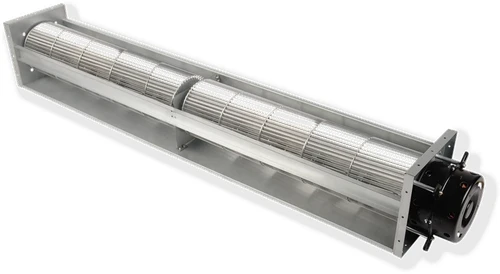
The reference drawing makes the overall envelope, motor-side clearance and mounting features visible together. Use it to structure the dimensional review, and request the current controlled drawing for the exact ordered model.
Source: Company-supplied CA230-F100A-EC-06 reference drawing and 3D assembly illustration.
Which cross flow fan models should you review?
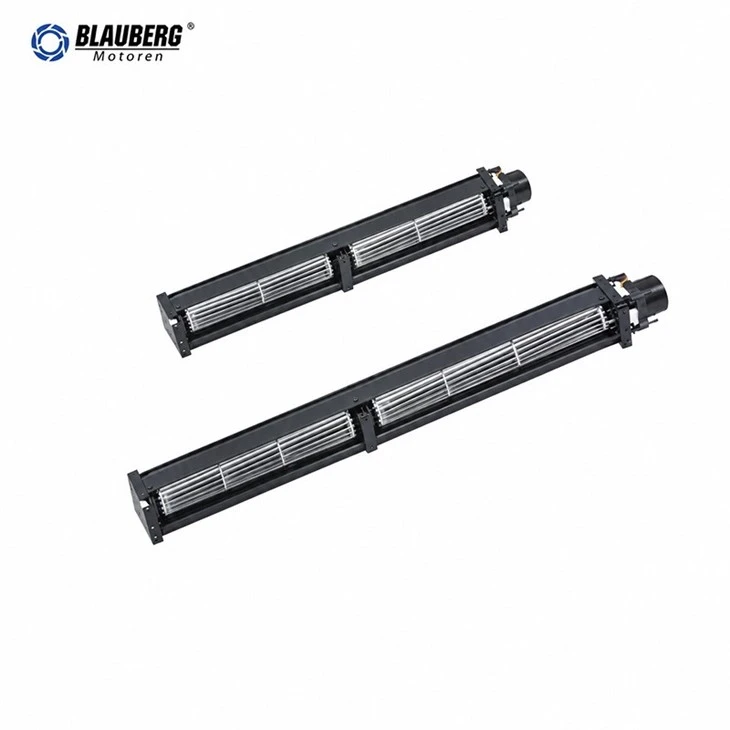
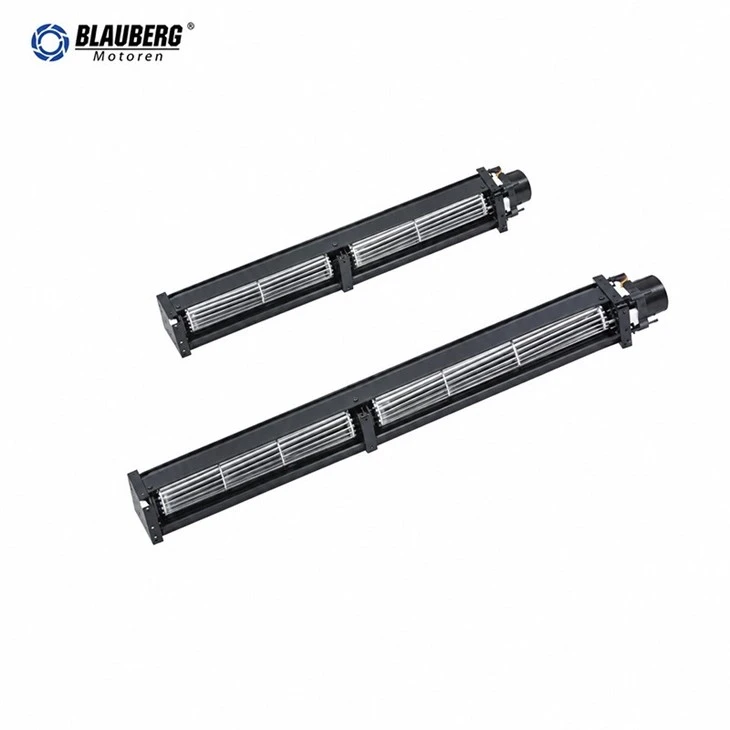
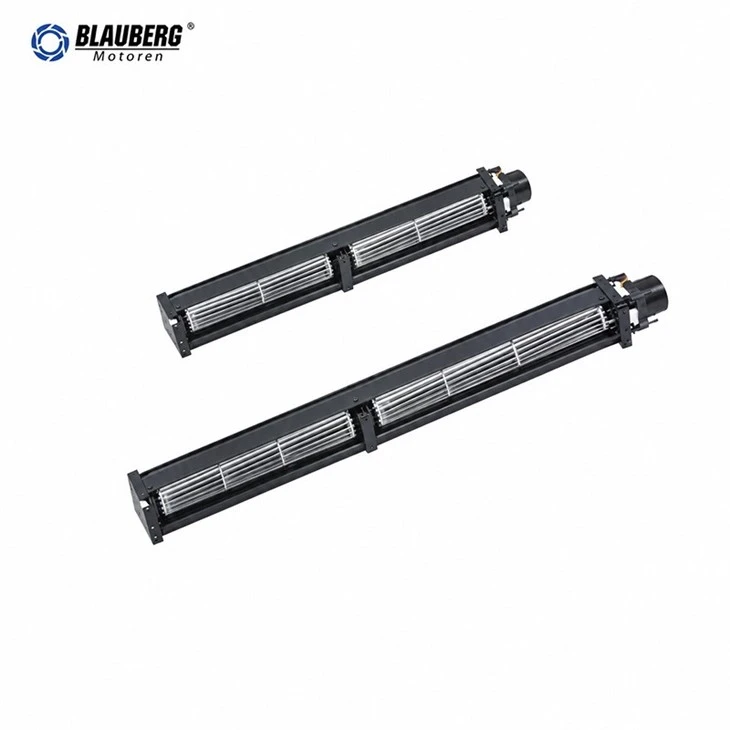
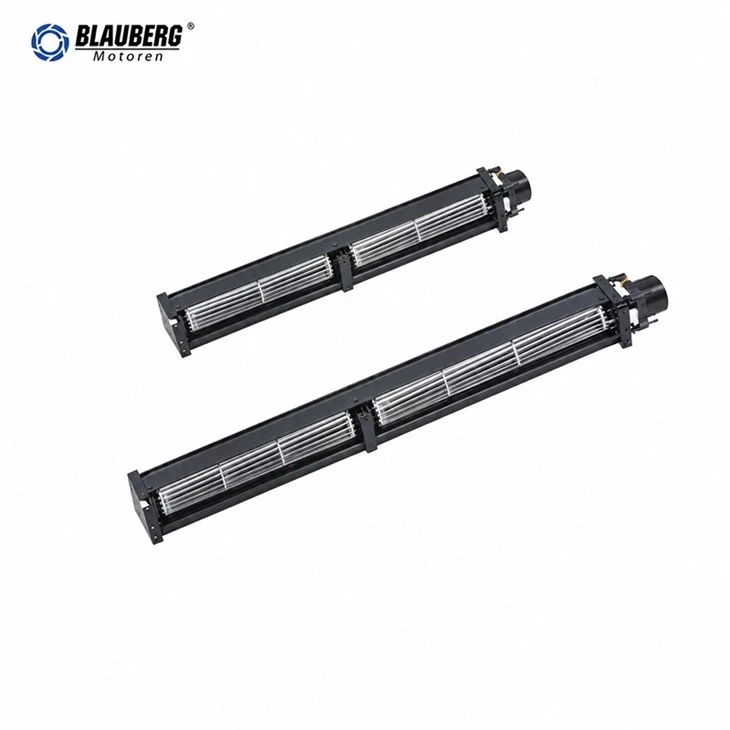
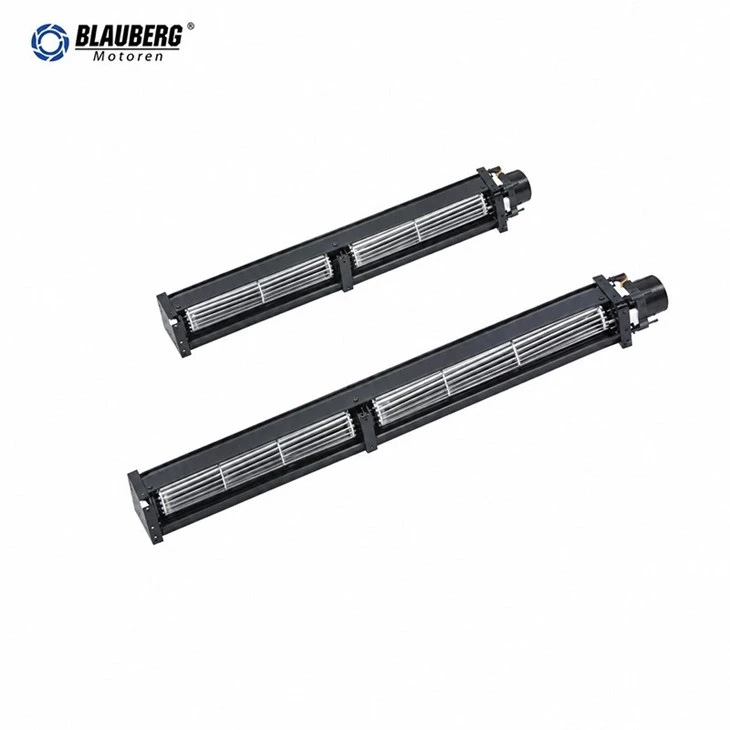
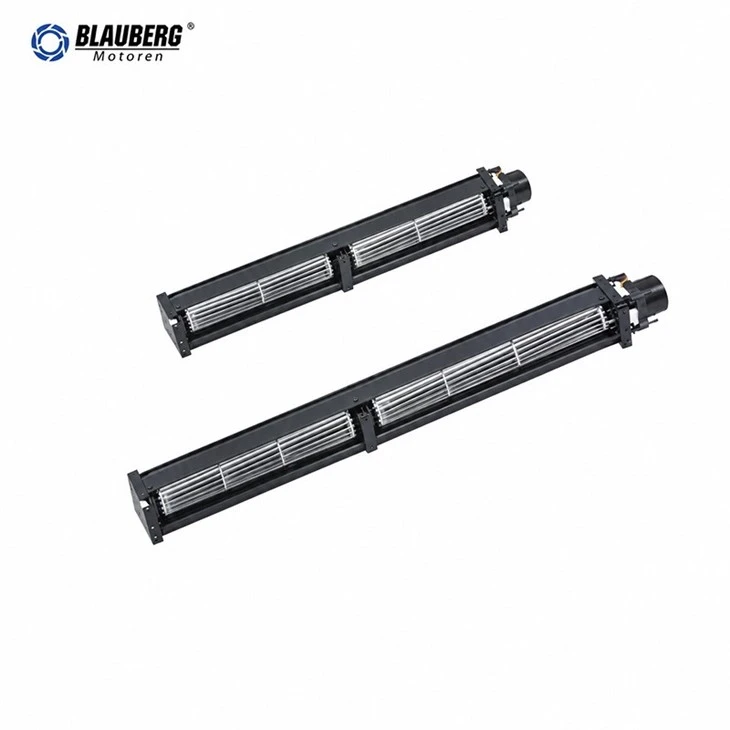
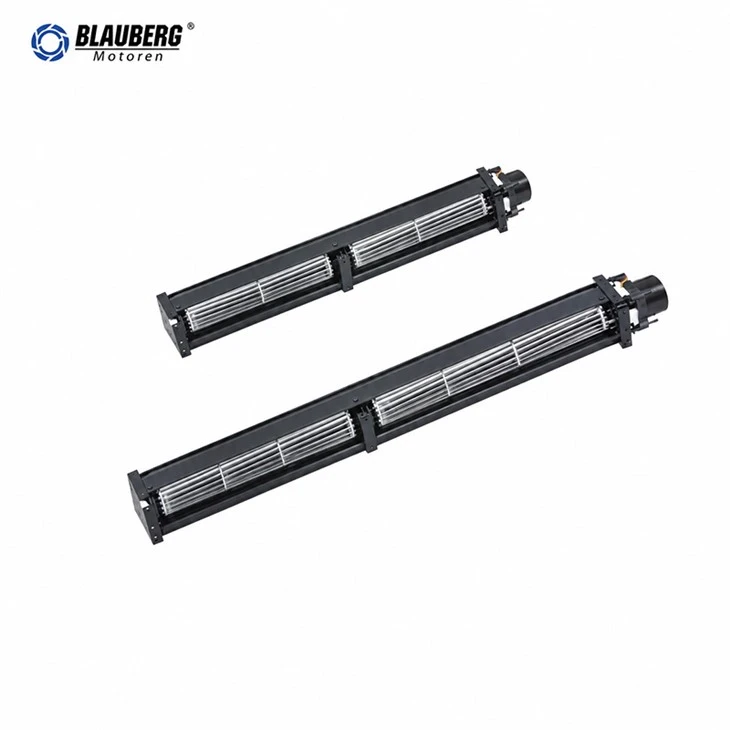
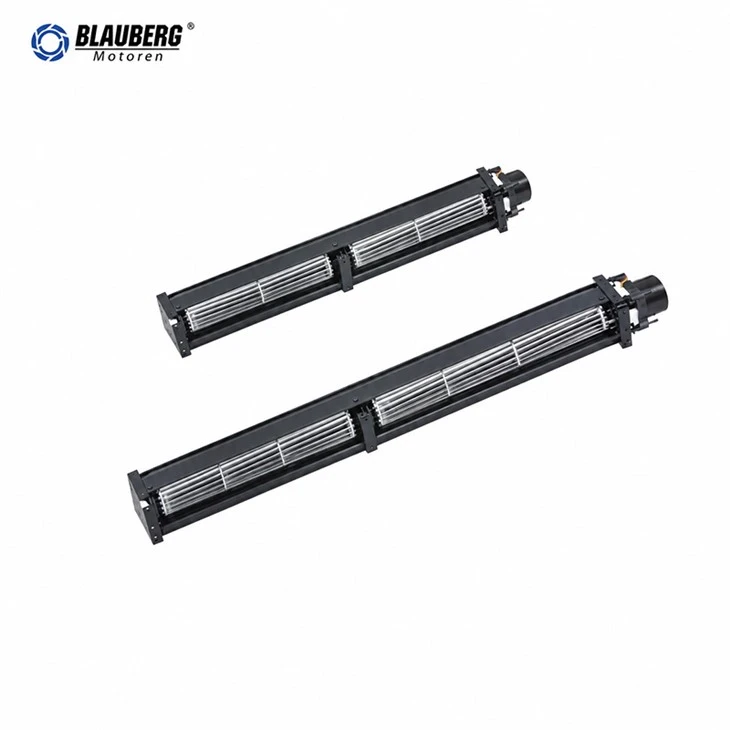
Product descriptions from the Blauberg catalogue, checked 22 September 2026. Listed airflow and pressure maxima are separate ratings; confirm the selected model at your operating point.
Which electrical and environmental conditions belong in the request?
State the actual supply architecture before choosing an AC, DC or EC catalogue category. Give nominal voltage, the supply limits required by the equipment design and any relevant mains frequency. Describe the controller separately: the desired command signal, feedback, connector and behaviour when a command is absent. Request a model-specific wiring diagram; a family-level description does not prove that every variant has the same interface.
Describe where the blower will operate, including the temperatures expected at the inlet, motor and electronics, the operating orientation, moisture exposure and duty cycle. These are requirements for the supplier to evaluate, not implied capabilities of every tangential blower. If the project has a specified protection level or regulatory requirement, request the applicable evidence for the proposed part and distinguish it from the finished equipment's obligations.
Keep desirable options separate from non-negotiable requirements. Procurement can compare offers more accurately when a supplier can see which constraint rejects a candidate and which can be resolved through a different connector or mounting arrangement.
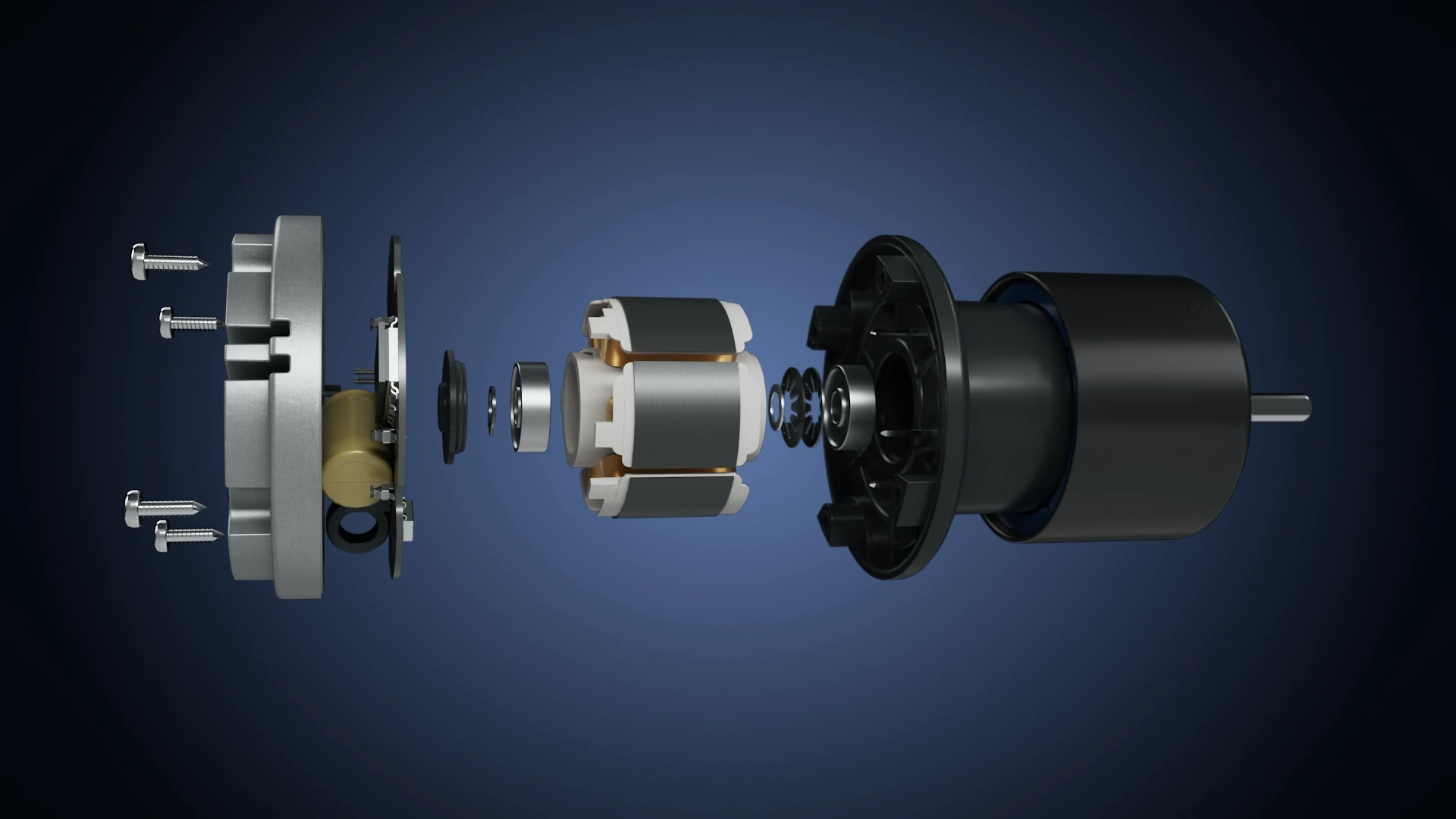
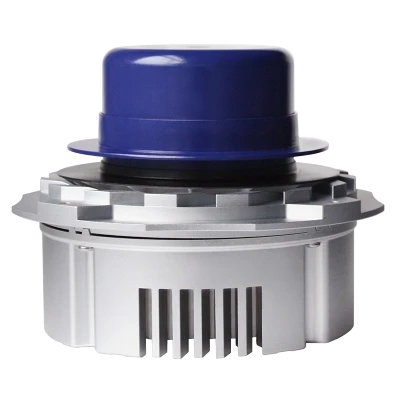
The motor illustration helps locate the drive assembly within the product package. Supply range, protection and control compatibility must come from the selected model's electrical documentation, not from its appearance.
Source: Blauberg product-animation frame, 17 seconds. Component illustration, not a wiring or service procedure.
What should the prototype prove before you approve the model?
The prototype should show whether the selected blower meets the equipment requirement in its intended installation. Fit the production-representative grille, coil, supports and housing. Record their revisions alongside the fan's full part number, supply, command and measured speed where available. This links a result to the assembly that produced it.
Agree acceptance criteria before the run. Record airflow and pressure at the defined locations, then evaluate the outlet distribution where coverage matters. Measure electrical input at a stated boundary, and assess noise under recorded acoustic conditions. Keep thermal and control observations in the same run record so a low-noise setting is not approved while failing the functional requirement.
The downloadable selection worksheet is an original editorial tool for collecting this evidence, not a completed test report or a certification method. Leave a result blank until it has been recorded. If the production enclosure changes, compare the change with the tested configuration and decide which checks need repetition instead of assuming the original result still applies.
What information makes an OEM blower RFQ actionable?
Send a compact package containing the required operating point, enclosure drawing, electrical interface, environment and acceptance plan. Identify which values are measured, which are design targets and which remain unknown. Include expected quantities and the project stage so a sample recommendation is not confused with a frozen production specification.
After reviewing the Blauberg cross flow fan range, attach your completed requirement worksheet when contacting Blauberg about model selection. Ask the response to identify the exact proposed variant, outstanding technical questions and documents needed for prototype approval. That gives the next engineering discussion a clear decision to make.
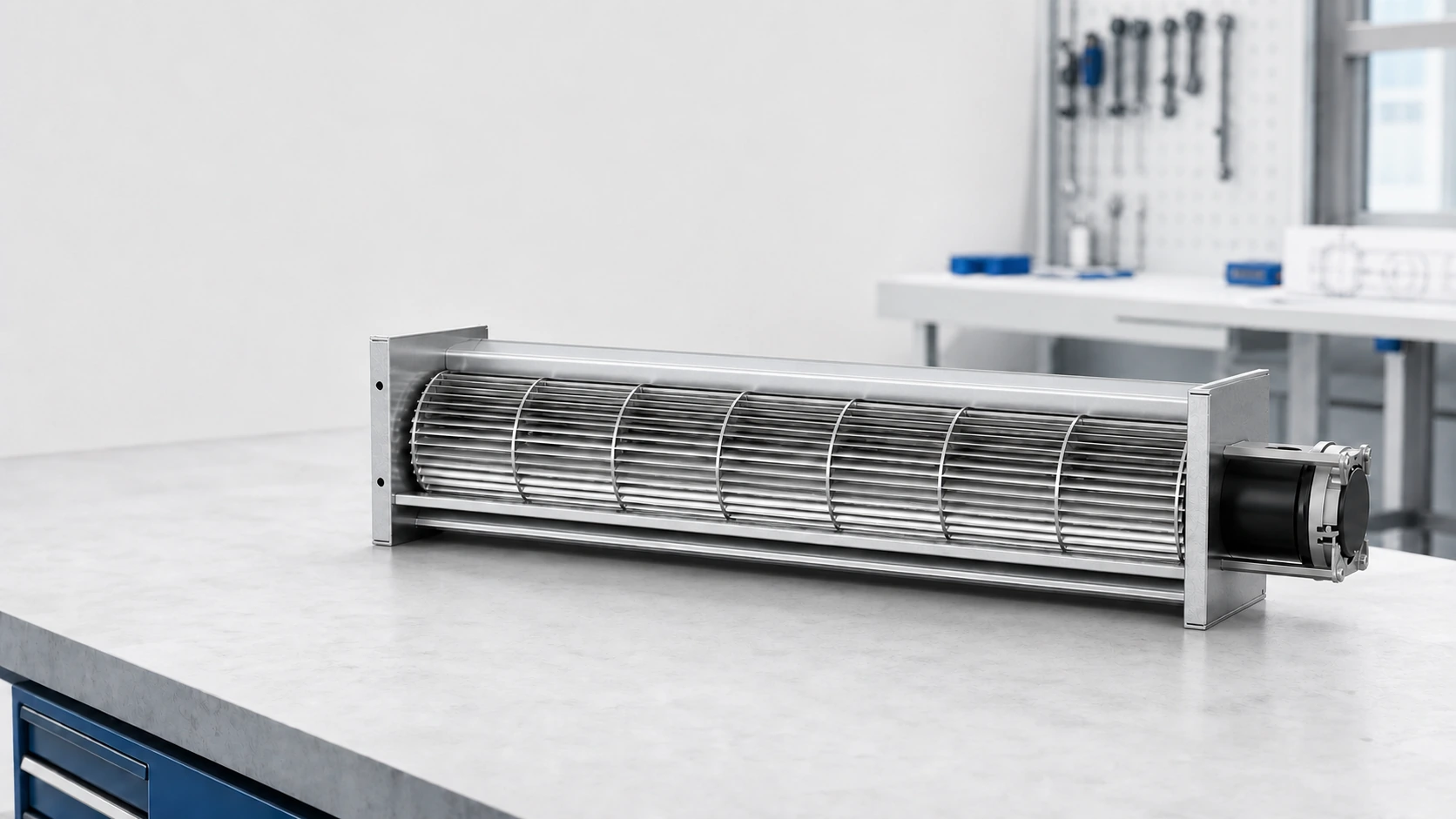
Attach a complete assembly view alongside the dimensional drawing, duty requirement and electrical specification. The image provides a visual reference for the enquiry while the model code and controlled documents establish the configuration.
Source: Company-supplied EC cross flow fan product render.
What should you record before making a decision?
Original editorial worksheet for OEM requirements and evidence capture. Blank fields are for the project team; this is not a completed measurement report or an approved product specification.
This original worksheet is a record template, not a completed measurement report, certification procedure or manufacturer-approved service instruction. Define project acceptance criteria before testing; leave unmeasured values blank.
Download the editable CSV worksheet| Check | What to record | Acceptance basis |
|---|---|---|
| Required airflow | Target flow; unit; measurement boundary | Equipment functional requirement |
| Required pressure | Pressure quantity; Pa; measurement locations | Measured system characteristic or declared design estimate |
| Operating modes | Normal; minimum; maximum; exceptional modes | Equipment mode requirements |
| Fan identity | Complete order code; drawing and data revision | Supplier-confirmed proposed variant |
| Fan curve | Supply; speed; air conditions; curve reference | Curve covering the required operating point |
| Installation envelope | Overall dimensions; motor; connector; cable space | Host assembly drawing |
The download contains all 14 checks and a blank result column for your project.
What else should you check?
Can I shortlist a blower before measuring enclosure resistance?
Yes, provided the shortlist is explicitly provisional. Supply the enclosure geometry, desired airflow and known restrictions, then agree how the sample will establish the installed operating point. Do not turn an unmeasured pressure estimate into a production acceptance result.
Does matching rotor length make two tangential blowers interchangeable?
No. Compare the complete envelope, support arrangement, inlet and outlet geometry, electrical interface and performance evidence. Record the exact variant and drawing revision; an identical nominal length does not resolve the other integration requirements.
Should I approve a model using its highest available speed?
Approve the operating modes the equipment will actually use. Check that the required service can be delivered at each intended setting and record the corresponding input power, noise and control behaviour. Maximum speed is only one possible test condition.
What should I do when a catalogue field and a model drawing disagree?
Keep both source references and request written clarification for the intended order code and revision. Avoid silently choosing the more convenient value. Resolve the discrepancy before treating the affected dimension, electrical rating or performance value as an acceptance requirement.
Sources and scope
Sources checked on 22 September 2026. Published catalogue values describe the cited models only. This article provides an engineering decision framework; it does not report a new Blauberg laboratory test.
- Blauberg Motoren cross flow fan catalogue - Catalogue identification and published values, accessed 2026-09-22; not an installed performance test.
- Blauberg VF-T030A-EE-1082(R002) model reference - Model information entry point; obtain current drawing and confirm variant before approval.
- AMCA: Mitigating System Effect - Installation effects; no duct clearance rule transferred to compact tangential fans.
Category of Blauberg Products
Built on German engineering principles, focusing on precision, reliability, and long-term performance. Through efficient and scalable manufacturing, we deliver high-quality ventilation solutions with optimized cost structure, ensuring strong value for global OEM and project-based customers.