How to Optimize the Air Volume of Centrifugal Fans Through Design?
Blade and Impeller Design Optimization
- Adjustment of Blade Geometric Parameters
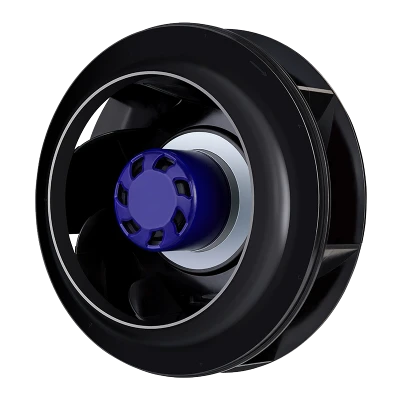
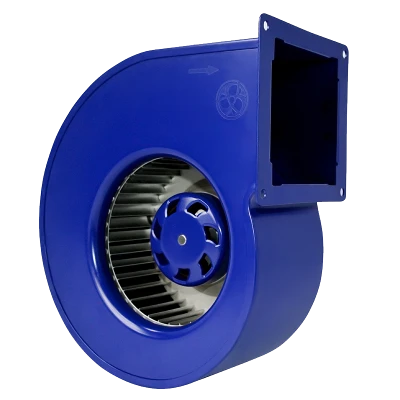
- Optimize the number and shape of blades: Select an appropriate number of blades to prevent excessive resistance caused by too many blades or airflow separation due to insufficient blades. Backward-curved or airfoil-shaped blade designs can effectively reduce turbulence and enhance airflow stability.
- Adjust the impeller's inlet-to-outlet diameter ratio (wheel diameter ratio) and outlet width-to-diameter ratio based on computational fluid dynamics (CFD) analysis to significantly minimize flow losses.
- Precisely optimize the blade outlet angle to reduce air separation and energy loss, thereby further improving total pressure efficiency.
- Impeller Structural Matching
Match the blade inlet and outlet widths to ensure that the inlet width satisfies accelerated airflow requirements while avoiding excessive diffusion at the outlet, which could cause airflow separation. This reduces impact losses and enhances overall efficiency.
Inlet/Outlet Structure Optimization
Inlet Design
– Optimize the inlet area and shape through simulation calculations to determine the optimal inlet size, preventing increased flow resistance from a too-small inlet or wasted energy from a too-large inlet. A tapered design improves airflow uniformity.
– Optimize the curvature of guide plates and the expansion angle of diffusers to effectively reduce local resistance and airflow separation.
Outlet Design
– Adjust the direction and size of the outlet to match the system's actual requirements, avoiding backflow or vortex generation, which reduces pressure loss and enhances overall performance.
Efficient Material and Structural Design
Lightweight and Corrosion-Resistant Materials
- Utilize high-performance materials such as stainless steel or aluminum alloys to reduce the impeller's weight, minimizing mechanical losses while enhancing corrosion resistance for operation in high-temperature, high-humidity, or other harsh environments.
- Employ a compact plug-in design to minimize air leakage, ensuring tightness and maintaining directional flow efficiency, thereby further enhancing the fan's overall performance.
Intelligent Control and Power System Integration
High-Efficiency Motor Technology
- Apply EC motors or brushless DC motors (BLDC) combined with energy-efficient motor technology to improve power conversion rates and achieve precise air volume control via PWM speed regulation.
- Implement variable frequency speed regulation technology to dynamically adjust the speed according to different operating conditions, avoiding unnecessary energy consumption caused by constant-speed operation and significantly reducing energy usage.
System Matching and Maintenance
System Resistance Adaptation
- Design impeller parameters based on the size and layout of the ductwork to ensure that the system's total resistance aligns with the fan's performance curve, preventing efficiency losses due to overloading.
- Conduct regular cleaning and maintenance to promptly remove dust accumulation in the inlet and impeller, reducing additional resistance and ensuring the fan maintains its designed air volume and long-term stable operation.
Through comprehensive optimization of blade design, inlet/outlet structure, material selection, and intelligent control systems, the air volume efficiency of centrifugal fans can be significantly improved. For instance, combining backward-curved blades with wheel diameter ratio adjustments can increase efficiency by 10%-15%, while the application of EC motors and variable frequency speed regulation technology can reduce energy consumption by over 20%. In practical applications, it is essential to balance air volume and energy consumption according to specific operating conditions and maintain the fan's optimal performance through regular maintenance.