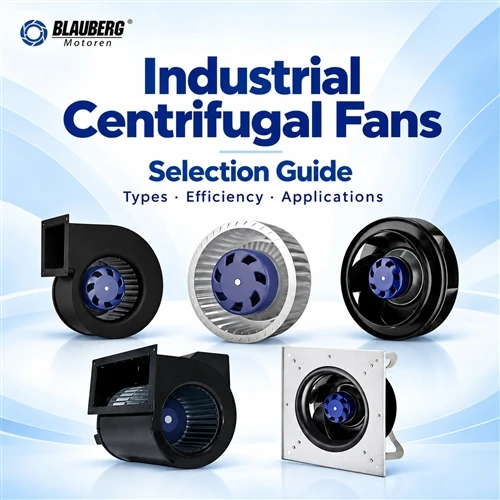
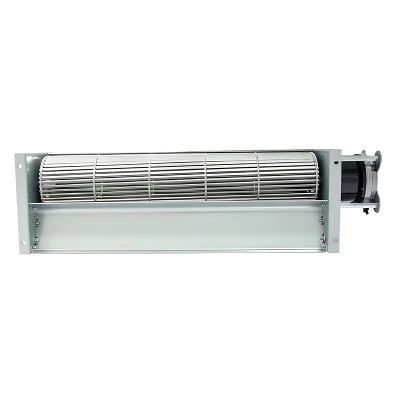
Centrifugal fans are widely used in ventilation, air conditioning, dust removal, and industrial exhaust systems. However, not all centrifugal fans are built the same - two of the most common blade designs are forward curved and backward curved. Understanding the difference between these two types can help you improve system efficiency and select the right solution for your project.
What Is a Forward Centrifugal Fan?
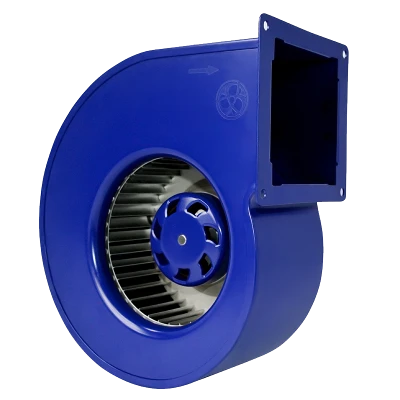
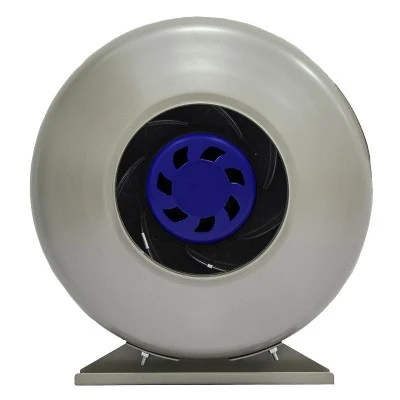
A forward centrifugal fan (also called a forward-curved fan or squirrel-cage fan) features blades that curve in the same direction as the impeller rotation.
Key Characteristics:
- High airflow volume
- Low to medium static pressure
- Typically more compact with many thin blades
- Often used in fan coil units, air curtains, and residential HVAC systems
What Is a Backward Centrifugal Fan?
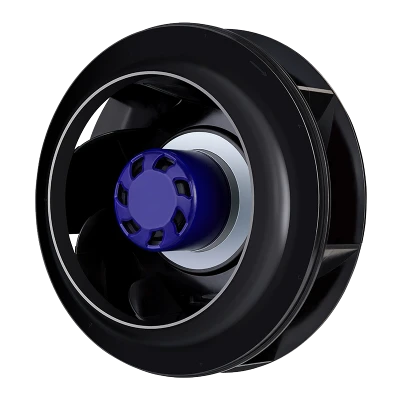
A backward centrifugal fan, also known as a backward curved centrifugal fan, has blades that curve in the opposite direction to the impeller rotation.
Key Characteristics:
- Lower volume than forward fan, but much higher pressure and efficiency
- Smoother airflow, which results in lower noise
- Available with airfoil, curved, or radial blade shapes
- Ideal for systems with long ducts, filters or resistance
- Our most popular models include:
- 355mm backward centrifugal fan
- 400mm EC backward curved centrifugal fan
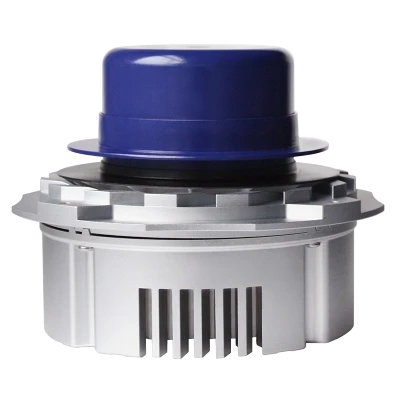
- EC backward centrifugal plug fan
Comparison: Forward vs Backward Centrifugal Fans
| Item | Forward Centrifugal Fan | Backward Centrifugal Fan (Backward Curved) |
| Blade Direction | Curved with rotation | Curved against rotation |
| Airflow Volume | High (large CFM) | Medium |
| Static Pressure | Low to medium | Medium to high |
| Energy Efficiency | Moderate (65–70%) | High (75–85%) |
| Noise Level | Higher when pressure increases | Lower, smoother airflow |
| Application Example | Fan coil, forward-airflow AC unit | AHU, industrial exhaust, dust filtration |
| Typical Motor Technology | AC motor + VSD | AC or EC motor (e.g. 400mm EC backward curved fan) |
When Should You Use Each Type?
Use a Forward Centrifugal Fan if:
You need high airflow with minimal pressure
Space is limited
You're supplying air in fan coils, small air handlers, or residential ventilation
Use a Backward Centrifugal Fan if:
You need high static pressure to handle filters, ducts or resistance
You want lower noise and higher efficiency, especially for long-term operation
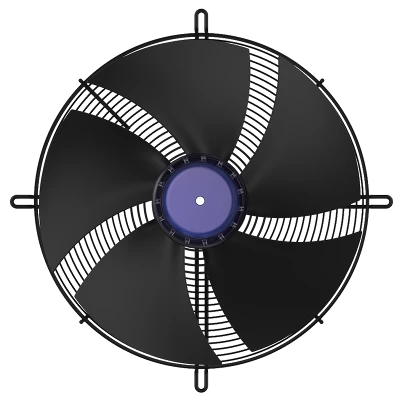
You're upgrading to EC technology for energy savings (e.g. EC axial fan or EC backward curved centrifugal fan)
Energy Efficiency Tip
Replacing an older forward centrifugal fan with a modern 400mm EC backward curved centrifugal fan can reduce energy consumption by up to 30–40%, especially in 24/7 operation systems such as air handling units and cleanroom ventilation.
Typical Product Matching
| Project Type | Recommended Product |
|---|---|
| Residential Fan Coil Unit | Forward centrifugal fan |
| Commercial AHU | 355mm backward centrifugal fan / 400mm EC backward curved fan |
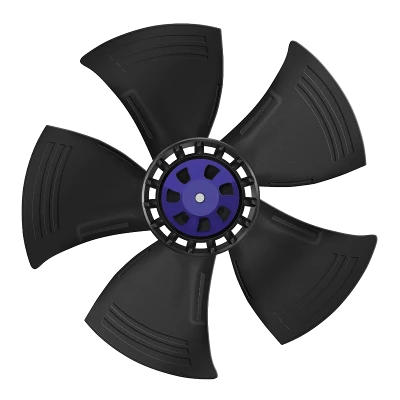
| Compact Purification Device | EC axial fan + backward curved plug fan |
| Industrial Ventilation System | Backward curved centrifugal fan |
Conclusion
The primary difference between forward and backward centrifugal fans lies in the blade curvature - which determines airflow capacity, pressure capability, noise level, and energy performance.
Forward centrifugal fans are best for high-volume, low-pressure applications.
Backward centrifugal fans are ideal for medium-to-high pressure, energy-efficient, and long-duct systems.
By understanding these differences, you can better select the optimal fan for your HVAC or industrial ventilation project - ensuring both performance and long-term cost savings.
Looking for help choosing the right centrifugal fan?
We offer a full range of forward centrifugal fans, backward curved centrifugal fans, EC axial fans, 355mm backward centrifugal fans, and 400mm EC backward curved centrifugal fans for customized system requirements - contact us for technical support.