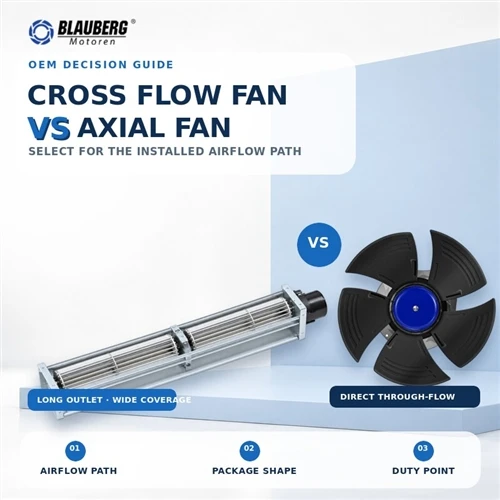
When it comes to moving air or gases in various applications, axial fans and centrifugal fans are two of the most commonly used types of fans. While they both serve the same general purpose - air movement - they are designed very differently and perform in distinct ways. Choosing the right type of fan depends on factors like airflow requirements, pressure, space constraints, and application specifics.
In this article, we will compare axial fans and centrifugal fans, highlighting their differences, performance characteristics, advantages, and typical applications. This guide will help you make an informed decision when selecting the right fan for your system.
What is an Axial Fan?
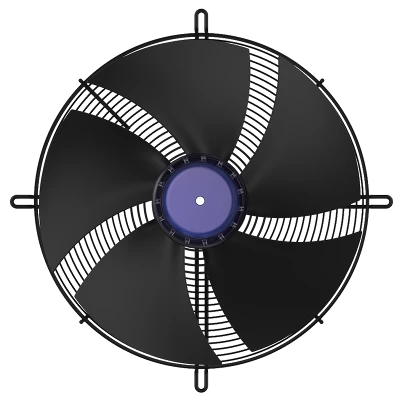
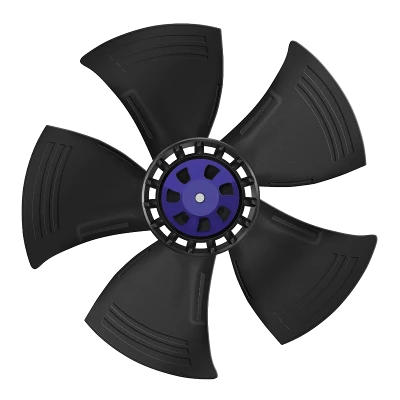
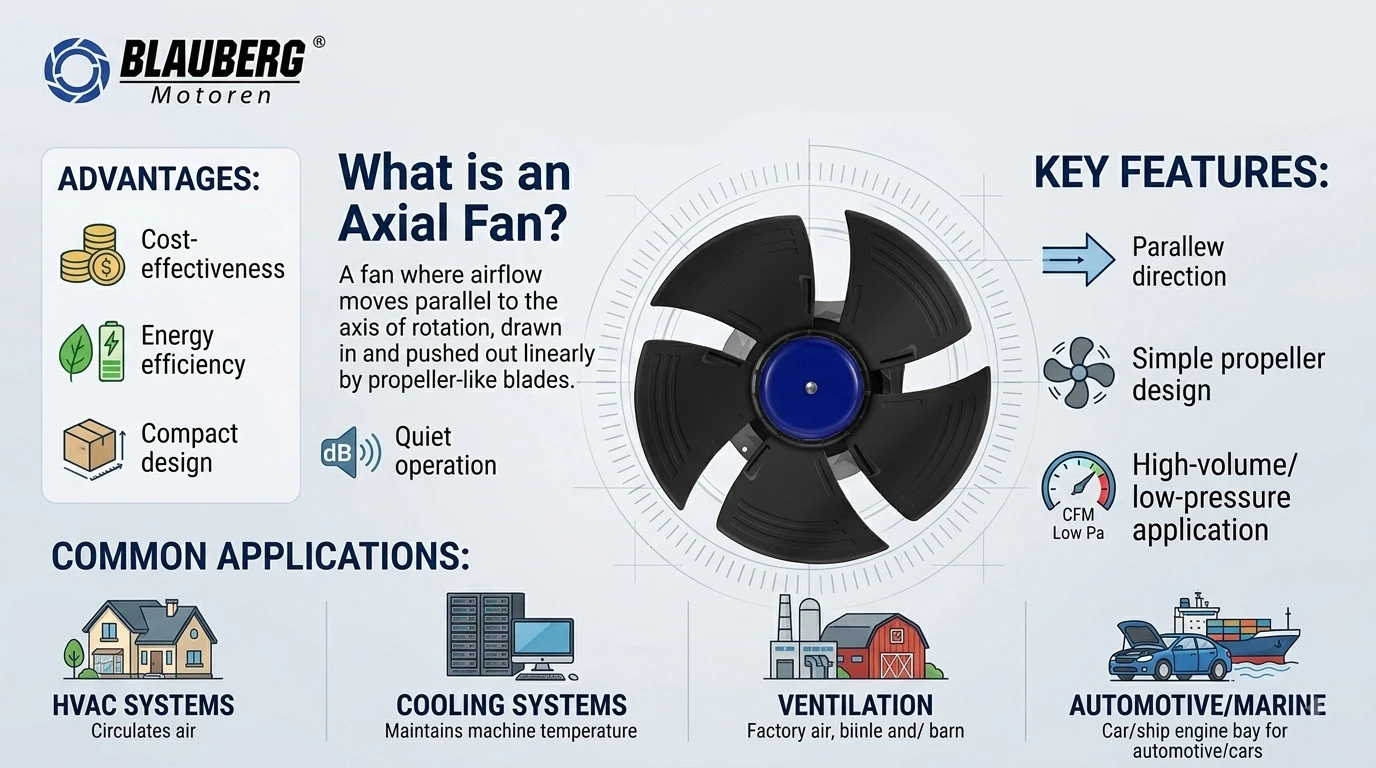
An axial fan is a fan where the air moves parallel to the axis of rotation. The fan blades are typically propeller-like, and as the motor spins them, air is drawn in from one side and pushed out the other side, all while traveling in the same direction as the axis.
Key Features of Axial Fans:
Airflow Direction: Air travels parallel to the axis of the fan.
Design: Simple design with blades resembling a propeller, suitable for moving large volumes of air with relatively low resistance.
Performance: Axial fans are best suited for high-volume, low-pressure applications.
Advantages of Axial Fans:
Cost-Effective: Axial fans tend to be more affordable due to their simpler design.
Energy Efficient: These fans are energy-efficient in low-pressure applications, making them ideal for general ventilation and cooling.
Compact Design: Their smaller and simpler design makes them suitable for installations in tight spaces.
Quiet Operation: Axial fans are generally quieter than centrifugal fans because they operate at lower pressures.
Common Applications of Axial Fans:
HVAC Systems: Used to circulate air in residential and commercial buildings.
Cooling Systems: Ideal for cooling computers, servers, and industrial machinery.
Ventilation: Frequently used in large industrial or agricultural applications where high airflow is needed.
Automotive and Marine: Used in engine cooling and ventilation.
What is a Centrifugal Fan?
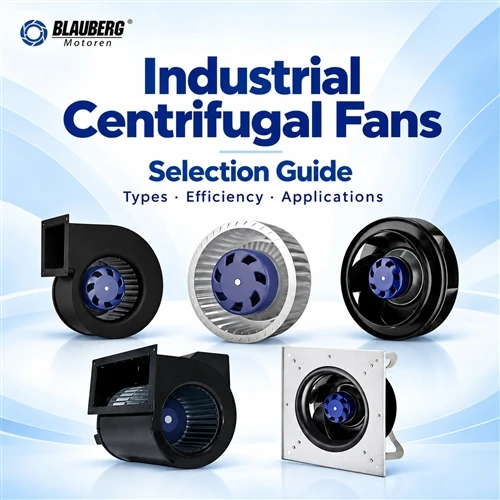
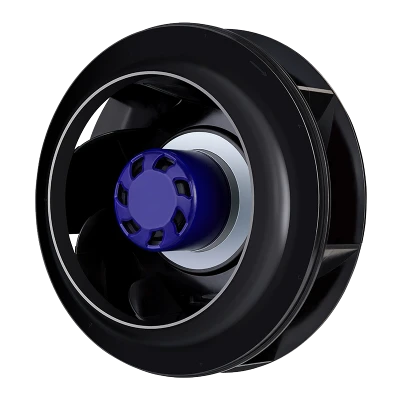
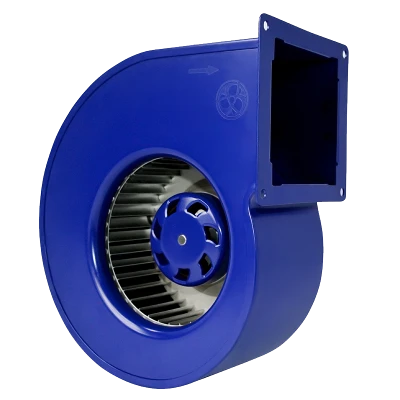
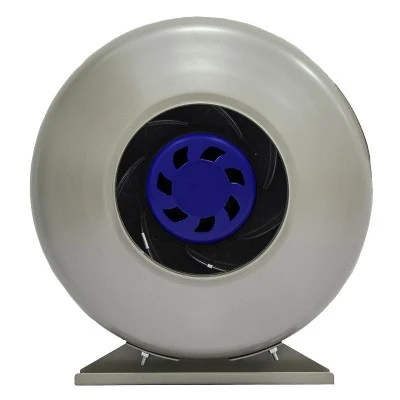
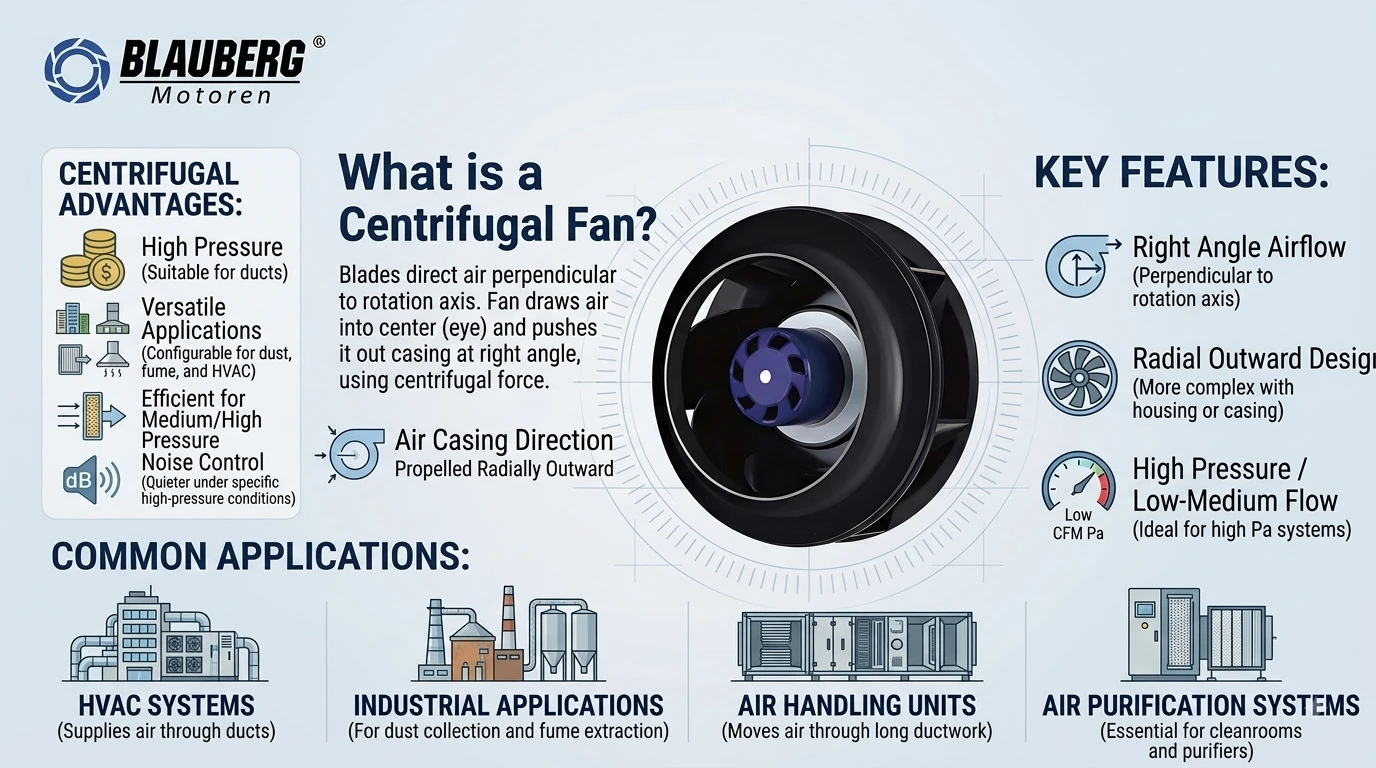
A centrifugal fan works differently than an axial fan. The fan blades are designed to direct air perpendicular to the axis of rotation. The fan pulls air into the center of the fan (the eye) and then pushes it out through a casing at a right angle to the inlet, creating centrifugal force to propel the air.
Key Features of Centrifugal Fans:
Airflow Direction: Air flows at a right angle to the axis of rotation.
Design: More complex design with multiple blades that direct air radially outward, often enclosed within a housing or casing.
Performance: Centrifugal fans are ideal for higher pressure applications with medium to low airflow requirements.
Advantages of Centrifugal Fans:
High Pressure: These fans are designed to move air at higher pressures, making them suitable for systems with high resistance or long ducts.
Versatile: Centrifugal fans can be configured for various applications, including dust collection, fume extraction, and HVAC systems.
Efficient for Medium to High Pressure: When you need to overcome resistance in ducts or filters, centrifugal fans provide better airflow control.
Noise Control: Depending on the design and application, centrifugal fans can offer quieter operation compared to axial fans under high-pressure conditions.
Common Applications of Centrifugal Fans:
HVAC Systems: Used in larger HVAC systems to supply air through ducts or to extract air from rooms.
Industrial Applications: Commonly found in dust collection systems, fume extraction, and ventilation systems for factories, laboratories, and other heavy-duty environments.
Air Handling Units: Used in systems where air needs to be moved through long ductwork or against high resistance.
Air Purification Systems: Essential for moving air through filters in systems requiring higher pressure, such as cleanrooms, or commercial and industrial air purifiers.
Axial Fan vs Centrifugal Fan: Key Differences
| Feature | Axial Fan | Centrifugal Fan |
|---|---|---|
| Airflow Direction | Air moves parallel to the axis of rotation | Air moves at a right angle to the axis |
| Design | Simple, propeller-style blades | Complex with multiple blades and casing |
| Air Pressure | Low pressure | High pressure |
| Efficiency | Best for high-volume, low-pressure airflow | Best for medium to high-pressure airflow |
| Noise Level | Generally quieter | Can be noisier, but quieter in high-pressure applications |
| Cost | Typically more affordable | Can be more expensive due to the design complexity |
| Applications | General ventilation, cooling systems | Dust collection, fume extraction, industrial processes, air handling units |
Which Should You Choose: Axial Fan or Centrifugal Fan?
The choice between an axial fan and a centrifugal fan depends on your specific application requirements. Here's a quick guide:
Choose an Axial Fan if:
You need to move a large volume of air with low resistance.
The application requires a compact and cost-effective solution.
Low to medium pressure is sufficient for your system.
You need quiet operation in low-pressure environments.
Choose a Centrifugal Fan if:
You need to move air through ducts, filters, or systems with high resistance.
High air pressure is required to achieve optimal performance.
You need precise control over airflow in industrial or air handling applications.
The application involves dust extraction, fume removal, or ventilation in large facilities.
Conclusion
Both axial fans and centrifugal fans have distinct advantages and are ideal for different types of applications. Axial fans are perfect for high-volume, low-pressure systems and are commonly used in ventilation and cooling systems where cost, energy efficiency, and compact design are essential. On the other hand, centrifugal fans excel in high-pressure applications and are better suited for systems where airflow needs to overcome resistance, such as in industrial dust collection or air handling systems.
Understanding the key differences between these two types of fans will allow you to make the right choice for your specific needs, ensuring that you achieve the best performance and efficiency for your air movement system.