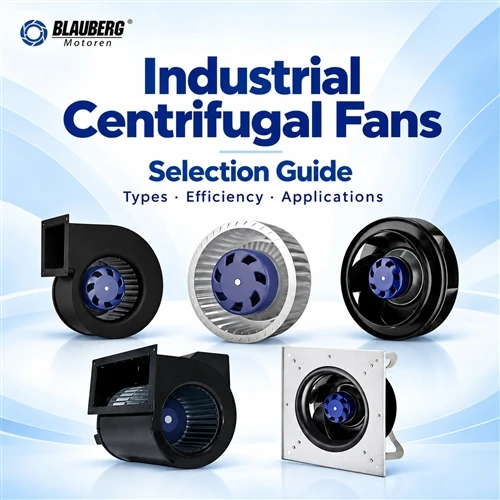
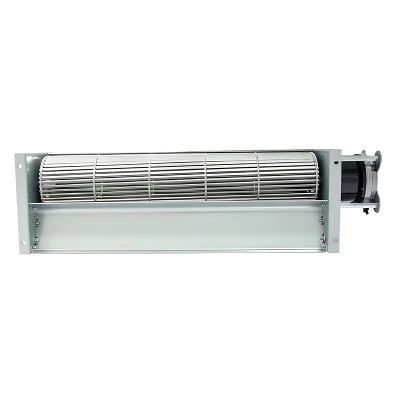
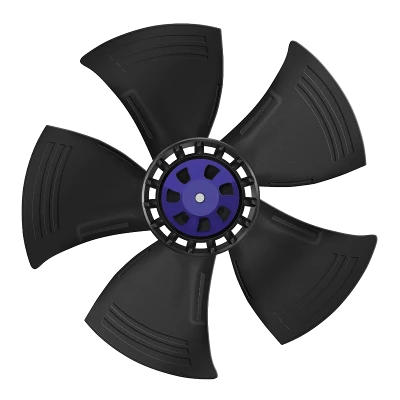
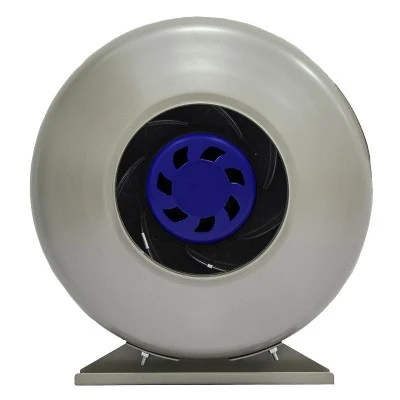
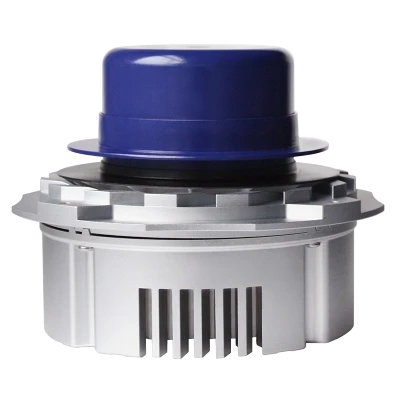
Efficient airflow is critical in modern ventilation and cooling systems. A backward centrifugal fan achieves this through its innovative backward-curved blade design. This design minimizes turbulence, allowing air to flow smoothly while maintaining higher static pressure. With efficiencies reaching up to 85%, these fans outperform forward-curved models, which typically achieve only 55% to 65%. Their superior efficiency reduces energy consumption and operational costs, making them a preferred choice for HVAC systems, industrial ventilation, and air purification. By enhancing air quality and lowering maintenance needs, backward centrifugal fans contribute to healthier, more sustainable environments.
Key Takeaways
Backward centrifugal fans have curved blades that cut down turbulence. This makes airflow smoother and improves efficiency.
These fans can save energy, reaching up to 85% efficiency. This helps lower energy bills in HVAC and factories.
They are built strong, so they need less fixing. This saves both time and money over the years.
With speed control features, these fans can change airflow easily. This makes them useful in places like cleanrooms and data centers.
These fans are quiet, so they work well in offices and homes where noise matters.
What Is a Backward Centrifugal Fan?
Defining Backward Centrifugal Fans
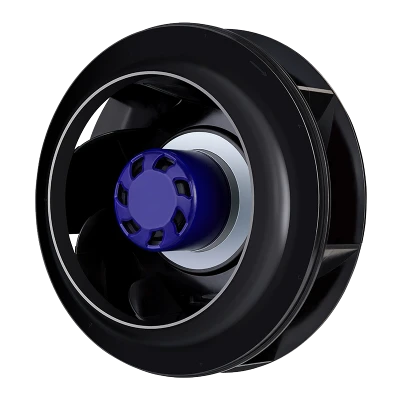
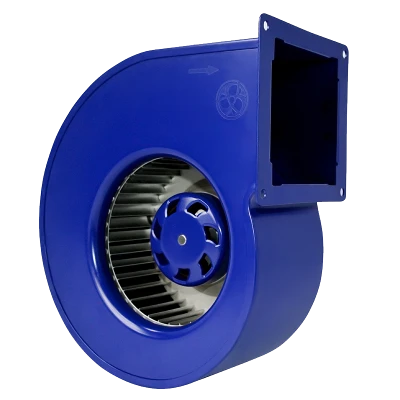
A backward centrifugal fan operates on a straightforward principle. When you activate the fan, the motor rotates the impeller, which features backward-curved blades. These blades draw air in parallel to the axis of rotation. As the impeller spins, centrifugal force pushes the air outward, creating a high-pressure zone. The compressed air then exits through the fan's outlet. This design ensures high-pressure airflow, making it ideal for applications requiring efficient ventilation or cooling.
Unlike forward-curved fans, backward centrifugal fans feature blades that curve away from the direction of rotation. This unique design enhances efficiency and performance, especially in high-pressure systems. You'll find these fans particularly effective in HVAC systems, industrial ventilation, and other demanding environments.
Key Features of Backward Centrifugal Fans
Backward-curved blades for optimized airflow
The backward-curved blades are the defining feature of these fans. They push air in the opposite direction of the impeller's rotation, reducing turbulence and energy loss. This design generates high pressure and high-volume airflow, ensuring smooth and efficient operation. It also minimizes noise levels, making it suitable for environments where quiet operation is essential.
Durable and compact construction
Backward centrifugal fans are built to last. Manufacturers use materials like stainless steel, sheet aluminum, and fiberglass-reinforced plastics to ensure durability. For example, stainless steel resists corrosion, even in chemically aggressive or humid conditions. Coatings like epoxy or polyurethane further enhance resistance to moisture and chemicals. Despite their robust construction, these fans maintain a compact design, allowing you to integrate them into systems with limited space.
| Material | Properties |
|---|---|
| Sheet Aluminum | Lightweight, corrosion-resistant, ensuring long lifespan and low maintenance. |
| Stainless Steel | Excellent corrosion resistance, suitable for harsh environments. |
| Fiberglass-reinforced Plastics | High mechanical strength, ideal for corrosive conditions. |
Types of Backward Centrifugal Fans
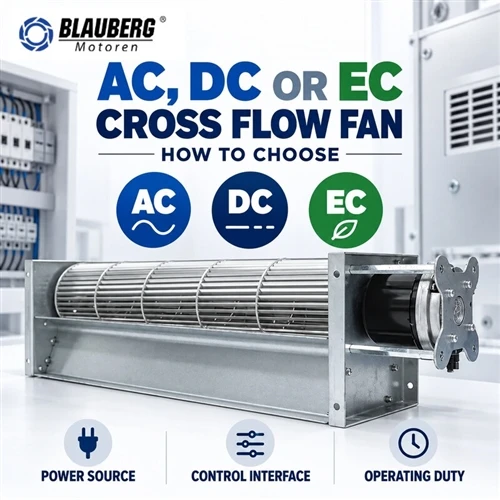
EC Backward Centrifugal Fans
EC (Electronically Commutated) backward centrifugal fans combine high efficiency with advanced motor technology. They consume less energy and operate quietly, making them perfect for high static pressure applications. You can also benefit from their precise speed control, which allows for tailored airflow.
AC Backward Centrifugal Fans
AC (Alternating Current) fans are reliable and cost-effective. They deliver consistent performance and are commonly used in general applications. While they may produce moderate noise levels, their affordability makes them a practical choice for many systems.
DC Backward Centrifugal Fans
DC (Direct Current) fans offer variable speed control, making them suitable for specialized applications. They can operate more quietly than AC fans and are often used in systems requiring precise airflow adjustments. However, their efficiency may not match that of EC fans.
| Fan Type | Efficiency | Noise Levels | Applications |
|---|---|---|---|
| EC | High | Low | High static pressure systems |
| AC | Moderate | Moderate | General-purpose ventilation |
| DC | Variable | Low | Systems requiring variable speed control |
How Backward Centrifugal Fans Improve Airflow Efficiency
Airflow Optimization
Reduced turbulence for smoother airflow
Backward centrifugal fans excel at reducing turbulence, ensuring smoother airflow. Their backward-curved blades play a pivotal role in this process. These blades are larger and more curved, allowing air to flow efficiently through the fan. By curving away from the direction of rotation, the blades facilitate a smooth transition of air from the impeller to the outlet. This design minimizes turbulence, which not only optimizes airflow but also reduces energy loss. As a result, you benefit from a more efficient system that delivers consistent performance.
Higher static pressure for enhanced performance
Backward centrifugal fans are ideal for applications requiring high static pressure. They perform exceptionally well in environments with high resistance, such as ductwork, filters, and heat exchangers. This capability ensures effective air movement even in challenging conditions. The backward-curved impellers are specifically designed to generate higher pressure, making these fans more efficient than forward-curved models. Whether you need to maintain airflow in a complex HVAC system or an industrial setup, these fans provide reliable performance.
Handle high-resistance environments like ductwork and filters.
Deliver consistent airflow and pressure for demanding applications.
Operate efficiently in systems requiring elevated static pressure.
Energy Efficiency
Lower energy consumption with EC motors
When paired with EC motors, backward centrifugal fans achieve remarkable energy efficiency. EC motors use advanced control technology to optimize fan speed and power consumption. This ensures the fan operates only at the speed necessary to meet airflow requirements, significantly reducing energy usage. Over time, this translates to lower operational costs and a more sustainable system.
EC motors enhance efficiency with precise speed control.
Reduced energy consumption leads to long-term cost savings.
Advanced motor technology ensures optimal performance.
Variable speed control for precise airflow
Variable speed control is another advantage of backward centrifugal fans equipped with EC motors. This feature allows you to adjust the fan's speed to match specific airflow needs. Whether you require high airflow for industrial cooling or low airflow for residential ventilation, variable speed control ensures precision. This not only improves efficiency but also enhances the overall performance of your system.
Enhanced System Performance
Consistent airflow delivery
Backward centrifugal fans ensure consistent airflow delivery, which is critical for maintaining system performance. In HVAC systems, consistent airflow helps regulate temperature and improve air quality. This eliminates hot and cold spots, creating a comfortable environment. By delivering steady airflow, these fans also enhance the efficiency of air distribution systems.
Reduced wear and tear on system components
The smooth airflow generated by backward centrifugal fans reduces stress on system components. Their design minimizes turbulence and noise, which lowers the strain on motors, bearings, and other parts. This results in less wear and tear, extending the lifespan of your equipment. By choosing these fans, you can reduce maintenance costs and improve system reliability.
Benefits of Backward Centrifugal Fans
Energy Savings
Long-term cost efficiency
Using a backward centrifugal fan can lead to significant long-term cost savings, especially in industrial applications. These fans optimize airflow and filtration, reducing energy consumption and operational expenses. Their ability to filter out dust and particles also helps extend the lifespan of machinery, minimizing maintenance costs. Furthermore, they ensure compliance with air quality standards, which can help you avoid regulatory penalties. The table below highlights these benefits:
| Aspect | Benefit |
|---|---|
| Energy Efficiency | Ensures optimal airflow and filtration while minimizing energy consumption. |
| Reduced Equipment Maintenance | Helps prolong machinery lifespan by filtering out dust and particles. |
| Compliance with Regulations | Aids in meeting air quality standards, avoiding penalties. |
Compliance with energy standards
Backward centrifugal fans align with modern energy standards, making them a sustainable choice for your systems. They often feature enhanced filtration systems that meet air quality regulations set by governing bodies. Additionally, EC backward centrifugal fans stand out for their energy efficiency, allowing precise control over speed and power consumption. These features ensure your system operates within regulatory requirements while maintaining optimal performance.
Enhanced filtration systems ensure compliance with air quality regulations.
EC fans provide energy-efficient operation with precise speed control.
Quiet Operation
Noise reduction due to blade design
The design of backward centrifugal fans prioritizes quiet operation, making them ideal for noise-sensitive environments. Their backward-curved blades promote smooth airflow by curving away from the direction of rotation. This reduces turbulence, which is a primary source of noise. The axial entry and radial discharge of airflow further minimize turbulence, ensuring quieter performance. Additionally, noise-reducing inlet and outlet designs, along with vibration isolation techniques, absorb vibrations and prevent noise transmission. These features make the fan quieter than other types, enhancing comfort in residential, commercial, and industrial settings.
Backward-curved blades reduce turbulence and noise levels.
Axial entry and radial discharge ensure smooth airflow.
Noise-reducing inlets and vibration isolation techniques prevent noise transmission.
Durability
Robust materials for extended lifespan
Backward centrifugal fans are built with robust materials to withstand demanding conditions. Stainless steel resists corrosion, making it suitable for harsh environments. Fiberglass-reinforced plastics offer high mechanical strength, ideal for corrosive or chemically aggressive settings. These materials ensure the fan can operate reliably for years, even in challenging applications.
Low maintenance requirements
The durable construction of backward centrifugal fans translates to low maintenance needs. Their design minimizes wear and tear on components, reducing the frequency of repairs. By choosing these fans, you can save time and resources on maintenance while ensuring consistent performance. This makes them a cost-effective solution for long-term use.
Comparing Backward Centrifugal Fans to Other Fan Types
Backward vs. Forward-curved Fans
Efficiency and performance differences
Backward centrifugal fans outperform forward-curved fans in efficiency and performance. Their backward-curved blades, which face away from the direction of rotation, reduce energy losses and improve airflow control. These fans excel in high-pressure applications due to their ability to develop effective static pressure. Forward-curved fans, on the other hand, are less efficient and struggle in high-pressure environments.
| Fan Type | Efficiency | Performance Characteristics |
|---|---|---|
| Backward Curved Fans | Higher | Better airflow control, reduced energy losses |
| Forward Curved Fans | Lower | Less effective in high-pressure applications |
Backward-curved fans have fewer, longer blades designed for higher flow rates.
Forward-curved fans are better suited for low-pressure systems.
Applications suited for each type
Backward centrifugal fans are ideal for demanding environments like HVAC systems, cleanrooms, and industrial processes. Forward-curved fans are more common in general ventilation, electronics cooling, and air handling units.
| Fan Type | Typical Applications |
|---|---|
| Backward Curved | HVAC systems, Cleanrooms, Industrial processes, Data centers |
| Forward Curved | Air handling units, Electronics cooling, General ventilation |
Backward Centrifugal Fans vs. Axial Fans
High-pressure system performance
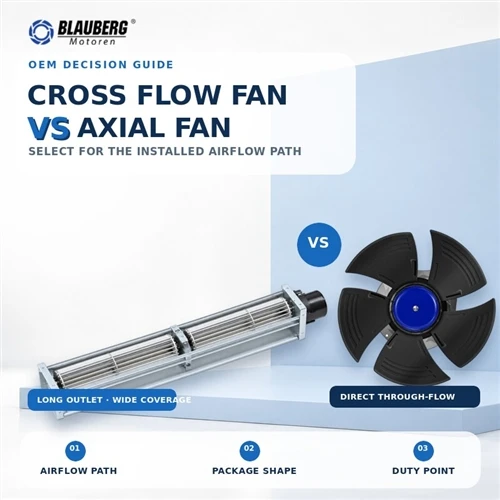
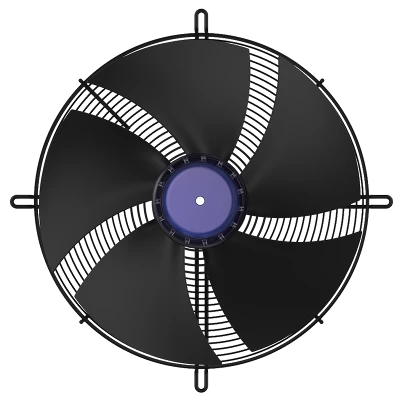
Backward centrifugal fans generate high pressure and high-volume airflow, making them perfect for high-resistance environments like ductwork and filters. Axial fans, while effective for moving large volumes of air, are better suited for low-pressure applications. You should choose backward centrifugal fans for consistent airflow and pressure in demanding systems.
Backward centrifugal fans excel in high-pressure systems.
Axial fans are more suitable for low-pressure, high-volume applications.
Energy consumption comparison
Backward centrifugal fans are more energy-efficient than axial fans. Their electronically commutated motor technology allows precise speed and power control, reducing energy consumption. Axial fans, while requiring less power to operate, lack the efficiency needed for large-scale systems. This makes backward centrifugal fans a better choice for energy-conscious applications.
Advantages of EC Backward Centrifugal Fans
Superior control and efficiency
EC backward centrifugal fans offer unmatched control and efficiency. Their advanced motor technology ensures significant energy savings and lower operational costs. Built-in variable speed control allows you to adjust performance to meet specific airflow needs, optimizing system efficiency. These fans also operate quietly, making them suitable for noise-sensitive environments.
Energy-efficient design reduces operational costs.
Variable speed control ensures precise airflow adjustments.
Quiet operation enhances comfort in residential and commercial settings.
Integration with modern HVAC systems
EC backward centrifugal fans integrate seamlessly into modern HVAC systems. Their backward-curved blades ensure stable airflow, improving ventilation efficiency. The electronically commutated motor technology minimizes noise and energy consumption, making these fans a sustainable choice for residential and commercial applications.
Energy Efficiency: Offers significant energy savings.
Low Noise Operation: Ideal for noise-sensitive environments.
Variable Speed Control: Matches fan performance to application needs.
Applications of Backward Centrifugal Fans
HVAC Systems
Residential and commercial ventilation
You can rely on backward centrifugal fans to enhance energy efficiency in residential and commercial HVAC systems. These fans operate effectively at higher static pressures, ensuring consistent airflow even in complex ductwork. Their backward-curved blade design minimizes turbulence, making them ideal for environments requiring clean air. Whether you need to ventilate a small apartment or a large office building, these fans deliver reliable performance while reducing energy consumption.
Operate efficiently at higher static pressures.
Provide clean air circulation for healthier indoor environments.
Reduce energy usage, lowering operational costs.
Air handling units
Backward centrifugal fans play a critical role in air handling units by improving airflow control and reducing energy losses. Their ability to handle higher static pressures ensures consistent performance, even under increased resistance. These fans also minimize dust accumulation, making them suitable for clean air circulation in sensitive environments.
Higher efficiency due to optimized airflow control.
Reliable performance in high-pressure applications.
Reduced dust buildup for consistent air quality.
Industrial Applications
Dust collection systems
Backward centrifugal fans excel in industrial dust collection systems. They handle large volumes of air while effectively capturing dust and pollutants. This improves workplace safety by removing airborne contaminants and ensures compliance with air quality regulations. Their energy-efficient design also reduces operational costs, making them a practical choice for industrial facilities.
High-efficiency filtration for cleaner air.
Versatile design suitable for various industrial environments.
Reduced equipment maintenance by filtering harmful particles.
Machinery cooling systems
In industrial settings, backward centrifugal fans provide efficient cooling for machinery. They move high volumes of air while filtering out contaminants, which reduces maintenance needs and extends equipment lifespan. Their energy-efficient operation ensures effective cooling without excessive power consumption, creating healthier working conditions.
Efficiently cool machinery with high airflow capacity.
Filter contaminants to prolong equipment lifespan.
Minimize energy usage for cost-effective operation.
Specialized Use Cases
Cleanrooms and laboratories
Backward centrifugal fans are essential for maintaining sterile environments in cleanrooms and laboratories. Their advanced filtration and circulation capabilities ensure contaminant-free air, which is critical for applications like fume hoods and exhaust systems. These fans help you meet stringent cleanliness standards, making them indispensable in scientific and medical settings.
Data centers and server rooms
Data centers and server rooms require precise airflow control to maintain optimal temperatures. Backward centrifugal fans provide superior efficiency and performance at higher pressures, ensuring consistent cooling in these high-demand environments. Their ability to handle resistance in ductwork makes them a reliable choice for protecting sensitive equipment.
| Feature | Backward Curved Fans | Forward Curved Fans |
|---|---|---|
| Efficiency | High | Moderate |
| Performance at Higher Pressures | Excellent | Limited |
| Airflow Control | Superior | Inferior |
| Common Applications | Data Centers | General Use |
A backward centrifugal fan offers a reliable solution for improving airflow efficiency across various applications. Its backward-curved blades and advanced motor technology ensure optimal airflow while minimizing energy consumption. These fans provide significant energy savings by operating only at necessary speeds, reducing operational costs over time. Their quiet operation and durable construction make them ideal for environments requiring consistent performance and low maintenance. Whether you choose EC, AC, or DC models, you can achieve superior efficiency, healthier air quality, and long-term cost-effectiveness in your systems.
FAQ
What makes backward centrifugal fans more efficient than other fan types?
Backward centrifugal fans use backward-curved blades to reduce turbulence and energy loss. This design generates higher static pressure and smoother airflow, making them more efficient for high-resistance systems like ductwork or filters. Their advanced motor technology further optimizes energy consumption.
Can backward centrifugal fans operate in noise-sensitive environments?
Yes, they can. The backward-curved blade design minimizes turbulence, which reduces noise levels. Additionally, features like vibration isolation and noise-reducing inlets ensure quieter operation, making these fans suitable for residential, commercial, and industrial spaces requiring low noise.
How do EC motors improve the performance of backward centrifugal fans?
EC motors enhance performance by providing precise speed control and optimizing energy use. They adjust the fan's speed to match airflow requirements, reducing unnecessary power consumption. This results in lower operational costs and improved system efficiency.
Are backward centrifugal fans suitable for industrial applications?
Absolutely. These fans handle high-pressure environments like dust collection systems and machinery cooling. Their robust construction and ability to filter contaminants ensure reliable performance in demanding industrial settings, improving air quality and extending equipment lifespan.
What maintenance do backward centrifugal fans require?
Backward centrifugal fans require minimal maintenance due to their durable construction. Their design reduces wear and tear on components, lowering the frequency of repairs. Regular cleaning of blades and filters ensures consistent performance and extends the fan's lifespan.