Introduction
In HVAC engineering and industrial ventilation projects, many buyers and system designers ask:
Is a plug fan a centrifugal fan?
The short answer is yes - a plug fan is a type of centrifugal fan.
However, not all centrifugal fans are plug fans.
Understanding this distinction is essential when selecting equipment for applications such as air handling units (AHU), data centers, medical ventilation systems, cold storage, and industrial air conditioning.
From an engineering perspective, this article explains the structural principles, performance characteristics, and practical application differences to help you make an informed decision.
What Is a Centrifugal Fan?
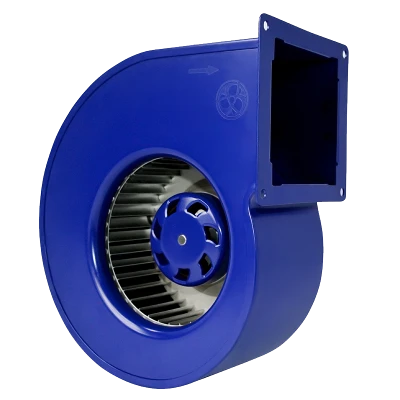
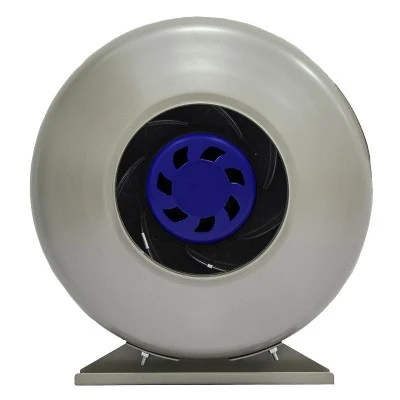
A centrifugal fan is a mechanical device that moves air radially outward using centrifugal force generated by a rotating impeller.
Airflow process:
Air enters axially into the impeller.
The impeller accelerates air outward.
Air exits radially at increased pressure.
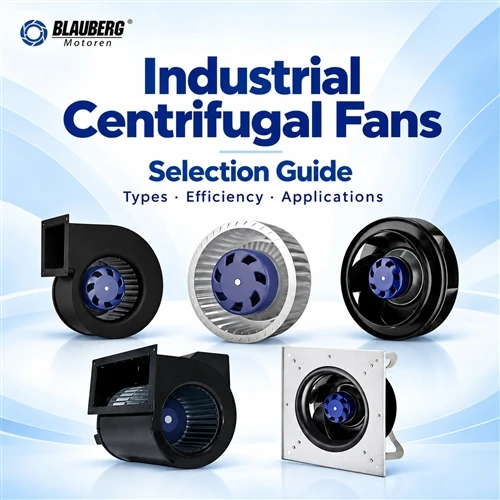
There are three main types of centrifugal fans:
Forward Curved Centrifugal Fans
Backward Curved Centrifugal Fans
Radial (Straight Blade) Fans
Centrifugal fans are widely used in:
- Ventilation and Purification
- Air Conditioning Systems
- Mechanical Equipment
- Cold Storage & Cold Chain
- Automobile Industry
- Medical Industry
- IT and Electronics Industry
They are particularly suitable for medium to high static pressure applications.
What Is a Plug Fan?
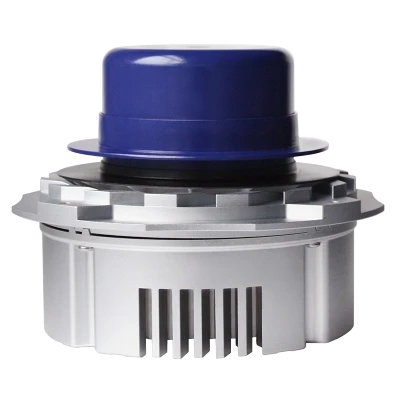
A plug fan is a specific structural form of a centrifugal fan, typically:
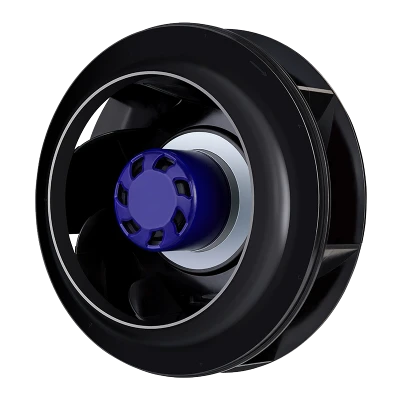
- Backward curved impeller
- Direct-driven motor (EC / DC / AC)
- No scroll housing
- Designed for plenum installation
Unlike traditional centrifugal fans that use a scroll casing to direct airflow, plug fans discharge air freely into a pressurized chamber (plenum).
This makes plug fans ideal for modular and high-efficiency systems such as:
- Air Handling Units (AHU)
- Cloud Data Centers
- Energy-saving & Intelligent Retrofitting
- High-performance HVAC systems
Key Technical Difference: Housing Structure
The primary difference lies in the presence or absence of a scroll housing.
Traditional Centrifugal Fan:
Includes volute (scroll casing)
Guides airflow direction
Common in duct-connected systems
Plug Fan:
No scroll casing
Air discharged directly into plenum
Designed for array configurations
Structurally, the impeller principle remains centrifugal. The difference is integration method.
Why Plug Fans Are Often Backward Centrifugal Fans
Most modern plug fans use backward curved centrifugal impellers because they provide:
- Higher efficiency
- Non-overloading performance curve
- Lower noise
- Stable airflow under variable speed
When combined with EC motors, plug fans achieve superior energy performance - especially important for:
- Data center cooling
- Medical ventilation
- Clean room applications
- Green building HVAC systems
Performance Comparison
| Feature | Traditional Centrifugal Fan | Plug Fan |
|---|---|---|
| Working Principle | Centrifugal | Centrifugal |
| Housing | With scroll | No scroll |
| Installation | Duct-based | Plenum-based |
| Energy Efficiency | Medium to High | High (especially EC type) |
| Noise | Moderate | Lower (backward EC) |
| Maintenance | Belt/direct | Mostly direct drive |
Conclusion:
A plug fan is structurally a centrifugal fan, but optimized for modern modular systems.
When Should You Choose a Plug Fan?
Plug fans are recommended when:
- High energy efficiency is required
- Intelligent speed control is needed
- Space optimization matters
- Modular fan arrays are desired
- Long-term operating cost is a priority
Typical industries include:
- Cloud Data Centers
- HVAC Retrofitting
- Air Conditioning Systems
- Ventilation & Purification
- Medical Industry
When Is a Traditional Centrifugal Fan More Suitable?
Traditional centrifugal fans may be preferable when:
- System requires scroll pressure guidance
- Installation is duct-connected only
- Dusty or heavy industrial air handling is involved
- Budget constraints limit EC motor adoption
Radial centrifugal fans are particularly effective for industrial environments.
Engineering and Testing Matter
While the structural definition is clear, performance reliability depends on engineering precision.
At Blauberg-motoren, our R&D department ensures performance through:
- Fluid Lab with multi-size airflow testing equipment
- Noise Lab with 16dBA background noise
- Electronic Lab for software and motor control validation
- Shaking test equipment
- Salt spray test equipment
- High/Low temperature chambers
- Dynamometer testing
This comprehensive validation ensures that whether selecting a plug fan or a traditional centrifugal fan, performance curves are accurate, stable, and reliable.
The Growing Trend Toward EC Plug Fans
As industries prioritize carbon reduction and operational efficiency, EC plug fans are increasingly becoming the standard solution.
Advantages include:
- Variable speed control
- Reduced power consumption
- Lower maintenance cost
- Intelligent system integration
- Longer service life
In modern HVAC and data center systems, plug fan arrays allow redundancy and scalability - a major advantage over traditional single-fan setups.
Final Answer: Is a Plug Fan a Centrifugal Fan?
Yes.
A plug fan is a type of centrifugal fan, usually featuring a backward curved impeller and designed for plenum installation without a scroll casing.
However, selecting the right type depends on your application requirements, airflow parameters, and efficiency goals.
Need Professional Selection Support?
Choosing between different centrifugal fan configurations requires:
- Airflow calculation
- Static pressure evaluation
- Noise control requirements
- Environmental analysis
- Motor type selection (EC / DC / AC)
Our engineering team provides:
- Customized airflow solutions
- Technical consultation
- OEM/ODM support
- Application-based product matching
If you are designing an HVAC system, upgrading a data center, or developing ventilation equipment, contact us today for expert guidance and tailored solutions.