Introduction
In modern HVAC and industrial ventilation systems, the terms plenum fan and plug fan are often used interchangeably. However, many engineers and buyers still ask:
- What is the difference between a plenum fan and a plug fan?
- Are they the same?
- Is one better than the other?
- Which should you choose for your project?
From an engineering perspective, understanding the structural definition, airflow mechanism, and application logic behind these two fan types is essential for proper system design.
This article explains the differences clearly and helps you determine the best solution for applications such as air handling units (AHU), cloud data centers, medical ventilation systems, cold storage, and intelligent energy-saving retrofits.
What Is a Plug Fan?
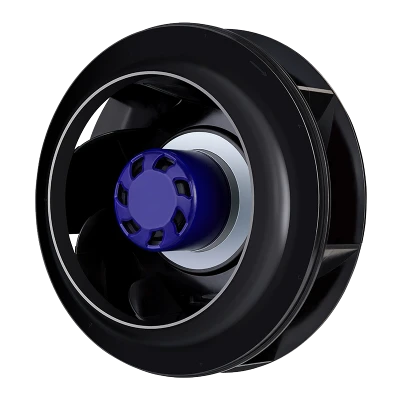
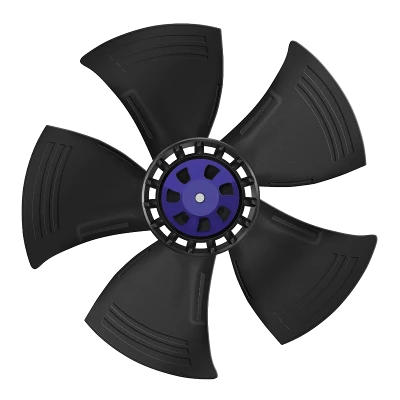
A plug fan is a type of centrifugal fan - typically a backward curved centrifugal fan - designed without a scroll (volute) housing.
Key Characteristics of Plug Fans:
No scroll casing
Direct-driven motor (EC / DC / AC)
Compact structure
High efficiency (especially EC models)
Designed to discharge air freely
Plug fans are commonly used inside:
- Air Handling Units (AHU)
- HVAC plenum chambers
- Data center cooling systems
- Ventilation and purification systems
In simple terms:
A plug fan refers to the structural configuration of the fan itself.
What Is a Plenum Fan?
A plenum fan is not a specific fan structure - it refers to how the fan is used.
A plenum fan is a fan installed inside a pressurized plenum chamber, where the air is distributed through the chamber instead of being guided by a scroll housing.
In most modern HVAC systems, a plenum fan is actually a plug fan installed inside a plenum.
So technically:
- Plug fan = equipment structure
- Plenum fan = installation method
- That is why the two terms are frequently confused.
Core Technical Difference
| Aspect | Plug Fan | Plenum Fan |
|---|---|---|
| Definition | Fan structure | Installation concept |
| Scroll Housing | No | Not required |
| Installation | Can be standalone | Installed inside plenum chamber |
| Airflow Direction | Free discharge | Distributed through chamber |
| Typical Impeller | Backward curved | Usually backward curved |
Conclusion:
In most modern systems, a plenum fan is essentially a plug fan operating in a plenum configuration.
Why Plug / Plenum Fans Are Popular in Modern HVAC
Higher Energy Efficiency
Backward curved plug fans, especially EC backward centrifugal fans, provide:
- Higher total efficiency
- Non-overloading performance curve
- Reduced power consumption
- Intelligent speed control
This makes them ideal for:
- Cloud Data Centers
- Energy-saving & Intelligent Retrofitting
- Air Conditioning Systems
- IT and Electronics Industry
Improved System Flexibility
Plenum configurations allow:
- Multiple fan arrays
- Redundancy design
- Modular airflow control
- Easier system balancing
This is particularly important in data centers and mission-critical environments.
Lower Noise Performance
Without a scroll casing and with optimized blade design, backward plug fans offer lower noise levels.
At Blauberg-motoren, noise performance is validated in our Noise Lab with 16dBA background noise,
ensuring suitability for:
- Medical Industry
- Clean environments
- Electronics manufacturing
Reduced Maintenance
Modern plug fans are typically:
- Direct driven
- Belt-free
- Compact
- Easy to replace
This reduces long-term maintenance costs in commercial HVAC systems.
When Should You Use a Plug (Plenum) Fan?
Plug or plenum fans are ideal when:
- High efficiency is required
- Space is limited
- Modular system design is needed
- Intelligent EC motor control is desired
- Energy cost reduction is a priority
Common applications include:
- Air Handling Units
- Ventilation & Purification Systems
- Cold Storage & Cold Chain
- Mechanical Equipment
- Automobile HVAC systems
When Is a Traditional Scroll Centrifugal Fan Better?
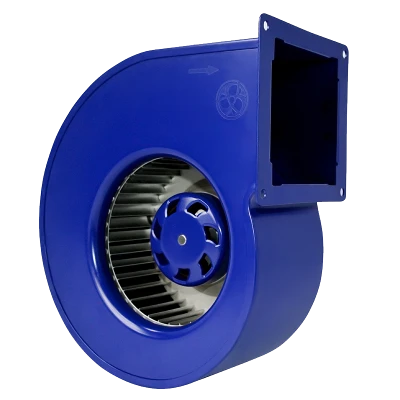
Traditional centrifugal fans with scroll housings may still be preferred when:
- Duct pressure direction control is critical
- Installation does not include a plenum chamber
- Dust or heavy industrial air is present
- Lower initial cost is prioritized
For example, radial centrifugal fans are more suitable in harsh industrial environments.
Engineering Validation and Performance Testing
Performance reliability depends heavily on testing and R&D capability.
At Blauberg-motoren, our R&D infrastructure includes:
- Fluid Lab with multi-size airflow testing equipment
- Noise Lab (16dBA background noise)
- Electronic Lab with software testing systems
- Shaking test equipment
- Salt spray test equipment
- High/Low temperature testing chambers
- Dynamometer systems
This ensures:
- Accurate airflow curves
- Stable static pressure performance
- Verified EC motor efficiency
- Long-term durability
Our multidisciplinary R&D team - including software engineers, mechanical engineers, and customization designers - works closely with marketing, sales, and manufacturing to ensure every plug or plenum fan solution is optimized for real-world applications.
Final Answer: What Is the Difference Between a Plenum Fan and a Plug Fan?
Technically speaking:
- A plug fan refers to the fan's structural design (centrifugal, no scroll casing).
- A plenum fan refers to how the fan is installed (inside a plenum chamber).
In most HVAC systems, a plenum fan is simply a plug fan operating in a plenum configuration.
The key is not the terminology - but selecting the right airflow solution for your application.
Need Help Selecting the Right Fan for Your Project?
Choosing the correct configuration requires:
- Airflow (CFM / m³/h) calculation
- Static pressure analysis
- Noise evaluation
- Energy efficiency goals
- Installation environment assessment
- Motor selection (EC / DC / AC)
We provide:
- Technical consultation
- Customized airflow solutions
- OEM / ODM manufacturing
- Project-based selection support
If you are designing an HVAC system, upgrading a data center, or planning an energy-efficient retrofit project, contact our engineering team today for professional guidance.