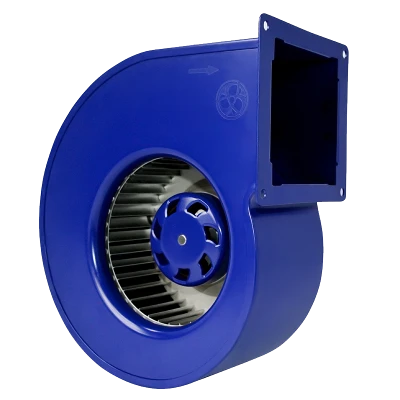
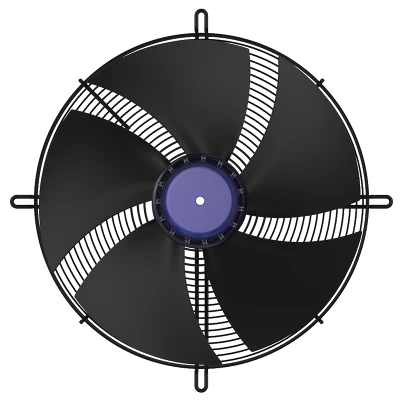
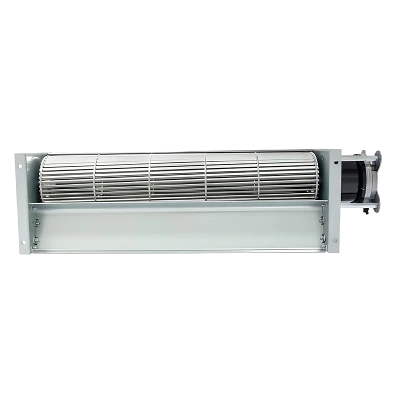
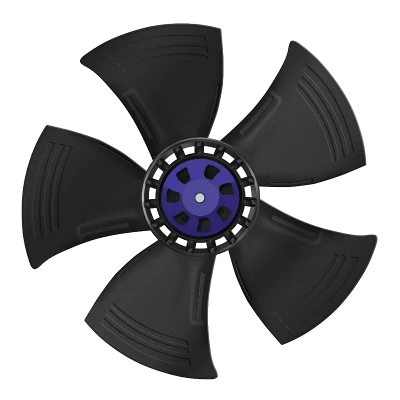

If you've ever stood next to a commercial HVAC unit, a dust extraction system at a woodworking shop, or a cleanroom air handler, you've likely heard the low, steady hum of a centrifugal blower at work. Those blowers are workhorses for countless industrial, commercial, and even residential applications, and their performance hinges on far more than just a motor size or a fan housing. As a centrifugal blower supplier, I've spent thousands of hours troubleshooting client systems and testing our own products, and one factor that consistently separates a well-performing blower from an underwhelming one is impeller design.

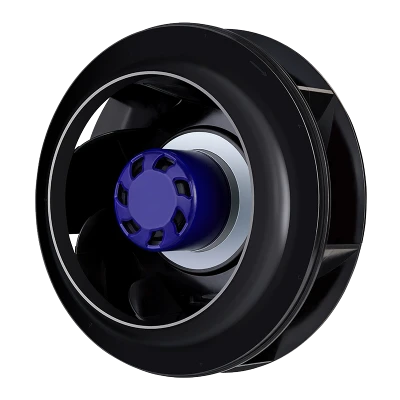
At its core, a centrifugal blower moves air by drawing it axially into the center of a rotating impeller, then accelerating it outward by centrifugal force before directing it through the housing and out the discharge. The impeller's geometry-including blade shape, blade angle, number of blades, and inlet design-directly impacts three key performance metrics: airflow volume, static pressure, and energy efficiency. It also shapes how the blower behaves under different operating conditions, like when ductwork is partially blocked or when a system's demand shifts. Let's break down each element and how it plays out in real-world use, plus how to match impeller design to your specific needs.
First, blade shape is the most obvious (and most impactful) variable in impeller design, with three main categories: backward-curved, forward-curved, and radial blades. Each has a distinct sweet spot, and choosing the wrong one can lead to wasted energy or insufficient airflow.
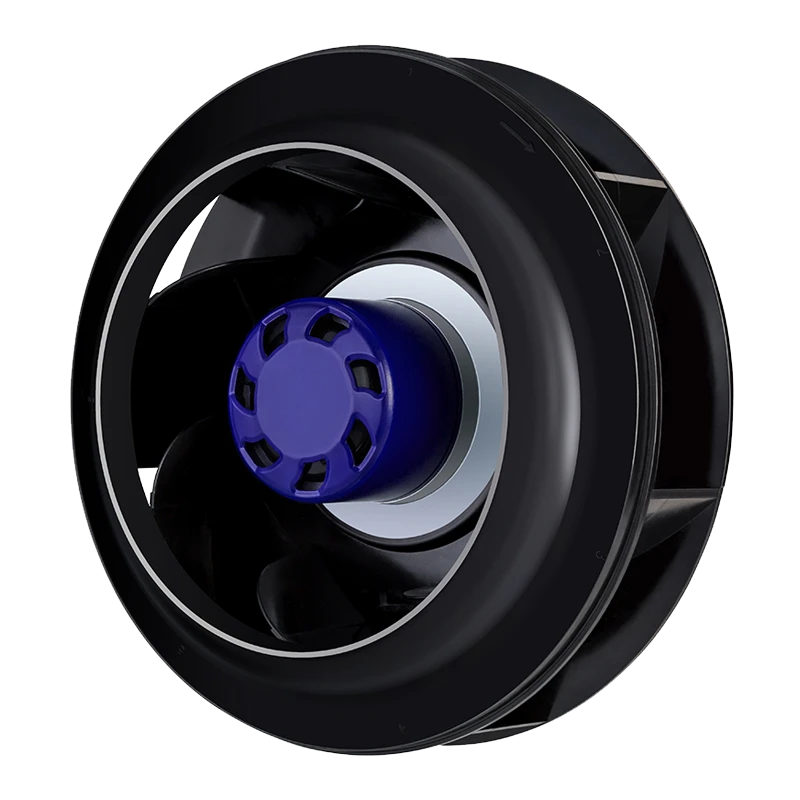
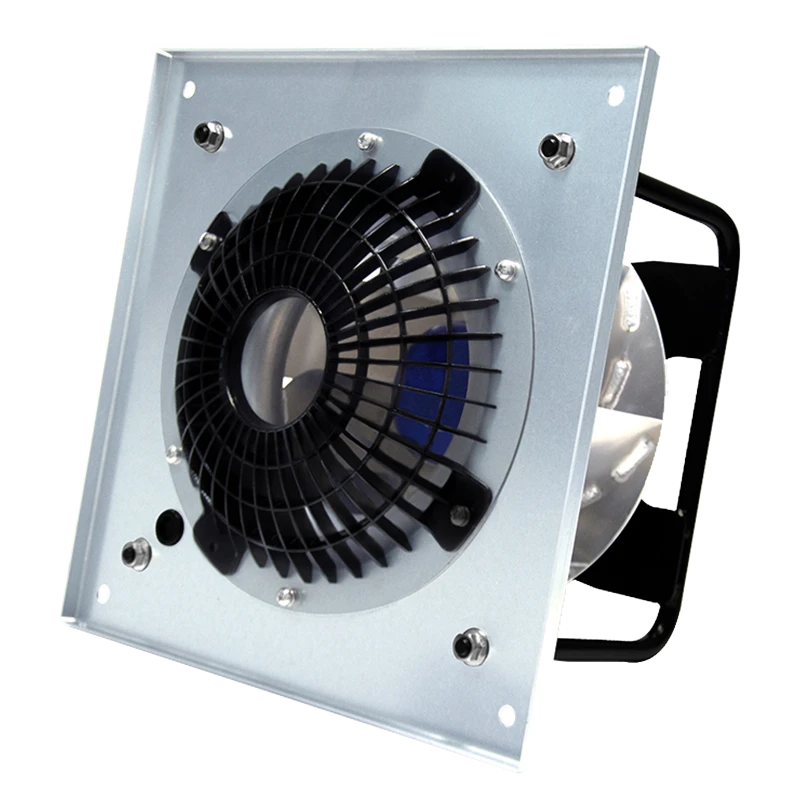
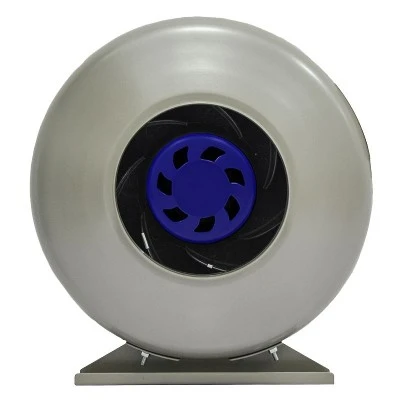
Backward-curved blades, where the blade curves away from the direction of impeller rotation, are the most energy-efficient option for most continuous-use applications. When air flows over these blades, the impeller transfers more of its rotational energy to static pressure (the pressure that pushes air through ducts and against resistance) rather than velocity (the speed of the air itself). This means backward-curved blowers deliver higher static pressure for the same power input, making them ideal for systems with long duct runs, filters, or other obstructions that create resistance. They also have a flatter power curve-meaning their energy use stays consistent across a range of airflow rates-so they don't waste power when demand is lower. For example, our dual-inlet inline duct blowers, like the AC/EC 230V Backward/forward Centrifugal Fan Inline Duct Ventilation Exhaust Fan Single/double Inlet Fan, use a mix of backward-curved blades to balance airflow and pressure for residential and light commercial duct systems. This design lets them move enough air for proper ventilation without driving up electricity costs, even when running for 12+ hours a day.
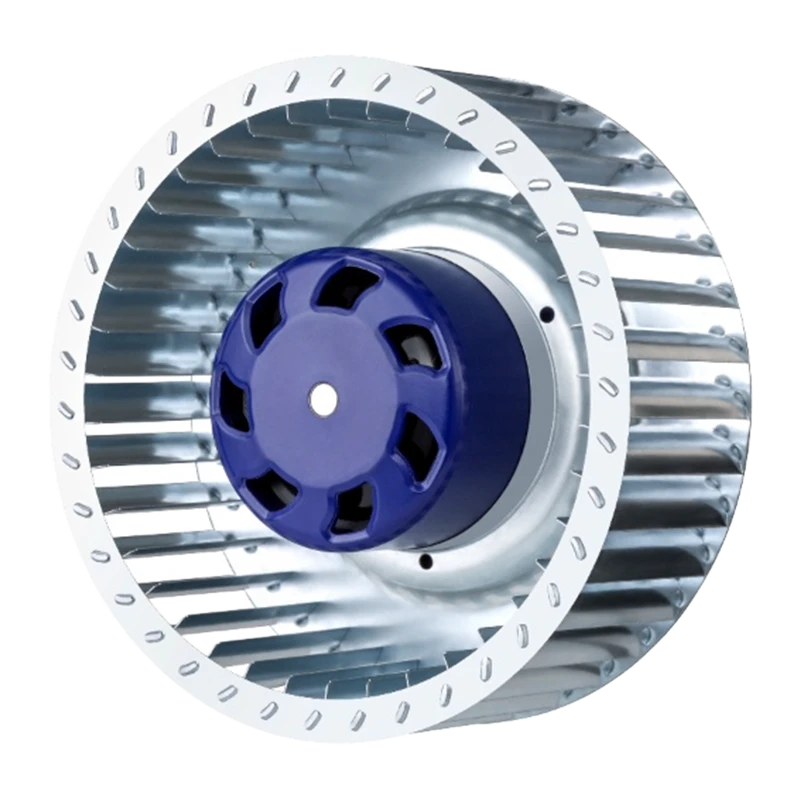
In contrast, forward-curved blades curve toward the direction of rotation. These blades are shorter and more numerous, and they prioritize velocity over static pressure. They're cheaper to manufacture and deliver higher airflow volumes relative to their physical size, which makes them popular for applications where space is tight and resistance is low-like small air handlers or bathroom exhaust fans. The tradeoff is lower static efficiency and a steeper power curve, meaning energy use spikes as airflow increases. While they work well for small, low-resistance systems, they're not ideal for industrial applications with long duct runs or high airflow demands.
Radial blades, the third shape, are straight blades that run perpendicular to the impeller's rotation. These are built for heavy-duty, high-resistance environments where dust, debris, or particulate matter is common-like dust collectors for sawmills, grain handling systems, or industrial cooling. The straight, rigid blades are less likely to clog with debris and can handle higher rotational speeds without deforming. But they're the least energy-efficient of the three blade shapes: a larger share of their energy goes to moving air at high velocity, rather than pressure, so they require more power to move the same volume of air as a backward-curved blower. For that reason, they're only chosen when debris resistance is a top priority.
Next, blade angle and number directly shape both performance and noise levels. Blade angle refers to the angle between the blade's leading edge (where air enters the impeller) and the impeller's rotational direction. A steeper blade angle increases airflow volume but reduces static pressure, while a shallower angle boosts pressure at the cost of lower airflow. The number of blades also matters: too few blades create uneven airflow, leading to turbulence and noise, while too many blades can restrict air flow into the impeller, reducing overall performance.
For our single-inlet blowers, this balance is tailored to specific use cases. Take the Blauberg SY-F200E-EC-05 200mm EC Single Inlet Centrifugal Blower, designed for cleanroom ventilation and small FFU (fan filter unit) applications. Its impeller uses 26 backward-curved blades with a precise 32-degree outlet angle, calibrated to deliver 500 CFM of airflow with 1.2 inches of static pressure, while keeping operational noise under 45 dB(A)-critical for cleanrooms where quiet, consistent airflow is required. In contrast, the Blauberg SC-F225E-EC-05 225mm EC Single Inlet Centrifugal Blower, built for commercial HVAC and rooftop units, uses 24 blades with a 35-degree angle to push 800 CFM and 1.8 inches of static pressure, suited for longer duct runs in office buildings.
Which EC centrifugal blower models should you review?

Blauberg DD-F133B-EC-N07 133mm DC Dual Inlet Centrifugal Blower
DD-F133B-EC-N07 133mm DC Dual Inlet Centrifugal Blower

Blauberg DD-F146B-EC-N07 146mm DC Dual Inlet Centrifugal Blower
DD-F146B-EC-N07 146mm DC Dual Inlet Centrifugal Blower

Blauberg DN-F120B-EC-00 120mm DC Dual Inlet Centrifugal Blower
DN-F120B-EC-00 120mm DC Dual Inlet Centrifugal Blower

Blauberg SN-F180A-EC-01 180mm DC Single Inlet Centrifugal Blower
SN-F180A-EC-01 180mm DC Single Inlet Centrifugal Blower

Blauberg SE-F180A-EC-01 180mm DC Single Inlet Centrifugal Blower
SE-F180A-EC-01 180mm DC Single Inlet Centrifugal Blower

Blauberg SD-F180A-EC-N07 180mm DC Single Inlet Centrifugal Blower
SD-F180A-EC-N07 180mm DC Single Inlet Centrifugal Blower

Blauberg SD-F180A-EC-01 180mm DC Single Inlet Centrifugal Blower
SD-F180A-EC-01 180mm DC Single Inlet Centrifugal Blower

Blauberg SN-F160C-EC-01 160mm DC Single Inlet Centrifugal Blower
SN-F160C-EC-01 160mm DC Single Inlet Centrifugal Blower
Explore the Blauberg centrifugal blower range. Confirm airflow at the required pressure, electrical supply and control compatibility for your project; inclusion here does not establish suitability for a specific medical installation.
Impeller inlet design is another often-overlooked factor that affects performance, especially for single-inlet vs. dual-inlet impellers. Single-inlet impellers draw air from one side, while dual-inlet designs draw air from both sides, doubling the airflow potential for the same impeller diameter. But inlet geometry-like the shape of the inlet nozzle and how it directs air into the impeller's eye (the center opening)-has a big impact on how much air the impeller can move. A poorly designed inlet can cause air to swirl before entering the impeller, reducing efficiency and increasing turbulence. That's why our dual-inlet model, the AC/EC 230V Backward/forward Centrifugal Fan, uses a contoured inlet nozzle that straightens incoming air, cutting pre-swirl by 15% compared to generic dual-inlet designs, boosting overall efficiency by 8%.
For smaller single-inlet blowers, inlet design is critical for compact applications. The Blauberg SD-F120B-EC-N02 120mm DC Single Inlet Centrifugal Blower, used in electronics cooling and small appliance ventilation, has a tapered inlet that fits into tight enclosures without sacrificing airflow. At just 120mm in diameter, it moves 180 CFM at 0.8 inches of static pressure, perfect for cooling server racks or AV equipment where space is at a premium.
Impeller design also plays a key role in motor compatibility and system stability. Impellers are sized to match the blower's motor power and rotational speed (RPM). A mismatched impeller-say, a too-large impeller on a low-power motor-will draw more current than the motor can handle, leading to overheating and premature failure. Conversely, a too-small impeller won't move enough air, wasting the motor's capacity. That's why all our blowers, from the 120mm DC model to the large dual-inlet units, are engineered as a complete system: impellers are matched to EC or DC motors, ensuring optimal RPM and power draw. For example, the 225mm IP55 Motor 0-10v Radial EC Single Inlet Centrifugal Cooling Fan for FFU uses a 0-10V variable speed controller paired with a radial impeller, letting users adjust airflow to match demand, while the impeller's heavy-duty design works with the IP55-rated motor to withstand dust and moisture in industrial settings.

I've seen first-hand how impeller design missteps cause headaches for clients. A few years back, a small manufacturing client reached out because their new dust collection system was underperforming: they'd installed a forward-curved blower expecting high airflow, but their shop's long duct runs and heavy dust load required higher static pressure. Swapping in a backward-curved impeller (paired with a properly sized motor) fixed the problem, increasing airflow by 30% while cutting energy use by 25%. On the flip side, another client tried to save money by using a radial impeller for a cleanroom application, only to have it clog with fine particulate matter within six months, requiring costly replacements. That's why matching impeller design to your system's needs isn't just a technical detail-it's a way to avoid downtime and extra costs.
At our company, we've tested impeller designs for over a decade, refining our models to balance performance, efficiency, and durability across every application. Whether you need a compact single-inlet blower for electronics cooling, a high-static backward-curved model for long duct runs, or a heavy-duty radial impeller for dusty industrial use, the impeller is the foundation of that blower's performance.
If you're not sure which impeller design is right for your centrifugal blower needs, or want to learn more about our models, we're here to help. Our team can walk you through airflow requirements, static pressure needs, and environmental factors to find the perfect match for your project. Reach out to our sales team to discuss your specific application and find the right centrifugal blower for your needs.
References
- Miller, T. J. (2019). Centrifugal Blowers: Design, Performance, and Application. Industrial Press.
- ASHRAE. (2021). HVAC Applications Handbook: Fans and Air Distribution. American Society of Heating, Refrigerating and Air-Conditioning Engineers.
- Department of Energy. (2020). Energy-Efficient Fan Systems: A Guide for Industrial Users. U.S. Department of Energy, Office of Energy Efficiency and Renewable Energy.
- Blauberg Ventilation. (2022). Centrifugal Blower Impeller Design Specifications. Product Engineering Manual.
- Cengel, Y. A., & Cimbala, J. M. (2020). Fluid Mechanics: Fundamentals and Applications (4th ed.). McGraw-Hill Education.
Category of Blauberg Products
Built on German engineering principles, focusing on precision, reliability, and long-term performance. Through efficient and scalable manufacturing, we deliver high-quality ventilation solutions with optimized cost structure, ensuring strong value for global OEM and project-based customers.