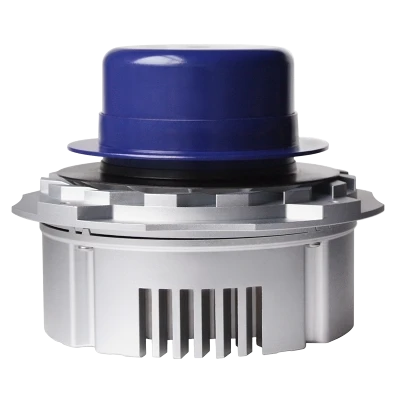

When you're shopping for centrifugal blowers, whether for HVAC systems, industrial ventilation, or equipment cooling, there's one tiny detail that makes a huge difference in how well your setup works: impeller size. As a blower supplier, I can't tell you how often I get asked, "Does a bigger impeller mean more air?" The short answer? Not always, but it's way more nuanced than just "bigger = better." Let me break this down in plain terms, no jargon, so you can make the right call for your project.
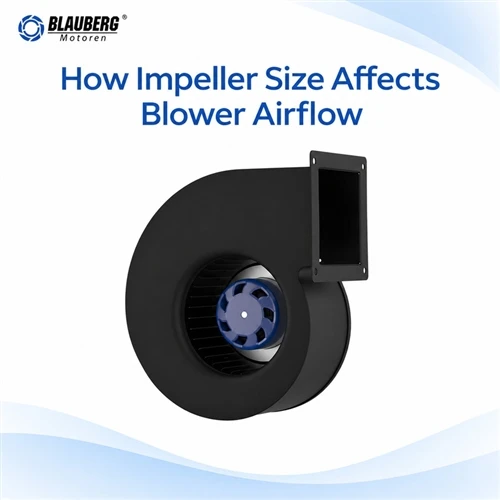
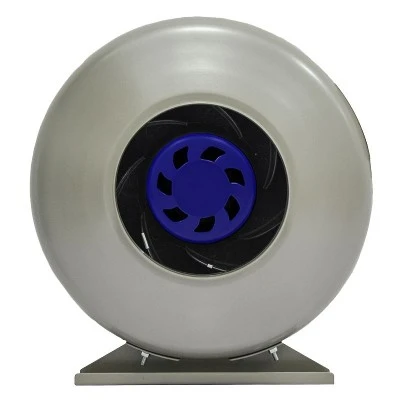
First, let's keep basics straight for anyone who's not a blower nerd: an impeller is the spinning, blade-covered wheel inside a centrifugal blower that grabs air, slings it outward, and pushes it through your ducting or vent. The size here isn't just the blade span-it's the diameter of that spinning wheel, measured from the tip of one blade to the tip of the opposite side. That diameter is what we call "impeller size," and it's the biggest driver of how much air a blower can move, but only when paired with other key specs.
Here's the science that actually matters (I'll skip the complex equations, promise): when an impeller spins, it moves air based on two main factors: how fast it spins (RPM, or revolutions per minute) and how much "space" it has to push that air. A larger impeller, all else equal, has a bigger outer edge that can pull in and expel more air with every spin. Think of it like a fan: a 16-inch box fan moves more air than a 10-inch desk fan spinning at the same speed, right? Same logic applies here.
But here's the catch-size only works if the blower's motor is powerful enough to spin that bigger impeller efficiently, and your system doesn't have so much duct resistance that the extra air can't escape. I see this all the time: someone buys a big impeller blower for a small space, and it's actually too loud or uses way more electricity than they need. Or they skimp on motor power, so a 180mm impeller can't spin fast enough to deliver more air than a well-designed 160mm one.
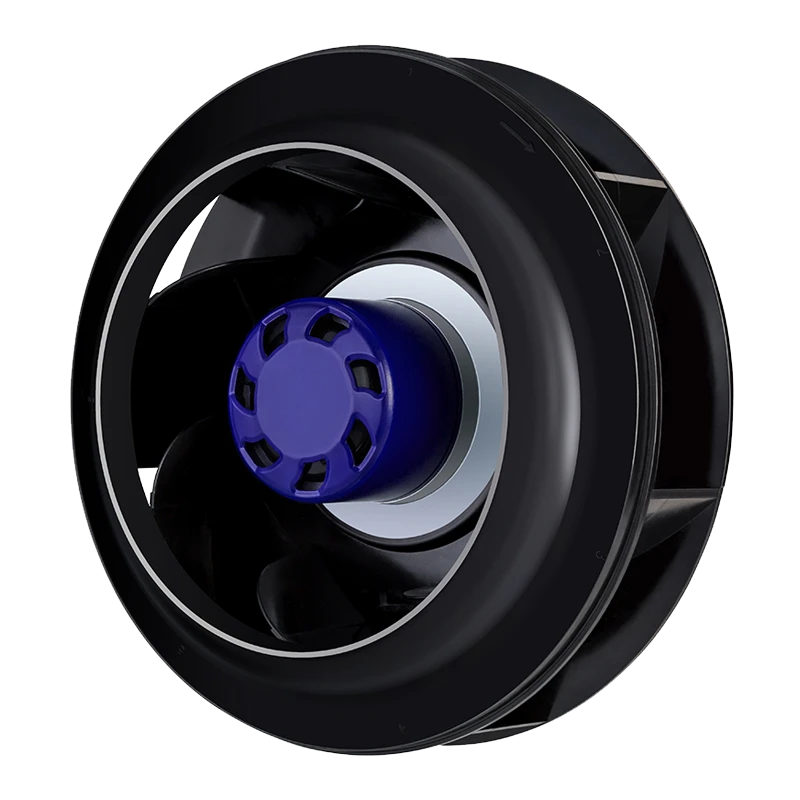
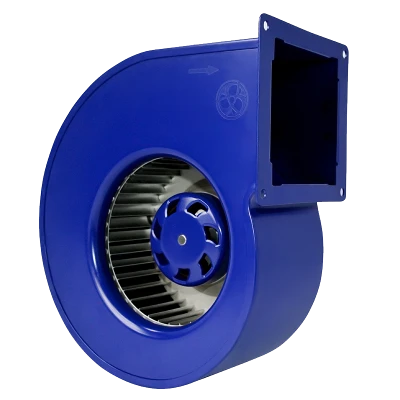
Let's use real products we stock to make this concrete. We have two popular 160mm single-inlet centrifugal blowers: the [Blauberg SN-F160B-EC-01 160mm DC Single Inlet Centrifugal Blower] and the [Blauberg SD-F160C-EC-00 160mm DC Single Inlet Centrifugal Blower]. Both have the same 160mm impeller diameter, but they're built for different uses. The SN-F160B, for example, has a high-efficiency EC motor that hits up to 2500 RPM, moving about 350 CFM (cubic feet per minute) at peak, while the SD-F160C is a lower-speed model (1800 RPM) that's quieter, around 220 CFM. Same impeller size, different air delivery because of motor RPM. That's a key point: impeller size is critical, but it's not the only variable.
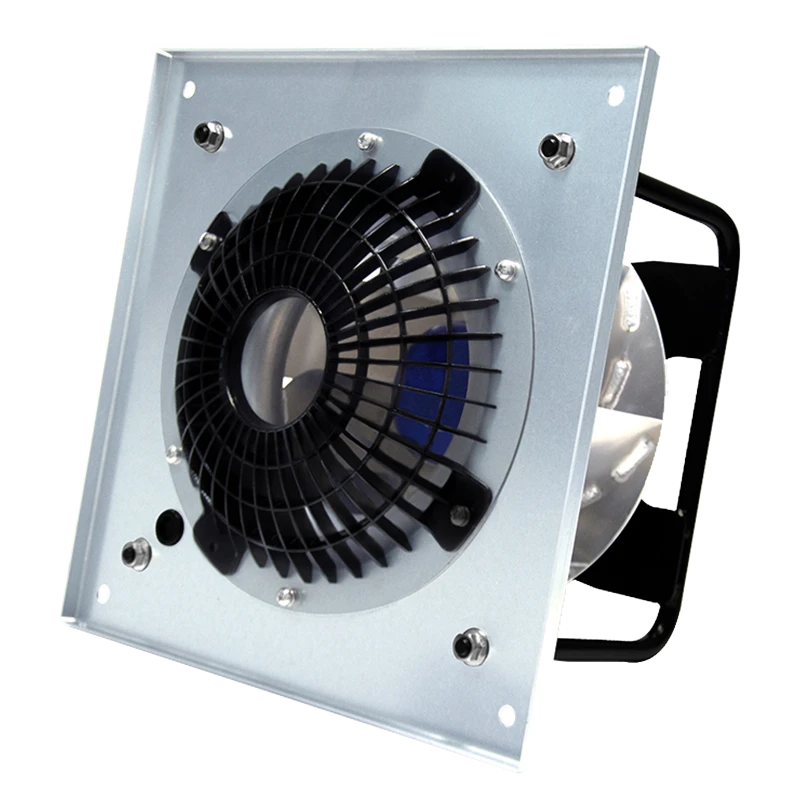
If you need more air than a 160mm can deliver, step up to the next common size: 180mm. Our [Blauberg SL-F180E-EC-05 180mm EC Single Inlet Centrifugal Blower] has a 20mm bigger impeller, and when paired with a high-torque EC motor, it pushes up to 520 CFM-way more than the 160mm models, even if you crank the SN-F160B all the way up. But you can't just swap impeller sizes randomly: if your ductwork is only 4 inches wide, a 180mm impeller is too big to fit without modifying the setup, which defeats the purpose.

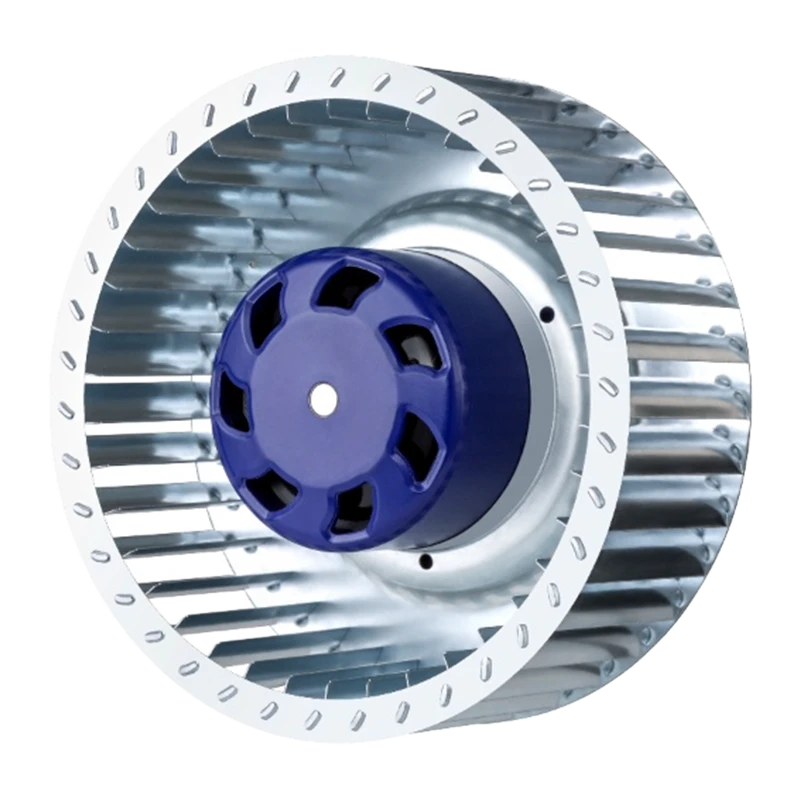
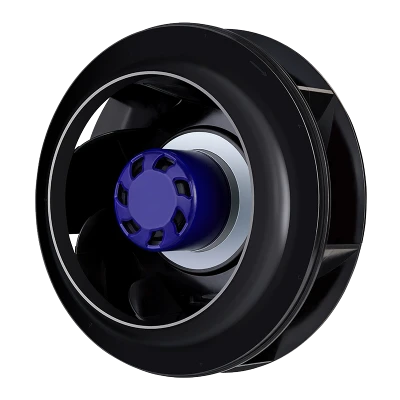
Another thing that's easy to miss: impeller blade design interacts with size to change air delivery. Some impellers have forward-curved blades, some backward-curved, some radial. A 160mm impeller with forward-curved blades (like the [160mm EC Single Inlet Centrifugal Fan]) moves more air at lower speeds, which is perfect for residential exhaust fans or small HVAC systems. A 160mm impeller with radial blades, like our [160mm House Exhaust Vent High Temp EC Single Inlet Centrifugal Fan], is built for high-heat applications, like drying rooms or engine cooling, where you need to push air through a restrictive duct without the blades warping. So even if two blowers have the same impeller size, their blade shape can shift how much air they move and what they're built for.
Which EC centrifugal blower models should you review?

Blauberg DD-F133B-EC-N07 133mm DC Dual Inlet Centrifugal Blower
DD-F133B-EC-N07 133mm DC Dual Inlet Centrifugal Blower

Blauberg DD-F146B-EC-N07 146mm DC Dual Inlet Centrifugal Blower
DD-F146B-EC-N07 146mm DC Dual Inlet Centrifugal Blower

Blauberg DN-F120B-EC-00 120mm DC Dual Inlet Centrifugal Blower
DN-F120B-EC-00 120mm DC Dual Inlet Centrifugal Blower

Blauberg SN-F180A-EC-01 180mm DC Single Inlet Centrifugal Blower
SN-F180A-EC-01 180mm DC Single Inlet Centrifugal Blower

Blauberg SE-F180A-EC-01 180mm DC Single Inlet Centrifugal Blower
SE-F180A-EC-01 180mm DC Single Inlet Centrifugal Blower

Blauberg SD-F180A-EC-N07 180mm DC Single Inlet Centrifugal Blower
SD-F180A-EC-N07 180mm DC Single Inlet Centrifugal Blower

Blauberg SD-F180A-EC-01 180mm DC Single Inlet Centrifugal Blower
SD-F180A-EC-01 180mm DC Single Inlet Centrifugal Blower

Blauberg SN-F160C-EC-01 160mm DC Single Inlet Centrifugal Blower
SN-F160C-EC-01 160mm DC Single Inlet Centrifugal Blower
Explore the Blauberg centrifugal blower range. Confirm airflow at the required pressure, electrical supply and control compatibility for your project; inclusion here does not establish suitability for a specific medical installation.
I've also seen mistakes from people who only look at impeller size and ignore "static pressure"-that's the force needed to push air through ductwork, filters, or vents. A big impeller might move a lot of air in open space, but if you have a 20-foot duct with a HEPA filter, you need enough pressure to get that air through. For example, a 160mm impeller blower with high static pressure (like the high-temp exhaust vent model) will deliver more consistent air through a restricted system than a larger 180mm impeller with low static pressure, which might "choke" and push less air when the duct is closed off. This is why when I talk to clients, I always ask two questions first: how much air do you need, and what's your system's static pressure? That tells me if a bigger impeller is the right move, or if a properly sized smaller one will work better.
Let's do a quick real-world example to make this relatable. Say you're replacing a bathroom exhaust fan that moves 30 CFM, and the old impeller is 100mm. Upgrading to a 160mm impeller fan makes sense here-our [160mm EC Single Inlet Centrifugal Fan] (a generic high-volume, low-static model) will move that 30 CFM plus more, pulling moisture out faster and cutting down on mold. But if you're replacing a fan for a commercial server closet, which needs 500 CFM to cool servers that put off a lot of heat, a 160mm impeller won't cut it. You'll need that 180mm impeller blower I mentioned earlier, because even with the best motor, a 160mm can't move enough air to keep servers from overheating.
One common myth I hear: "A bigger impeller always uses more energy." Not exactly. High-efficiency EC motors (which we use across most of our models) adjust their speed based on demand, so a 180mm impeller blower running at 50% speed uses less energy than a 160mm impeller blower running at 100% speed to deliver the same air. It's all about matching the impeller size to your actual needs, not just grabbing the biggest one to "be safe."

So what should you actually do when choosing a centrifugal blower? First, calculate the required CFM for your space or application-this is usually in your equipment specs, or you can figure it out by measuring the room size and how often you need to replace the air. Then, check the static pressure of your system (duct length, filters, vents), because that will tell you how much pressure your blower needs. Finally, match that to an impeller size that fits your equipment's physical space-you can't install a 180mm impeller blower if your housing only fits 160mm.
If you're still not sure, don't stress. As a blower supplier, I've helped hundreds of clients pick the right size, and I can walk you through matching impeller size to your exact needs. Whether you're doing residential exhaust, industrial cooling, HVAC, or something else, we have 160mm, 180mm, and other sizes tailored for different jobs. Don't waste money on a blower that's too big or too small-let's chat to find the perfect fit.
References
- Centrifugal Blower Fundamentals: Impeller Design and Air Delivery. American Society of Heating, Refrigerating and Air-Conditioning Engineers (ASHRAE).
- EC Motor Efficiency and Blower Performance Data. Blauberg Group Technical Documentation.
- HVAC Duct Static Pressure Calculation Guide. U.S. Department of Energy, Office of Energy Efficiency and Renewable Energy.
Category of Blauberg Products
Built on German engineering principles, focusing on precision, reliability, and long-term performance. Through efficient and scalable manufacturing, we deliver high-quality ventilation solutions with optimized cost structure, ensuring strong value for global OEM and project-based customers.