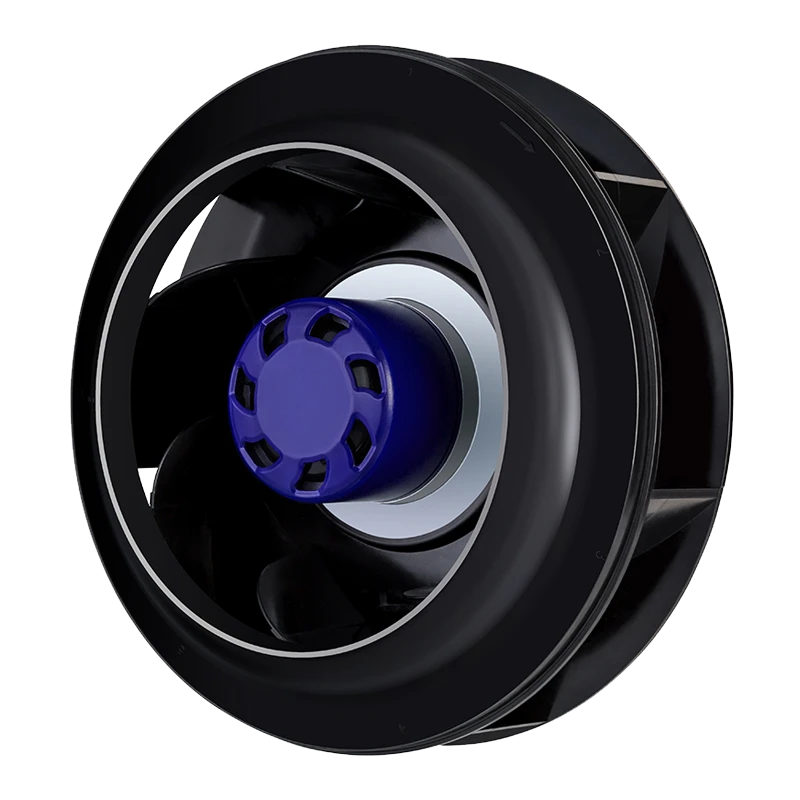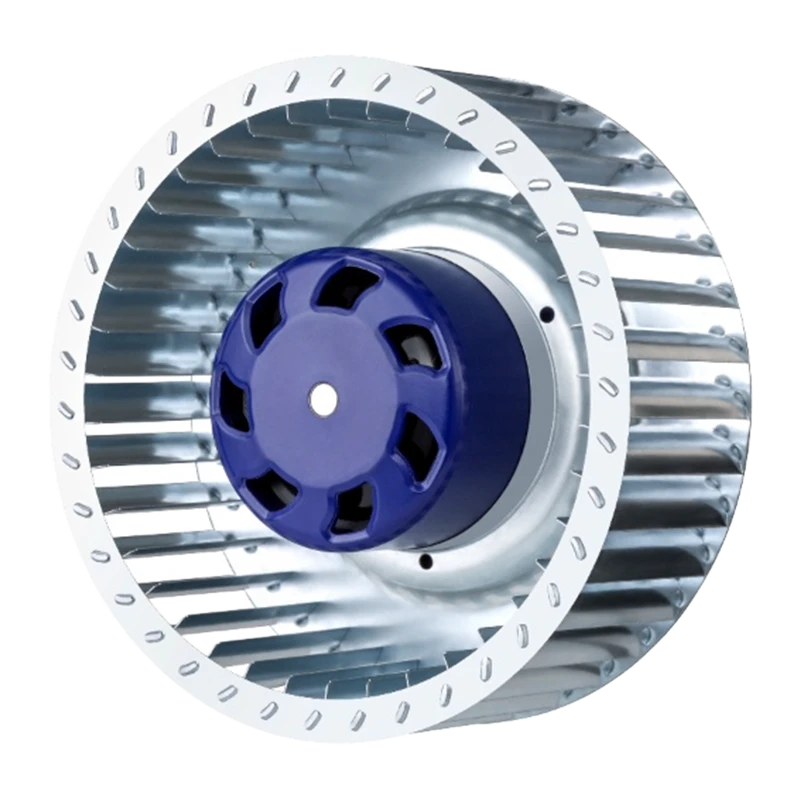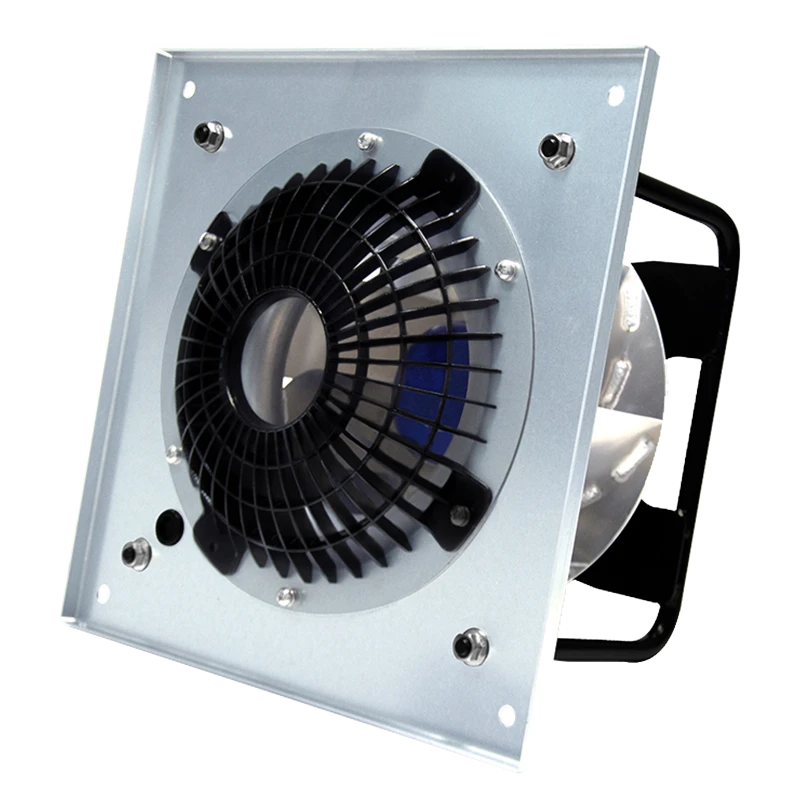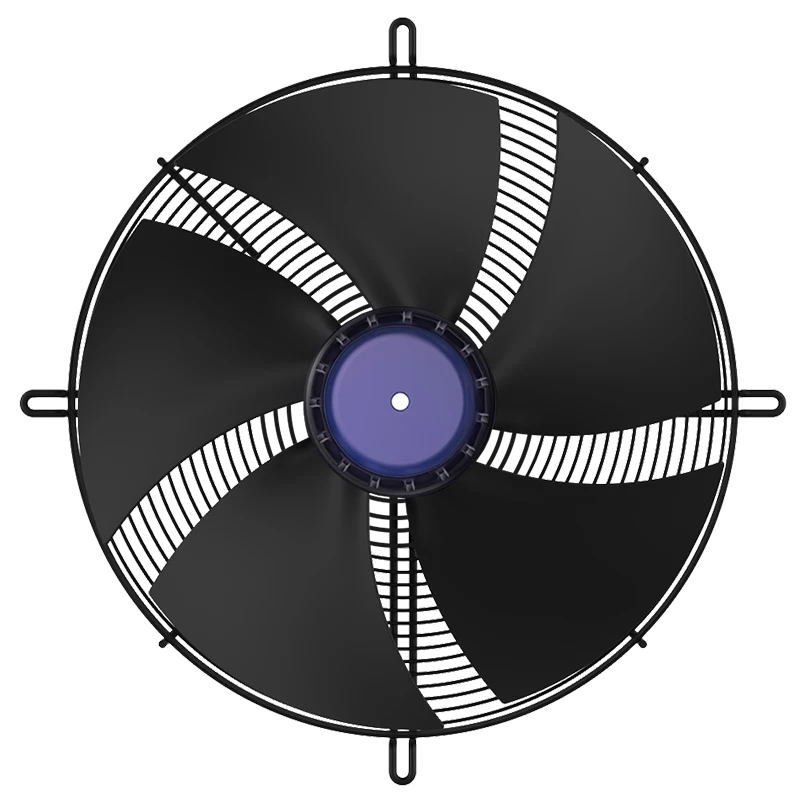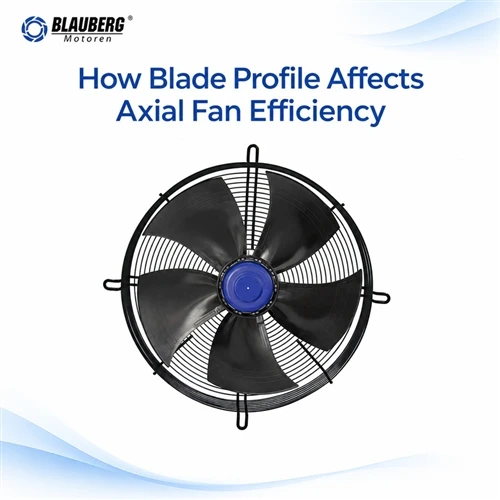

If you've ever stood next to an axial flow fan moving tons of air, you might have noticed something odd: two fans that look almost identical-same size, same motor, same enclosure-can move the same volume of air while using drastically different amounts of electricity. As someone who's spent the last decade supplying axial flow fans to HVAC contractors, industrial warehouse operators, and data center managers, I've seen this disconnect play out again and again. Most buyers focus on motor power or overall fan size when choosing a unit, but the secret to unlocking real efficiency gains lies in one often overlooked part: the blade profile.
Axial flow fans work on a simple core principle: they pull air straight along the axis of the fan, rather than pushing it outward like centrifugal fans. But that simple motion hides a lot of small, complex aerodynamic choices that turn a generic blade into one that wastes almost no energy on turbulence, drag, or wasted air movement. When I explain blade profile to customers, I start with what it isn't: it's not just the length of the blade, or how many blades there are. (Though blade count does tie into it.) Profile refers to the exact shape of the airfoil that forms each blade, from the tip that spins near the fan's grille to the root that attaches to the hub, and even the subtle curve along the entire length. Every one of these details changes how air flows over the blade, and that directly impacts how much of the motor's energy actually ends up moving useful air.

Let's break down the biggest factors that make blade profile matter for efficiency, starting with the most impactful one: airfoil design. The earliest axial flow blades were basically flat metal plates, a leftover from crude early fan designs. Flat plates push air, but they also create a huge amount of drag-like holding a piece of cardboard out a car window at 60 mph. That drag means the motor has to work harder just to spin the blades, rather than moving air. Modern axial flow blades use curved airfoils, similar to the wings on an airplane, shaped to generate lift rather than just push. A properly designed airfoil accelerates air smoothly over its curved upper surface and along its flatter lower surface, creating low pressure above the blade and high pressure below, which pulls air along the fan's axis without wasting energy.
Not all airfoils are equal, though. Thin, high-camber airfoils work best for low-speed, high-volume applications, like exhaust fans in small bathrooms, where you just need to move a lot of air quickly. Thick, low-camber airfoils perform better at higher speeds and with more static pressure-think of axial fans pushing air through a long duct, or over a server rack in a data center. The difference might sound small, but for a fan running 24/7 in a server room, that 2% efficiency gain from a matched airfoil design adds up to hundreds of dollars in lower annual electricity bills.
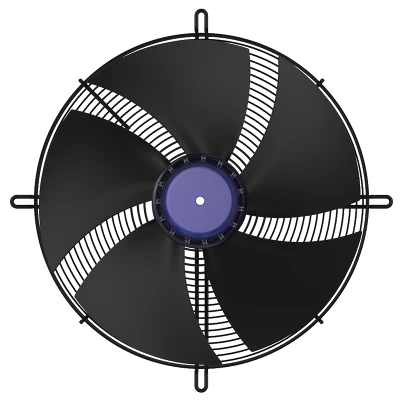
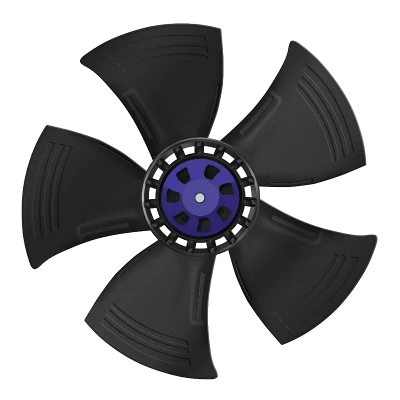
Another critical part of blade profile is taper and twist, two features that almost no customers notice until you point them out. Most blades are wider at the tip than at the root, and twisted along their length. Why? Because the tip of the blade spins in a wider circle than the root, so it moves much faster. If the blade was a flat, untwisted surface, the fast-moving tip would push too much air, while the slow root would barely move at all. That mismatch creates turbulence, where air near the root gets pushed backward, wasting energy, and the tip creates drag as it pushes against air moving around the fan. Taper (narrowing the blade toward the tip) and twist (angling the blade to match the speed at each point along its length) fix this imbalance by making the entire blade work as a cohesive unit, pushing air smoothly from root to tip.
I learned the importance of twist early in my career, when a customer came to me frustrated with a set of fans we'd supplied for a 10,000 square foot warehouse. The fans were rated to move 5,000 CFM each, but they only moved 3,800 CFM, and were using 30% more power than advertised. When we took the old blades off, we saw they were untwisted, flat blades, a cheap design the customer had switched to from another supplier to save money. Replacing them with a set of twisted, tapered blades that matched the warehouse's static pressure needs boosted airflow to 4,900 CFM, cut power use by 22%, and the customer saved over $1,200 a year on their electricity bill. That experience stuck with me: blade profile isn't just a technical detail-it's a direct line to real, bottom-line savings for our customers.
Tip clearance is another blade profile feature that impacts efficiency, and it's one I talk about a lot when explaining our line of EC axial fans. The tip of a spinning blade comes very close to the fan's outer housing, right? The gap between the blade tip and the housing is called tip clearance. If that gap is too big, air that the blade spent energy moving gets pushed backward through the gap, instead of moving forward along the fan's axis. It's like if you had a paddle boat with a big hole between each paddle and the boat's side-most of the energy from your legs would just push water backward, not move the boat.
A good blade profile minimizes tip clearance without letting the blade hit the housing (which would cause noise and damage). Modern manufacturing techniques let us build blades with precise, consistent tip clearances-just a few millimeters-so almost no air leaks backward. That's why even fans with the same blade length can have wildly different efficiency: a fan with tight tip clearance and a smooth, twisted blade profile will waste almost none of the blade's energy on tip leakage.
Blade count also ties into profile, though it's often mistaken for a separate factor. Fans with fewer, longer blades (usually 3 or 4) work best for high-volume, low-pressure applications, like general ventilation in offices or small warehouses. More blades (5 or 6) paired with a shorter, wider profile work better for high-pressure, low-volume applications, like pushing air through long HVAC ducts or cooling heavy industrial equipment. The key here is matching blade count and profile to the specific static pressure the fan will face. A fan with a 4-blade profile designed for low pressure will struggle to move air through a long duct, wasting energy as it strains against the pressure, while a 6-blade high-pressure profile will be overkill and create unnecessary drag for low-pressure tasks.
This is why when customers ask for a reliable axial fan, I don't just show them our stock models-I walk through their exact application to match the right blade profile. For example, for small office ventilation projects, we recommend our 250mm 115V EC Cooling Axial Flow Fans for Ventilation System, which use a 5-blade, low-pressure profile optimized for smooth airflow at low static pressure. For larger warehouses that need to move air through long duct runs, I point them to our 450mm Brushless Ball Bearing Energy Efficient Motor EC Axial Fan High Efficiency Centrifugal Fan, with a 4-blade, high-pressure tapered profile built to push air against consistent resistance. I've also had great results with our 350mm EC Axial Fan High Efficiency Centrifugal Fan Axial Blower Fan, a mid-sized unit with a versatile profile that works well for both data center cooling and greenhouse ventilation.
Which EC axial fan models should you review?
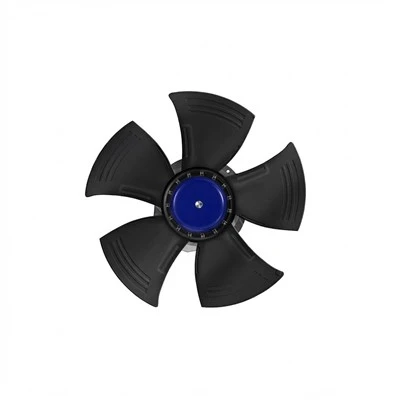
Blauberg BL-A500C-EC-05 500mm EC Axial Fan
View product details and specifications.
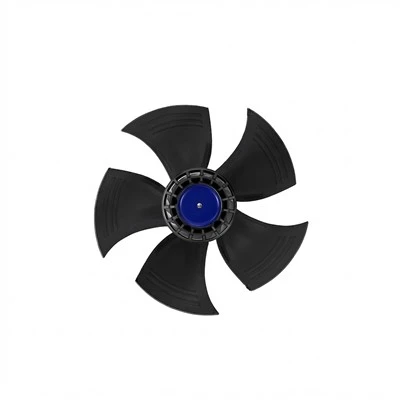
Blauberg BL-A450C-EC-05 450mm EC Axial Fan
View product details and specifications.
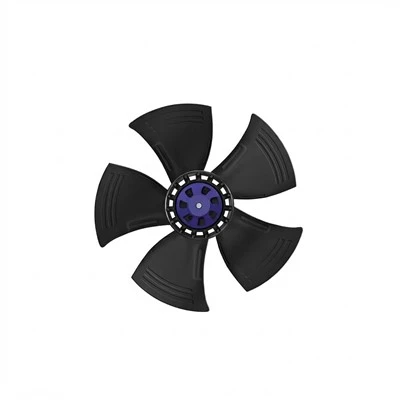
Blauberg BL-A400C-EC-07 400mm EC Axial Fan
View product details and specifications.
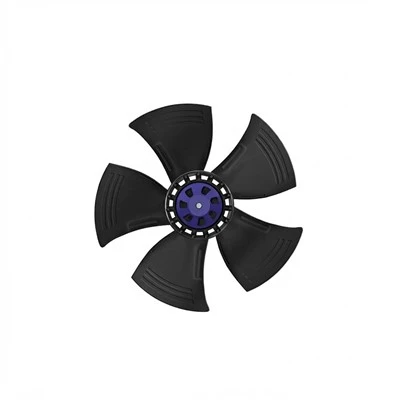
Blauberg BL-A400C-EC-05 400mm EC Axial Fan
View product details and specifications.
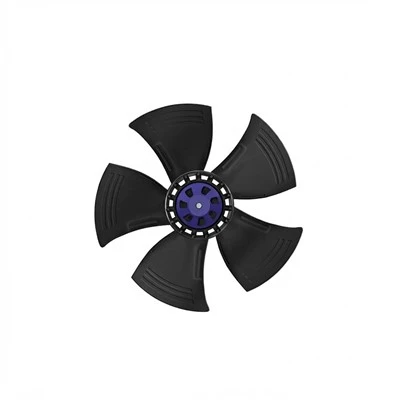
Blauberg BC-A400C-EC-07 400mm EC Axial Fan
View product details and specifications.
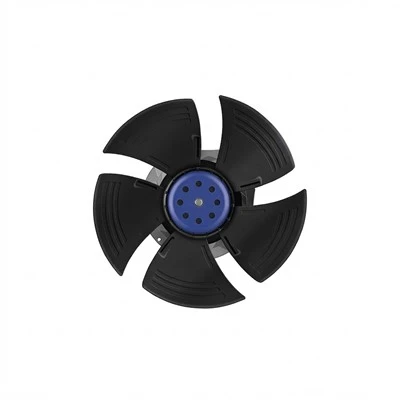
Blauberg BL-A350C-EC-F05 350mm EC Axial Fan
View product details and specifications.
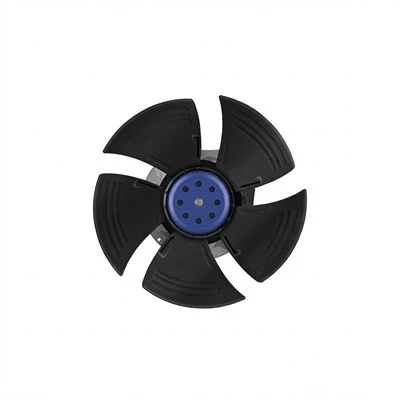
Blauberg BL-A350C-EC-07 350mm EC Axial Fan
View product details and specifications.
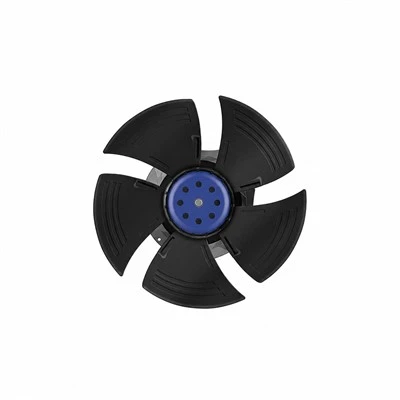
Blauberg BL-A350C-EC-05 350mm EC Axial Fan
View product details and specifications.
It's also important to note that blade profile's impact on efficiency only matters when paired with the right motor, especially for EC (electronically commutated) fans, which have transformed axial flow fan efficiency over the last 15 years. EC motors use variable speed technology, so they adjust their speed to match the load, rather than running at a fixed speed no matter how much air the system needs. When combined with a well-designed blade profile, EC fans can cut energy use by 30-50% compared to old AC fans with flat blade profiles. For example, our Blauberg BE-A250C-EC-02 250mm DC Axial Fan pairs a twisted airfoil blade with a DC EC motor, delivering 18% higher airflow per watt than comparable AC fans with generic blade designs.
I've also seen efficiency gains from blade profile play out in low-noise applications, which is a big selling point for restaurants and schools. A poorly designed blade profile creates more turbulence, which turns into noise. A smooth, twisted airfoil with proper taper reduces turbulent air flow, so the fan moves the same amount of air at a lower noise level. Our 450mm EC Axial Fan Cooling Low Noise Centrifugal Fan is a perfect example: it has a 5-blade profile optimized for noise reduction, so it runs at just 28 decibels-quieter than a normal conversation-while still moving 4,200 CFM, all while using 15% less energy than older models.
Of course, blade profile isn't the only factor in fan efficiency-motor quality, bearing type, overall aerodynamic design of the fan housing all play a role. But it's the foundation. A great motor paired with a bad blade profile will never deliver good efficiency, and a great blade profile paired with a low-quality motor will underperform. The sweet spot is matching all these parts, starting with the blade profile, to the specific needs of the application.

Let's put this in real numbers to make it concrete. Suppose you have a 5,000 CFM axial fan running 8,760 hours a year (24/7, all year). A generic flat-blade fan that moves 5,000 CFM at 1.0 static pressure, using 1.2 kW of power, will cost you around $1,000 a year in electricity (at $0.10 per kWh). A well-designed twisted blade fan, optimized for that same 1.0 static pressure, will move 5,000 CFM at the same pressure using 0.9 kW of power, cutting your annual electricity cost to $788-a savings of $212 per fan, every single year. Multiply that by 10 fans in a data center, and you're looking at $2,120 a year in savings, and that's just the start. Over the 10-year lifespan of a typical fan, that's $21,200 in energy savings, all from a better blade profile.
For small businesses, those savings can be game-changing. A local bakery I worked with had four exhaust fans running 18 hours a day to vent hot air from ovens and mixers. They were using old, flat-blade AC fans that used too much electricity and struggled to keep up with the heat, leading to longer bake times and higher utility bills. We replaced them with our 250mm 115V EC Cooling Axial Flow Fans for Ventilation System, which have a twisted airfoil profile matched for low-pressure kitchen ventilation. The bakery cut their fan-related electricity use by 28%, reduced their bake times by 5% because the fans moved air more consistently, and saved over $800 a year on utility bills-enough to cover the cost of the new fans in 14 months.
If you're in the market for axial flow fans, the biggest mistake you can make is focusing only on price or fan size. Take the time to ask about the blade profile: what airfoil design is used, is it twisted and tapered, what's the tip clearance, and is it matched to the static pressure of your specific application. A fan that looks identical to another on the surface could have a blade profile that makes it 20% less efficient, leading to thousands of dollars in extra energy costs over the fan's lifespan.
At our company, we've spent years testing and refining our blade profiles to get the maximum efficiency for every application, from small ventilation fans to large industrial units. We don't cut corners on blade design because we know that the best fan isn't the one with the lowest upfront cost-it's the one that delivers reliable, efficient air movement for years, without driving up utility bills.
If you're looking to upgrade your axial flow fans, replace underperforming units, or just want to talk about which fan will work best for your specific needs, we're here to help. Our team has years of experience working with HVAC contractors, facility managers, and business owners to match the right blade profile, motor, and size to every job, so you get the best combination of efficiency, performance, and value. Whether you need a small fan for a bathroom or a large unit for a warehouse, we can walk you through your options and help you make a choice that saves you money for years to come.
References
- Cengel, Y. A., & Cimbala, J. M. (2014). Fluid Mechanics: Fundamentals and Applications (3rd ed.). McGraw-Hill Education.
- ASHRAE. (2021). ASHRAE Handbook: HVAC Systems and Equipment. American Society of Heating, Refrigerating and Air-Conditioning Engineers.
- Eck, B. (1973). Fans: Design and Operation of Centrifugal, Axial-Flow, and Cross-Flow Fans. Pergamon Press.
- EC Motor Technology Consortium. (2019). Energy Efficiency of EC Axial Flow Fans: A Field Study of Commercial and Industrial Applications. International Energy Agency.
- Liu, Y., et al. (2020). Aerodynamic Optimization of Axial Flow Fan Blades for Low-Noise High-Efficiency Operation. Journal of Fluids Engineering, 142(12), 121103.
Category of Blauberg Products
Built on German engineering principles, focusing on precision, reliability, and long-term performance. Through efficient and scalable manufacturing, we deliver high-quality ventilation solutions with optimized cost structure, ensuring strong value for global OEM and project-based customers.