
Hey there! As a centrifugal fans supplier, I've seen firsthand the benefits and challenges of using centrifugal fans in series. It's a setup that can really boost performance, but it also comes with its own set of considerations. So, let's dive into what you need to think about when using centrifugal fans in series.
Pressure and Flow
The main reason you'd want to use centrifugal fans in series is to increase the total pressure. When fans are arranged in series, the pressure of each fan adds up, while the flow rate remains relatively constant (assuming the system resistance doesn't change too much). This is great for applications where you need to push air through a high - resistance system, like long ductwork or a system with multiple filters.
But here's the thing: you can't just stack fans willy - nilly. Each fan has its own performance curve, which shows how the pressure and flow rate are related. When you put fans in series, the combined performance curve is a bit more complex. You need to make sure that the fans are operating within their efficient ranges. If one fan is operating at a point where it's not very efficient, it can drag down the performance of the whole system.
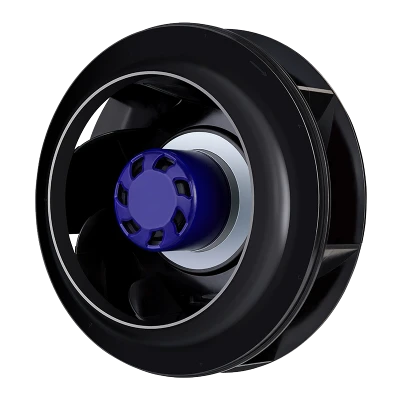
For example, if you're looking for a fan that can handle a high - pressure situation, our 250mm 24V DC Backward Industrial Centrifugal Smoke Exhaust Fan with CE could be a great option. It's designed to work well in industrial settings where high pressure is required.
 Fan Compatibility
Not all fans are created equal, and not all fans will work well together in a series setup. You need to consider factors like the size, type, and performance characteristics of the fans.
Size matters because fans of different sizes will have different flow rates and pressure capabilities. If you mix a small fan with a large fan in series, the small fan may not be able to keep up with the large one, leading to uneven airflow and reduced efficiency.
The type of fan also plays a role. There are forward - curved and backward - curved centrifugal fans, and they have different performance curves. Forward - curved fans are generally better for low - pressure, high - flow applications, while backward - curved fans are more suitable for high - pressure applications. So, if you're using fans in series, it's a good idea to stick with the same type of fan to ensure compatibility.
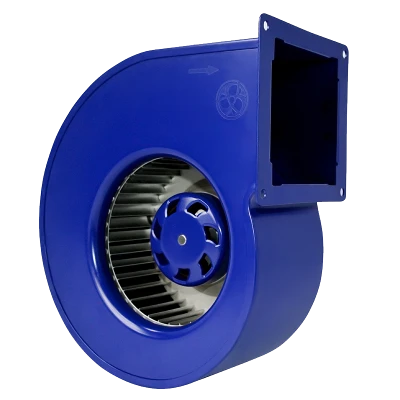
Our 180mm 24V 50/60hz forward Centrifugal Dc Fan for Ventilation Unit Project and Telecom Container Project is a forward - curved fan that's well - suited for ventilation projects. And if you need a backward - curved fan for a high - pressure job, our 220mm DC 310V Air Industrial Extractor Centrifugal Fan Backward Bracket with CE for Kitchen Window could be a good fit.
System Resistance
The resistance of the system that the fans are working in is a crucial factor. As I mentioned earlier, the main purpose of using fans in series is to overcome high system resistance. But you need to know the exact resistance of your system before you choose the fans.
A high - resistance system might require more fans in series or fans with higher pressure capabilities. On the other hand, if the system resistance is low, using too many fans in series could be overkill and lead to unnecessary energy consumption.
You can measure the system resistance or use engineering calculations to estimate it. Once you have an idea of the system resistance, you can select the appropriate fans to ensure that they can work together effectively to push the air through the system.

Power Consumption
Using fans in series means that you're using more than one fan, which also means higher power consumption. You need to consider the energy efficiency of the fans and the overall cost of running the system.
Some fans are more energy - efficient than others. For example, EC (electronically commutated) fans are generally more efficient than AC fans because they can adjust their speed to match the load. This can result in significant energy savings over time.
Our 140mm EC forward Curved Centrifugal Fan is an EC fan that offers good energy efficiency. By choosing energy - efficient fans for your series setup, you can reduce your operating costs and make your system more sustainable.
Noise Levels
Another consideration is the noise generated by the fans. When you have multiple fans running in series, the noise level can add up. This can be a problem, especially in applications where noise is a concern, like in offices, hospitals, or residential areas.
You can choose fans with low - noise designs or use noise - reducing measures such as acoustic enclosures. Some fans are designed to operate quietly without sacrificing performance. For instance, our 160mm Computer Room Cooling DC forward Centrifugal Fan for Air Purifier is designed to be relatively quiet, making it suitable for environments where noise needs to be kept to a minimum.
Maintenance and Control
Maintaining and controlling a series of fans can be more complicated than maintaining a single fan. You need to ensure that each fan is working properly and that they are all synchronized.
Regular maintenance, such as cleaning the fans and checking the belts or bearings, is essential to keep the system running smoothly. You also need to have a control system in place to manage the speed and operation of the fans. This could be a simple on/off switch or a more sophisticated control system that can adjust the fan speed based on factors like temperature, pressure, or airflow.
In conclusion, using centrifugal fans in series can be a great way to increase the total pressure and improve the performance of your ventilation or air - handling system. But it's important to consider factors like pressure and flow, fan compatibility, system resistance, power consumption, noise levels, and maintenance and control. By carefully selecting the right fans and designing a well - thought - out system, you can achieve optimal performance and efficiency.
If you're interested in learning more about our centrifugal fans or need help with a series - fan setup for your project, don't hesitate to reach out. We're here to assist you with all your centrifugal fan needs. Just let us know your requirements, and we'll work with you to find the best solution.
Reference:
- Fan Engineering Handbook, various editions